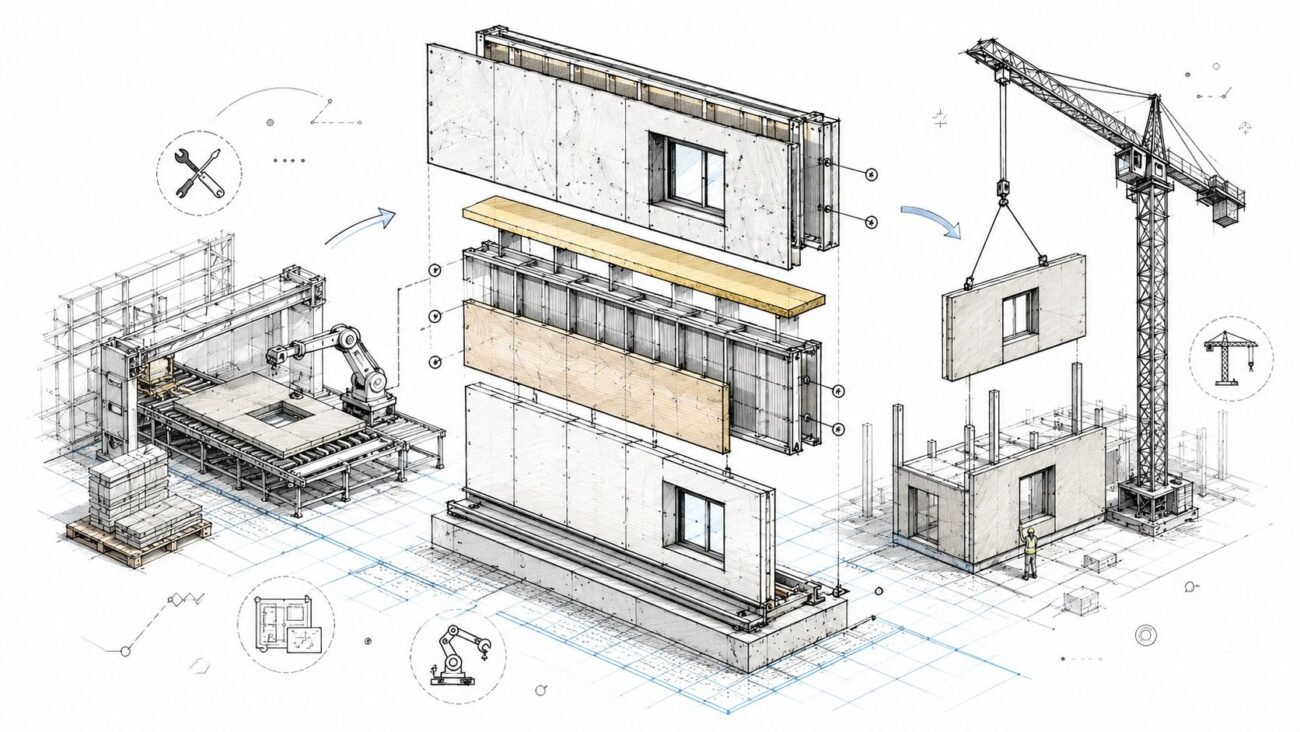
Generative design is an incredible tool for exploring concepts. It allows architects to churn through thousands of design options based on specific parameters, like maximizing daylight or boosting structural efficiency. But let's be clear: these AI-generated concepts are not drawings for construction. They’re the first spark in a long, demanding process that requires production maturity to turn an idea into a buildable asset.
The Promise of Generative Design in AEC
For architects, computational designers, and BIM managers, generative AI has quickly become a powerful co-pilot in the earliest stages of design. It’s brilliant at tackling complex geometric problems that would be nearly impossible to solve manually, especially under the gun of a tight project timeline. This is where AI truly shines—it supercharges schematic design by letting teams explore a universe of "what if" scenarios, protecting margins by front-loading critical decisions.
This initial phase is all about pure, unadulterated exploration. By feeding the algorithm goals and constraints, a design team can sit back and watch it generate countless potential solutions.
- Massing and Form: AI can produce thousands of building massings in minutes, each one optimized for things like solar gain, wind exposure, or preserving key view corridors.
- Floor Plan Layouts: It can test endless spatial arrangements to squeeze out the most usable square footage or figure out the most efficient circulation paths.
- Facade Optimization: Algorithms can generate intricate facade patterns that find the perfect balance between aesthetics and energy performance—a task that would take forever to iterate manually.
Accelerating Conceptual Possibilities
The real value here is speed and scale. A firm can evaluate more high-quality design directions in a few hours than a team could produce in weeks. This front-loads the design process with data-driven options, helping stakeholders make much smarter decisions before committing serious time and money. It’s a huge step forward, moving firms away from being limited to just a handful of human-generated ideas.
The real power of generative design lies in its ability to augment human creativity, not replace it. It handles the heavy lifting of iteration, freeing designers to focus on refinement, strategy, and solving higher-level problems.
This is the promise of AI in architecture: a tool that expands the very definition of what's possible. But here’s the catch—the output is still just geometry. An optimized shape. It has none of the critical information needed to actually build anything.
The journey from an elegant geometric solution to a permit-ready set of drawings for construction is where the real work begins. It’s a journey that shifts from algorithms and possibilities to the hard realities of building codes, materials, and human accountability. This gap between a beautiful concept and a buildable instruction set is where most conversations about AI in AEC fall short, and it's exactly what we need to unpack next.
The Reality Gap Between Geometry and Documentation
The conceptual power of generative design is undeniable. It churns out stunning geometric forms, but a fatal assumption often follows: that a beautiful model is a buildable one. It's not. A form, no matter how optimized for daylight or structure, is a sculpture.
The leap from this abstract geometry to the legally binding drawings for construction that contractors need is a vast and unforgiving gap. This is where the aspirational power of AI collides with the gritty reality of production.
Think of it this way: an AI can generate a perfect digital sculpture of a car. But that model tells you nothing about the spark plugs, the wiring harness, the brake fluid specifications, or the torque settings for the lug nuts. Without that data, you have an object, not a vehicle.
Beyond the Form: Information as Instruction
A buildable project is defined by instruction and data, not just shape. Sure, the 3D model from a generative algorithm contains some data—XYZ coordinates, vertices, surfaces. But a complete set of construction documents is an entire ecosystem of non-geometric information, and every piece is critical for risk mitigation, code compliance, and margin protection.
This is the information that turns a design concept into a constructible asset. It’s the very foundation of the modern building industry. In fact, the global construction market is projected to surge to $12.1 trillion in 2025, an expansion built entirely on the accuracy and clarity of its core documents. Detailed drawings for construction are the contractual bedrock enabling this growth, ensuring every dollar is spent according to precise instructions. You can learn more about the construction industry's outlook and trends on Buildern.com.
The Data Deficit in AI-Generated Models
So, what exactly is missing from a purely generative model? The list is long, and it exposes the true complexity of architectural production. A typical AI-generated massing or floor plan lacks the layers of intelligence required for permitting and building.
A construction document must answer thousands of questions the initial geometry doesn't even know to ask:
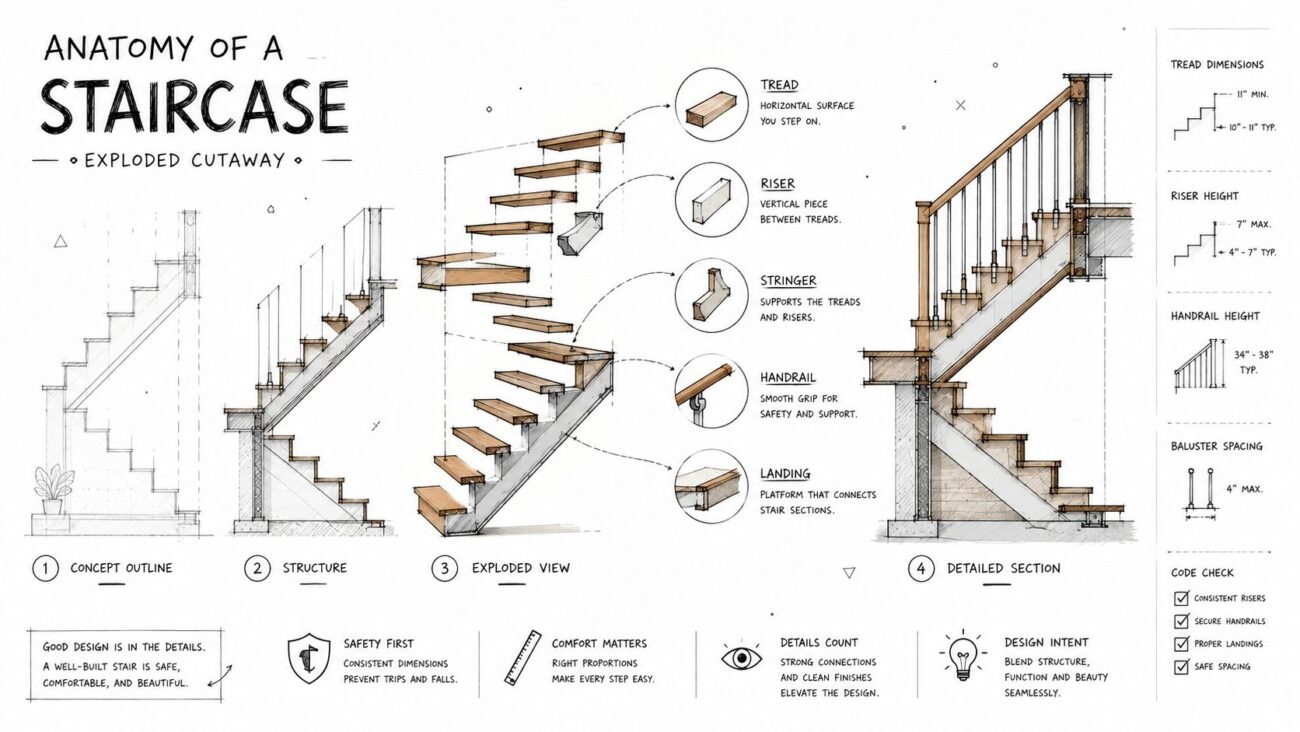
- Annotations and Dimensions: Precise measurements that dictate every cut, placement, and assembly.
- Material Specifications: What specific grade of steel? Which manufacturer's glazing system?
- Fire-Resistance Ratings: Which walls need a 1-hour or 2-hour rating per code?
- Waterproofing Details: How does the facade system tie into the roof membrane to prevent leaks?
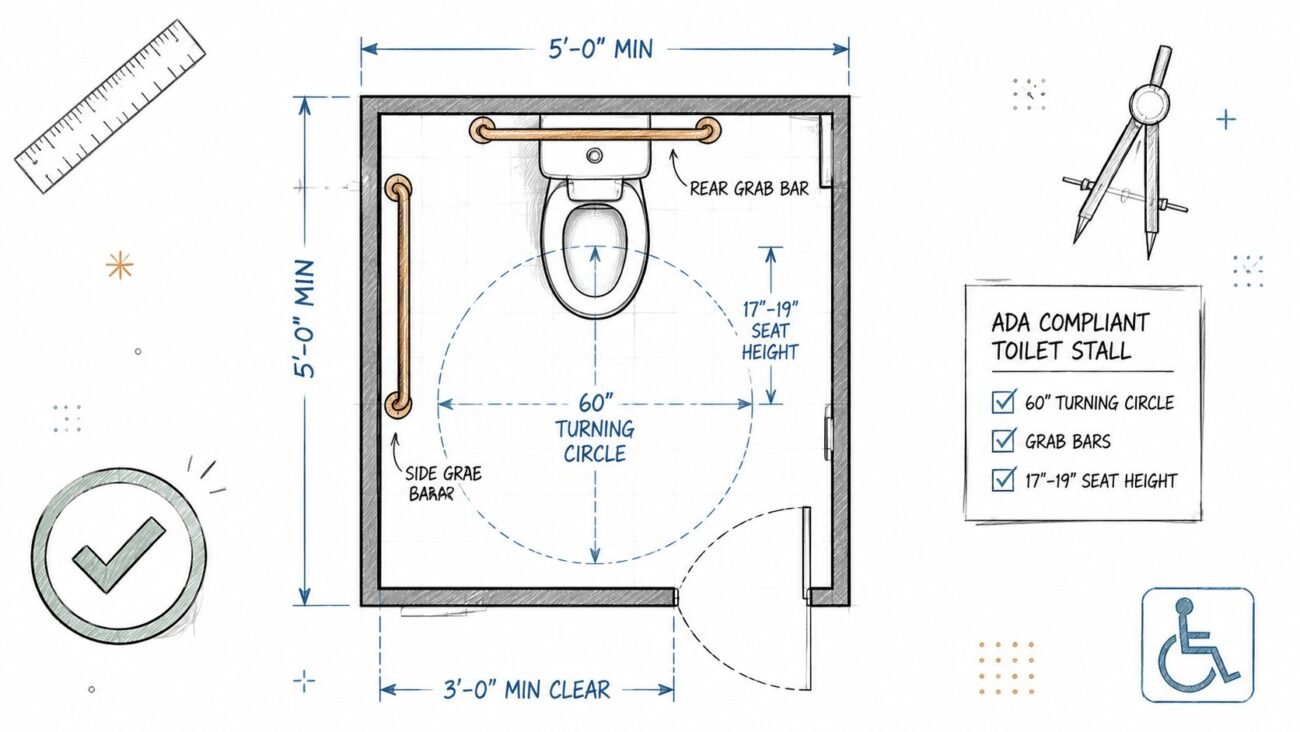
- Regulatory Callouts: Accessibility clearances, egress path widths, and seismic joint locations.
- Tolerances: The allowable deviation for steel erection or concrete pours.
This is the language of construction. It’s a language of liability, performance, and legal compliance. AI, in its current state, doesn't speak it fluently. It's a master of form but a novice in the rules-based world of building.
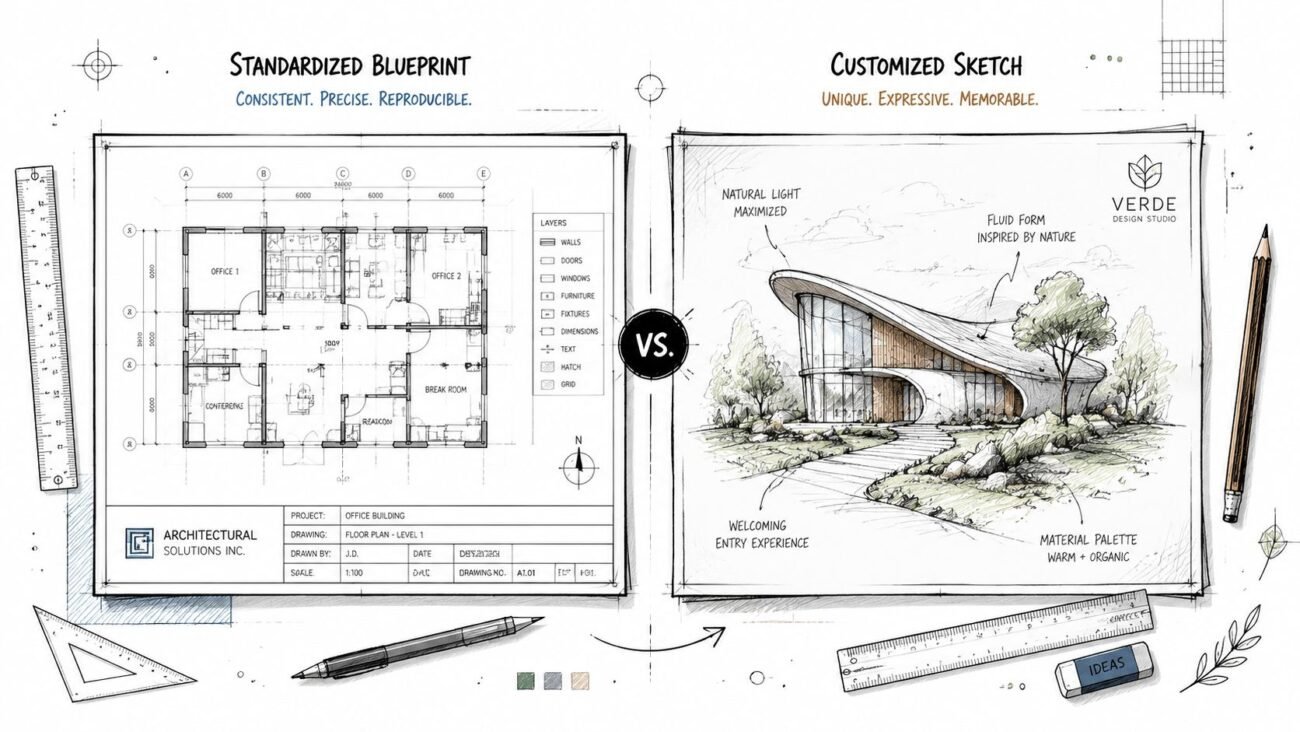
To put it into perspective, here’s a direct comparison of what a generative AI typically produces versus what a contractor actually needs to get the job done.
Generative Design Output vs Construction Document Requirements
| Attribute | Generative Design (Typical AI Output) | Construction Document (Required for Permit & Build) |
|---|---|---|
| Geometry | Provides 3D massing, surfaces, and basic spatial layouts. | Includes precise, dimensioned plans, sections, and elevations. |
| Annotations | Lacks detailed callouts, dimensions, or specifications. | Contains thousands of legally binding annotations and dimensions. |
| Materiality | Suggests generic materials (e.g., "glass," "concrete"). | Specifies exact material grades, manufacturers, and product codes. |
| Code Compliance | Ignores fire ratings, accessibility, and egress requirements. | Details all code-mandated elements like fire-rated walls and ADA clearances. |
| Assembly Details | Offers no instructions on how components connect. | Provides detailed sections and callouts for all critical connections. |
| Liability | Represents a conceptual idea with no legal standing. | Is a contractual document that defines liability and scope of work. |
The table makes it clear: one is a suggestion, the other is an instruction manual. Without the latter, the former is just an expensive idea.
A generative model provides the what—the shape and space. A construction document provides the how—the detailed, legally defensible instructions for assembly, sequence, and performance. Without the 'how,' the 'what' is useless.
This gap isn’t just a technical hurdle; it’s the core of a firm's value proposition. The expertise required to embed this non-geometric data is what protects a project from RFIs, change orders, and litigation. It ensures predictability and operational consistency, turning a creative vision into a reliably delivered asset.
Ignoring this reality is a direct threat to a firm's margins and reputation. The challenge, then, isn't to get AI to create drawings, but to build a workflow that systematically translates AI's geometric brilliance into the data-rich documents construction demands.
Why AI Can’t Speak the Language of Construction
While generative AI is fantastic at whipping up slick-looking geometry, it hits a wall when you ask it for a full set of drawings for construction. The reason is simple, but it’s a big one: AI doesn’t yet understand the dense, context-heavy “language” of building. This language isn’t just about lines on a page—it’s a complex system built on liability, regional building codes, and hard-won knowledge from the field.
A generative model can spit out a wall location in seconds. What it can’t do is decide if that wall needs a 2-hour fire rating because it’s too close to a property line in Austin, Texas. That decision requires someone to interpret the International Building Code, factor in local amendments, and apply that judgment. That’s a level of nuanced, localized thinking AI just doesn’t have yet.
The output from an algorithm is pure design intent. Construction documents, on the other hand, translate that intent into legally binding instructions. This is where professional accountability—a uniquely human responsibility—enters the picture.
The Missing Piece: Professional Judgment
AI works by recognizing patterns in data. The problem is, construction is full of exceptions, trade-offs, and unwritten rules learned over decades of practice. A seasoned architect or BIM manager makes thousands of tiny decisions that protect the project’s budget and ensure the final product is actually buildable.
These decisions are often invisible in the final 3D model, but they are absolutely critical.
- Jurisdictional Nuances: Permitting rules can change dramatically from one county to the next. An AI model trained on a global dataset has no idea about the specific plan submission format required by the City of Chicago's Department of Buildings.
- Firm-Specific Standards: Every established firm has a library of proven details and graphic standards. These aren't just for branding; they're a built-in QA process, a system for reliable delivery that heads off common RFIs and mistakes in the field.
- Material and System Compatibility: Specifying a particular waterproofing membrane means knowing it works with the chosen window system and sealant. That knowledge comes from digging into manufacturer data sheets and installation manuals, not from analyzing geometric shapes.
An AI can draw a thousand unique rooflines in an hour. It cannot, however, detail a single warrantable roof assembly. That requires navigating product data, sequencing trades, and understanding how water behaves in the real world—tasks that remain squarely in the human domain.
Right now, AI completely lacks the contextual awareness to navigate this web of rules and real-world constraints. It can generate geometry that’s beautiful or structurally optimized, but it can’t yet embed the deep, risk-mitigating intelligence that defines professional practice.
From Design Intent to Buildable Instructions
The core challenge is that a design is an idea, while drawings for construction are a contract. They are precise instructions that someone has to stamp, taking full legal and financial responsibility for their accuracy. That’s a line an algorithm simply can’t cross. Our guide on the fundamental types of construction drawings breaks down this critical distinction even further.
Think about a simple callout on a drawing. It’s not just text; it’s a decision with real consequences. Does a specific steel beam need intumescent paint or spray-on fireproofing? The answer depends on aesthetics, cost, and code—a classic design trade-off that requires human judgment.
An AI might place a door based on a circulation analysis. But it won’t consider the required clearances for accessibility, the hardware specs needed for security, or the undercut required for proper HVAC airflow. Each of those details is a data point that has to be consciously added by a professional who understands what happens if they get it wrong.
Ultimately, the gap between generative design and generative construction documents is the gap between probability and certainty. AI can generate probable solutions based on its training data. A construction document, however, must provide certainty—a single, coordinated, and legally defensible source of truth. Until an AI can be held accountable for its decisions, it will remain a powerful conceptual tool, leaving the critical work of documentation to the experts.
How BIM Bridges the Generative Design Divide
Generative design is incredible at spitting out brilliant geometric concepts, but let's be honest—it’s a concept trapped in a data vacuum. This is where Building Information Modeling (BIM) becomes the essential bridge to production, turning raw ideas into buildable realities. BIM isn’t just another 3D modeling tool; it’s a structured data environment where that raw AI geometry gets systematically enriched with the intelligence needed to create true drawings for construction.
This is where the real work begins. It’s a disciplined process that methodically transforms a simple, algorithm-generated 'wall' into a fully specified building assembly. Within a well-managed BIM environment, that wall gains layers of crucial, non-geometric data that contractors and fabricators actually need.
From Geometry to Intelligent Assemblies
A disciplined BIM workflow is what imposes order on the raw creativity of generative AI. It's the system that translates a beautiful shape into a buildable instruction. The AI might suggest a form, but BIM is where that form gets grounded in reality, complete with the data everyone downstream depends on.
- Material Layers: That single wall is broken down into its real-world parts—studs, gypsum board, insulation, and exterior cladding, each with its own specific properties.
- Performance Data: Fire-resistance ratings, acoustic properties (STC ratings), and thermal resistance (R-values) are assigned directly to the assembly. No guesswork.
- Classification Codes: Elements get tagged with industry standards like OmniClass or UniFormat, ensuring they show up correctly in schedules and cost estimates.
This methodical enrichment is the core of production maturity. It’s a deliberate process that protects your margins by eliminating ambiguity and ensuring every single component is clearly defined before it ever hits the field. For a deeper dive into this process, our overview of BIM and 3D modeling provides essential context.
Template Discipline as a Production System
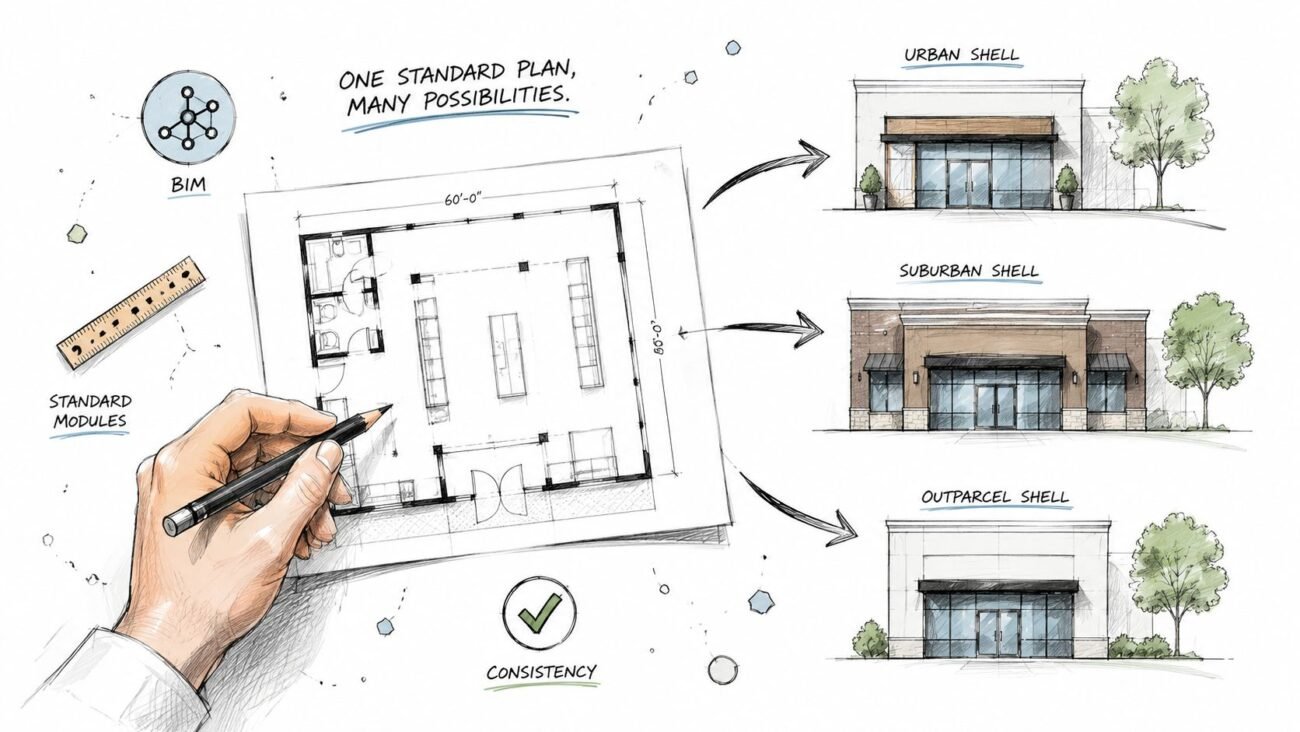
The secret to making this work at scale isn’t reinventing the wheel on every project. It’s all about template discipline. A robust BIM template is your firm's operational playbook, pre-loaded with standard wall types, families, annotation styles, and sheet layouts. It's a system built from the ground up for consistency and predictability.
When a generative design is imported, it’s not just dropped into a blank file. Instead, its geometry is mapped onto the pre-defined, data-rich components already living inside the template. This simple step ensures that even the most novel design is immediately grounded in your firm’s established production standards.
A BIM template is more than a starting point; it’s a quality assurance system in itself. It enforces graphic standards, automates data entry, and provides a reliable framework for translating design intent into contractually sound documentation.
This approach creates a single source of truth—the absolute cornerstone of modern project delivery. Think about the jump from hand-drafting to CAD; it was a huge leap in productivity. Today, BIM-integrated drawings are the standard, reducing errors by 20-30% and saving 10-15% on project costs through virtual clash detection. You can explore more about these construction market trends on Skanska's interactive site. It's the structured environment of BIM that makes these efficiencies possible.
The QA Process That Prevents RFIs
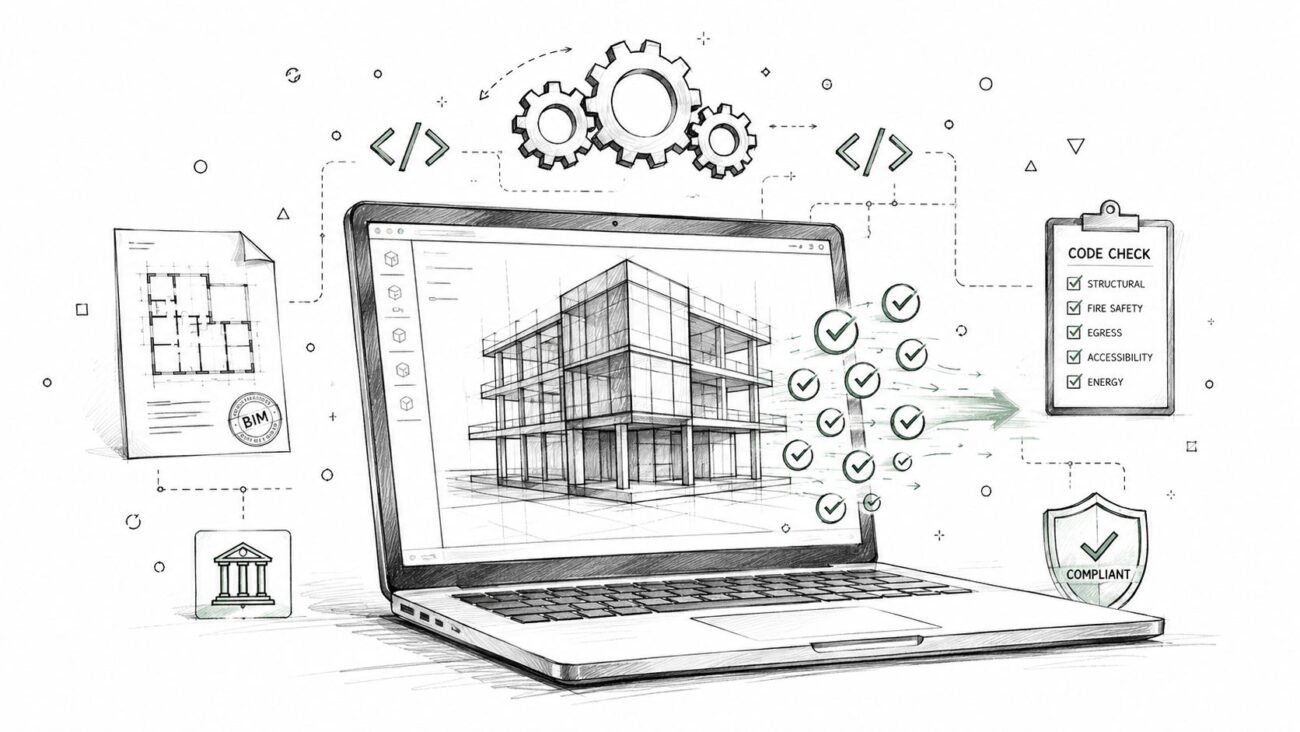
Finally, BIM provides the platform for rigorous quality assurance and coordination. Long before a single sheet gets printed, the model can be checked for clashes, code compliance issues, and general constructability problems. This is a critical decision checkpoint that prevents a flood of costly RFIs and change orders down the line.
The BIM model becomes the central hub where architects, structural engineers, and MEP consultants can work within a federated model, resolving conflicts on a screen instead of on-site. This proactive approach to QA/QC is what separates mature production teams from firms still wrestling with 2D coordination headaches.
Ultimately, BIM is the indispensable system that imposes manufacturability onto AI’s conceptual ideas. It bridges the gap between generative design and generative construction documents by providing a structured, data-centric framework for turning a beautiful form into a project that can be permitted, priced, and built with confidence.
Building a Production-Ready Generative Workflow
Generative design is giving us a peek into a much faster, more exploratory way to handle the front end of the design process. But let's be real—without a disciplined system to translate those flashy concepts, firms risk creating projects that are unbuildable, unprofitable, or both. The answer isn't to ditch AI. It's to build a tough, reliable workflow that bridges the gap between raw generative geometry and the rigorous demands of drawings for construction.
This isn’t about hunting for some magical "AI to CD" button that doesn't exist. It’s about creating a production-ready system that uses AI for what it does best—spitballing ideas—while keeping human-led discipline right where it matters most: documentation and liability. A mature workflow treats AI output like raw material that needs to be systematically refined inside a controlled BIM environment.
This diagram shows you the high-level process, moving from abstract AI geometry to instructions people can actually build from.
The key takeaway? BIM is the essential bridge. It provides the structured, data-rich environment needed to turn AI’s abstract ideas into construction documents you can stand behind.
Establishing Human-Led Checkpoints
The very first step in making this work is to define clear, human-led decision checkpoints. AI can generate a thousand options, but a person has to make the final call. This means setting up formal reviews where architects, engineers, and BIM managers sign off on the AI-suggested geometry, checking it against project goals, budget, and basic constructability before it ever touches your firm’s official BIM template.
Think of these checkpoints as non-negotiable gates that protect your bottom line. They stop teams from sinking hours into developing a concept that was never going to work in the first place. This is where professional judgment—the ability to spot a future waterproofing nightmare or an obvious code violation—provides a critical backstop that algorithms just don't have yet.
To really connect generative models with practical documentation, a solid understanding of AI engineering is crucial. You can learn more by exploring AI Engineering principles in Construction, Architecture, and Real Estate.
Integrating AI Output into Disciplined Templates
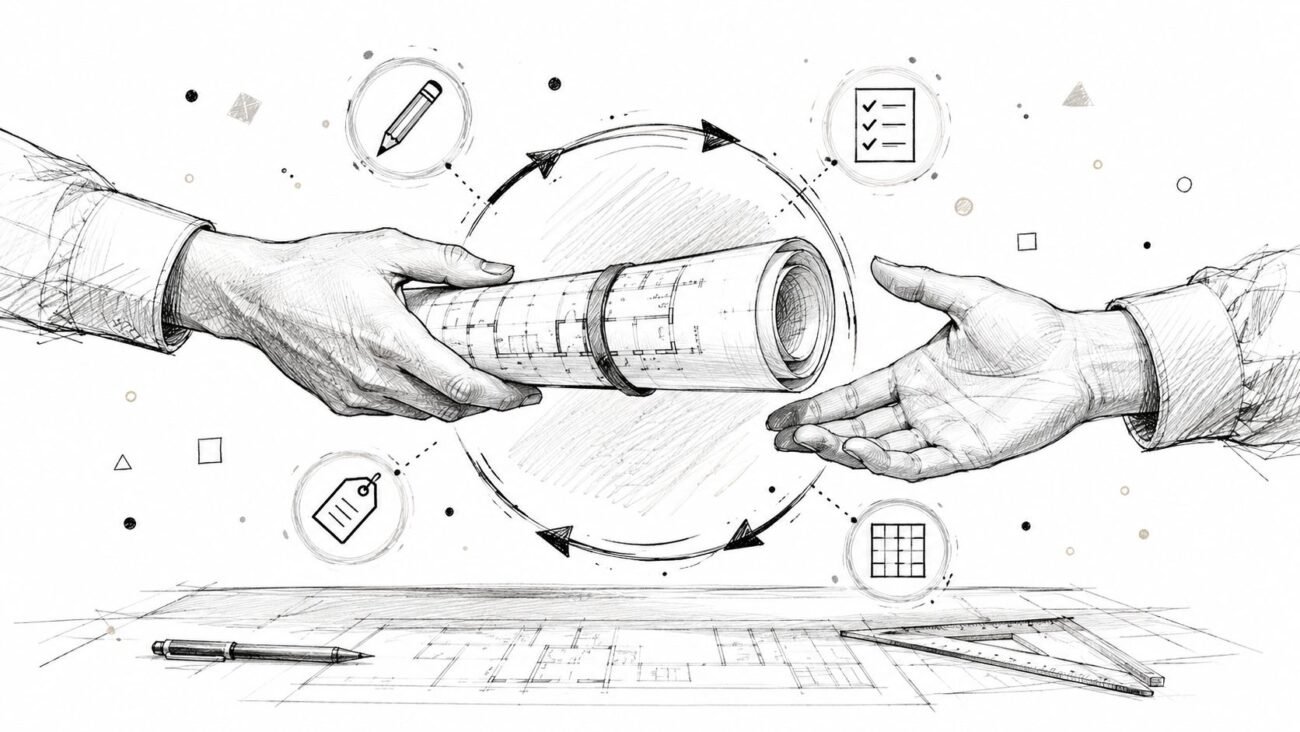
Once a design direction gets the green light, that raw geometry has to be brought into a disciplined BIM template. This is probably the most critical step for keeping your operations consistent. You’re not just importing a model; you are translating a concept into your firm’s established production system.
This process involves a few key moves:
- Mapping Geometry to Standard Families: The AI’s generic "wall" gets replaced with your firm’s standard, data-rich wall assembly—the one that already has fire ratings, material layers, and cost data baked in.
- Applying Firm-Specific Standards: Every element is brought into line with your company’s graphic standards, annotation styles, and sheet layouts. This ensures the final deliverables look and feel predictable.
- Enriching the Model with Non-Geometric Data: This is where the real work happens. You start adding the specifications, callouts, and details that transform a pretty model into a set of buildable instructions.
This structured workflow provides the rigor needed to prevent the kinds of mistakes that lead to a flood of RFIs and costly rework on site. The precision this gives you is mission-critical, especially now. With material costs soaring and project abandonment rates high, firms are using advanced drawings for construction through BIM to slash change orders by 15-25%.
Automating Repetitive Documentation Tasks
With the geometry and core data locked in, the final stage is to use automation for what it’s good at: handling the repetitive, low-judgment tasks. This isn't about asking AI to create complex details from scratch. It’s about using scripts and plugins to speed up the documentation of decisions that the project team has already made.
A production-ready workflow uses AI as a front-end catalyst for ideas and a back-end engine for repetitive tasks. The middle—where design intent is translated into buildable, legally defensible instructions—remains a human-led, system-driven process.
This kind of practical automation can include:
- Automated Tagging and Dimensioning: Scripts can fly through a model, applying tags and dimensions based on the rules you’ve already defined in your BIM template.
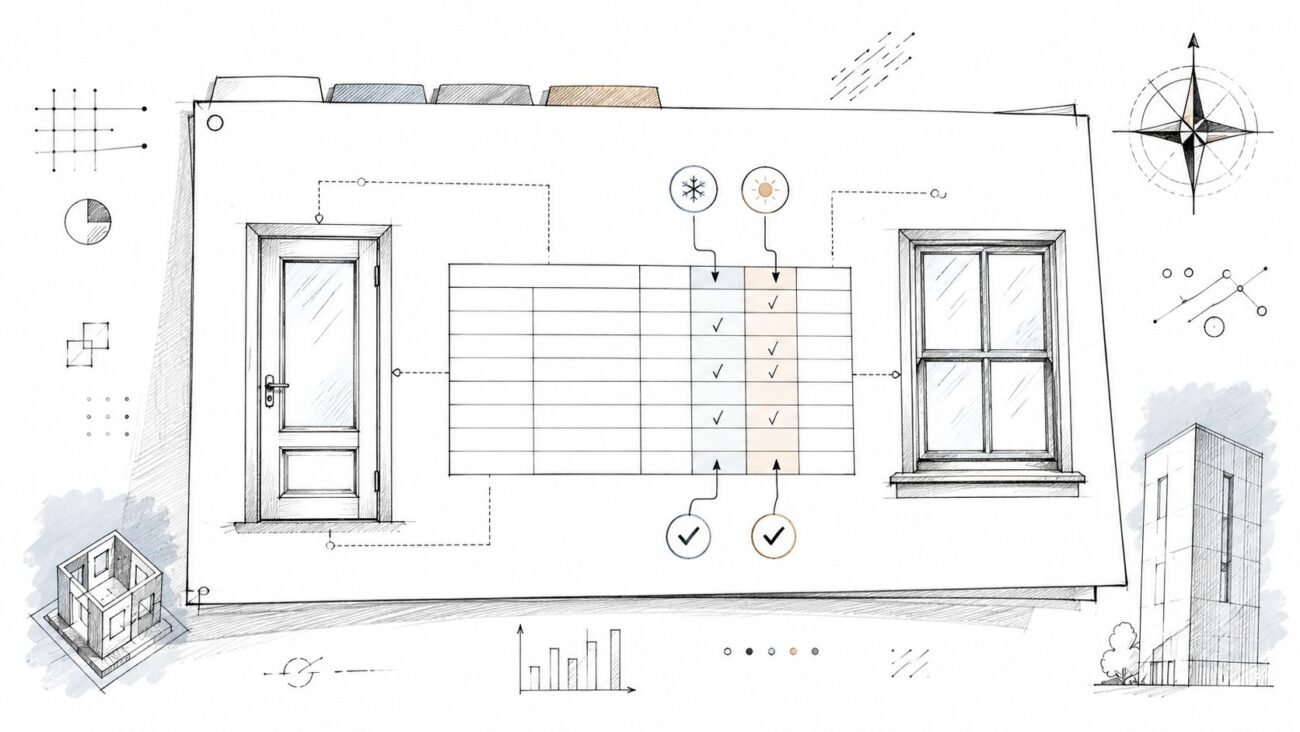
- Generating Schedules: Automatically pull door, window, and finish schedules directly from the data-rich model, saving hours of mind-numbing data entry.
- Sheet Creation and View Placement: Use automation to set up new sheets and place standard views, cutting out countless hours of manual drafting.
This approach ensures that every single drawing, from high-level plans all the way down to detailed shop drawings for construction, is derived from the same coordinated, human-vetted source of truth. It's a pragmatic framework that protects your margins, ensures predictability, and reinforces your firm's reputation for getting the job done right.
The Future Is Augmented, Not Automated
Let's get one thing straight: the future of creating drawings for construction is all about human-led augmentation, not handing the keys over to a machine. Think of AI as an incredible co-pilot, fantastic for running through design possibilities at lightning speed. But the architect or BIM manager? They're still the pilot-in-command, the one responsible for the final, legally binding documents.
Generative design gives us a thrilling peek into a faster, more dynamic front-end process, but it doesn't eliminate the need for rigorous, system-driven production on the back end. Your firm’s true value isn’t just in whipping up beautiful geometry; it's in delivering clarity, consistency, and predictable outcomes. That's a game that requires human expertise and accountability, plain and simple.
To get a better sense of how AI can boost human capabilities, it's worth looking into different AI automation solutions. The real goal here is to shift our thinking. We should be using AI to supercharge creativity while doubling down on the template discipline and QA checks that protect our margins and guarantee reliable delivery.
At the end of the day, the professional stamp on a drawing set is a symbol of human judgment and liability. That’s a responsibility no algorithm is ready to take on. This is where your expertise isn’t just valuable—it's indispensable. You’re the one turning innovative ideas into buildable, risk-managed assets.
Frequently Asked Questions
Let's tackle some of the real-world questions our team hears all the time about using AI to create drawings for construction.
Can AI Generate Construction Details and Specifications?
Not in a way you can trust or stamp. This is probably the most critical distinction to make right now. While AI is great at generating geometry that looks like a wall section or a window detail, it has zero understanding of the physics, chemistry, and sequencing that make a building assembly actually work.
It doesn’t know that the waterproofing needs to lap over the flashing, not under it. It can’t cross-reference a manufacturer’s spec sheet to check for material compatibility, and it certainly can’t interpret the nuance in a local building code. For now, human expertise is absolutely essential for creating details that are reliable, buildable, and legally defensible.
What Is the Biggest Risk of Over-Relying on AI?
Plain and simple: the legal and financial exposure. If you get too comfortable letting AI generate drawings for construction, you’re opening your firm up to massive liability. Every error, every clash, every code violation an algorithm produces becomes your problem.
A professional stamp isn’t just a rubber circle; it’s a legally binding promise of human accountability. A licensed architect or engineer is taking personal responsibility for that drawing's safety and accuracy. An algorithm can't do that. If a mistake in an AI-generated drawing leads to a catastrophic failure, the liability lands squarely on the architect of record. That’s a risk that can sink a firm’s reputation and its bottom line.
The core value of a professional stamp is the assurance of human judgment and legal accountability. AI, in its current form, can provide suggestions but cannot offer this fundamental guarantee of professional responsibility.
How Can My Firm Start Using Generative Design Safely?
The best place to start is where the stakes are lowest: early-stage conceptual design. Use these tools for what they're truly good at—rapidly exploring ideas. Think site analysis, massing studies, or generating a dozen initial floor plan layouts to get the conversation started. These activities play to AI's strengths in iteration without exposing you to the risks that come with production documents.
Here's the key: once you and the client land on a concept you like, that's the decision checkpoint. From there, you must manually bring that geometry into your firm's battle-tested BIM template. This step is non-negotiable. It ensures you maintain total control over the documentation. The AI's output is just raw input for your proven, human-led workflow, where you can layer in the real data, standards, and details needed to deliver a reliable set of drawings.
At BIM Heroes, we believe the smartest workflows combine the best of human expertise and machine efficiency. If you're looking to bridge the gap between generative concepts and production-ready documents, your team needs a proven system.
Download our Generative-to-CD Workflow Checklist to build a reliable process for turning AI-driven ideas into buildable, profitable projects. https://www.bimheroes.com