We've all been there. Staring into the digital abyss of a shared drive, hunting for a critical detail buried in an old project folder, or finding out your team started a project with an outdated template. That sinking feeling isn't just frustration—it's a direct threat to your firm’s margin and predictability. This chaos of scattered information is a sign of low production maturity, leading to rework, wasted hours, and inconsistent delivery that chips away at your reputation.
The core problem is simple: shared folders store files. An architecture firm knowledge system builds predictable, scalable, high-quality delivery.
Shared Folders Are Where Profitability Goes to Die
Every hour a junior architect spends searching for the right Revit family, verifying a standard wall detail, or asking a senior a question they’ve answered a dozen times is a direct hit to your project margins. When you rely on a patchwork of shared folders—basically a digital graveyard for outdated files and tribal knowledge—you're creating friction that slowly grinds your firm’s efficiency down.
This isn't a minor annoyance; it’s a systemic problem that shows up in very real, very expensive ways. To really grasp the financial impact, it's worth exploring the hidden costs of poor data governance and how they manifest in day-to-day operations.
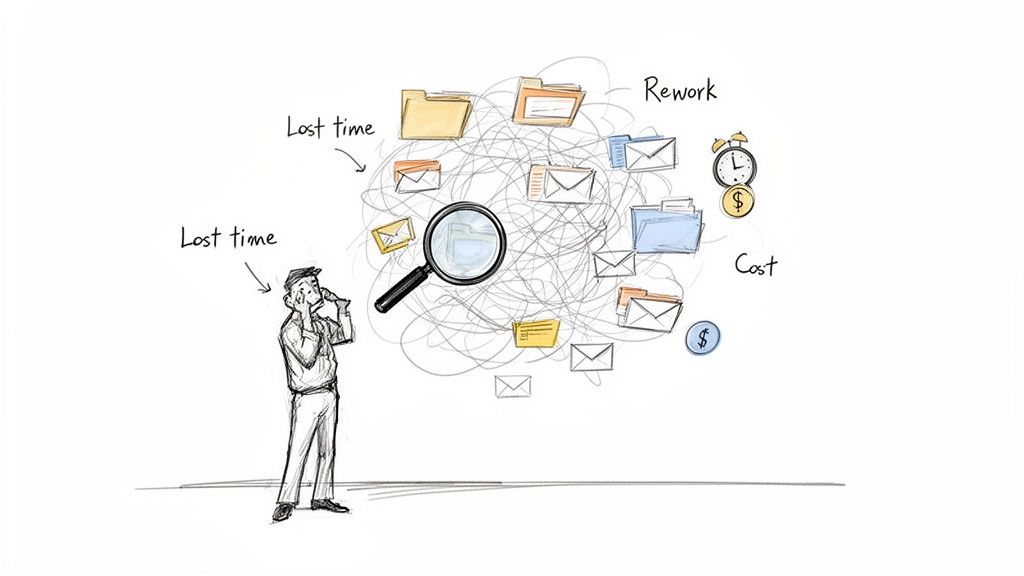
Common Scenarios That Erode Margins
The financial drain from poor information management pops up everywhere. Teams accidentally use outdated details, which leads straight to RFIs and change orders. New hires take months to get up to speed because all the critical “how-we-do-it-here” knowledge is locked in the heads of your senior staff. QA checklists are missed because they're buried three subfolders deep in a project that wrapped up years ago.
Think about these all-too-common scenarios:
- Wasted Billable Hours: Junior staff burn time looking for standard details instead of producing work.
- Costly Rework: A team kicks off a project using an old template, forcing expensive fixes late in the design phase.
- Inconsistent Quality: Two project teams deliver wildly different documentation sets, confusing clients and contractors.
- Slow Onboarding: New team members constantly interrupt senior staff, slowing everyone down and preventing scalable delivery.
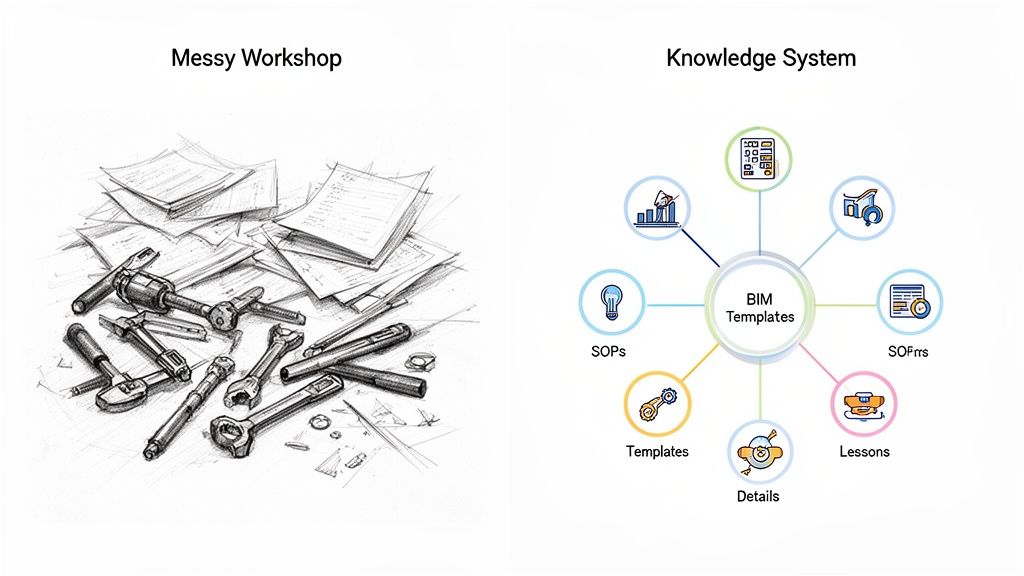
That distinction is everything. A shared drive is a passive, cluttered attic. A knowledge system is a well-organized workshop where every tool is in its place, calibrated, and ready to go. This structured approach is what shifts a firm from constant, reactive problem-solving to predictable, high-quality delivery.
What is an Architecture Firm Knowledge System?
Let's get one thing straight: an architecture firm knowledge system isn't just a fancy name for your shared drive. It’s not another labyrinth of folders. Think of it as the operational backbone of your practice—a structured, organized, constantly updated ecosystem of templates, standards, detail libraries, SOPs, modeling rules, and project lessons.
Your shared folders are like a messy workshop. Tools are scattered, some are rusty and outdated, and nobody can find the instruction manuals. An AEC knowledge management framework is a professionally organized workshop where every tool is ready for any team member to use effectively.
Beyond a Digital Filing Cabinet
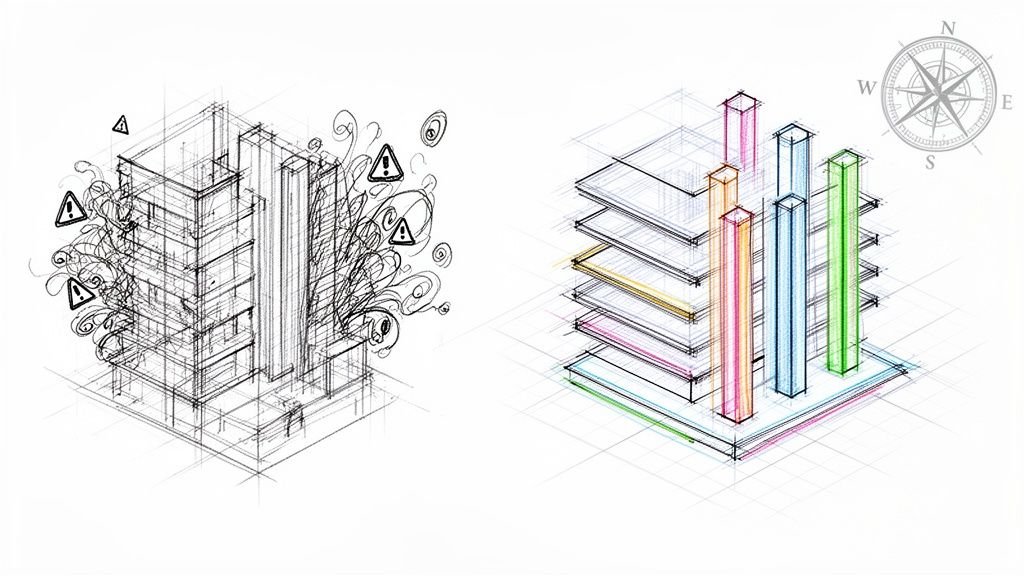
The real difference boils down to three pillars that simple storage lacks: governance, context, and version control. A shared drive is a passive digital graveyard where good information goes to die. A knowledge system is active; it turns siloed "tribal knowledge" into a powerful, firm-wide asset that everyone can build upon.
Let's break down the core differences.
Shared Folders vs. A Knowledge System
| Attribute | Shared Folders | Knowledge System |
|---|---|---|
| Structure | Chaotic, inconsistent, user-defined | Governed, standardized, searchable |
| Ownership | Unclear, often abandoned | Defined roles for content creation and updates |
| Context | Non-existent (e.g., Final_Final_v2.dwg) |
Rich with project history, usage notes, and lessons learned |
| Version Control | Manual and error-prone | Automated, ensuring a single source of truth |
| Accessibility | Depends on knowing "where to look" | Easily discoverable through search and tagging |
| Business Impact | Creates bottlenecks, rework, and risk | Drives efficiency, quality, and scalability |
A shared folder tells you where a file is (maybe). A knowledge system tells you what the file is, why it matters, and how to use it correctly to protect project margins.
The Core Components of a Scalable Practice
A genuine architectural documentation system isn't just a collection of files. It’s a curated set of operational assets working together to mature your production process. If you want a broader business perspective on this, the post What is a Knowledge Management System? offers a solid foundational overview.
For an architecture firm, a well-structured system typically includes:
- A Governed BIM Standards Library: The single source of truth for all Revit families, templates, line styles, and modeling protocols.
- Curated Project Templates: Pre-configured project starters that embed your firm’s standards and decision checkpoints from day one.
- Documented Workflows & SOPs: Clear guides for critical processes like permitting prep, drawing issuance, and QA.
- An Accessible Detail Library: A vetted, searchable repository of standard details that stops teams from reinventing the wheel.
- A Lessons Learned Database: A living repository where teams document insights from RFIs and construction to inform future work.
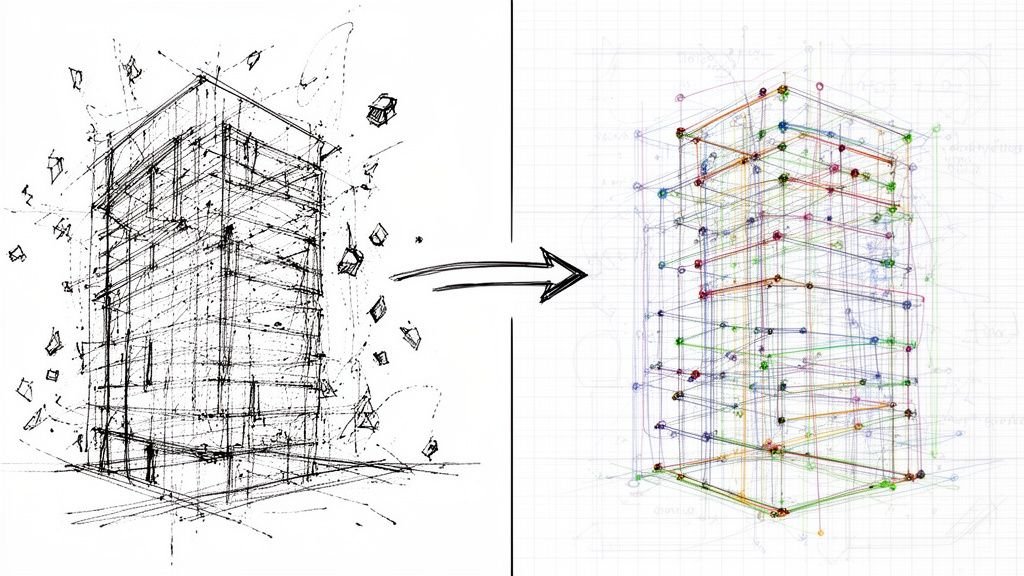
Ultimately, these components turn scattered information into actionable intelligence. This is the foundation for predictable delivery, faster onboarding, and the operational consistency that builds a scalable firm.
Driving Production Maturity and Protecting Margins
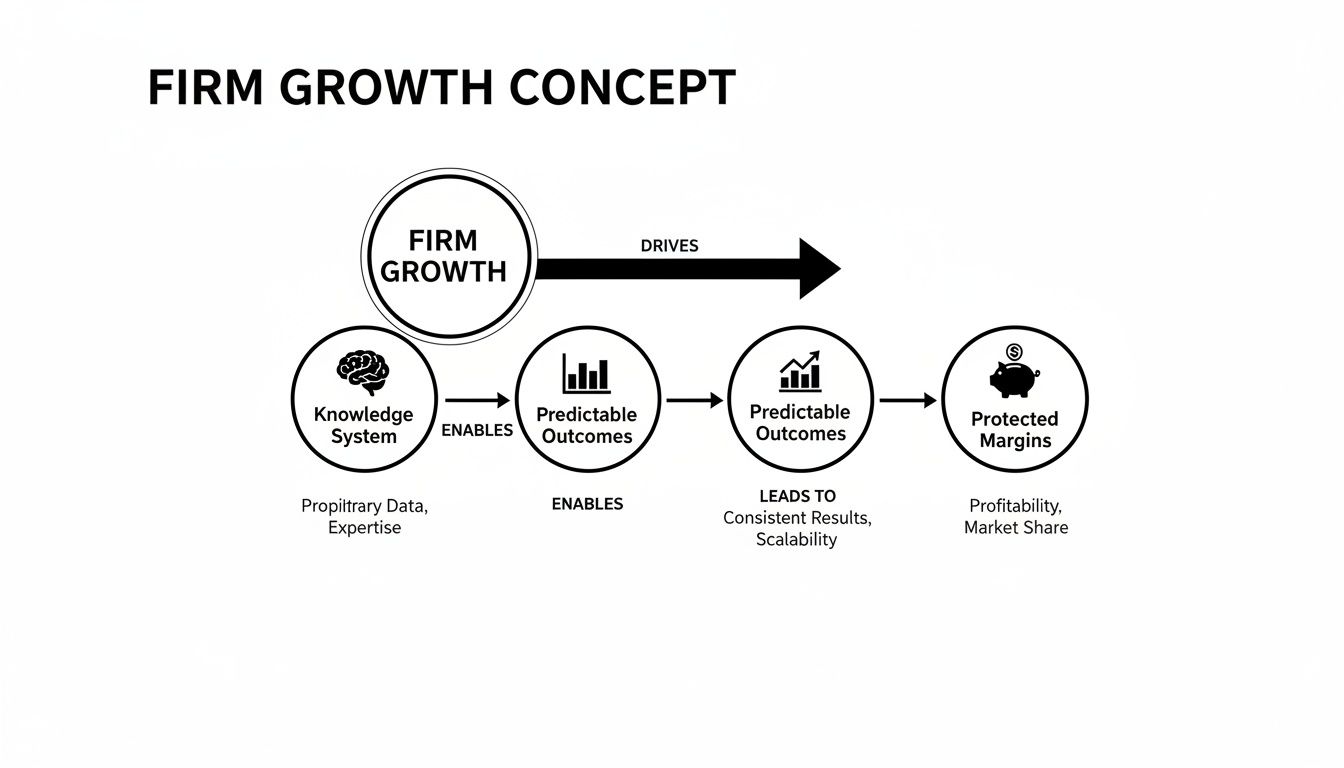
An architecture firm knowledge system is more than an organizational tool; it’s a direct lever for protecting your margins and maturing your production capabilities. When teams constantly create new details, hunt for standards, or start projects with outdated templates, you aren't just losing time—you're systematically eroding profitability.
A knowledge system establishes a single source of truth that pays dividends across the entire project lifecycle. Production becomes less about heroic individual efforts and more about repeatable, high-quality execution.
We’ve seen firms cut onboarding time in half once their knowledge shifted from scattered files to a system. The ROI isn't just in saved hours; it’s in getting new team members contributing to high-quality work, faster.
This operational discipline translates directly into financial health. Reduced errors mean fewer RFIs. Predictable workflows allow for more accurate project planning. Your firm stops selling hours and starts delivering clarity, consistency, and reliable outcomes.
From Tribal Knowledge to Scalable Delivery Pods
One of the biggest drags on growth is "tribal knowledge"—the expertise locked in the heads of your most senior staff. When that knowledge isn't documented, your ability to deliver is tied to a handful of individuals. This creates a bottleneck that prevents you from scaling.
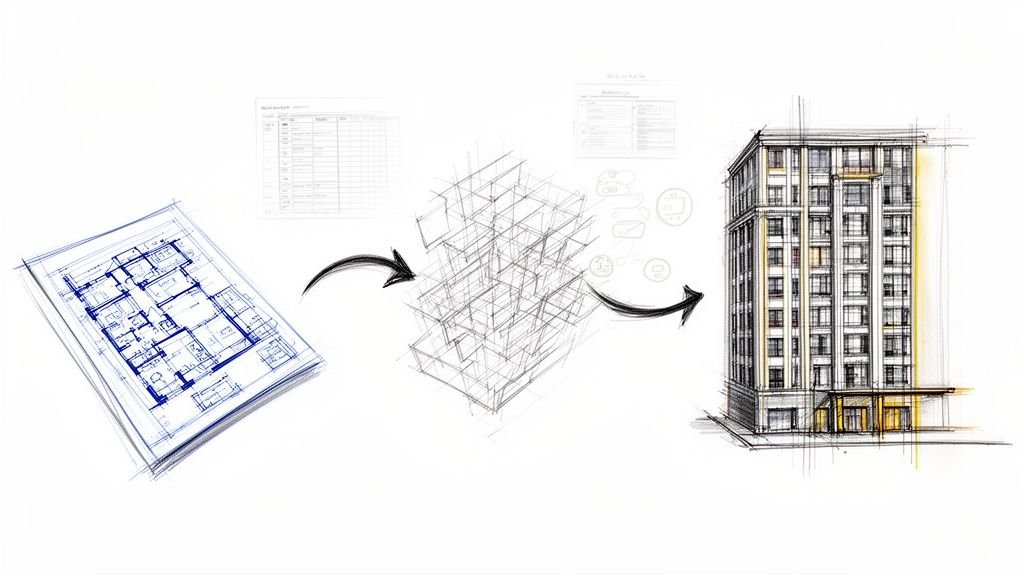
An AEC knowledge management framework breaks down these silos, transforming that hard-won expertise into a structured, firm-wide asset. This is the foundation for building scalable delivery pods—agile teams that can spin up for new projects and immediately align with your firm's quality standards.
This structure allows you to:
- Empower junior staff: They find answers independently, freeing up senior leaders for high-value work.
- Ensure consistency across teams: Whether the project is in New York or California, the documentation quality remains the same.
- Mitigate risk: Key person dependency is reduced, making your firm more resilient to staff turnover.
By systemizing your firm’s intelligence, you create an environment where excellence is the default. For a deeper dive into how this fits into a broader operational framework, explore our guide to standardizing your firm's architecture production systems.
Embedding Quality into Daily Workflows
Quality assurance shouldn't be a separate step at the end of a phase. A mature architectural documentation system integrates QA/QC processes directly into daily workflows. When your project templates have built-in decision checkpoints and your BIM standards library is the only source for approved components, quality becomes an inherent part of the production process.
This proactive approach prevents errors before they happen, which is always cheaper than fixing them later.
This leads to several key outcomes:
- Fewer RFIs: Clear, consistent documentation leaves less room for contractor ambiguity.
- Smoother Permitting: Permit sets are assembled using proven templates and checklists, reducing rejections.
- Increased Predictability: Projects run smoother with fewer surprises, protecting both your margins and your team's well-being.
Driving production maturity isn't about rigid bureaucracy. It's about creating a clear path for your teams to do their best work.
A Practical Roadmap to Your Firm's Knowledge System
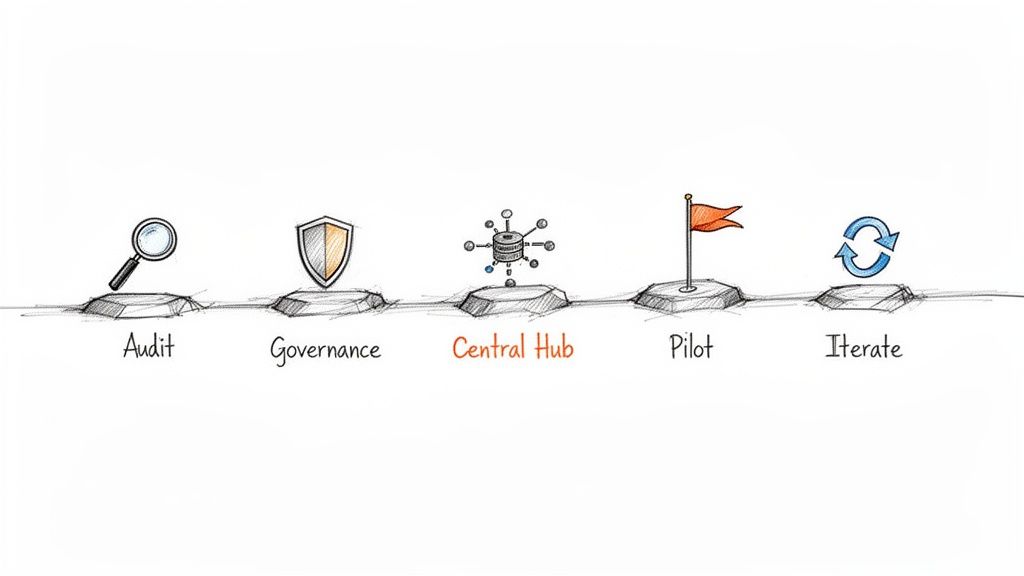
Shifting from information chaos to a clear, operational system doesn't have to be a massive project. Building an effective architecture firm knowledge system is about making steady progress by solving your biggest pain points first.
This practical roadmap will guide your firm from scattered files to a structured system, one manageable step at a time. The goal is to build momentum and show real value quickly.
Step 1: Audit Your Current State
Before building anything, get an honest look at where you stand. Map out your information landscape. Pinpoint where critical knowledge actually lives—project templates, standard details, QA checklists, and those hard-won "lessons learned." This audit will almost certainly uncover redundant files and outdated details. Documenting the chaos is the first win.
Step 2: Establish Clear Governance
A knowledge system without ownership is just a more organized digital graveyard. Governance is the human element that makes the system work. Decide who is responsible for creating, updating, and archiving content within your AEC knowledge management framework.
Governance isn't about bureaucracy; it's about accountability. A simple charter that defines who owns the BIM standards library is what stops the system from sliding back into chaos.
Step 3: Select a Central Hub
With a clear picture of your content and a governance plan, you can pick the right hub. The best tool is one your team will actually use, whether that's SharePoint, Notion, or a well-structured cloud drive. The platform must be accessible, searchable, and easy to manage.
Step 4: Launch a Pilot Project
Don't try to boil the ocean. Pick one high-impact area for a pilot. For most firms, the BIM standards library is the perfect place to start. Focus on organizing your Revit families and creating a single, governed project template. A victory here builds buy-in to expand the system.
Step 5: Iterate and Improve
An architecture firm knowledge system is a living thing, not a one-and-done project. Launch your pilot, get feedback, and make adjustments. Use what you learn to guide the next phase. This cycle of implementing, getting feedback, and refining is what builds a resilient system that grows with your firm.
Ready to move from information chaos to operational clarity? The right systems turn tribal knowledge into a scalable asset, protecting your margins and enabling growth. It's the foundation for reliable delivery.
To help you take that first practical step, we’ve created a simple guide to get you started.
Start building your firm's operational backbone with a Knowledge System Starter Framework.