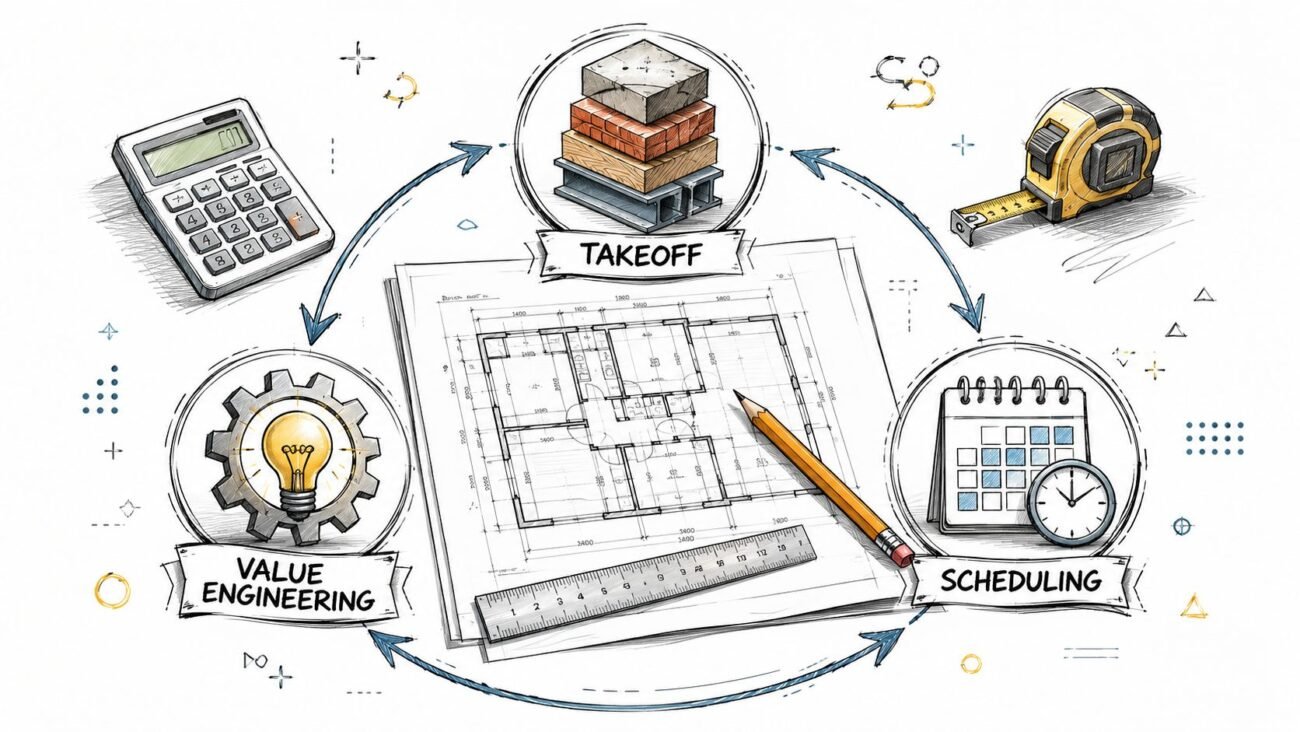
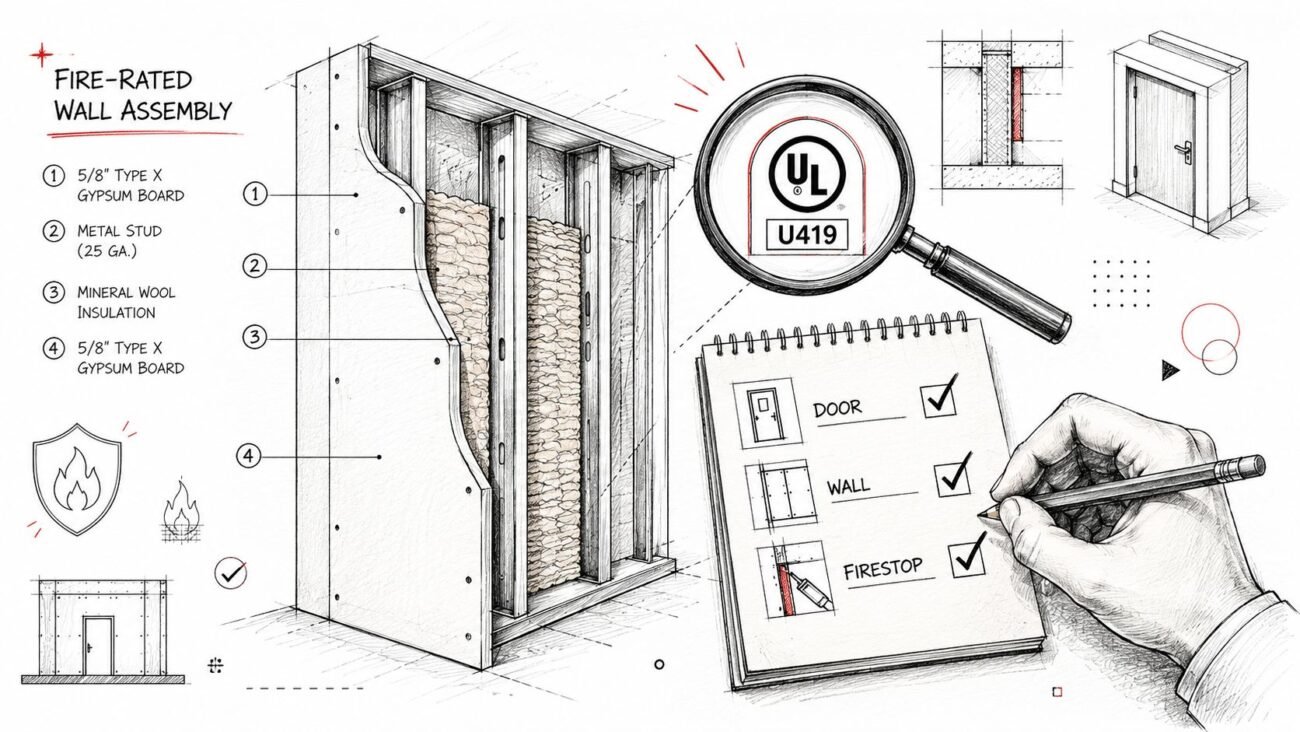
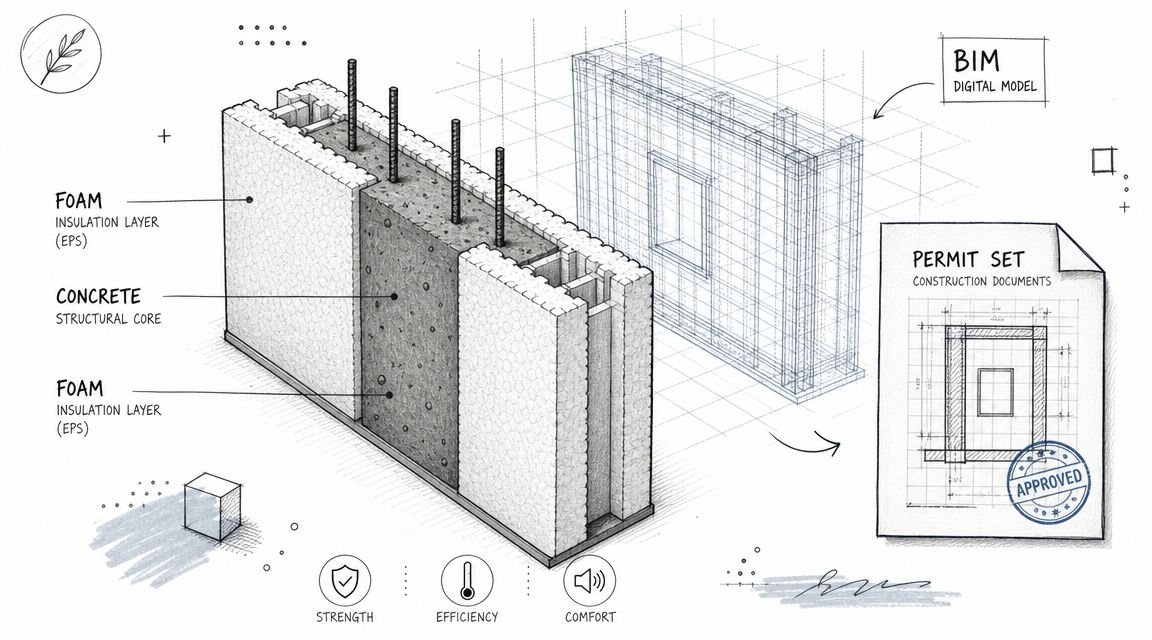
A project scope is your production control mechanism. It lays out the specific goals, deliverables, tasks, and boundaries for any architectural or construction project. Think of it as a documented agreement on what work will be done and, more importantly, what won't. Without that level of clarity, projects inevitably drift into a sea of rework, delays, and lost profits.
Most project stress, rework, and margin loss does not come from design complexity. It comes from ambiguous scope boundaries that allow assumptions to multiply. And these problems rarely appear at kickoff; they surface months later as redlines, coordination conflicts, and deadline pressure.
The Hidden Costs of an "Understood" Project Scope
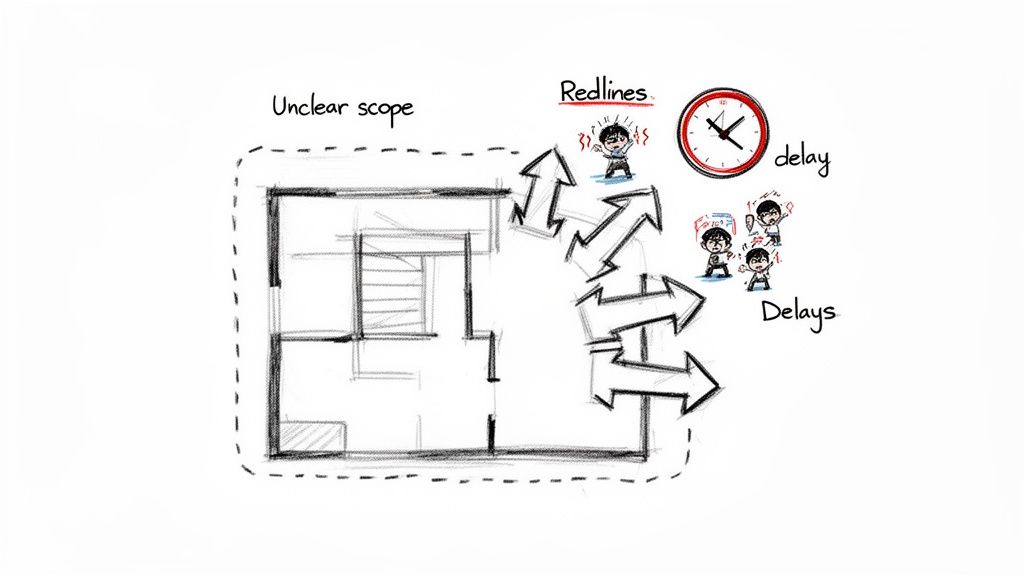
For architecture firm leaders, BIM managers, and builders on the ground, a poorly defined project scope is far more than a contractual formality—it’s a breakdown in production control that quietly eats away at your margins.
This isn’t abstract project management theory. It’s about the real, tangible pain points that crop up after a project feels settled. We’re talking about those endless redlines, teams arguing over “who was supposed to do this,” and schedules that slip one day at a time. These are all symptoms of a much deeper problem that started with a scope that felt “understood” but was never clearly defined.
When Assumptions Become Invoices
Let's be clear: ambiguity is expensive. When your list of deliverables is vague or phase handoffs aren't crystal clear, your team is forced to make assumptions. An outsourced partner might deliver a BIM model at the wrong Level of Development. The structural engineer might assume the architect is coordinating all MEP penetrations.
These misalignments rarely show up on day one. They emerge later as coordination conflicts, leading to a flood of RFIs and costly rework. We’ve seen projects regain control simply by pausing to rewrite their scope definitions midstream and get everyone back on the same page.
Protecting Predictability and Margins
A disciplined approach to scope definition in architecture is the single most effective tool you have for protecting your firm’s financial health. It’s what provides the operational consistency needed to scale delivery pods and ensure predictable outcomes.
Just as a vague project scope can lead to surprise expenses, it's critical to understand the real financial impact of your decisions. A rock-solid scope creates the structure that allows projects to move forward without friction, turning potential chaos into clarity. To get a better handle on this, you can learn more about how to reduce construction costs in our detailed guide.
Lesson 1: Vague BIM Deliverables Derail Projects
We’ve all seen it happen. A project scope document lands on your desk calling for a "BIM model." It sounds simple enough during kickoff. Everyone nods, assuming they're on the same page. But that one vague phrase is often the seed for major project stress, endless rework, and evaporating profit margins.
When a scope is this ambiguous, assumptions run wild. Does "BIM model" mean a basic massing model for visualization, or a fabrication-ready LOD 400 model packed with asset data? The answer carries huge implications for fees, timelines, and effort. The real trouble is, you usually don't find out you were all thinking of different things until it’s far too late.
The High Cost of Unspecified Detail
Let’s play out a common scenario. An architecture firm outsources structural modeling, and the deliverable is listed as "a structural BIM model." The partner delivers a masterpiece of detail, perfect for fabrication.
The problem? The architect only needed a coordination model for clash detection. The result is a completely blown budget. The partner poured dozens of extra hours into unnecessary detail, and now the firm is staring down a massive invoice. This is a classic failure of project scope management, born from a simple lack of specificity.
"A project scope must be granular, especially in modern BIM workflows. Defining details like LOD upfront isn't micromanagement; it’s a critical decision checkpoint that prevents costly assumptions from taking root."
The opposite scenario is just as damaging. What if the team needed a detailed model for accurate quantity takeoffs, but the partner delivers a basic LOD 200 model? Now that deliverable is effectively useless. The project is behind schedule as the team scrambles to add the missing detail. Both situations stem from the same root cause: a vague deliverable.
Connecting BIM Growth to Scope Discipline
The industry's rapid shift to BIM makes this discipline more critical than ever. The US BIM market alone was valued at USD 2.33 billion in 2023 and is projected to skyrocket to USD 7.69 billion by 2034. This explosive growth, detailed in a report on BIM's expansion by PlanRadar.com, highlights an urgent need for better scope definition in architecture. BIM isn't just a 3D model anymore; its capabilities for scheduling (4D) and cost (5D) demand precision.
This is where your scope document must transform into a production control tool. By clearly defining the intended use and the Level of Development (LOD) for every model element, you eliminate the guesswork and ensure every hour spent directly contributes to the agreed-upon project goals.
Shifting from “Understood” to “Documented”
The lesson here is simple: an architectural project scope cannot rely on implied understanding. It has to be explicit, especially when it comes to BIM deliverables. Getting this clarity on paper prevents the friction that inevitably bubbles up when teams start arguing over who was supposed to model what, and to what level of accuracy. If you need a refresher, check out our guide on the essentials of BIM Level of Development.
By turning your scope from a contractual formality into a detailed production playbook, you ensure every single team member is aligned from day one. This fundamental move is the key to achieving the predictability, consistency, and margin protection that mature firms are built on.
Lesson 2: Unassigned Roles Lead to Coordination Chaos
A solid project scope does more than just list deliverables; it serves as a responsibility matrix that spells out exactly who does what. Without it, projects slide into chaos where critical tasks fall through the cracks because everyone assumes someone else has it covered. This is one of the biggest reasons for painful rework and shrinking margins.
Imagine an architectural, structural, and MEP team all working in the same federated model. The scope vaguely states, “coordination and clash detection will be performed,” but never names a quarterback. The architect assumes the BIM manager is running point. The BIM manager figures the GC will handle it. Meanwhile, the MEP engineer is sure the architect is leading the charge.
This kind of ambiguity isn't a small oversight—it's a ticking time bomb.
The Inevitable Collision of Assumptions
For weeks, each team grinds away in their own silo. It’s not until deep in the design development phase that the problems surface—not as tidy clash reports, but as major, system-on-system collisions discovered by accident.
Suddenly, the project slams to a halt. A flood of RFIs hits everyone's inbox, and the finger-pointing begins. "Who was supposed to be doing this?" The schedule is now in jeopardy, and the only way out is through expensive rework. This is a classic, textbook failure of project scope management. The stress and budget hits weren't caused by a complex design, but by a simple, avoidable gap in the scope.
From Vague Mandates to Clear Ownership
A mature production workflow demands that a scope document answer the "who" question for every critical task. This is non-negotiable for coordination, model management, and phase handoffs. Defining these roles isn't about bureaucracy; it's about establishing control.
- Model Manager: Who’s on the hook for maintaining the central model and keeping it healthy?
- Clash Detection Lead: Who is running clash tests, how often, and who distributes the reports?
- Deliverable Handoffs: Who officially signs off on the LOD 300 architectural model before it goes to the structural team?
Assigning clear owners for these tasks transforms the project scope from a passive document into an active tool for preventing disasters. We’ve seen projects regain control mid-stream simply by hitting pause, rewriting the scope to assign these responsibilities, and realigning the entire team.
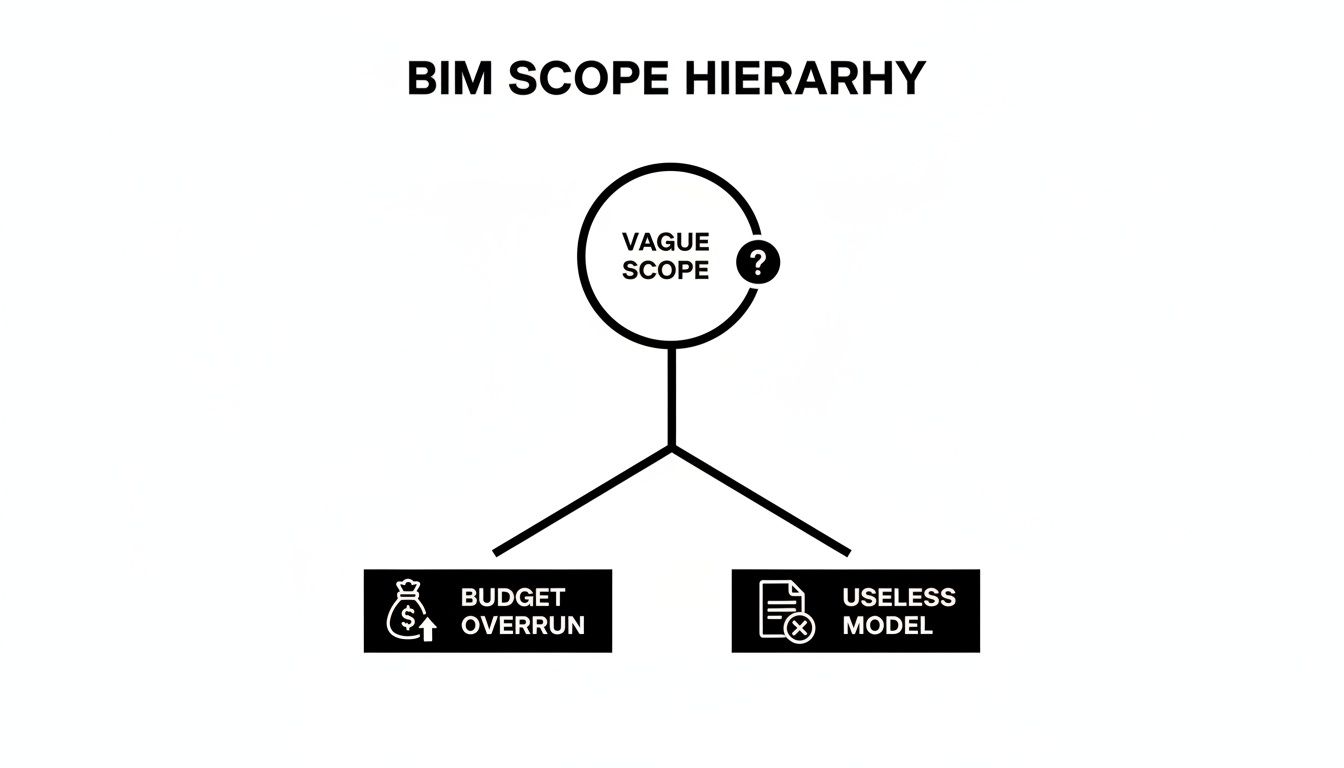
Without explicit roles and well-defined deliverables, you're practically guaranteeing budget and usability problems down the line. To illustrate how this plays out, let's look at a common task defined two different ways:
Vague Scope vs. Clear Scope: A Responsibility Breakdown
| Project Task | Vague Scope Definition ('Understood') | Clear Scope Definition ('Documented') |
|---|---|---|
| BIM Coordination | "Run clash detection weekly." | "The BIM Manager will run weekly clash detection reports using Navisworks Manage every Friday by 5 PM. Reports will be distributed to all discipline leads via BIM 360 for review." |
| Model Handoff | "Share the structural model when it’s ready." | "The Structural Engineer will publish the LOD 300 model to the 'Shared' folder on BIM 360 by the EOD on the first Monday of each month. Architectural and MEP teams are required to link this new model by the following day." |
| RFI Response | "The design team will address RFIs." | "The Architect of Record is responsible for logging all incoming RFIs. The relevant discipline lead (e.g., MEP Engineer for HVAC RFIs) has 48 hours to provide a response, which is then formally issued by the Architect." |
The "clear" column leaves no room for interpretation. It assigns a name, a timeline, and a specific action, ensuring accountability.
Building a Foundation for Scalable Delivery
This level of clarity is what makes smooth transitions between project phases possible and allows your firm to effectively scale up with dedicated production teams. When your process for scope definition in architecture includes a detailed responsibility matrix, you build a system that stops rework before it even starts.
You protect your margins. You hold your schedule. And you create a project environment where your team can focus on execution instead of wasting time arguing over who dropped the ball.
Lesson 3: "Minor Changes" Quietly Erode Your Margins
The biggest threat to your project’s profitability isn’t a catastrophic failure. It’s the slow, silent death by a thousand cuts—the steady drip of “minor changes” that never feel big enough to document. This is the classic story of scope creep in construction and architecture, where a healthy project slowly bleeds out, one undocumented tweak at a time.
It starts with a small client request during a design review. Then an internal adjustment from a senior designer. Before you know it, you’re dealing with a string of unrecorded decisions made over email or a quick phone call. Each seems trivial on its own, but together, they quietly inflate the project scope without touching the fee or the schedule.
The project never officially goes off the rails. It just gets heavier, slower, and more expensive. Then one day, you look up and realize you’re deep in the red.
The Baseline as Your Production Control Tool
To protect your margins, your formal scope document must be the definitive baseline against which every single change is measured. Think of it as an active production control tool. When a new request comes in, the first question should always be: "Is this in the scope?"
If the answer is no, it doesn't mean the conversation stops. It just means you’ve hit a decision checkpoint. This is where a simple, disciplined change order process makes all the difference.
We’ve seen projects get back on track simply by rewriting the scope definitions mid-project to realign everyone’s expectations. This isn’t about adding bureaucracy; it’s about restoring the clarity you need to move forward profitably.
When you treat every deviation as a formal checkpoint, you force a crucial conversation about the impact on your team, the budget, and the timeline. It’s the single best way to stop the informal scope expansion that quietly drains your profits.
Why Small Changes Cause Big Problems
Undocumented changes don’t just add more work—they inject chaos and risk into a perfectly structured workflow. Every unrecorded adjustment creates a ripple effect:
- It breaks template discipline: Carefully crafted templates and standardized workflows become less effective when the project no longer reflects the original plan.
- It invites rework: A "minor" architectural tweak can have massive consequences for the structural and MEP systems, leading to coordination clashes that were entirely avoidable.
- It erodes team morale: Nothing burns out a team faster than a finish line that keeps moving. Constant, undocumented changes create an unstable environment where progress feels impossible.
This is where the link between a tight project scope and predictable delivery becomes unbreakable. The discipline to track every deviation is what separates firms that consistently hit their numbers from those that are always scrambling.
Implementing a Frictionless Change Process
A change order process shouldn't be a bureaucratic hurdle to punish clients. It should be a simple, transparent tool for making smart decisions together. We’ve found the most effective processes are built on clarity, not confrontation. You can learn more in our deep dive on managing change orders for architects.
By positioning the project scope as the single source of truth, you completely change the dynamic. You are a strategic partner, guiding the project to a successful, predictable, and profitable outcome. Protecting your margins isn't about saying "no"—it's about making sure every "yes" is properly planned, budgeted, and accounted for.
Building a Bulletproof Project Scope Document
We've all seen it: the eroded margins, the coordination chaos, the endless rework. It all stems from scope ambiguity. The fix? A meticulously crafted project scope document. This isn’t just another piece of paper; it's your production control mechanism, the single source of truth guiding every decision from kickoff to closeout.
A bulletproof scope is a comprehensive guide that anticipates friction points and preemptively answers the tough questions. Building one takes discipline, but it’s the single best investment you can make in project predictability and margin protection. It creates the stable structure your project needs to move forward without friction.
From Vague Ideas to Actionable Instructions
An effective architectural project scope translates high-level goals into concrete, actionable components. Each element works together to eliminate the gray areas where assumptions breed disaster. When you define these components with precision, your scope document transforms from a formality into a powerful tool for project scope management.
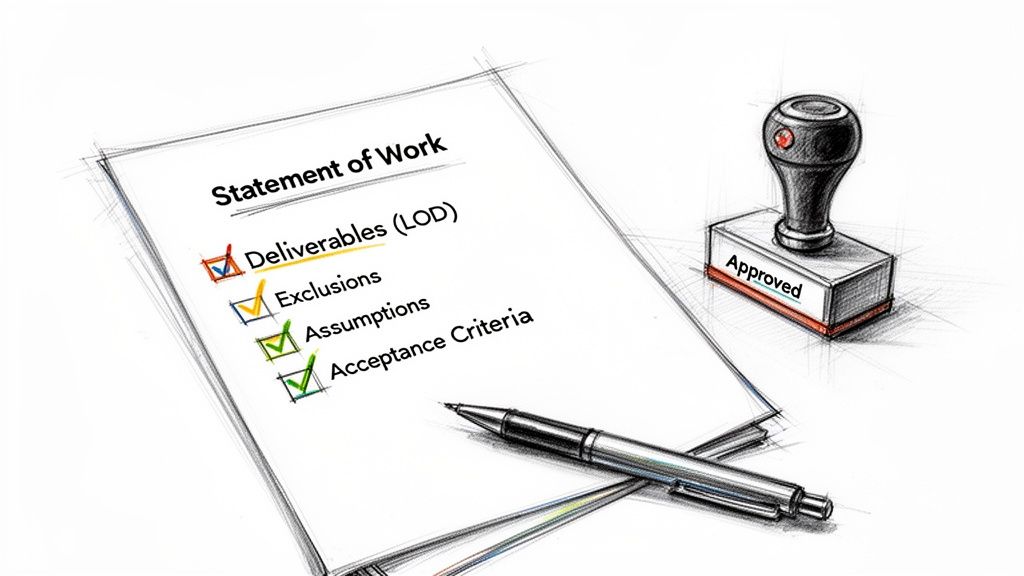
To make sure nothing gets missed, a truly robust scope document needs to address several key areas. Think of it as a checklist for clarity.
| Essential Components of an Architectural Project Scope |
| :— | :— | :— |
| Component | Purpose | Key Questions to Answer |
| Statement of Work (SOW) | Sets the stage by defining the project's "why" and "what." It's the narrative that frames all other details. | What is the overall goal of this project? What specific work needs to be done to achieve it? |
| Detailed Deliverables | Moves beyond just listing drawings. It specifies formats, quantities, and (for BIM) the Level of Development (LOD). | What exactly will be delivered? In what format? To what level of detail for each project phase? |
| Explicit Exclusions | Defines what is not included. This is your first line of defense against scope creep. | What tasks or services are outside the agreed-upon scope? Are 3D renderings, as-builts, or site surveys included? |
| Documented Assumptions | Makes unspoken expectations transparent, turning them into manageable risk factors instead of future problems. | What conditions are we assuming to be true? (e.g., client data availability, site access, review timelines) |
| Acceptance Criteria | Clearly defines what "done" looks like by outlining the standards a deliverable must meet to be approved. | How will we know when a deliverable is complete and successful? What are the specific sign-off requirements? |
By detailing each of these components, you create a firm foundation that supports smoother collaboration and helps streamline everything from design reviews to permitting prep.
The Power of Documenting Exclusions
Of all these components, defining exclusions is where many firms miss a critical opportunity to protect themselves. It’s not enough to detail what you will do; you must be just as clear about what you won’t. This isn't about being difficult—it's about providing absolute clarity to prevent misunderstandings.
An "exclusion" isn't a limitation—it's a boundary. By defining the edges of the project clearly, you give your team the freedom to operate with confidence inside those lines, knowing precisely where their responsibility begins and ends.
For example, your exclusions list might explicitly state that the scope does not cover 3D visualization renderings, as-built documentation, or hazardous material surveys. This simple act shuts down future arguments over "what was assumed" and turns a potential conflict into a straightforward change order discussion.
Building a Resilient Framework
Ultimately, a strong scope document is your project's constitution. It lays out the rules of engagement and provides the baseline against which all changes are measured. To make your scope even more robust, consider running exercises like Mastering Project Pre-Mortems to identify and plan for risks before they ever materialize.
The discipline of building and adhering to a detailed scope is a hallmark of production maturity. It’s how you shift from a reactive project management style to a proactive one, ensuring operational consistency and predictable delivery. This clarity doesn't stifle creativity; it creates the stable framework that allows your team to perform at its best.
Your Next Step Toward Project Predictability
The real battle scars from any project rarely come from tricky design challenges. They come from fuzzy communication. The stress, the late-night rework, and the shrinking profit margins almost always trace back to unstated assumptions—the kind that fester in the quiet gaps left by a poorly defined project scope.
We’ve seen the real-world consequences firsthand: the coordination chaos, the arguments over vague BIM deliverables, and the slow bleed of profits from one “minor” change after another. Every one of those scenarios started with a failure to draw clear lines in the sand from day one. A well-crafted scope document isn't just a contractual formality; it’s your best tool for production control.
Shift from Reactive to Proactive Control
A detailed project scope doesn't box you in. Quite the opposite—it creates the stable framework that lets your team move forward with confidence and clarity, eliminating the friction that grinds projects to a halt. When everyone knows the rules of engagement, your team can finally focus on execution. We’ve watched projects pull themselves back from the brink midstream simply by pausing to rewrite the scope and realign the team.
This discipline is the bedrock of scalable delivery and predictable outcomes. It's how seasoned firms stop reacting to project fires and start proactively preventing them.
A great scope doesn't just list tasks. Its real job is to forge a shared understanding of what success looks like, wiping out guesswork and aligning everyone from your internal team to your outsourced partners.
To help you turn these hard-won lessons into action, we’ve put together a resource based on years of guiding firms toward this kind of production maturity. It’s a practical tool designed to help you immediately sharpen your scope definition in architecture.
Download our Project Scope Clarity Checklist. Use it to pressure-test your current process and start building the discipline that leads to more predictable, profitable projects. We don’t sell hours; we sell the clarity, systems, and reliable delivery your firm can build on.
Project Scope Questions We Hear All the Time
We get a lot of questions about project scope from firm leaders, project managers, and even builders on the ground. Let's tackle a few of the most common ones with answers rooted in real-world experience, not textbook theory.
What Is the Difference Between a Project Scope and a Statement of Work?
People often use these terms interchangeably, but they serve different functions. The Statement of Work (SOW) is the high-level formal document that gets the project off the ground—it covers the broad objectives, timeline, and deliverables.
The project scope is a much more detailed component that lives inside the SOW.
Think of it this way: the SOW is the handshake agreement that authorizes the project. The project scope is the nitty-gritty rulebook that defines exactly what work will get done and, just as importantly, what won't. The scope is your production control; the SOW is the contractual frame.
How Can You Manage Scope Creep Without Damaging Client Relationships?
This is the million-dollar question. The answer isn't about saying "no" all the time; it's about having a clear change management process from day one and putting it right there in your project scope document. This isn't about being difficult—it’s about creating a transparent system for making decisions together.
When a client asks for a change, you don't have to get defensive. You simply pull out the scope and walk them through your formal process. This usually means creating a change order that spells out the impact on cost, schedule, and resources. Suddenly, a potentially tense conversation becomes a collaborative one about whether the change is worth the trade-offs. Good project scope management is really just good communication.
When Should the Project Scope Be Finalized?
Your initial, detailed project scope needs to be locked in before any real design or production work kicks off. Think of it as a critical go/no-go checkpoint.
But that doesn't mean you carve it in stone and never look at it again. A scope document should be a living guide. You should pull it out and review it at key project milestones. For instance, the jump from schematic design to design development is the perfect time to make sure everyone is still on the same page. As the project gets more detailed, you have to reaffirm alignment to stop assumptions from creeping in between phases.
At BIM Heroes, we see a clear project scope as the bedrock of production control and profitability. If you're tired of ambiguous agreements and want to move toward predictable, profitable delivery, our team is here to help. We don’t just sell hours—we provide the clarity, systems, and reliable execution that make projects successful.
Learn more about our architectural production and BIM consulting services.