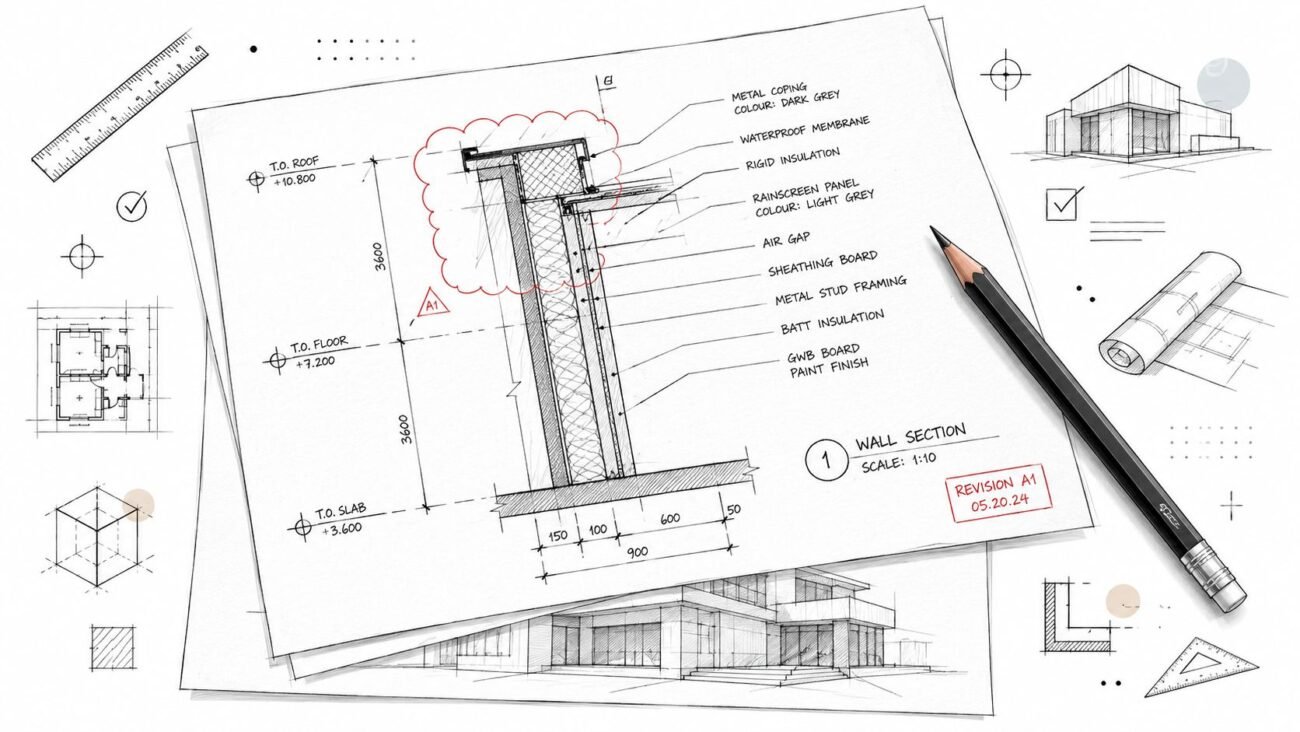
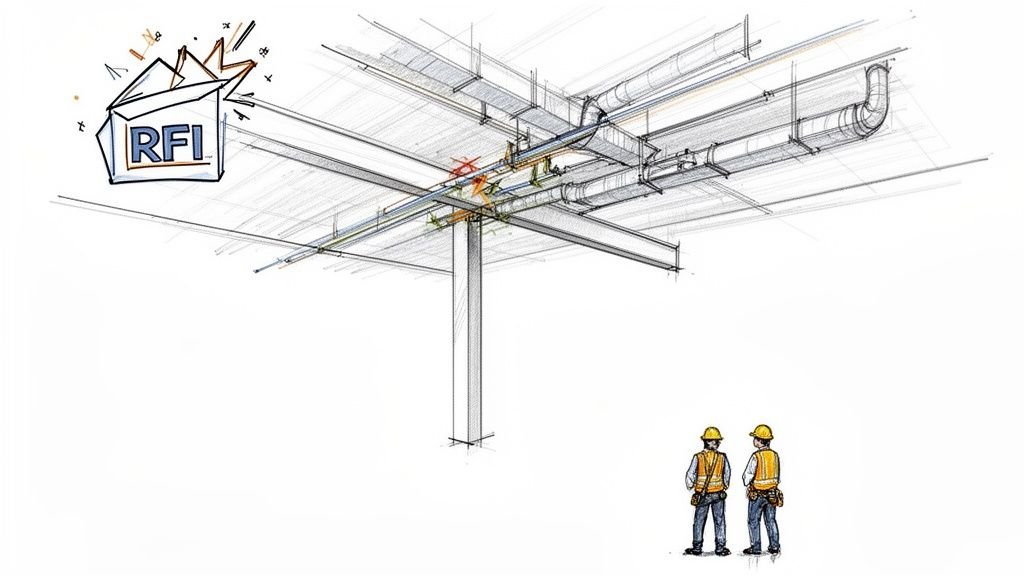
The permit set is out, the drawings looked clean, and the project feels coordinated—on paper. Then the first RFI arrives from the field. Ductwork is hitting a primary beam. Plumbing stacks don't align with the wall cavities. The project that was on track is now facing a cascade of questions, delays, and change orders. It’s not a dramatic failure, just a depressingly familiar one.
These coordination issues are the ghosts in the machine of building design. They are the predictable result of a fragmented workflow where architecture and MEP teams work in separate files, on different schedules, making assumptions that are never confirmed. The result is a project that bleeds margin, not from one catastrophic event, but from a thousand small cuts.
Why This Keeps Happening: The Anatomy of a Breakdown
This isn't about bad engineers or careless architects. It’s about a process that wasn't built for modern, complex buildings. The traditional, siloed workflow—where disciplines pass drawings back and forth like batons in a relay race—is fundamentally broken.
The structural reasons for MEP architectural coordination failure are baked into the system:
- Siloed Files: Architects work in their model, MEP engineers in theirs. Without a live, shared reference, each team is designing against a snapshot in time. A wall moved by the architect last Tuesday might not appear in the MEP model until next week’s background update.
- Staggered Schedules: Architectural design often advances ahead of MEP. This forces engineers to make educated guesses about available space, leading to designs based on unverified assumptions.
- Unconfirmed Assumptions: The MEP team assumes a 24-inch plenum, but the architect has only allowed for 18 inches above the ceiling. This conflict exists for weeks, undiscovered, because there was no decision checkpoint to confirm it.
This disconnect isn't a fluke; it's the standard operating procedure for many firms. The result is a set of drawings that only appears coordinated. The real test comes in the field, where these digital discrepancies become expensive physical realities. Breaking this cycle is the first step toward achieving predictability and protecting margins.
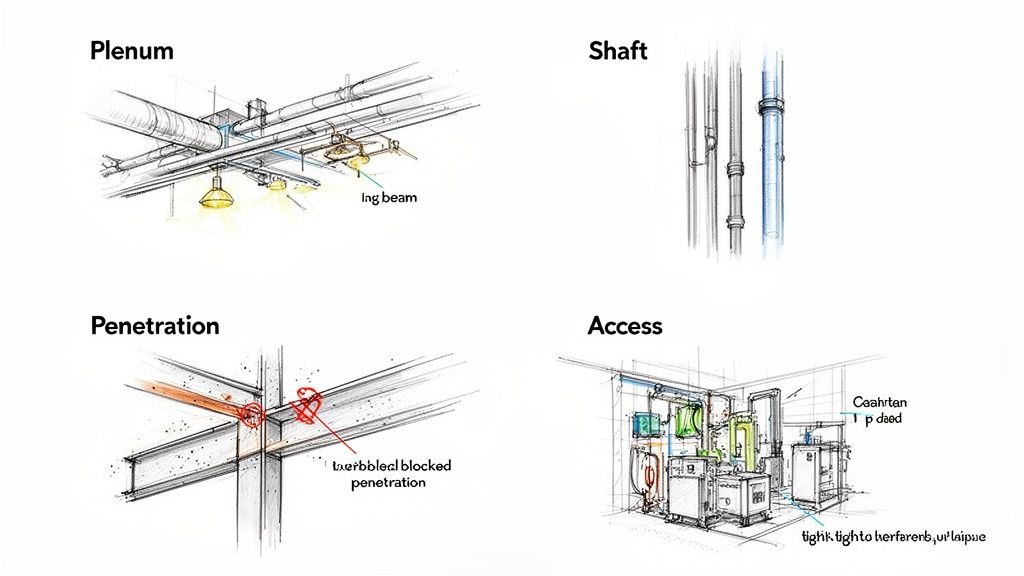
The Four Coordination Failures That Cause the Most Damage
These aren’t theoretical risks; they are the recurring, high-impact failures that show up as RFIs, change orders, and on-site conflicts. They are the direct consequence of disciplines working in isolation. Here are the four breakdowns that cause the most damage to your schedule and budget.
1. Ceiling Plenum Conflicts
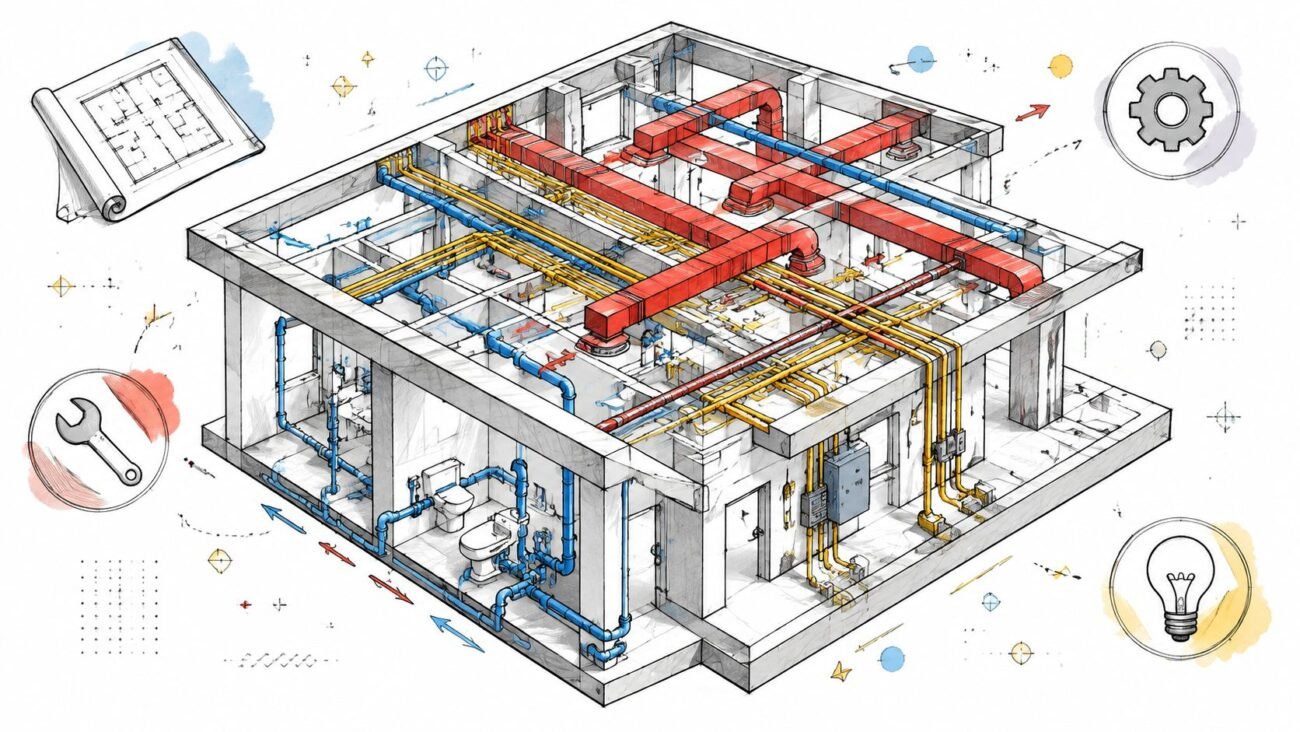
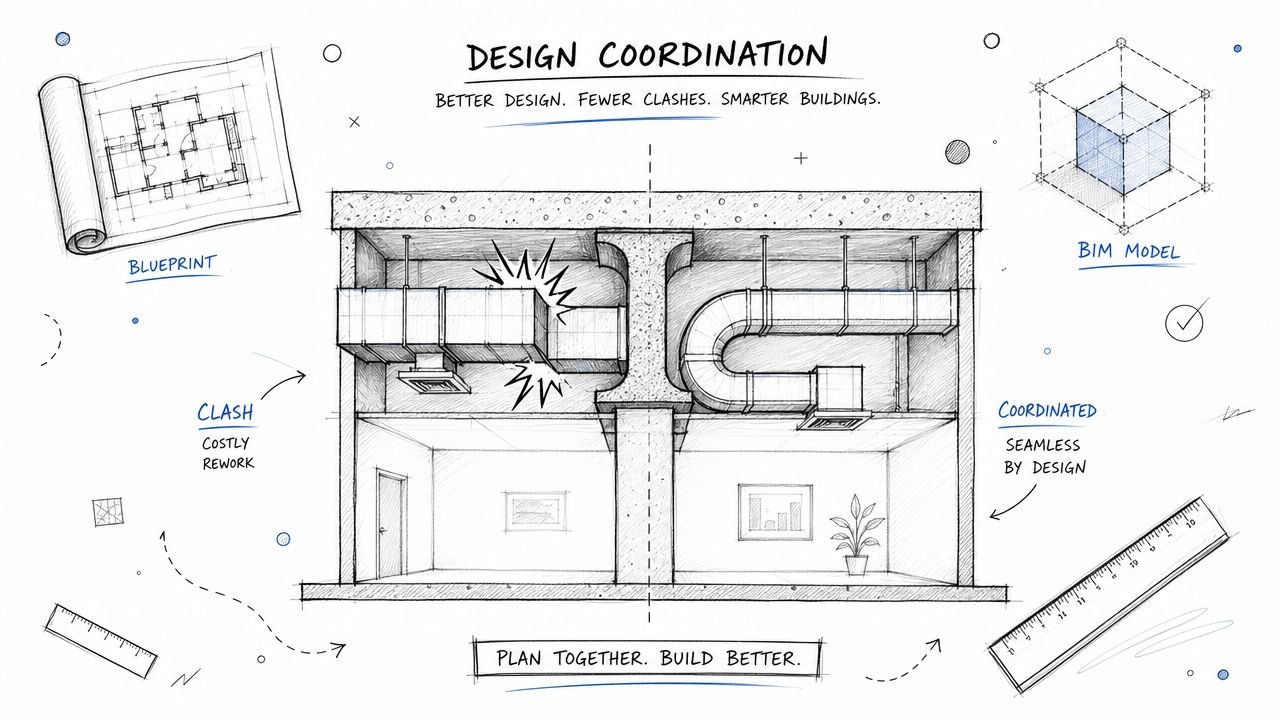
The space above the finished ceiling is the most contested real estate in any building. Ductwork, sprinkler lines, structural beams, lighting, and conduit are all competing for the same 18 inches. The core problem is that nobody owns the plenum. The architect sets the ceiling height, the structural engineer places the beams, and the MEP engineer routes the systems. Each discipline works assuming the others have left them enough room.
This leads to familiar field conditions:
- Ductwork is flattened to fit, compromising airflow and system performance.
- Sprinkler heads are dropped below the ceiling plane, creating an aesthetic mess.
- Light fixtures can’t be installed because a pipe is directly in the way.
Each "field fix" is a compromise that dilutes design intent and adds cost. This is the classic architecture MEP conflict, born from the simple failure to coordinate a shared space.
2. Shaft and Chase Misalignment
Vertical shafts are the building's arteries, carrying essential services between floors. They demand perfect alignment from the foundation to the roof. But what happens when the architectural team moves a wall on the third floor to improve a unit layout, and that change isn't immediately reflected in the MEP model?
You get a misaligned shaft. The plumber arrives on-site to find their pipe stack now runs through a newly framed wall. The mechanical contractor discovers their duct riser won't fit. This isn't a measurement error; it’s a version control failure. When teams work from static, outdated reference files, they are designing in the dark, and shaft misalignment becomes almost inevitable. Fixing it on-site means cutting concrete, reframing walls, and absorbing costly delays.
3. Structural Interference
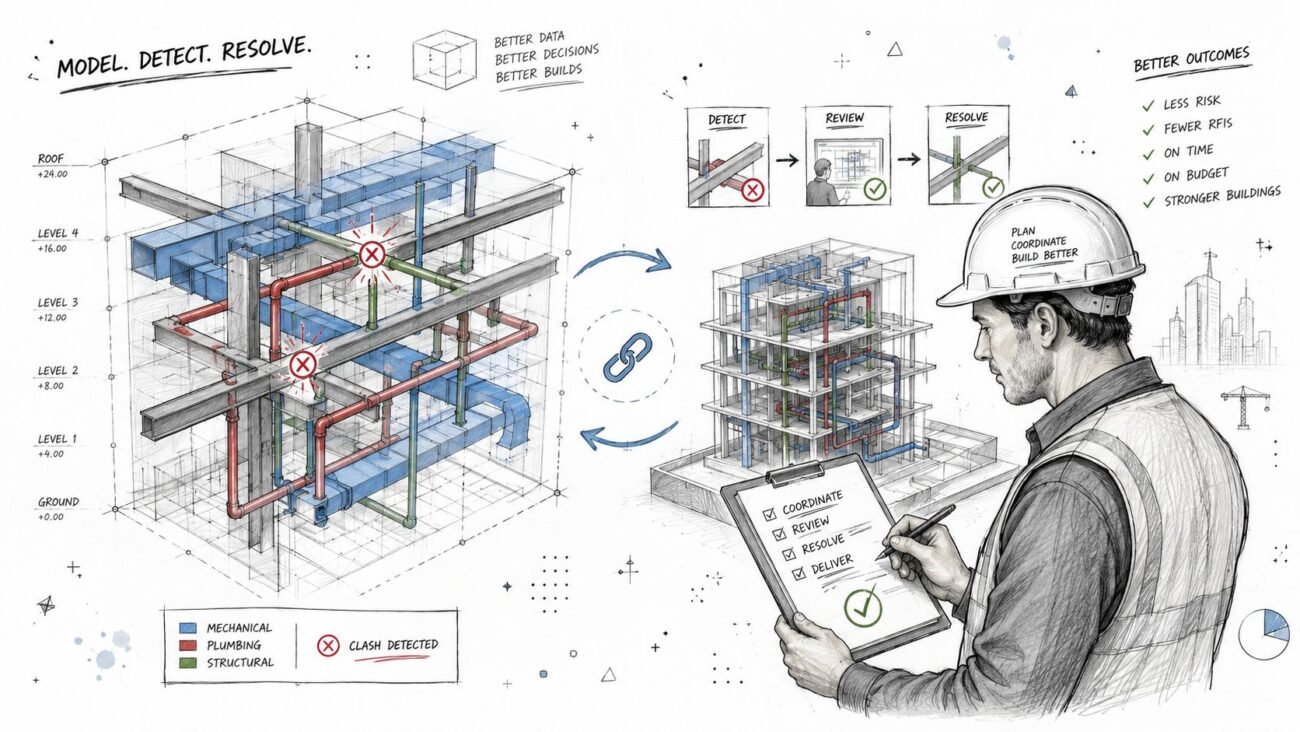
One of the most disruptive MEP coordination issues occurs when mechanical systems and the building’s structure try to occupy the same space. An MEP engineer, working without a live structural model, routes a large duct straight through a primary beam. In their isolated 2D drawing, it looks fine. In reality, it’s a critical conflict.
When discovered in the field, all work stops. The question becomes: can we penetrate the beam? This requires an urgent structural review, and the answer is often a hard "no," especially with post-tensioned slabs or lateral bracing. The scramble for a workaround is always expensive and results in a compromised design—lower ceiling heights, inefficient routing, and a flurry of change orders. A basic clash detection BIM process would have flagged this in minutes.
4. Equipment Access and Clearance
Designers often solve the puzzle of fitting equipment into tight spaces but forget about the people who have to maintain it for the next 30 years. Mechanical equipment, from VAV boxes to pumps, requires specific clearances for service and replacement, as mandated by code and manufacturer specs.
Yet, it’s shockingly common to see an access panel for a critical valve hidden behind permanent millwork, or a fan coil unit jammed into a space with no room for a technician to work. This happens when the team is focused solely on the "Day 1" installation, not the building's lifecycle. The consequence isn't an immediate RFI, but a long-term operational failure for the owner and a black eye for the design team's reputation.
Why Nobody Admits To It
If these failures are so common, why don’t we talk about them more honestly? Because the professional and contractual dynamics of a project discourage it. When a coordination failure surfaces, the focus is on a quick fix, not a root cause analysis.
Each discipline assumes the other is responsible for overall coordination. No one wants to be the one who admits they missed something. The RFI gets resolved quietly, the change order is processed, and the project moves on. There's rarely a post-mortem to ask why the clash happened. As a result, the systemic flaw—the broken handoff or lack of a decision checkpoint—is never addressed. The same MEP coordination issues are repeated on the next project because the firm never fixed the process that caused them. This cycle of quiet fixes normalizes dysfunction and accepts margin erosion as a cost of doing business.
What BIM Coordination Actually Catches
This isn’t about the technology of BIM; it’s about what a coordinated process makes visible. A truly coordinated model isn’t just a 3D picture; it’s a single source of truth that surfaces conflicts before they have a price tag.
Instead of abstract benefits, think about the tangible problems a coordinated model solves:
- It reveals the actual clearance in a ceiling plenum, showing exactly how much space is left after structure, fireproofing, and the largest duct are in place.
- It visualizes the real path of a plumbing stack from the ground floor to the roof, confirming its alignment with architectural walls on every level.
- It verifies that a 36-inch clearance zone around a piece of mechanical equipment is truly clear, preventing an access violation before the walls are even framed.
A coordinated model turns abstract assumptions into concrete, verifiable geometry. It replaces guesswork with certainty.
The Cost of Catching It Late vs. Early
The difference between a profitable project and a money pit often comes down to one question: when did you find the problem?
A coordination conflict caught during a model review costs a few hours of design time. The MEP and structural engineers get on a call, find a new route for the duct, and the model is updated. The cost is minimal.
That same conflict discovered on-site, after the steel is erected and ductwork is fabricated, is a financial disaster. It costs a stop-work order, idle labor, emergency engineering fees, and a change order for rework. It costs schedule days you can never get back. It costs a difficult conversation with the client about who is going to pay. A problem found in the model is a task. A problem found in the field is a crisis.
What Better Coordination Looks Like in Practice
Fixing this doesn't require a massive technology investment. It requires a shift in behavior and a commitment to a few disciplined production habits.
- Shared Reference Models: All disciplines must work from a live, cloud-based reference model. When the architect moves a wall, the MEP engineer sees it immediately, not next week.
- Documented Assumptions: Before MEP design begins, hold a single meeting to agree on critical dimensions like plenum depths and shaft locations. Document these in a project kickoff file that everyone acknowledges. This simple act eliminates a huge source of conflict.
- One Coordination Review Before Permit: Make one interdisciplinary model review a mandatory gate before issuing drawings. The sole purpose is to find conflicts when they are still cheap to fix.
- Own the Plenum: Assign a single person—a BIM lead, project architect, or production manager—as the "owner" of shared spaces like plenums and shafts. Their job is to be the air traffic controller, resolving spatial disputes before they become RFIs.
These aren't aspirational goals; they are practical, field-tested behaviors that create operational consistency.
The Uncomfortable Truth
The coordination failures that drain profit and frustrate teams are common, predictable, and largely preventable. The uncomfortable truth the industry rarely admits is that these aren’t isolated mistakes; they are symptoms of a broken process. The firms that solve this aren't just using better software—they're having earlier, more honest conversations. They’ve established a production discipline that values clarity over speed and turns coordination from a reactive headache into a competitive advantage.
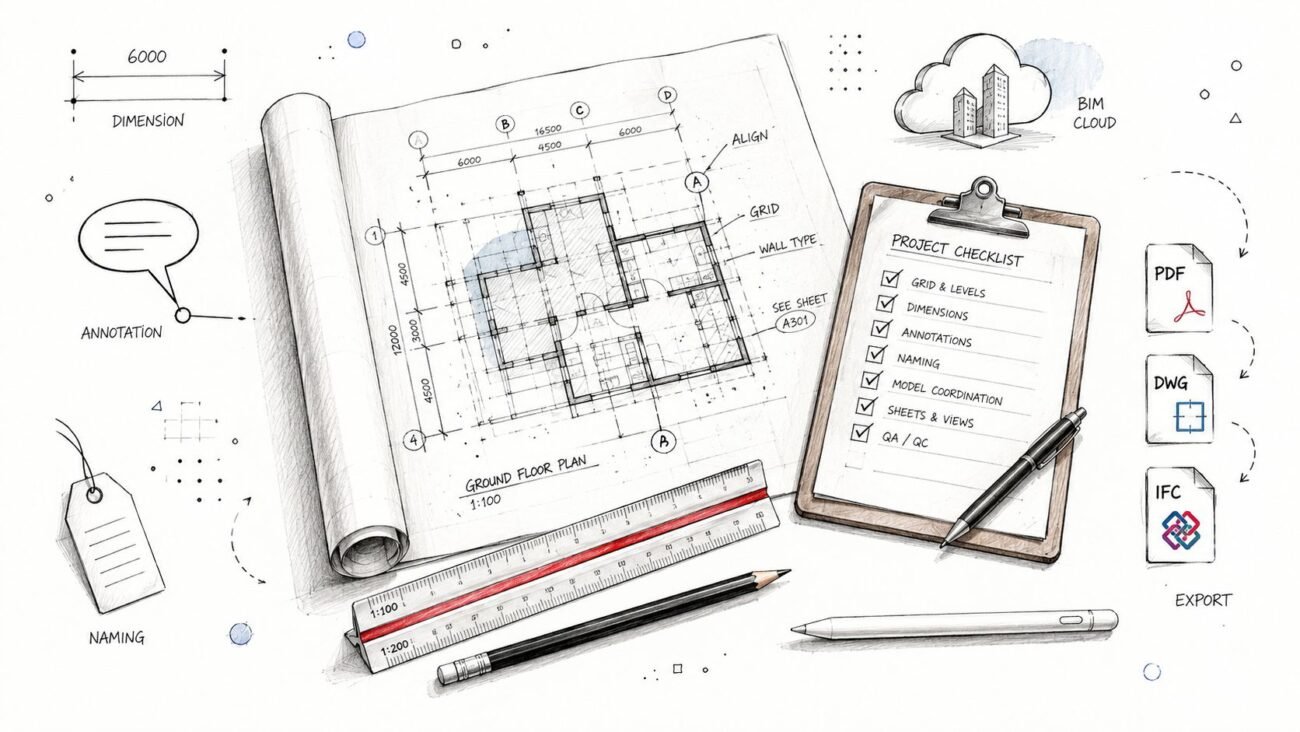
Ready to diagnose the gaps in your own process? Our Coordination Gap Checklist is a simple framework designed to help you identify the specific weak points in your workflow and start building a more predictable, profitable delivery system.