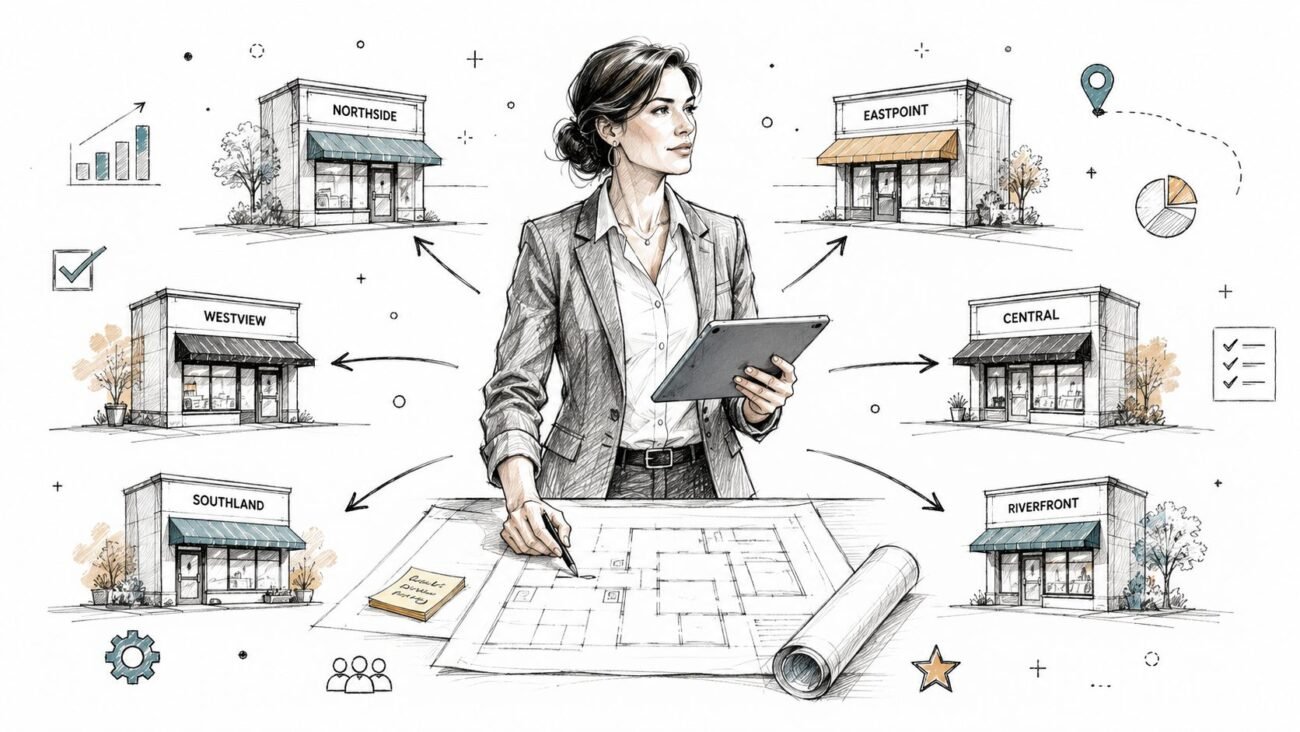
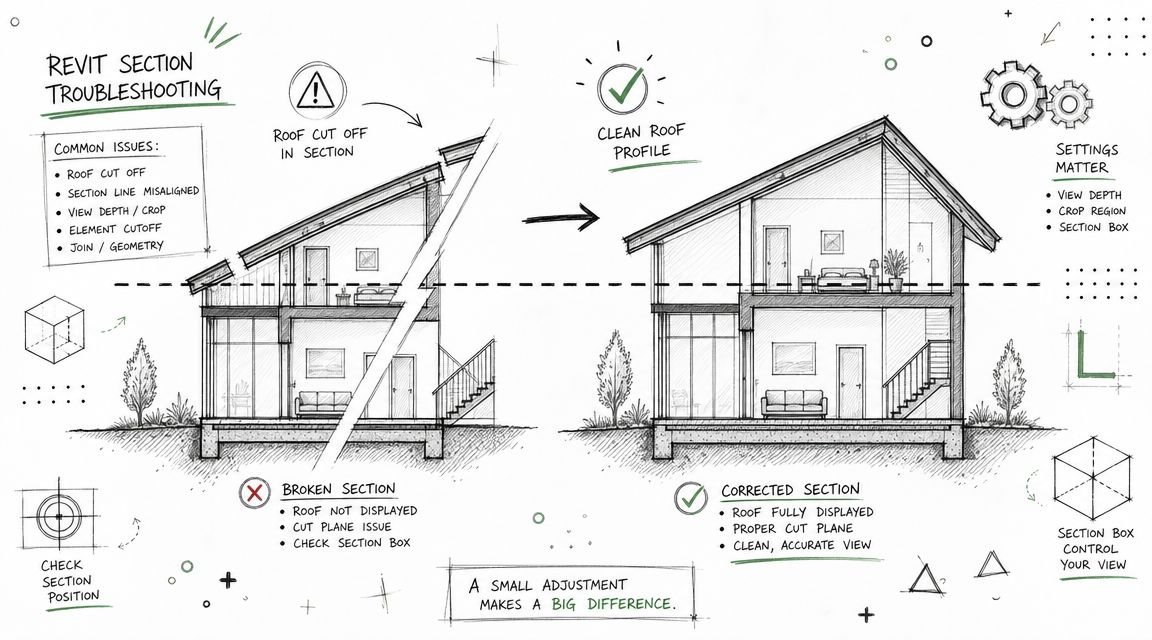
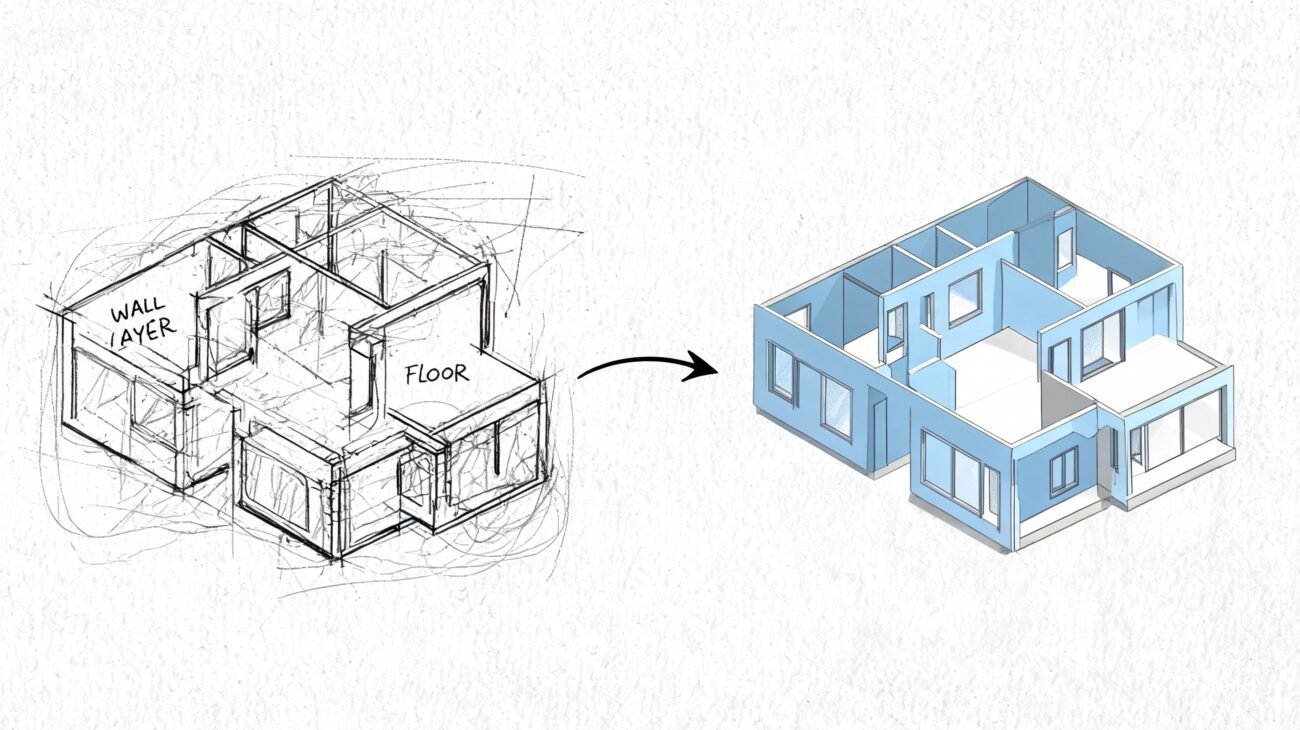
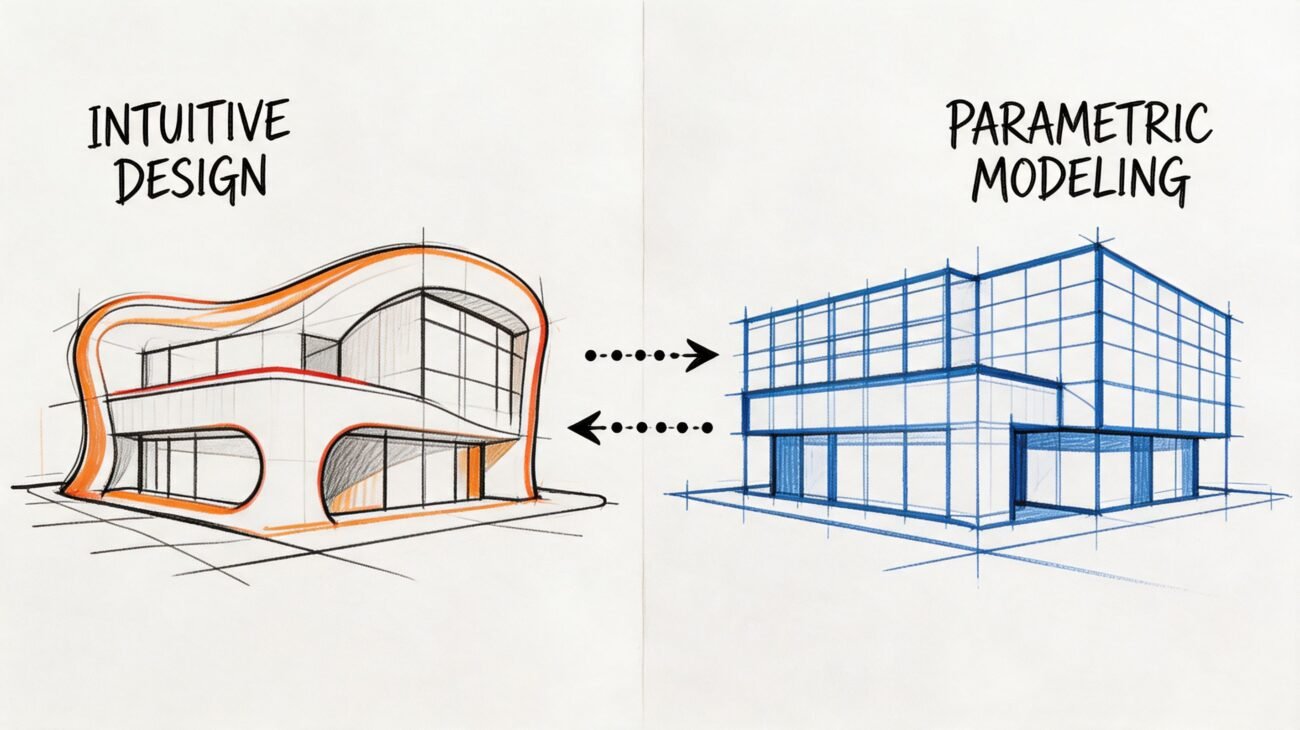
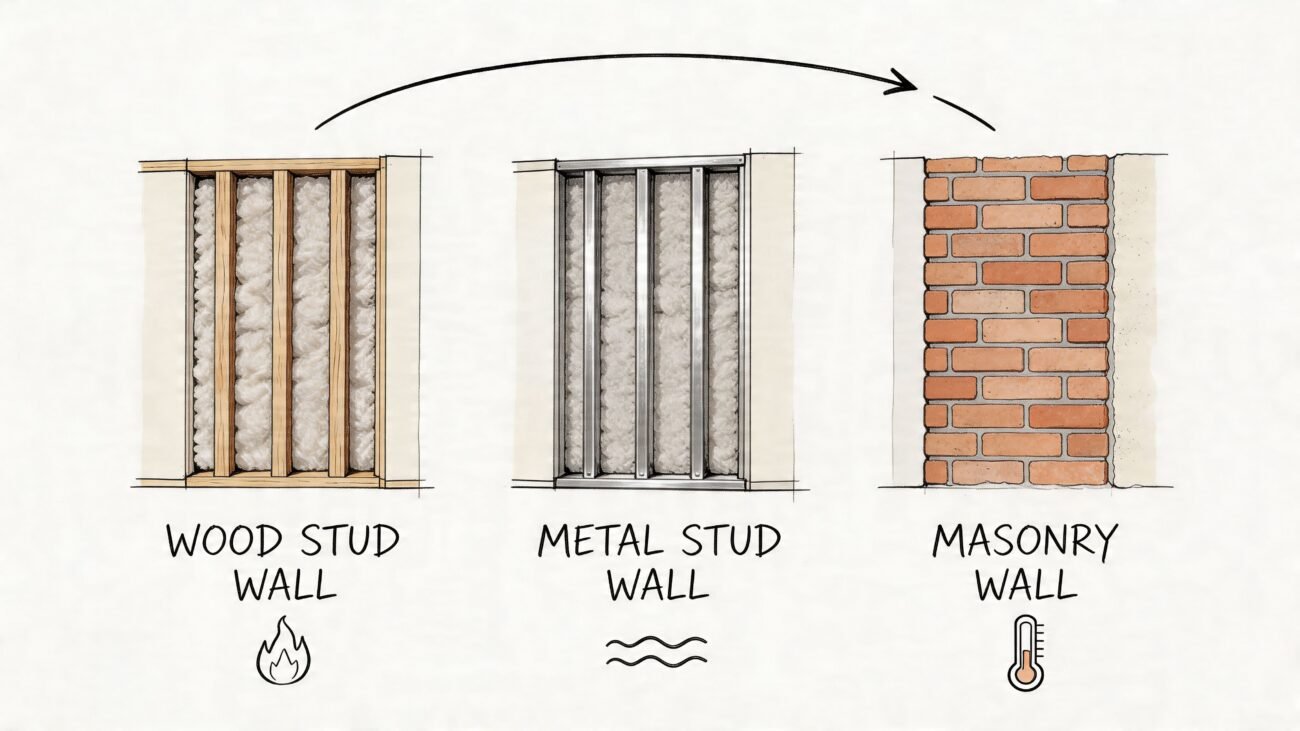
The RFP lands on your desk. It’s the perfect client, the right project type, and the fee is solid. Everything about it screams "win"—except for one nagging thought: your team is already running at full throttle.
This is a crossroads every principal at a small or mid-sized firm knows well. You're left with two equally bad choices. You can politely pass, handing a golden opportunity straight to a competitor. Or, you accept the project and watch your best people get crushed under the workload, risking burnout to keep all the plates spinning. Neither outcome builds a sustainable practice.
This isn’t about cutting costs; it’s about changing the fundamental economics of how your firm bids and takes on work. When you outsource CAD drafting services, you're not just offloading tasks. You're expanding what you can say yes to.
The Capacity Ceiling Most Firms Don't Talk About
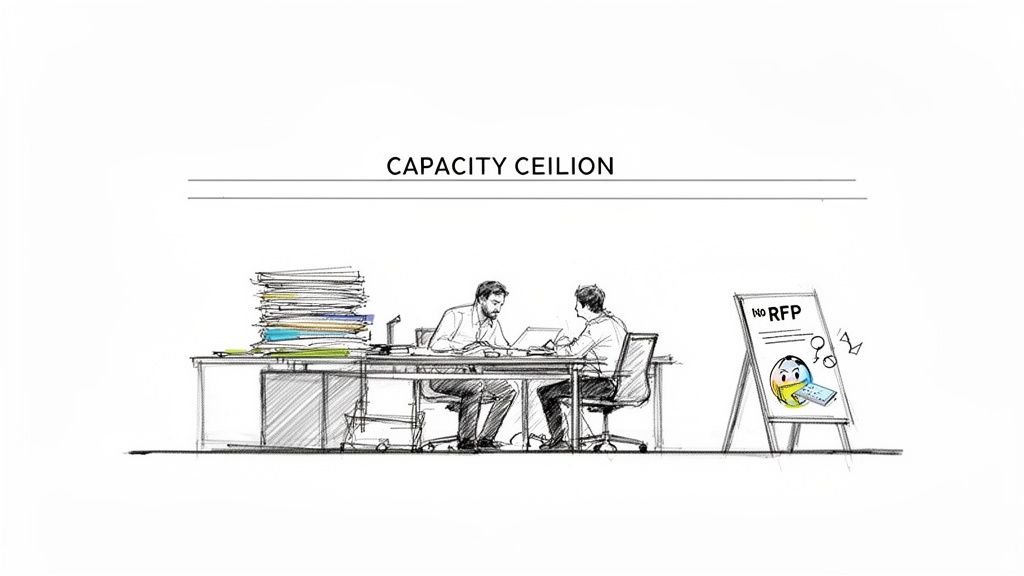
Most firms operate with a fixed in-house production team, which creates a hard ceiling on the amount of work they can realistically handle. Hiring to meet peaks is a notoriously volatile strategy. It piles on significant overhead—salaries, benefits, software licenses—that quickly becomes a liability when the inevitable slow periods hit.
The result is that principals unconsciously start calibrating their business development not to what the market offers, but to what their current team can absorb. This is the real constraint on growth—not lead flow, not relationships, not fees. It's the production capacity of your architecture firm.
This reality forces firms into a defensive crouch. Instead of strategically chasing growth, the focus shifts to managing a finite pool of resources. Projects get evaluated through the lens of team availability first and strategic fit second. It’s a feast-or-famine cycle that punishes ambition.
How Outsourcing Changes the Bid Calculus
When production can flex on demand, the decision to bid shifts from "do we have the bandwidth?" to "is this the right project?" This is a fundamental change in how you approach business development. Your bid strategy is no longer dictated by the frantic juggling of internal schedules but by a proactive pursuit of the most profitable, brand-building work you can find.
The mental shift is profound. You stop thinking about your team's availability and start evaluating opportunities based on their actual merit: strategic fit, client quality, and margin potential.
This pivot away from resource management lets principals focus on what truly drives the business forward:
- Client Relationships: Nurturing existing partnerships and building new ones without the constant worry of over-promising on delivery.
- Strategic Growth: Intentionally pursuing projects in new markets or at a larger scale that were previously off-limits.
- Design Excellence: Protecting your senior team's time for the high-value creative work where their expertise matters most.
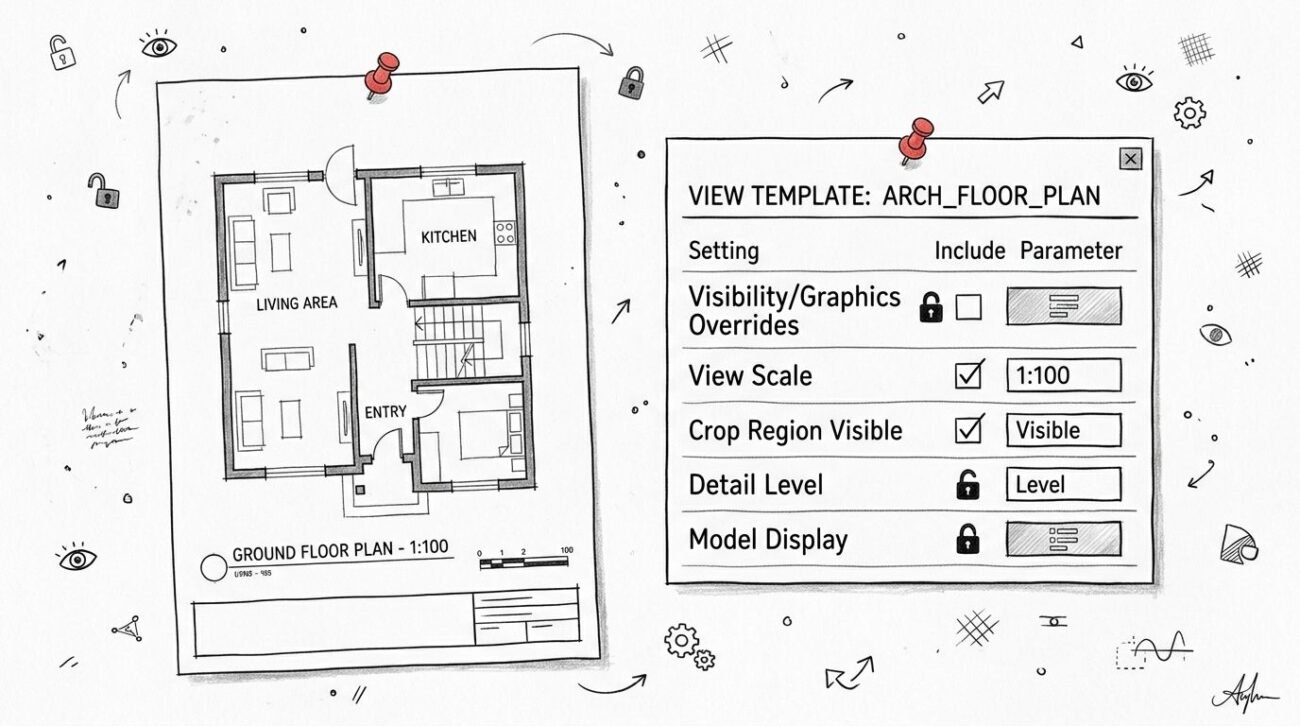
Thinking of an offshore drafting team as a plug-and-play solution is a mistake. The goal is to build a dependable partner that acts as a true extension of your studio. This requires a disciplined approach to process, from template discipline and QA processes to clear decision checkpoints. You aren't just buying hours; you are investing in a reliable, scalable production engine that runs on your standards and delivers predictable results.
Four Ways Firms Use Outsourced Production to Compete Differently
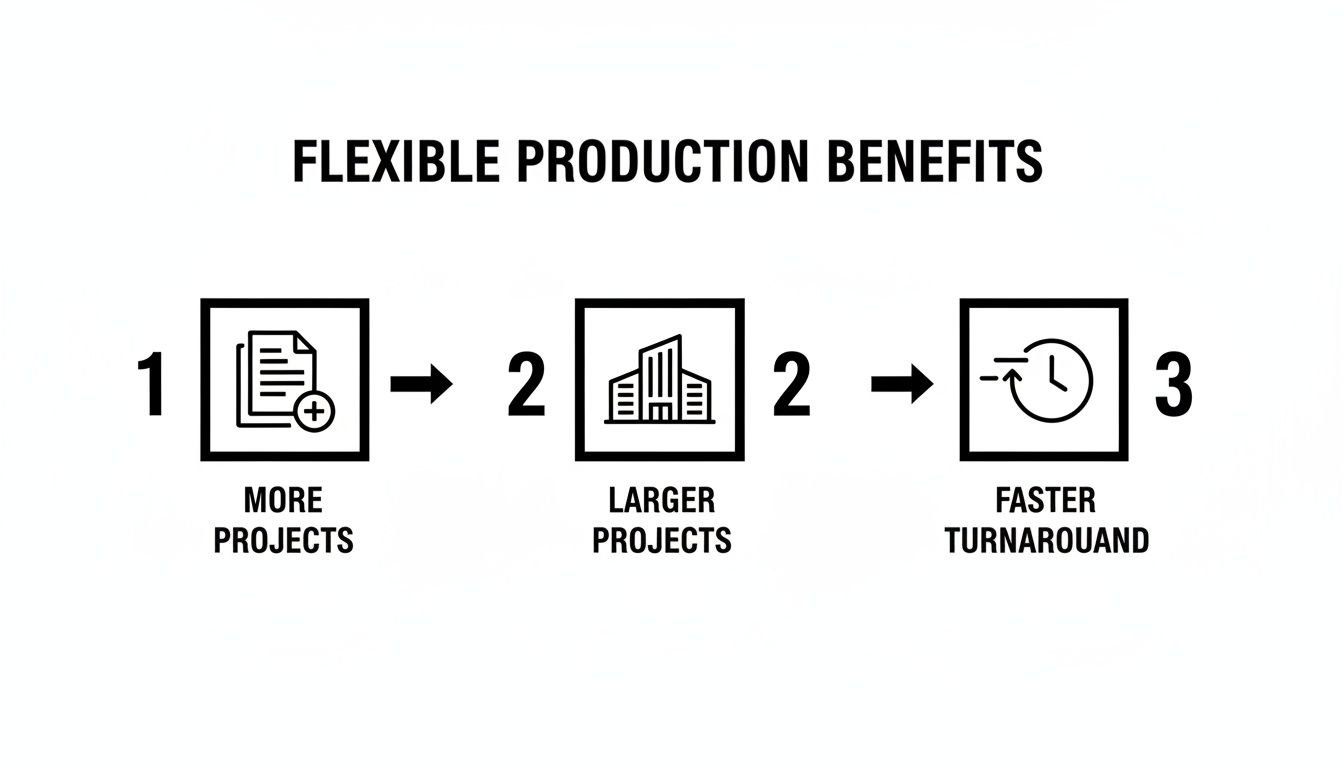
Firms that master this don't just get work done cheaper. They use their newfound agility to turn production from a cost center into a competitive advantage.
1. Taking on More Projects Simultaneously
The most immediate win is the ability to run multiple projects in parallel without burning out your core team. With a scalable delivery pod for outsourced architectural production, you can confidently take on that third, fourth, or even fifth project. Your in-house experts stay focused on project setup, design intent, and client management, while the sheer volume of production—drawing sets, detailing, and documentation—is handled by your external partners.
This model demands a new kind of production maturity. Success hinges on a rock-solid handoff process, clear decision checkpoints for quality assurance, and a single point of contact to manage communication and prevent RFIs.
2. Bidding Larger Project Types
How many times has your firm passed on a big project, not because you lacked design talent, but because you knew the documentation volume would bury you? That production bottleneck is a barrier to entry for many small and mid-sized firms. Flexible production capacity kicks that barrier down. Suddenly, a large mixed-use project or multi-family housing development isn't out of reach.
The real barrier isn't talent; it's documentation bandwidth. Outsourced production gives you the confidence to cross that threshold.
This lets you punch above your weight class, opening up new markets and client types that can transform your portfolio and protect your margins. Your core team can focus on the critical design and coordination challenges, knowing the production engine can handle the drawing volume, from initial CAD drafting all the way to a full BIM workflow.
3. Faster Turnaround as a Differentiator
In a tight bid between two firms of similar caliber, the client's decision often boils down to speed. The ability to deliver a permit set weeks ahead of the competition is a huge advantage. An outsourced production team, especially one in a different time zone, can dramatically compress your project timelines.
This isn’t about rushing; it’s about creating a 24-hour work cycle. The work literally gets done while your team sleeps. Redlines submitted at the end of your day in the USA are incorporated overnight and ready for review the next morning. Firms that master this can market speed as a key differentiator—a tangible value proposition that resonates with clients under pressure. The strategic advantages are well documented; the data on CAD outsourcing shows how this model enhances operational consistency.
4. Protecting Senior Staff for Design and Client Work
This is perhaps the most significant long-term benefit. Your most expensive people—principals and senior project architects—should not be spending their days drafting details or picking up redlines. Their value is in design innovation, client strategy, and solving complex problems.
Every hour a senior architect spends on production is an hour they aren't spending winning the next project. When you outsource CAD drafting services, you systematically shift that lower-margin production work to a more cost-effective resource. This frees up your senior staff to focus on high-value, high-margin activities, directly improving your firm's margin profile.
What Firms Get Wrong When They Start Outsourcing
Bringing in an outsourced team is a smart move for scaling, but it’s not a magic wand. If you think you can just toss designs over the wall and get perfect drawings back, you’re setting yourself up for a world of pain. But these problems aren’t a failure of the outsourcing model. They’re predictable friction points that arise from weak processes.
The firms that nail this treat their outsourced partners not as vendors, but as an extension of their own studio—a remote team that needs clear structure and solid communication to succeed.
Handoff Quality and Drawing Standards
The most common frustration is getting a drawing set back that just feels wrong—mismatched line weights, incorrect notation, or a messy layer structure. This happens because firms don’t properly transfer their CAD or BIM standards.
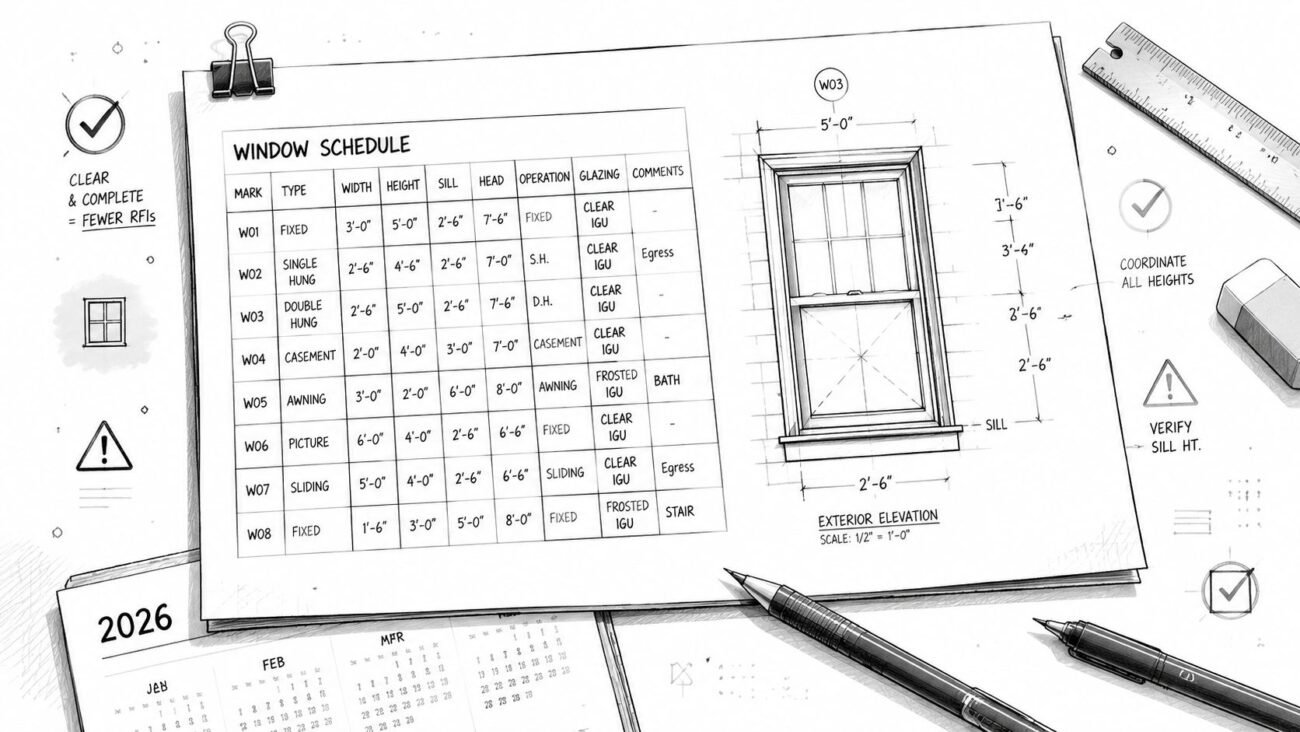
The Fix: Package your entire discipline into a starter kit. Include title block files, a complete library of your standard details and families, and a simple cheat sheet explaining your layering and annotation styles. Investing a few hours here will save hundreds of hours in rework. A clean, unambiguous handoff is the single best way to prevent RFIs and keep a project on track.
Revision Communication and Time Zone Coordination
Managing revisions across different time zones can become a nightmare without a system. Vague feedback or conflicting redlines will trap you in a cycle of confusion and rework. The discipline you'd apply with Construction Change Order Management Software needs to be applied to your internal revision workflow.
The Fix: Be ruthless about structuring communication. Appoint a single point of contact on both sides, consolidate all internal feedback into one set of markups, and schedule non-negotiable daily or weekly check-ins to review progress and build a strong working relationship.
Success in architectural production and outsourcing is less about finding the cheapest labor and more about building a dependable system that delivers consistency. According to outsourcing specialists at Personiv, this flexibility and process discipline are core advantages beyond simple cost-cutting.
The Right Projects to Outsource First
Jumping into architectural drafting outsourcing doesn't mean you should immediately hand over your most complex design work. That’s a quick way to create friction. A smarter move is to start with tasks that are repetitive, clearly defined, and require less subjective interpretation.
This isn't about a lack of trust—it’s about building it methodically. By starting with the right kind of projects, you give both teams the breathing room to nail down handoff procedures, template discipline, and communication workflows.
Here are some excellent starting points:
- Redline Incorporation: Taking your team’s markups and turning them into clean CAD or BIM files is a perfect first step.
- Permit Drawing Packages: Once the core design is locked in, an external team can take over developing the full permit set for prepping applications.
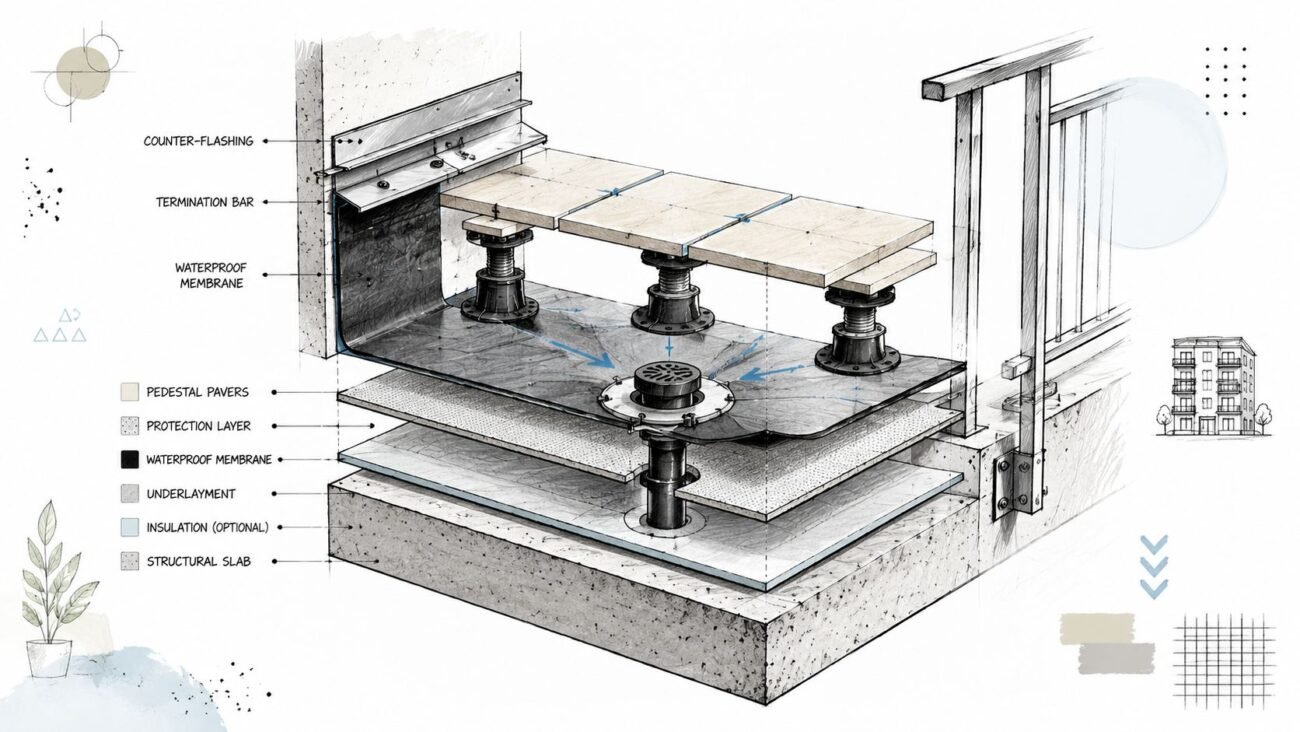
- Construction Details: Having an offshore drafting team create, clean up, or standardize your detail library is a great, low-pressure way to align on quality and standards.
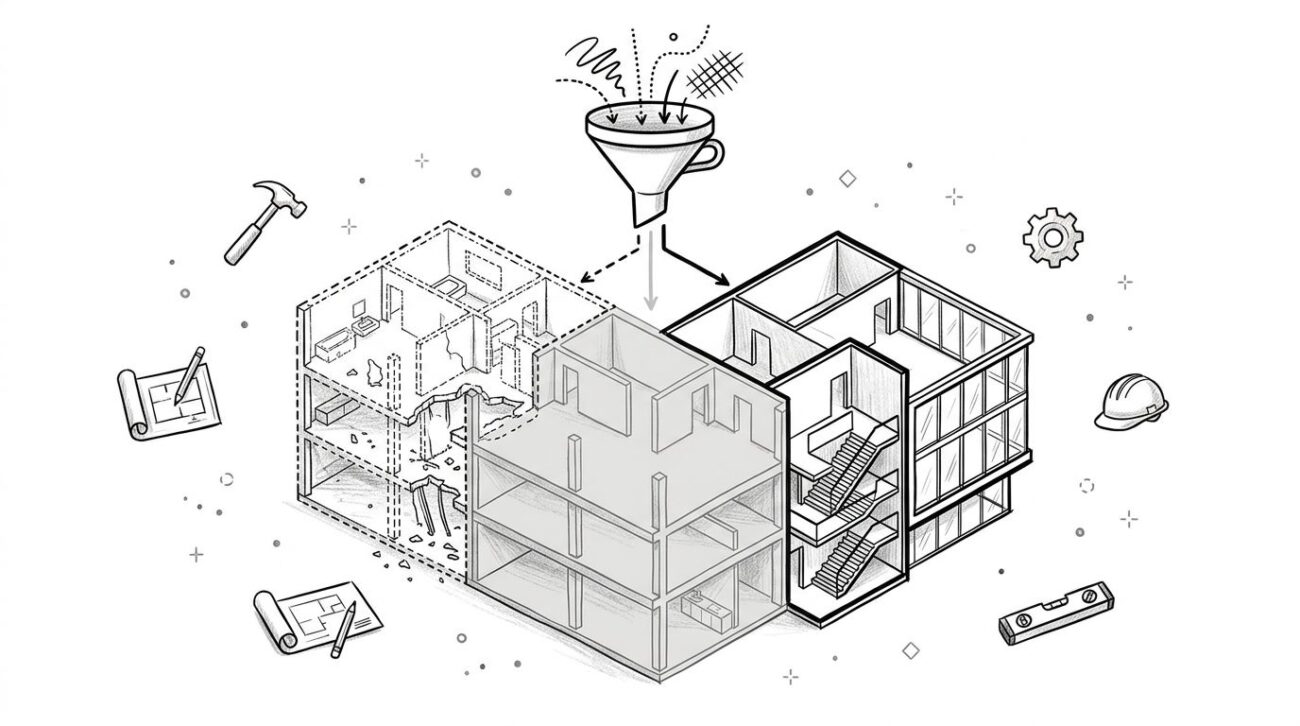
- As-Built Documentation: Turning point cloud scans or field markups into clean as-built models and drawings is an ideal, process-driven task.
The goal with your first project is simple: get high-quality work done and prove the process is solid. As your teams get in sync, you can move from CAD drafting to more integrated BIM workflows. You can learn more about structuring these kinds of arrangements by exploring our full suite of architectural services. Insights on leveraging this expertise on alcads.com confirm that starting with well-defined documents is a practical way to immediately benefit from a specialized skillset.
How to Evaluate Whether the Economics Work
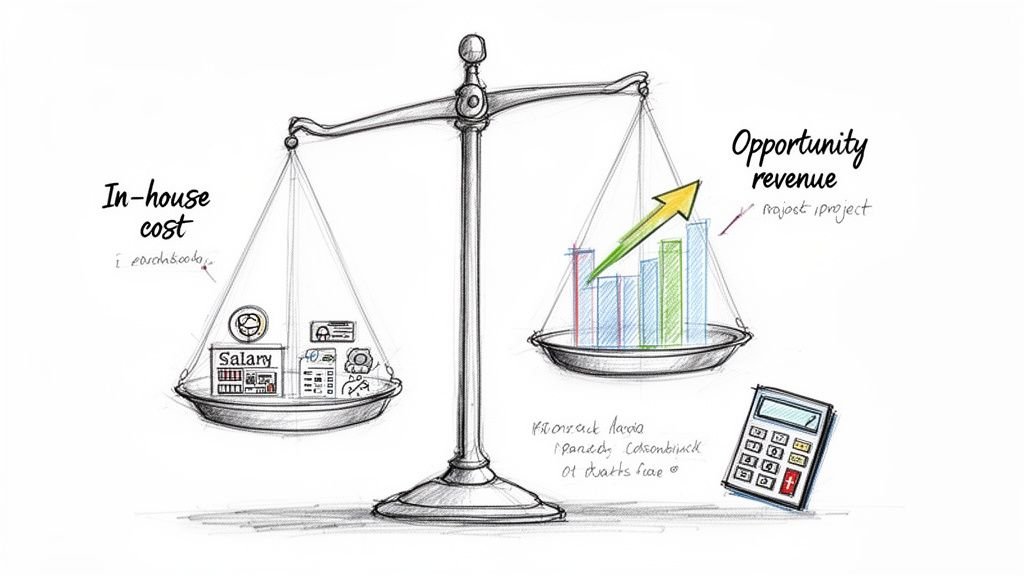
The real financial win isn’t about shaving a few dollars off an hourly rate. It's about changing your firm's capacity to generate revenue. To see the true economic impact, you need to stop thinking like a project manager and start thinking like a CFO.
Frame the decision around these questions:
- What does an in-house production hour actually cost? Get honest about the "fully loaded" cost, including salary, benefits, overhead, software, and non-billable time. Your $45/hour drafter might actually cost the firm closer to $90/hour.
- What's the fee recovery on a project you declined last quarter? That lost revenue is the opportunity cost of having a fixed production team. It's a real number that hits your bottom line.
- What would one additional concurrent project mean to annual revenue? For most firms, the answer is huge. That single extra project, made possible by a scalable outsourced architectural production team, could easily add six figures to your top line.
The most expensive drafter is the one you don't have when you need them. The cost isn't what you pay for production; it's the revenue you forfeit.
This perspective reframes the entire decision. While you can read more on these cost comparisons at optimarprecon.com to get a baseline, the real prize is revenue growth, not just trimming expenses. This is how you protect your margins and deliver operational consistency. And as we've explored before, this is just one of the ways that how BIM outsourcing reduces project costs.
Outsourcing Isn’t Cheaper—It’s More Capable
The firms that get this right—the ones that build this flexible muscle before they’re desperate—are the ones that can confidently say “yes” when that perfect project lands on their desk. They aren’t trapped by a fixed team size or the fear of burning out their key people.
When production becomes an elastic resource, your bidding strategy transforms from a gamble into a calculated move. This isn’t about chasing cheaper hours; it's about investing in predictability and production maturity. It’s about building a system that protects your senior talent, keeps your operations consistent, and unlocks revenue from projects that were previously out of reach. The strategic value is similar to the advantages gained from the top 9 benefits of managed IT services.
It lets you focus on what you do best—design excellence and client relationships—knowing the documentation is handled. If you're starting to imagine what a more predictable production system could mean for your firm, a good place to start is by exploring our approach to architectural production and outsourcing.
Building a scalable production system starts with a clear-eyed look at your current processes. If you're ready for a conversation centered on developing a framework for predictable delivery, reach out to us. We help firms build the systems that let them say yes.