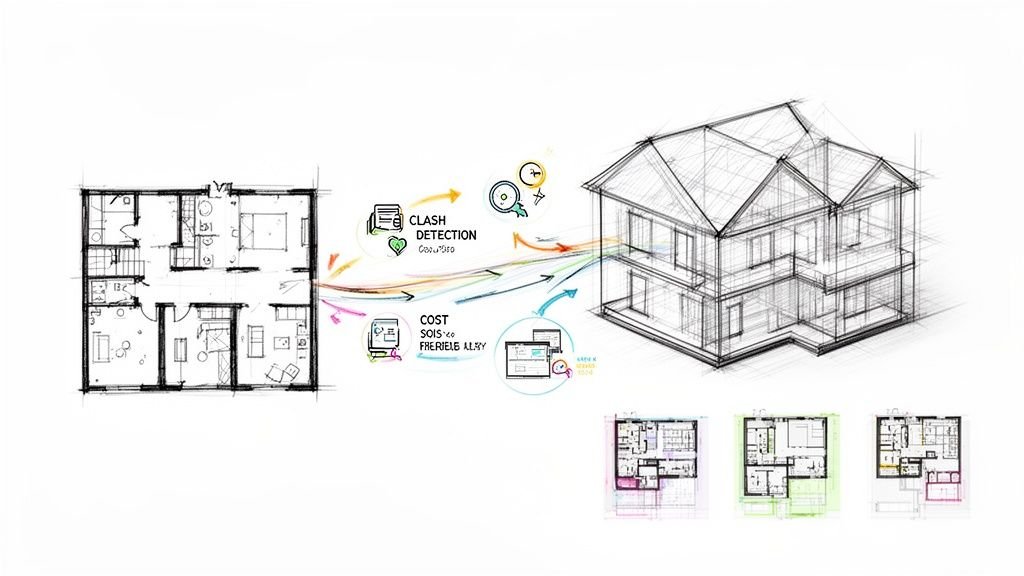
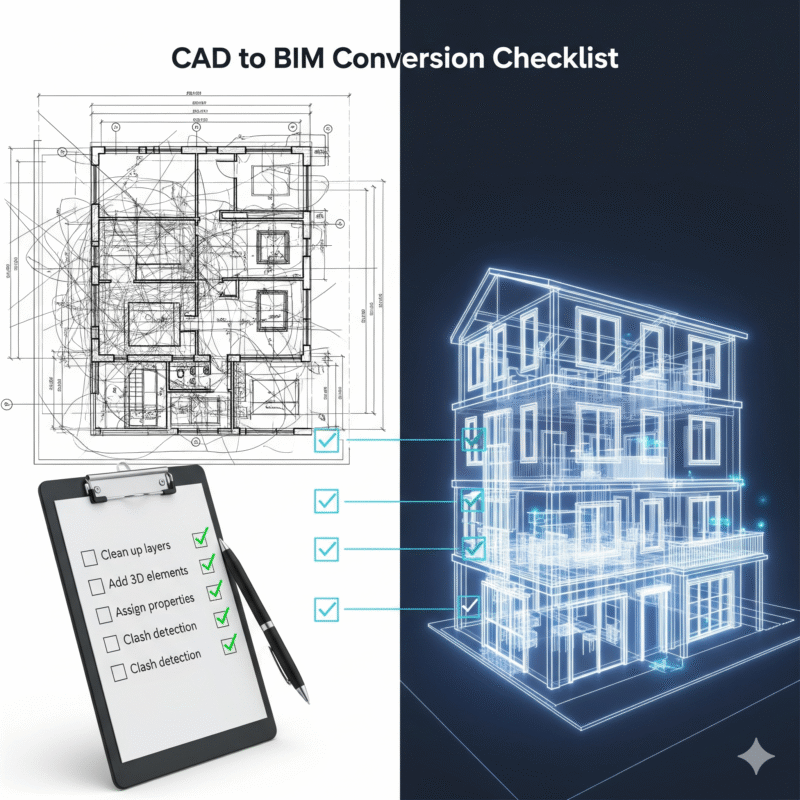
Architecture outsourcing isn't about finding cheaper drafters. It's about embedding a strategic production system into your firm to lock in predictable delivery and protect your margins. This is a fundamental shift from reactive staffing to proactive systems that build real operational consistency.
Rethinking Architecture Outsourcing Beyond Staffing
For too long, the conversation around architecture outsourcing has been stuck on cost-cutting and temporary staff augmentation. That perspective misses the real opportunity. A true partnership isn’t about selling hours; it’s about delivering clarity, disciplined systems, and reliable output that becomes a core part of your operational strategy.
Think of it less like hiring a freelancer and more like installing a precision assembly line for your design work. This approach is what moves a firm from chaotic project cycles to a mature, predictable delivery engine. The focus shifts from just getting tasks done to improving the entire production ecosystem.
Adopting a Systems-Driven Mindset
A mature approach to architecture outsourcing services is all about building scalable and repeatable workflows. Instead of just reacting to the next deadline, you proactively implement systems that guarantee quality and consistency right from the start.
This includes things like:
- Template Discipline: Enforcing rigorous standards for every drawing and model to ensure everything looks and feels the same, project after project.
- CAD-to-BIM Evolution: Methodically managing the transition from 2D drafting to fully integrated BIM workflows, which dramatically improves coordination and data accuracy.
- Structured QA Processes: Implementing multi-stage quality assurance checks with clear decision points to catch errors early and prevent costly RFIs down the line.
- Scalable Delivery Pods: Creating dedicated teams or "pods" that can easily scale up or down based on your workload, giving you flexibility without sacrificing quality.
This systems-first philosophy is what it takes to achieve the operational consistency that protects your margins. For a deeper look, check out the many key benefits of outsourcing that go far beyond simple cost savings.
A Strategic Response to Market Growth
The demand for these specialized services is exploding. The global architectural services market is expected to jump from USD 215.13 billion in 2025 to USD 273.97 billion by 2029. On top of that, global construction output is projected to rise 42% by 2030. This incredible growth is fueling the demand for efficient production methods, making outsourcing a strategic necessity, not just an option.
Outsourcing is fundamentally a strategic decision about where to focus your firm's energy. By delegating production logistics, you free up your core team to concentrate on high-value design, client relationships, and business development.
Before you jump in, it’s vital to do a thorough strategic assessment of your own firm. For example, learning how to conduct a SWOT analysis can give you a clear picture of your internal capabilities and external market opportunities related to outsourcing. That clarity ensures you pick a partner who truly aligns with your long-term goals for production maturity and operational excellence.
Choosing the Right Outsourcing Delivery Model
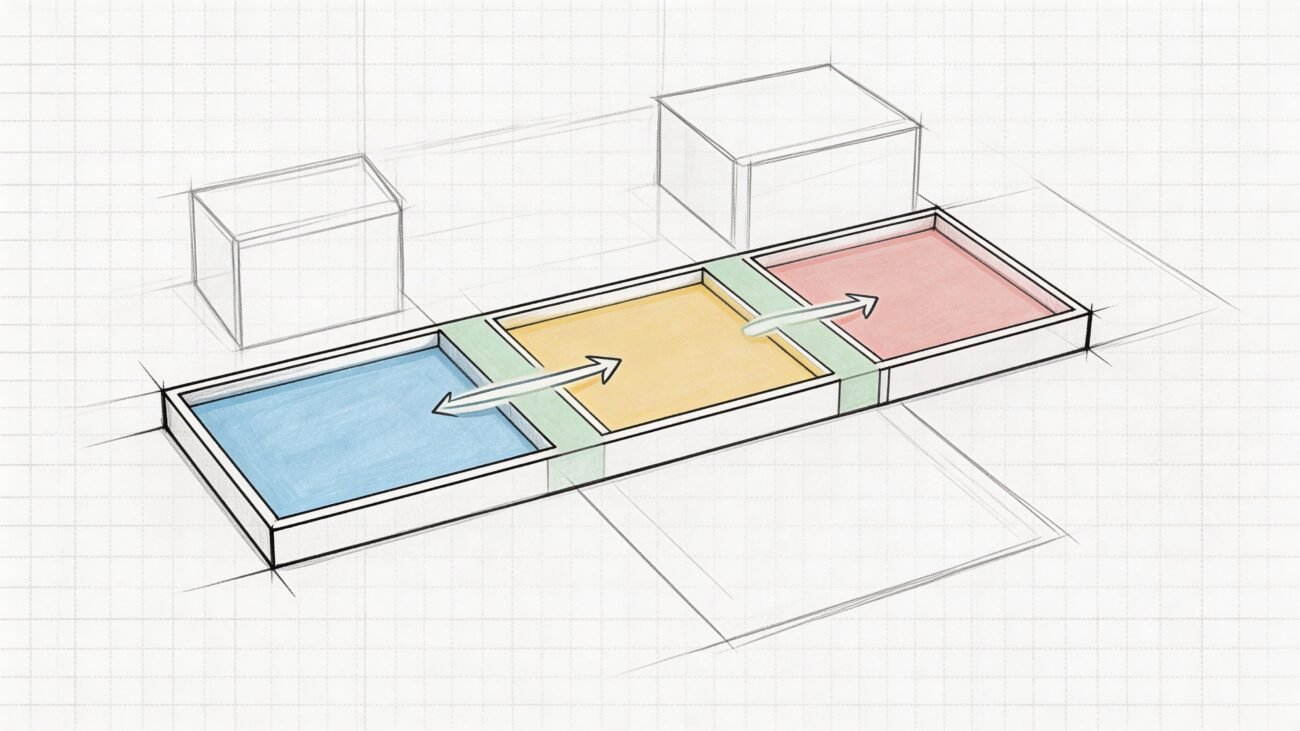
Picking the right delivery model for architecture outsourcing services isn't just about saving a few bucks—it's a strategic move. The choice between onshore, offshore, and hybrid models is going to directly shape your firm's BIM workflows, how your teams communicate, and ultimately, your production maturity. It's about finding a partner that plugs into your operational goals, not just the one with the lowest price tag.
Get this right, and your new partner acts as a force multiplier for your in-house team. Get it wrong, and you're stuck with friction, drained resources, and the exact kind of chaos you were trying to escape. This decision is all about how cleanly an external team can integrate into your day-to-day grind.
Understanding Your Core Options
Each delivery model comes with its own set of trade-offs. The trick is to match the model to the job at hand and what your firm can realistically manage when it comes to time zones and cultural nuances.
- Onshore: Your partners are right here in the same country. This gives you maximum alignment on building codes, language, and work culture, which is perfect for complex jobs that need constant, real-time collaboration. The only catch? It costs more.
- Offshore: Your partners are in a different country, usually with a major time-zone gap. This is where you'll find the biggest cost savings, making it ideal for high-volume, repeatable work like construction documentation or as-built drawings where the scope is nailed down tight.
- Hybrid: This approach blends the two, typically using an onshore project manager as your main point of contact for an offshore production crew. It's a smart balance between cost savings and clear communication, giving you a local touchpoint to make sure nothing gets lost in translation.
The goal isn't just to hand off tasks; it's to build a system that churns out consistent, high-quality work on demand. Your delivery model is the foundation of that system.
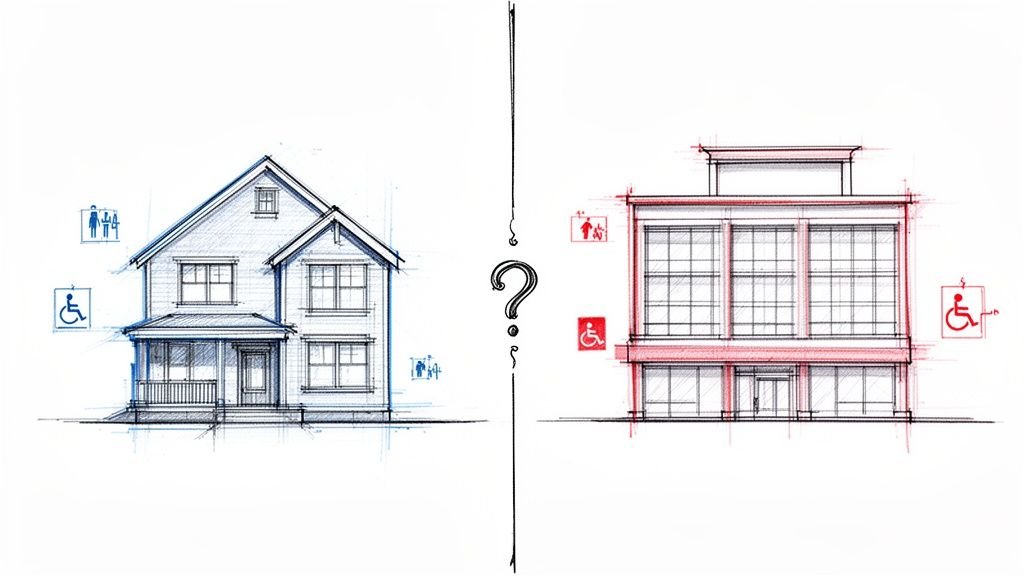
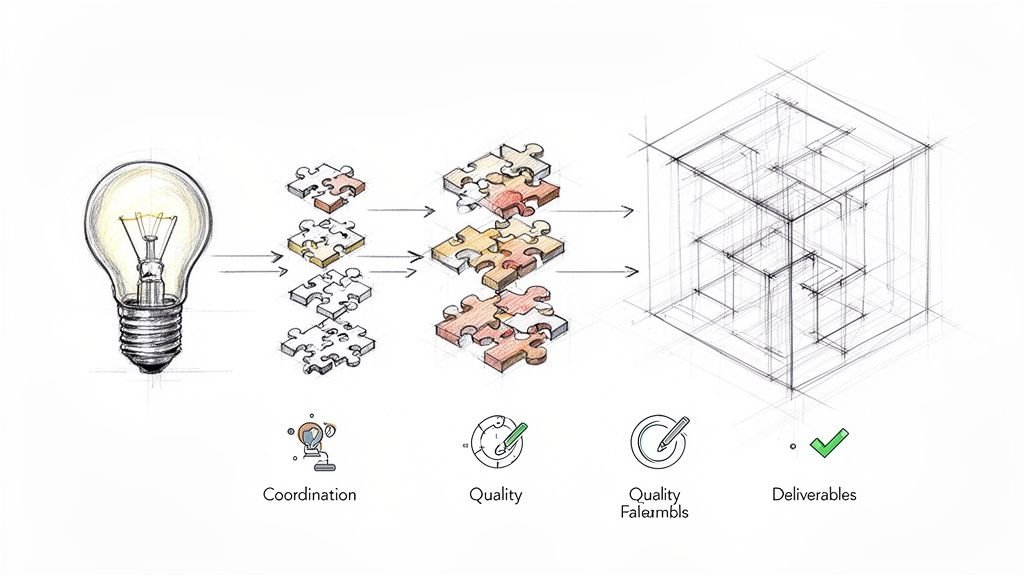
This decision tree shows how you can move from a reactive, chaotic project cycle to a strategic system by picking the model that fits your firm's DNA.
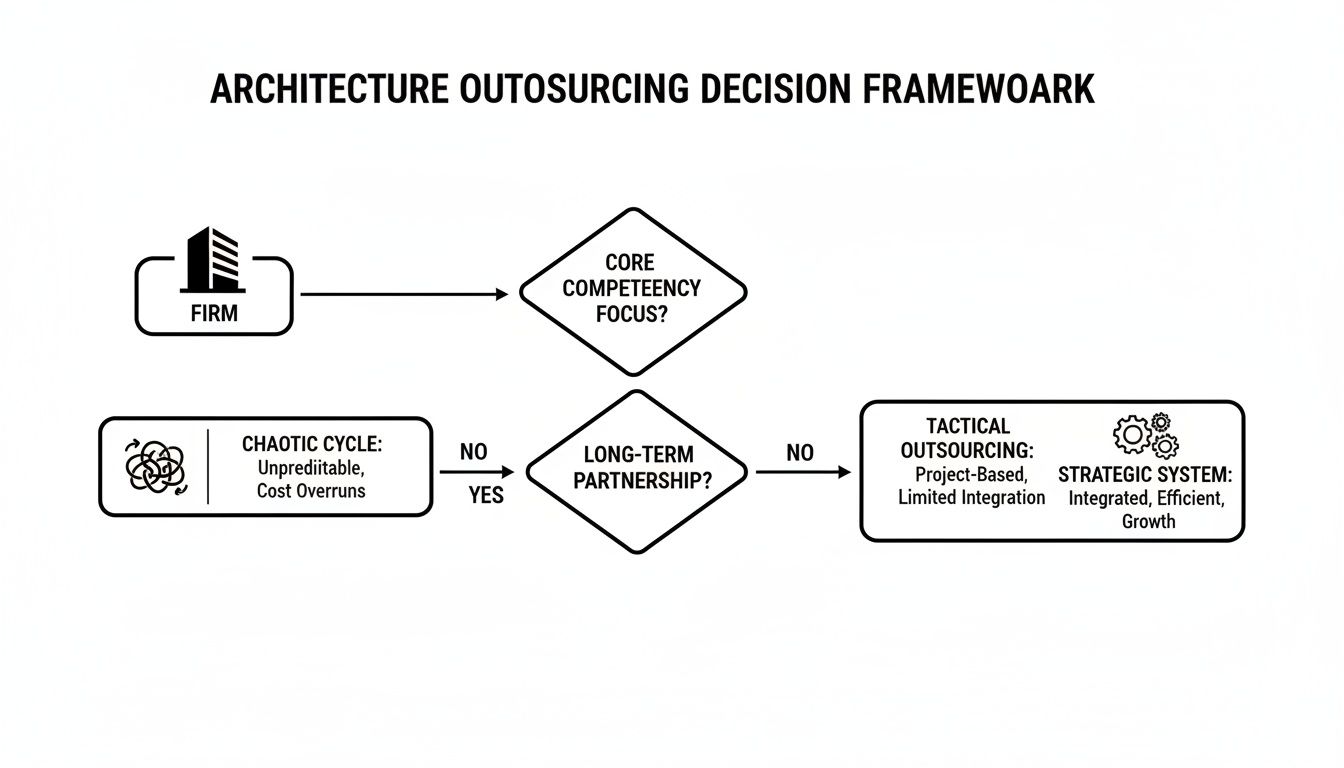
As the chart makes clear, a systematic approach guided by a solid understanding of these models leads to predictable outcomes and protects your profit margins.
A quick-glance comparison can help clarify which model fits best for different needs.
Comparing Architecture Outsourcing Delivery Models
| Model | Best For | Cost Impact | Communication Flow | BIM Workflow Integration |
|---|---|---|---|---|
| Onshore | Complex, high-collaboration projects with fluid scopes (e.g., custom institutional buildings). | Highest cost, but often offset by reduced management overhead and fewer errors. | Real-time, seamless. Shared work hours and cultural context minimize friction. | Easiest to integrate. The partner functions like a local extension of your team. |
| Offshore | High-volume, standardized tasks with clear deliverables (e.g., permit sets for volume builders). | Lowest cost. Offers significant labor arbitrage for repetitive production work. | Asynchronous. Requires disciplined documentation and communication protocols. | Requires highly structured, template-driven workflows to succeed across time zones. |
| Hybrid | Projects needing cost-efficiency and a local touchpoint for quality control and communication. | Mid-range. Balances offshore cost savings with the added expense of onshore management. | Blended. Onshore PM handles real-time coordination; offshore team works on production. | Effective, with the onshore PM acting as the integration bridge for BIM standards. |
Ultimately, the right model depends entirely on the type of work you do and how your firm operates. There's no single "best" answer—only the best fit for you.
Structuring for Scalable Production with Delivery Pods
No matter which model you land on, the most effective partners organize their people into delivery pods. Think of them as small, dedicated groups of specialists—a BIM manager, a project coordinator, and a few technicians—all working as a self-contained unit.
This setup is a game-changer. A delivery pod gets to know your firm’s specific template discipline, your QA process, and your communication quirks. Over time, they become a true extension of your team, ready to handle fluctuating workloads without any drop in quality. You aren’t just hiring individual drafters; you're getting an integrated production cell that already knows your standards inside and out.
Matching the Model to Your Firm's Needs
So, how do you make the call? It really comes down to your project types and your operational style.
A volume home builder cranking out hundreds of permit sets a year will see huge benefits from an offshore model. The work is so repeatable that it’s perfect for a cost-effective, systematized production line. When the process is that well-defined, the time difference actually becomes a perk—work gets done while you sleep. A big part of this efficiency comes from leveraging specialized BIM modeling services to create those streamlined workflows.
On the other hand, an architecture firm tackling a one-of-a-kind hospital renovation needs tight, real-time collaboration to deal with complex site conditions and head off RFIs. For them, a hybrid model with a local project manager provides the essential decision-making checkpoints to keep the project moving. This structure ensures every critical detail is handled with precision, protecting both the schedule and the firm's reputation.
Calculating the True ROI of Outsourced Production
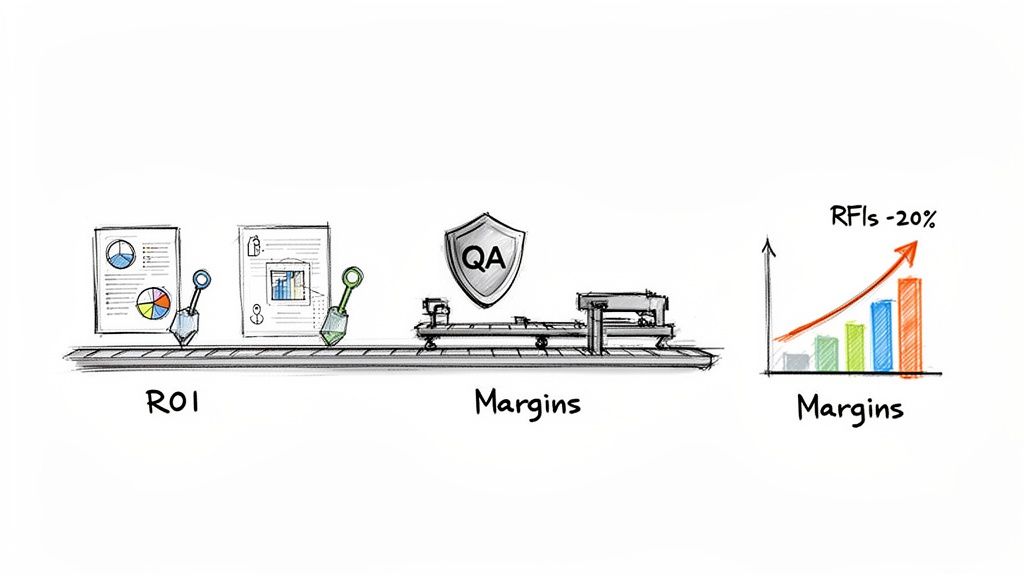
Looking past simple hourly rate comparisons is the first step to seeing the real value of strategic outsourcing. The true return on investment isn't hiding in a labor cost spreadsheet; it's measured in protected margins, predictable timelines, and the kind of operational consistency that lets your firm grow without chaos. When you partner with a production specialist, you're not just buying drafting time—you're investing in a system.
That system is what turns expenses into assets. It’s built on disciplined production practices that have a direct, measurable impact on your bottom line. Think of it like this: you can hire a temp to fill a seat, or you can install a finely tuned engine that drives your entire production process forward with less friction and more power.
Beyond Labor Arbitrage to Margin Protection
Of course, the most obvious benefit of architecture outsourcing services is cost savings, and the numbers are compelling. American volume home builders and interior design firms often see savings of 40-60% on labor by delegating BIM consulting and drafting to offshore teams. With the global engineering services outsourcing market expected to hit USD 17,812.20 billion by 2033, the financial pull is undeniable.
But the real win? Margin protection. True ROI comes from neutralizing the risks that silently eat away at profitability. These are the "hidden costs" that never show up on an invoice but can absolutely wreck project budgets.
A mature outsourcing partner focuses on wiping out these costs through:
- Proactive QA Processes: A rigorous, multi-stage quality assurance system with clear decision checkpoints is built to catch errors before they ever leave the drafting table. This isn't just about spell-checking notes; it's about systematically hunting down potential coordination issues.
- Disciplined Template Management: Every single project kicks off from a standardized, pre-vetted template. This enforces consistency across all deliverables, which dramatically cuts down on the time your senior staff spends fixing formatting or tracking down standard details.
- Targeted RFI Prevention: The best partners analyze common sources of Requests for Information (RFIs) and build specific checks into their workflow to head them off. A well-structured process can slash RFIs by over 20%, saving thousands in project delays, administrative overhead, and rework.
Measuring Value in Outcomes Not Hours
The biggest mental shift in calculating ROI is moving from an hours-based mindset to an outcome-based one. Stop asking, "How much does an hour of drafting cost?" Instead, start asking, "How much value does a reliable, error-free drawing set create?"
Consider these tangible outcomes:
- Reduced Rework Costs: Fewer errors on drawings mean less time and money burned on-site fixing mistakes. That's a direct deposit into your project's profitability.
- Faster Permitting Cycles: By specializing in permitting prep, an outsourced team can deliver clean, compliant drawing sets that sail through municipal reviews, getting your projects off the ground that much faster.
- Increased In-House Capacity: When your core team is freed from the grind of production documentation, they can focus on higher-value activities like design innovation, client management, and business development. This directly fuels your firm's growth.
The ultimate ROI of outsourcing is predictability. It's the confidence that comes from knowing your construction documents will be delivered on time, on budget, and to your exact standards, every single time. This operational consistency is the foundation of a scalable and profitable firm.
To really get a feel for this, it helps to see how BIM outsourcing reduces project costs in ways that go far beyond just lower labor rates. It’s about building a more efficient and reliable project delivery machine from the ground up. By focusing on these metrics, you can accurately measure the powerful impact a strategic production partner has on your firm's financial health and long-term success.
How to Find a True Production Partner
When you’re looking for the right partner for architecture outsourcing services, it’s easy to get distracted by glossy portfolios. But a gallery of past projects tells you nothing about the systems that actually ensure reliable, on-time delivery. You have to look deeper.
The real experts—the ones who build value instead of just billing hours—aren't defined by design flair. They're defined by their production maturity. You have to ask questions that peel back the curtain on their day-to-day operations. Forget asking what they've built; start asking how they build it.
Moving Beyond the Portfolio Review
The traditional vetting process is broken. It focuses on aesthetics and past clients, which are terrible predictors of future performance. A true production partner’s value lies in their ability to deliver predictable, high-quality construction documents, time after time.
To see if a potential partner has this capability, your questions need to hit the core pillars of production discipline:
- BIM Workflows and Template Discipline: How do they enforce consistency? Ask to see their BIM execution plan templates or their standard Revit family libraries. A mature partner will have rigorous, documented standards they apply to every project, not just reinvent the wheel for each client.
- Quality Assurance Processes: How do they prevent errors, not just catch them? Request a look at their QA checklist. A good one is a detailed, multi-stage document with clear decision checkpoints designed to eliminate common issues before they become costly RFIs.
- Permitting Prep Experience: How do they handle the mess of jurisdictional nuances? Ask about their process for code compliance reviews and preparing permit sets. Experienced partners will have a system for navigating local requirements to ensure smoother approvals.
It’s also crucial to have a clear idea of the specific roles you need to fill. For instance, understanding key professional roles like structural engineers and architects helps you define your scope and ask much sharper questions about their team's real-world skills.
Actionable Questions That Reveal Production Maturity
Generic inquiries get you generic answers. The quality of your questions will determine the quality of the partner you find. A great partner won't just answer these questions; they'll be excited you're asking them. It shows you value what they truly deliver: operational consistency.
Here's the kind of question that cuts through the sales pitch and gets to the heart of their competence.
Don't ask: "Can you show me your portfolio?"
Ask instead: "Can you walk me through your standard QA/QC checklist for preventing common RFIs in construction documentation?"
That one question tells you volumes about their commitment to RFI prevention and whether they understand what actually causes expensive delays on-site.
Digging Deeper with a Vendor Vetting Checklist
Finding the right outsourcing partner isn't about reviewing a portfolio; it's about interrogating their process. A slick presentation might look impressive, but it says nothing about the day-to-day discipline that prevents errors and protects your margins. To find a partner who truly understands production, you need to ask questions that go beyond the surface.
This checklist is designed to help you do just that. It focuses on the systems and workflows that separate a genuine production powerhouse from a simple "body shop."
Vendor Vetting Checklist Key Differentiators
| Evaluation Area | What to Ask | Red Flag | Green Flag |
|---|---|---|---|
| BIM & Template Discipline | "Show me how you maintain and enforce project templates." | Vague answers about "following client standards." They should have their own robust baseline. | A clear, documented process for template management and a library of standardized assets. |
| QA Process | "Describe your decision checkpoints before a drawing set is issued." | "Our senior architects review everything." This is a bottleneck, not a process. | A multi-layered review system involving peer checks, senior oversight, and automated clash detection. |
| Scalability & Staffing | "How do you structure delivery pods for fluctuating workloads?" | "We hire freelancers as needed." This signals inconsistency and a lack of dedicated expertise. | A defined pod structure with cross-trained team members who can scale capacity without sacrificing quality. |
| Permitting Expertise | "What's your process for ensuring local code compliance?" | "We rely on the client's redlines." This shows a reactive, not proactive, approach. | A dedicated research phase and internal checklists for common jurisdictional requirements. |
By asking these pointed questions, you shift the conversation from cost-per-hour to value-per-deliverable. You move from being a client to being a partner.
This is how you find a team that understands that great architecture outsourcing services aren't just about drawing lines. They're about delivering clarity and predictability—the real foundations of a profitable and scalable firm.
Getting Your Outsourced Team Plugged In for Smooth Workflows
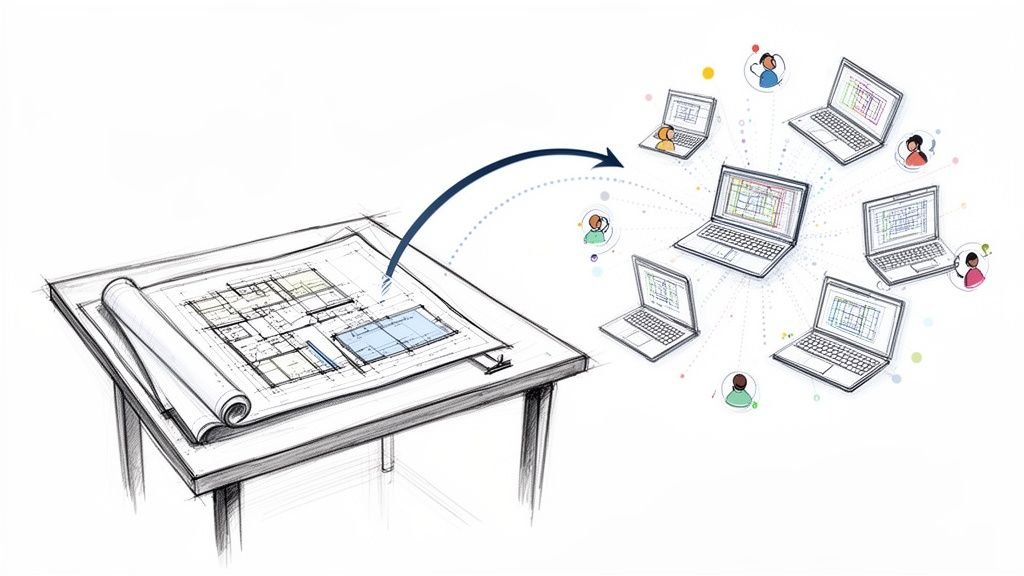
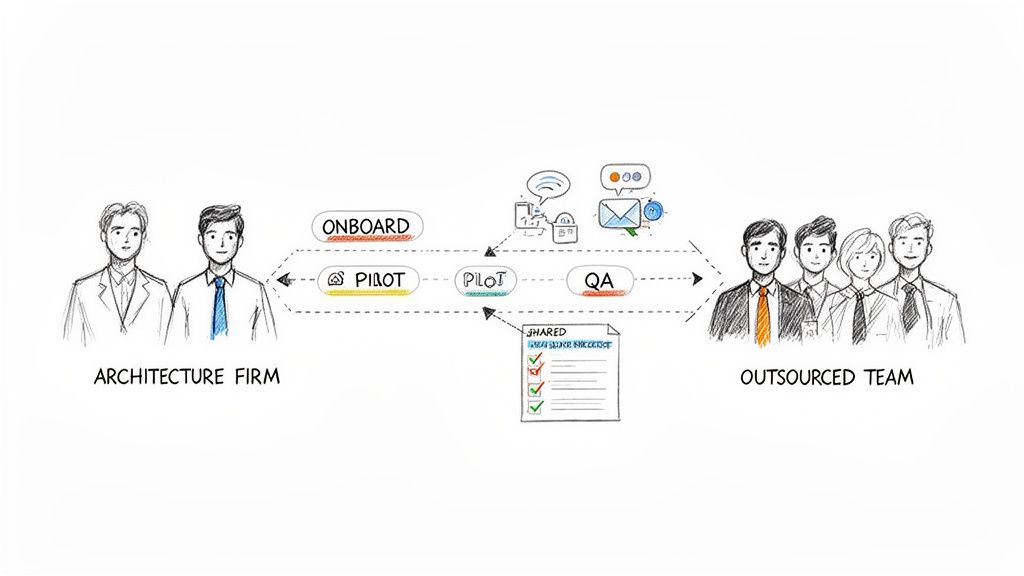
Finding the right production partner is only half the battle. The real test is plugging them into your daily operations so they feel like a genuine extension of your firm, not just some separate contractor. Success with architecture outsourcing services really comes down to a structured, systems-driven integration that builds trust and locks in quality from day one.
This isn't about micromanaging. It's about building a shared framework for getting things done right. A solid onboarding system gets rid of the guesswork, aligns expectations, and gives both teams the clarity they need to deliver. It’s what separates a partnership that hums along predictably from one that stalls out from friction and crossed wires.
Building a Shared Playbook
The integration process kicks off long before the first line is ever drawn. It all starts with creating a single source of truth for how your firm works. This "playbook" should be developed with your partner, not just handed to them, ensuring they buy into your standards from the get-go.
A strong playbook includes:
- Template Discipline: Hand over your complete library of title blocks, drawing standards, and BIM templates. A mature partner will absorb these and make them the default for their team, guaranteeing every drawing looks like it came from your office.
- Communication Rules: Define who talks to whom, about what, and when. This means setting primary points of contact, locking in regular check-ins, and agreeing on the right tools for the job (think Slack for quick questions, email for official sign-offs).
- Data Security and Access: Spell out exactly how project data will be shared and kept safe. Set up access to your cloud server or project management platform with the right permissions to keep everything confidential and under your control.
The Make-or-Break Pilot Project
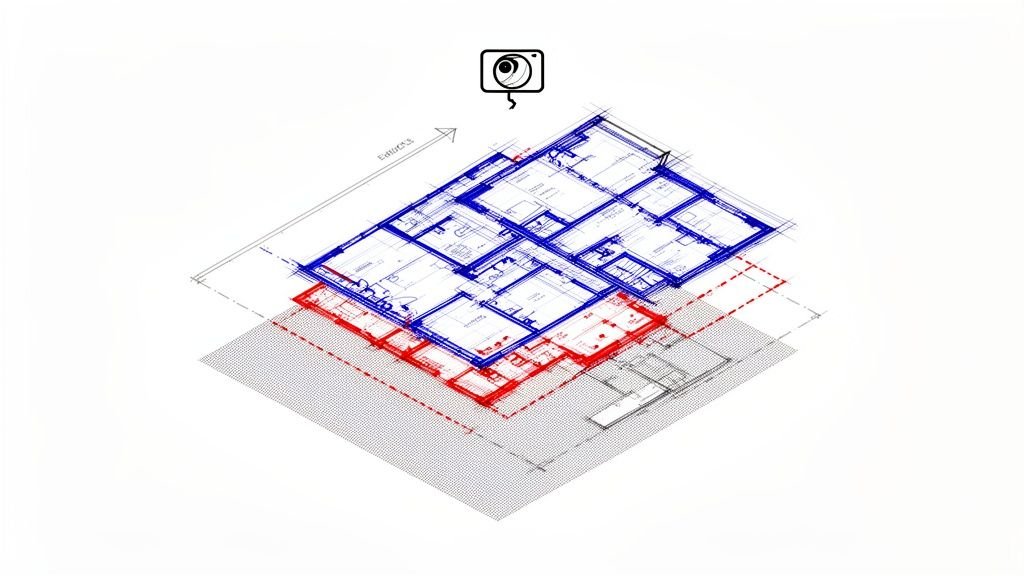
A pilot project is the ultimate stress test for your new partnership. It’s a low-risk, real-world trial that takes your relationship from theory to practice. This is your chance to iron out the wrinkles in your workflow, spot any friction points, and build a real rapport between your in-house staff and their new outsourced counterparts.
The pilot project isn't just a test run; it's a calibration exercise. It aligns two teams around a tangible goal, turning abstract protocols into a living, breathing workflow that everyone understands and trusts.
During the pilot, your main focus should be on validating your quality assurance process. Are the decision checkpoints clear? Is feedback being implemented correctly and without fuss? This first project gives you the perfect chance to fine-tune your quality control loop before you start sending over bigger, more complex work.
This structured approach is crucial. The global outsourcing market is projected to hit USD 1,551.9 billion by 2035, and with North America contributing 47% to architectural market growth, firms have to get this right. Using outsourcing effectively is how you bridge talent gaps and keep your team focused on high-value work, making a proven integration process absolutely essential. You can discover more insights about outsourcing market growth and its key drivers.
Locking in a Rock-Solid Quality Control System
A shared QA system is the foundation of any good outsourcing relationship. It needs to be transparent, documented, and followed to the letter by both sides. This isn't about pointing fingers when something goes wrong; it's a team effort to catch errors early and make sure every deliverable meets your firm's standards.
Your shared QA system should have three core parts:
- A Layered Review Process: Your partner's process should include self-checks by the technician, peer reviews within their team, and a final sign-off from a senior lead before it ever gets to you.
- A Standardized Redline Procedure: Agree on a consistent way to mark up drawings. This ensures comments are clear, actionable, and easy to track until they’re resolved.
- Proactive RFI Prevention: Make stopping RFIs an explicit goal. Your QA checklists should include items specifically designed to catch common coordination mistakes and compliance issues before they become a problem on site.
By methodically building these systems, you turn your outsourced team from a vendor into a true production partner—one who gets your standards, respects your process, and is fully committed to delivering predictable, high-quality work, every single time.
Your Path to Predictable and Scalable Delivery
The core lesson here is simple. Stop thinking of architecture outsourcing services as just a line item for cutting costs. That’s a fundamental misunderstanding. Instead, view it as a strategic system for building operational excellence. It’s the difference between temporarily filling a seat and permanently installing a high-performance production engine in your firm. This is how you achieve real, lasting operational consistency.
When you carefully choose the right delivery model, vet partners on their production maturity, and build deeply integrated workflows, you create a powerful, reliable engine. This system is designed for one thing—delivering predictable and scalable results that protect your margins, project after project.
Building Your Operational Flywheel
This journey is about transforming your firm’s entire approach to production. You’ll move away from chaotic, deadline-driven cycles and into a disciplined, proactive rhythm where quality is built-in, not bolted on at the end. The focus shifts from frantically reacting to problems to preventing them from ever happening in the first place.
This means mastering a few key disciplines:
- Systematic Workflows: Using mature BIM workflows and strict template discipline to guarantee every single deliverable is consistent and high-quality.
- Proactive Quality Control: Putting rigorous QA processes in place with mandatory decision checkpoints to catch errors early and prevent costly RFIs down the line.
- Strategic Scalability: Leaning on flexible delivery pods that can expand or contract with your workload, all without sacrificing the quality or predictability of the final output.
This isn’t just some academic exercise; it's a practical path to making your firm more resilient, efficient, and ultimately, more profitable. As MacKenzie Brown, CEO of Cad Crowd, points out, "Outsourcing doesn’t mean losing control." When you manage it correctly, it actually amplifies your firm's strengths and drastically improves turnaround times.
The ultimate outcome is predictability. It’s the confidence that comes from knowing your construction documents will be delivered on time, to your standards, and within budget—every single time.
To help you get started on this path, we're offering a complimentary resource to our readers. It’s not a sales pitch; it’s a tool we’ve developed to help firms start thinking critically about their own internal systems.
Download our Production Workflow Optimization Checklist to start identifying opportunities for improvement within your own processes. When you’re ready to build a more reliable and scalable production system, we're here to help.
Frequently Asked Questions
Let's tackle some of the most common questions we hear from AEC firms about outsourcing their architectural production work.
How Do You Guarantee Quality Control With a Remote Team?
Quality isn't about having someone looking over a drafter's shoulder; it's about building a bulletproof system. We guarantee quality through a multi-layered QA process that relies on disciplined checklists and mandatory decision checkpoints at every critical stage. This systematic approach ensures nothing ever falls through the cracks.
Our process combines peer reviews, senior architect oversight, and automated clash detection to nail down technical accuracy. More importantly, we tailor this system to your firm's specific standards from day one, using your templates to guarantee absolute consistency. The real goal is to catch and kill potential RFIs long before they become expensive problems on-site.
Is Outsourcing Only Effective for Large Repetitive Projects?
Not at all. While architecture outsourcing services are fantastic for scaling up production on something like a tract home development, the same principles work wonders for highly specialized tasks inside unique, complex projects. It's all about structuring the engagement to fit the specific need.
For example, a high-design firm can offload the entire construction documentation phase, freeing up their core team to focus on creativity and client relationships. In the same way, an engineering firm can outsource the tedious work of point cloud to BIM modeling. The trick is to build a delivery pod that precisely matches the project's demands, whether that's for massive scale or deep, niche expertise.
What's the Biggest Mistake Firms Make When Outsourcing?
Hands down, the most common mistake is treating the relationship like a temporary staffing fix—what we call the "body shop" approach. This mindset fixates on hourly rates instead of outcomes, and it almost always leads to mismatched expectations, poor communication, and disappointing results. It turns a strategic partnership into a simple commodity purchase.
A successful partnership is built on fully integrated processes, shared systems, and mutual trust.
You can avoid this trap by vetting partners on their production systems, QA discipline, and workflow maturity—not just their portfolio or their price. This is how you find a partner who is genuinely invested in your firm’s long-term success.
How Is Intellectual Property and Data Security Handled?
Protecting your IP is everything. Any reputable production partner will have solid security protocols in place, starting with a comprehensive Non-Disclosure Agreement (NDA) to legally protect your designs and project data from the get-go.
But legal agreements are just the start. Real security is baked directly into the workflow. This includes:
- Secure Cloud Environments: Using encrypted, access-controlled servers for all file sharing and collaboration.
- Defined Access Permissions: Making sure team members can only access the specific files they need for their assigned tasks.
- Strict Data Handling Policies: Implementing clear rules for how data is managed, stored, and eventually deleted to prevent any unauthorized use.
A mature partner will be completely transparent about their security measures and will work with you to meet any specific compliance requirements your firm or your clients might have.
At BIM Heroes, we believe that predictable delivery is the ultimate competitive advantage. We build strategic production systems that give your firm the operational consistency and scalability needed to thrive. If you're ready to move beyond the chaos of deadlines and build a more reliable production engine, we're here to help.
Learn more about how our architectural production and BIM consulting services can protect your margins and mature your workflows at https://www.bimheroes.com.