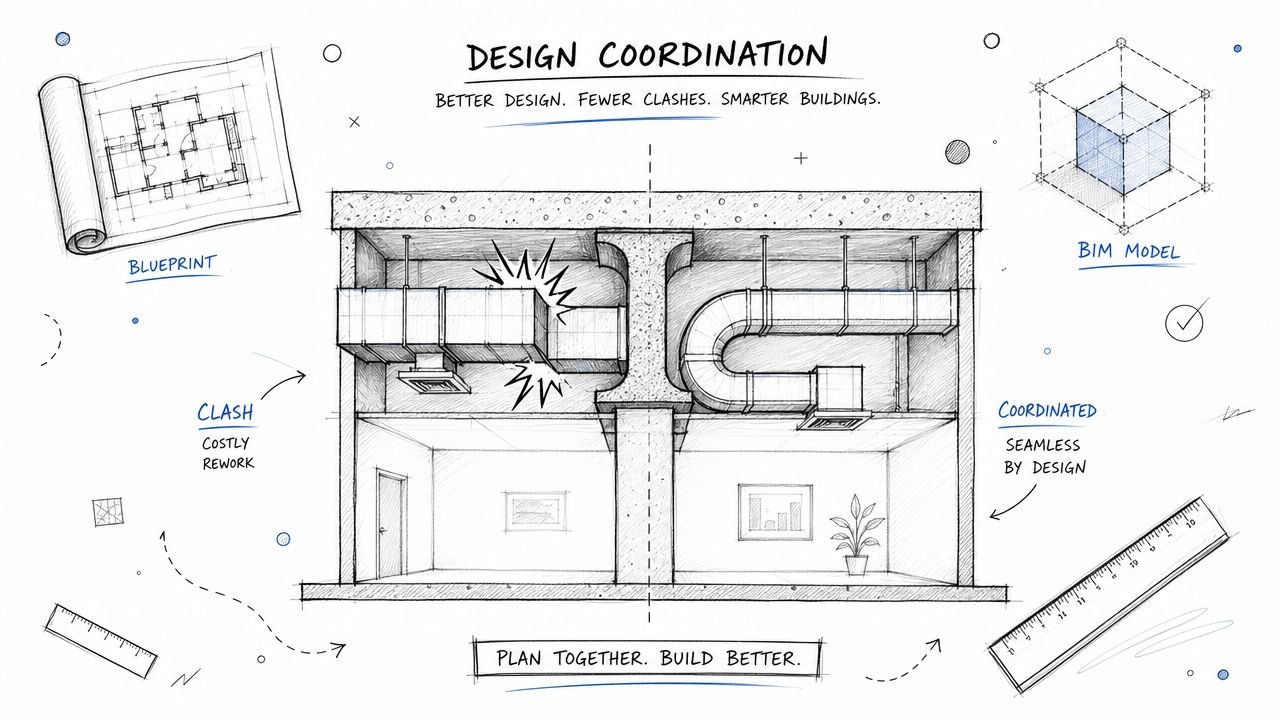
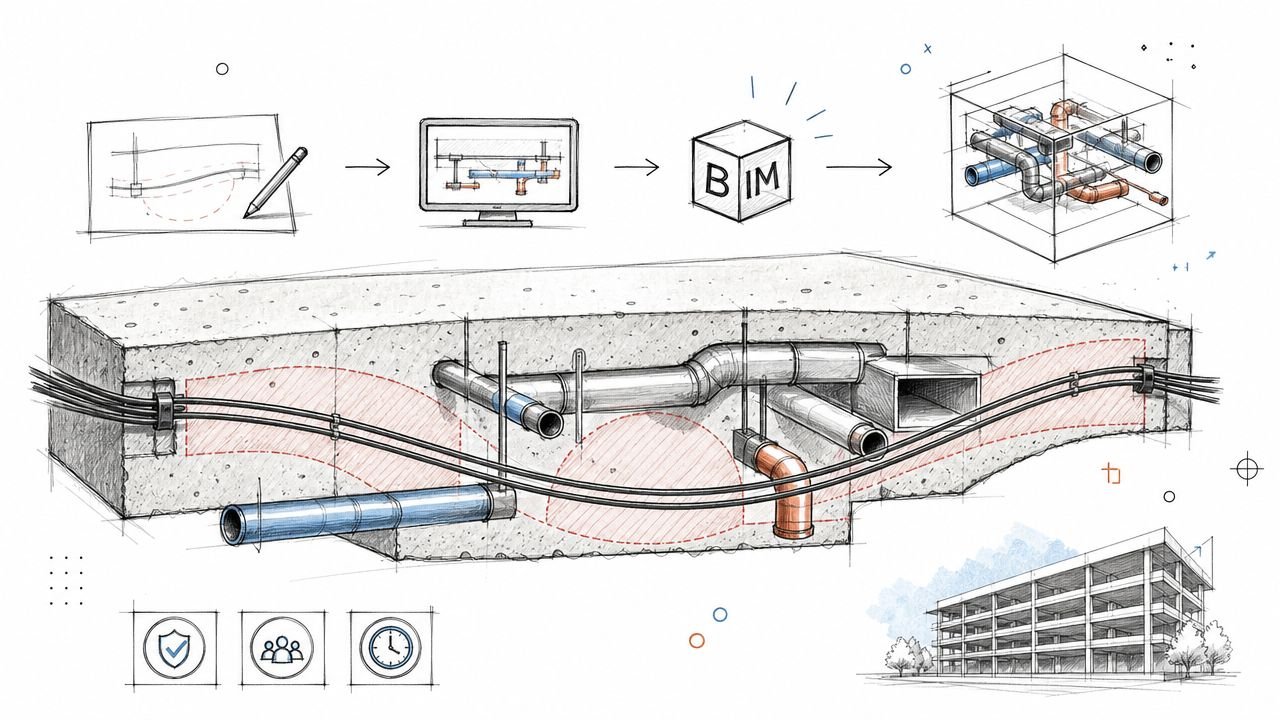
Let's be honest: your weekly coordination meeting is probably the most dreaded hour on the project calendar. It's a painful cycle of marathon screen-sharing sessions, scrolling through endless, unfiltered clash reports, and watching teams point fingers with no clear ownership of the issues. The meeting ends, and nothing has actually been resolved.
This isn't just poor communication—it's a broken system. Effective BIM coordination services are designed to fix this system, transforming chaotic meetings into productive decision-making checkpoints.
The Real Reason Your Coordination Meetings Fail
If your coordination meetings feel like a waste of time, you're not alone. The problem isn't a lack of effort from your team; it’s the flawed, reactive process they are forced to follow. Most ineffective meetings share the same root issues, turning what should be a solutions-focused session into a frustrating problem-discovery exercise.
The scene is all too familiar. A clash report with hundreds of low-priority items is pulled up live, and the team spends the first 20 minutes just trying to understand what they’re looking at. This reactive approach immediately puts everyone on the defensive.
Unfiltered Clash Reports Kill Productivity
When every clash is treated with the same level of urgency, nothing is truly urgent. Teams are overwhelmed by unfiltered data—minor conduit clashes mixed in with major structural conflicts. This lack of prioritization means significant issues get lost in the noise, only to surface later on-site when they are far more expensive to fix.
The meeting devolves into a debate over what matters instead of a discussion on how to solve what matters. This chaos is a direct result of a breakdown in the BIM workflow long before the meeting even starts. It’s a systemic failure where the focus is on generating a report rather than managing a process. Without a disciplined framework for filtering, grouping, and assigning issues, the meeting is doomed from the start.
The goal of a coordination meeting isn't to find problems; it's to ratify solutions to problems that have already been identified, assigned, and investigated.
No Ownership Means No Accountability
Perhaps the most significant flaw is the absence of accountability. When a clash between mechanical and plumbing is identified, who is responsible for proposing a solution? Without a clear owner assigned before the meeting, the discussion becomes a stalemate. This often leads to finger-pointing and unresolved issues being carried over week after week.
This dynamic creates friction and project delays. Stakeholder misalignment is a common challenge, and without a structured system to assign and track ownership, you're relying on goodwill rather than process. To learn more about navigating these challenges, see our guide on addressing common stakeholder issues in BIM projects.
A mature coordination process ensures every issue has a name next to it, turning ambiguity into actionable tasks and protecting your project margins.
Shifting From Clash Detection to True Coordination
There's a common trap many project managers fall into: thinking that running clash detection software is the same thing as managing coordination. This is a huge misunderstanding, and it's the very thing that keeps projects locked in a cycle of endless meetings, finger-pointing, and expensive rework.
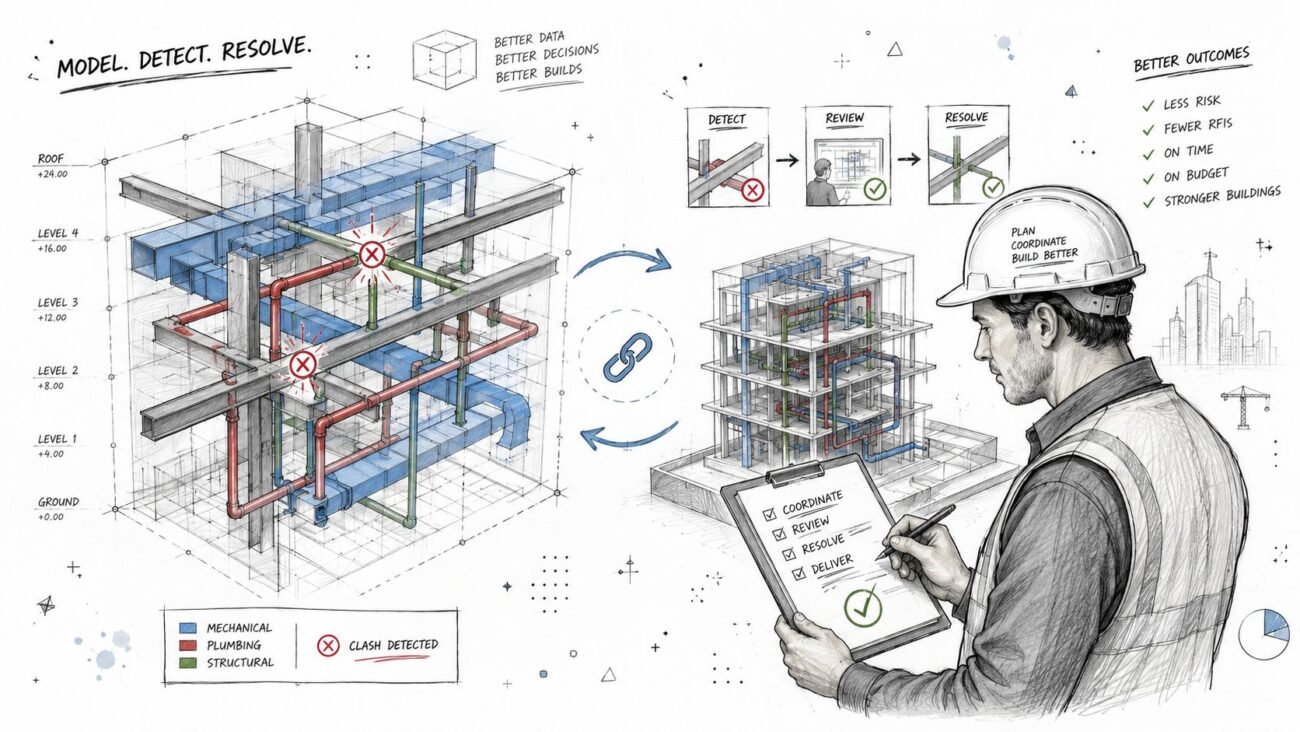
Let's be clear: clash detection is just a software function. It finds potential conflicts and spits out a report. That's it. True coordination, on the other hand, is a managed process. It's about people, accountability, and a disciplined workflow.
Think of it this way: a spell checker can find typos in a document, but it can't write a compelling story. In the same way, software finds clashes, but professional BIM coordination services build the narrative of a constructible project. This mindset shift is what moves teams from being reactive data sorters to proactive problem solvers.
Moving Beyond the Report
An unfiltered clash report is just noise. A list of 500 clashes with no context, no priority, and no ownership is a recipe for meeting paralysis. The first real step in building a mature coordination workflow is recognizing that the clash report is the start of the process, not the end.
This process involves a few key disciplines that turn that raw data into something you can actually use.
- Systematic Model Federation: This means consistently combining models from every discipline—architectural, structural, MEP, fire protection—into a single, federated model. This creates the "one source of truth" everyone talks about.
- Intelligent Clash Grouping: You need clear rules to group clashes by severity and trade. For example, a massive structural beam hitting a primary duct run is a Tier 1 issue that stops the meeting. A small conduit nicking a non-load-bearing stud? That's a Tier 3, and it can wait.
- Clear Ownership Assignment: Every single issue has to be assigned to a specific person or trade responsible for fixing it. Ambiguity is the enemy of progress. No more "someone should look at this."
With a structured approach like this, the report you bring to the coordination meeting is a curated list of high-priority issues already assigned to the right people.
This diagram shows exactly what happens when you have a broken process—just relying on endless reports creates chaos and a total lack of accountability.
The key thing to realize here is that these aren't separate problems. They are all symptoms of a flawed workflow that's missing a central management system.
The Financial Case for a Managed Process
Getting this disciplined isn't just about having smoother meetings; it's about protecting your project's margins. The entire goal is to solve coordination issues in the digital world, where the cost of a change is practically zero, instead of on-site, where it can be catastrophic.
Stopping even a handful of major on-site conflicts can save tens of thousands of dollars in labor and materials, which more than justifies the investment in a managed coordination process.
True coordination isn't about finding every possible clash. It's about systematically eliminating the ones that pose the greatest risk to the project's budget and schedule.
This systematic approach is what prevents the snowball effect where minor issues blow up into major RFIs and change orders. A well-managed process delivers predictability, and that's the cornerstone of profitable project delivery. For a deeper look at the mechanics, check out our guide on the fundamentals of clash detection in BIM.
The economic benefits are well-documented. BIM coordination practices that centralize model federation and systematically resolve issues can cut on-site rework by 30% to 60%. Those are huge savings, and it's why the demand for advisory BIM services is exploding as firms look for specialists who can implement systems that deliver real, measurable certainty.
A Framework for Productive Coordination Meetings
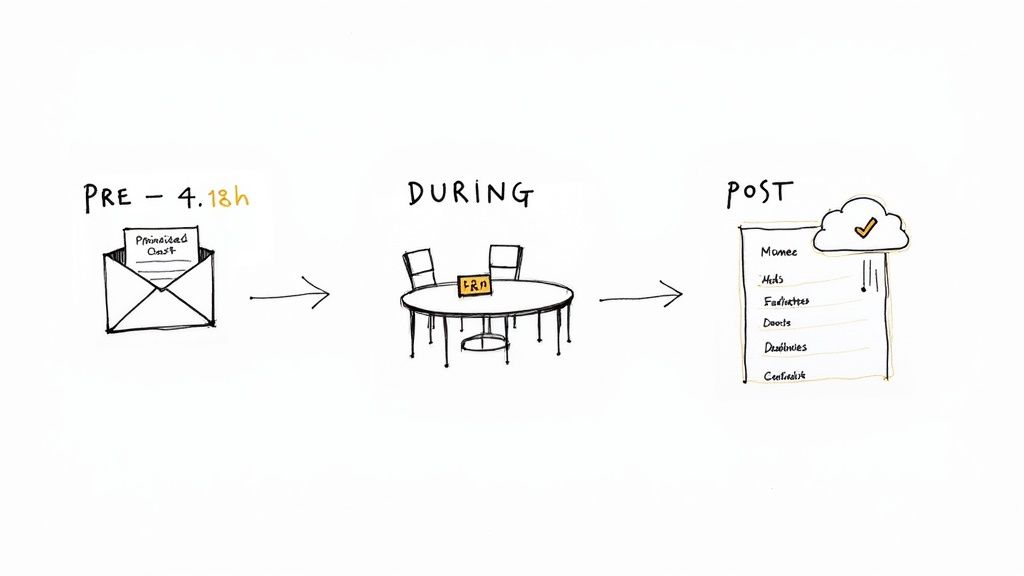
Ineffective meetings are a symptom of a broken workflow, not the cause. To fix them, you need a disciplined framework that turns chaotic discovery sessions into sharp, decision-making checkpoints. A mature approach to BIM coordination services hinges on a simple, repeatable structure: prepare before, execute during, and follow up after.
This isn't about longer meetings or more software. It’s about production maturity—a system that protects your margins by ensuring the most valuable resource on any project, your team’s time, is spent solving problems, not just finding them.
Pre-Meeting Preparation: The Foundation of Efficiency
The most important work happens long before anyone joins the call. A productive meeting is the direct result of meticulous prep work that kills surprises and sets clear expectations for everyone involved. The goal is to walk into the room with everyone already on the same page about the core issues.
This preparation phase is non-negotiable and breaks down into two key steps:
- Curated Clash Report Distribution: A prioritized clash report needs to land in every stakeholder's inbox 48 hours in advance. This isn't a raw data dump from Navisworks; it's a filtered list of the most critical issues, grouped logically by system and location.
- Assigned Ownership for Review: Every clash in that report must have a designated owner. That person is responsible for reviewing their assigned issues before the meeting, digging into the conflict, and coming prepared with potential solutions.
This simple discipline of front-loading the work transforms the entire dynamic. Instead of burning valuable meeting time explaining a problem for the first time, the team can jump straight into discussing viable solutions.
During the Meeting: A Focus on Decisions
With proper preparation, the meeting itself becomes a focused, action-oriented session. The BIM Coordinator's role shifts from a model navigator who just screen-shares clashes to a true facilitator guiding a decision-making process. Their job is to keep the team on track, stick to the agenda, and make sure every discussion ends with a clear resolution.
Here’s what an effective in-meeting structure looks like:
- Stick to the Agenda: The meeting should only cover the major, unresolved issues identified in the pre-meeting report. New items get tabled for the next cycle, which prevents scope creep and keeps everyone focused.
- Time-Box Discussions: Give each agenda item a specific time limit (say, 5-10 minutes per major clash). This creates a sense of urgency and forces concise, solution-focused conversations.
- Focus on Resolution, Not Blame: The facilitator’s role is critical here. They have to steer conversations away from finger-pointing and toward constructive problem-solving, asking questions like, "What's the most efficient way to resolve this for the project?"
A well-run coordination meeting feels less like a debate and more like a surgical procedure. It's precise, focused, and driven by a clear plan to achieve a specific outcome—a coordinated model ready for construction.
The table below contrasts the typical meeting chaos with a structured, decisive approach.
Transforming Coordination Meetings From Ineffective to Decisive
| Meeting Element | Ineffective Approach (The Problem) | Structured Approach (The Solution) |
|---|---|---|
| Agenda | Vague or non-existent; issues are discovered live. | A curated clash report is sent 48 hours in advance. |
| Pace | Slow and reactive; dragged down by long explanations. | Time-boxed discussions keep the meeting moving. |
| Focus | Identifying problems and assigning blame. | Debating and deciding on pre-vetted solutions. |
| Role of Coordinator | Acts as a model navigator, clicking through clashes. | Facilitates decisions and enforces the agenda. |
| Outcome | More questions than answers; action items are unclear. | Clear, documented resolutions with assigned owners. |
Moving from the "problem" column to the "solution" column is how you reclaim hours of wasted time and drive real progress on your project.
Post-Meeting Follow-Up: Where Accountability Lives
A meeting’s value dissolves if decisions aren't documented and acted upon. The post-meeting phase is where resolutions are solidified into concrete tasks, creating a clear chain of accountability that moves the project forward. This is how you close the loop and ensure momentum isn't lost.
Effective follow-up requires immediate, systematic action:
- Distribute Meeting Minutes Promptly: A summary of all decisions should be sent out within hours of the meeting. This document needs to be crystal clear, outlining the issue, the agreed-upon solution, the person responsible for implementation, and a firm deadline.
- Update the Central Issue Log: All action items must be tracked in a central, accessible platform like Autodesk Construction Cloud, Procore, or Revizto. This creates a single source of truth for the project team and makes it easy to monitor progress.
This disciplined, three-part framework—prepare, execute, follow up—is the engine of operational consistency. To make sure discussions are captured accurately, consider adopting some proven tips on how to take better meeting notes. It’s how you move from perpetual fire-fighting to a state of predictable, profitable project delivery.
The Strategic Value of Outsourcing BIM Coordination
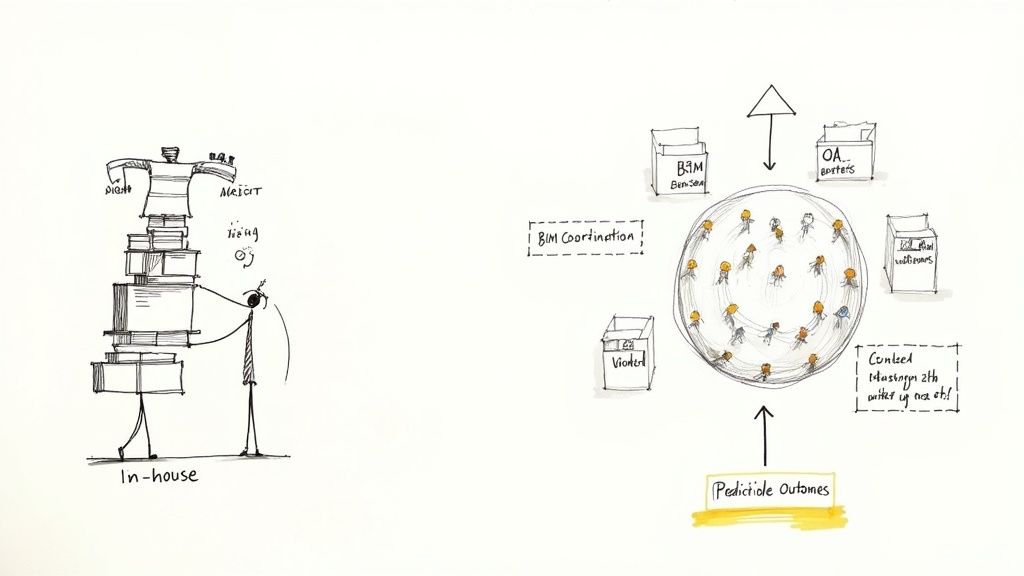
Deciding to bring in outside help for BIM coordination isn't just about filling a seat; it's a strategic move toward operational maturity. For many project managers, the internal BIM team is already stretched thin, juggling multiple projects and wearing far too many hats.
While they're skilled, they often lack the singular focus—and the battle-tested systems—needed to run a truly disciplined coordination process. This is where the real value of an outsourced partner shines.
You aren't just buying hours or renting a software operator. You're investing in a proven production system. An expert partner brings a level of discipline that's tough to replicate in-house, complete with refined templates, rigorous QA for model intake, and scalable "delivery pods"—small, focused teams ready to jump in and keep a project moving.
It's an approach designed for one thing: predictable outcomes.
Unbiased Facilitation and Process Discipline
One of the most immediate perks of an outsourced coordinator is their role as an impartial third party. Internal team members can sometimes hesitate to flag issues that might reflect poorly on their own department. An external partner, on the other hand, has a single mandate: protect the project by finding and fixing every critical conflict, no matter where it came from.
This unbiased eye is crucial during coordination meetings. The outsourced coordinator’s job is to enforce the agenda, keep discussions focused on solutions, and stop meetings from devolving into finger-pointing. They make sure decisions are made in the project's best interest, not based on internal politics.
When you outsource coordination, you're not just offloading tasks. You're importing a system of accountability that elevates the entire project team and protects your margins from the high cost of unresolved issues.
Access Specialized Systems Without the Overhead
Maintaining a top-tier BIM technology stack is expensive. Between software licenses, high-performance hardware, and continuous training, the overhead adds up quickly. Partnering with a specialist firm gives you immediate access to best-in-class tools and expertise without the long-term capital investment.
This model is quickly becoming the industry standard. The global BIM market, valued between USD 8.5–9.7 billion in 2024–2025, is on track to nearly double by 2030. A key driver behind this growth, as noted by Grand View Research, is the shift from buying software to procuring project-based managed services that cover the entire coordination workflow.
It’s a clear signal that firms get better outcomes by paying for reliable delivery, not just for tools.
Ensuring Operational Consistency and Predictability
Ultimately, the biggest win is operational consistency. An outsourced partner uses the same proven workflow on every project, creating a predictable rhythm for your teams. They know how to onboard trades, set model submission standards, and manage communication protocols.
This frees up your project managers from the administrative grind of running the coordination process, letting them focus on higher-value activities.
That consistency directly translates into margin protection. Every RFI avoided, every on-site clash prevented, and every unproductive meeting hour reclaimed is money in the bank. For a closer look, our guide on how BIM outsourcing reduces project costs breaks down the financial benefits.
By entrusting the process to a dedicated expert, you’re making a strategic investment in project certainty and reliable delivery.
How to Choose the Right BIM Coordination Partner
Once you realize outsourcing is the smart move, the real work begins: picking the right provider. This decision is about so much more than comparing hourly rates. You’re choosing a production partner, and their systems, discipline, and communication style will make or break your project's success. A cheap partner with a chaotic process will end up costing you a fortune in the long run.
Making the right choice means asking tough, specific questions that reveal how mature a provider's process really is. This isn't about listening to a sales pitch; it's about auditing their production line to see if it’s solid enough to protect your margins. Don't be afraid to dig deep—a confident, experienced firm will welcome the scrutiny.
Key Questions to Vet Potential Partners
Before you sign anything, your vetting process should feel more like a technical interview than a sales call. Their answers will tell you everything you need to know about their ability to deliver consistency and clarity. You want to understand their workflows, not just look at resumes.
Here are the essential questions you need to ask:
- "What is your QA process for model intake?" A mature provider won’t just dump models into a federated environment. They’ll have a formal checklist to audit them first, looking for common issues like incorrect origins, missing elements, or sloppy modeling that can derail coordination from day one.
- "Can you share anonymized examples of your clash reports and issue-tracking dashboards?" This is non-negotiable. You want to see reports that are clean, prioritized, and clearly assign ownership. If they show you a raw data dump from Navisworks, that’s a major red flag.
- "How do you handle non-responsive stakeholders?" This question cuts right to their real-world experience. A good partner will have a clear escalation protocol for chasing down answers and holding people accountable without poisoning team relationships.
- "Describe your template discipline and setup for a new project." Look for standardized processes. They should be able to clearly explain how they establish clash rules, reporting formats, and communication cadences from the start. That’s how you get operational consistency.
Choosing a partner is like hiring a project facilitator, not just a modeler. Their ability to manage people, process, and technology is what creates a predictable, low-risk environment for your project.
Understanding Their Technology Stack and Delivery Model
A provider's tech infrastructure is another critical piece of the puzzle. It has to align with your team's needs for accessibility, data security, and seamless integration. You need to know how your teams will collaborate, which means discussing whether their model is cloud-based or on-premises.
The industry is definitely leaning toward the cloud, which offers flexibility for distributed teams. However, on-premises solutions are still common for firms that want direct control over their data. When you consult a comprehensive guide to evaluating outsourcing providers, you'll find that aligning on technology and security protocols is a recurring theme for any successful partnership. You have to know if their platform plays nicely with your existing systems and meets your company's security standards.
The choice between on-premises and cloud solutions impacts everything from your cost structure to how easily your team can access the project. Cloud-based BIM coordination services usually involve recurring fees but make it much easier for global teams to jump in. The right partner will work with you to make sure their technology empowers your workflow, not complicates it.
Take Control of Your Coordination Process
The biggest takeaway is this: effective coordination is a system, not just a meeting. We’ve walked through the pillars of a mature BIM workflow—clear priorities, assigned ownership, and a disciplined process that puts preparation ahead of frantic, on-the-fly problem-solving. This is the bedrock of production maturity.
Instead of a sales pitch, we want to give you something you can use on your project right now. The goal isn’t to sell you on hours; it’s to give you the clarity and systems needed for reliable project delivery. This is how you start protecting your margins and bringing some much-needed predictability back to your schedule.
Empowering Your Team with the Right Tools
Lasting change doesn’t come from a single heroic effort; it comes from implementing better processes. To help you get started, we’ve put together a practical resource drawn from our own experience managing complex projects. This isn’t a theoretical guide—it’s a tool designed to bring immediate structure to your coordination efforts and turn chaotic meetings into decisive checkpoints.
The most successful project teams don't work harder; they work smarter within a proven framework. They replace ambiguity with accountability and reaction with preparation.
We believe that once you see the impact of a more disciplined approach, the value of dedicated BIM coordination services becomes obvious. It’s all about building an operational consistency that your team can count on, project after project. Our goal is to leave you feeling understood and empowered, thinking, "These people actually get production."
Ready to run your next coordination meeting with real confidence?
Download our free Coordination Meeting Agenda Template.
Use this on your next project to start seeing tangible improvements today. This is the first step toward building the kind of trust and systems that make it easy to reach out when you need more comprehensive support. We’re here to help when you're ready to scale these improvements across your entire portfolio.
Frequently Asked Questions About BIM Coordination
Even after seeing all the benefits, project managers usually have a few practical questions before bringing on a BIM coordination services partner. It's one thing to understand the theory, but it's another to know how the process, costs, and team dynamics will play out on a real project.
Let's get into the nitty-gritty. These are the most common questions we hear from firms ready to get serious about protecting their project margins right from the start.
How Much Do BIM Coordination Services Cost?
This is almost always the first question, and the honest answer is: it depends. The cost is tied directly to the project's size and complexity. A straightforward commercial building with a handful of trades is going to cost less to coordinate than a dense, multi-story hospital packed with complex MEP systems.
That said, most providers stick to one of three pricing models:
- Hourly Rates: This is a good fit for quick, ad-hoc support or smaller jobs where the scope isn't set in stone. It gives you flexibility, but it can make budgeting a bit of a moving target.
- Fixed Fee Per Project: This is the most popular option. After digging into your models and project goals, the provider gives you a single, all-in price for a clearly defined scope. It offers total budget certainty.
- Monthly Retainer: If you've got a long-term project or want ongoing coordination management across several jobs, a retainer makes sense. It ensures you have a dedicated resource ready to go whenever you need them.
A word of caution: any partner worth their salt will never give you a blind quote. They’ll insist on a discovery call and a quick look at your models to build a transparent, accurate proposal that actually fits your needs.
Can Our In-House Team Still Be Involved?
Absolutely—in fact, they have to be. The best projects run on a hybrid model where your internal team and the external coordinator work hand-in-hand. Your architects and engineers hold all the critical design intent and constructability knowledge. They're the experts on the project.
A BIM coordination partner doesn't replace them; they supercharge them. The provider handles the administrative and technical heavy lifting of the coordination process itself:
- Managing all the incoming models and running quality checks.
- Setting up and running clash detection, then filtering out the noise.
- Facilitating the coordination meetings and keeping them on track.
- Tracking every issue and making sure nothing falls through the cracks.
This approach frees your team from the process-heavy work, letting them focus their valuable time on what they do best: solving high-level problems. It's a partnership where the provider manages the system, and your team makes the critical design decisions.
The goal isn't to take your team out of the loop. It's to create a highly efficient system around them so their expertise is applied to solving problems, not chasing paperwork.
What Is the First Step to Get Started?
Getting the ball rolling is simple and designed to set clear expectations from day one. It all starts with a no-obligation discovery call where you can talk through your project’s specific pain points, goals, and deadlines. It’s a two-way street—a chance for the provider to understand your challenges and for you to see if they know their stuff.
After that initial chat, the next move is usually a preliminary model audit. You share your current design models, and the provider does a high-level review. This isn’t a full-blown coordination pass; it's more like a health check to gauge model quality, spot any immediate risks, and get a feel for the complexity ahead.
This audit is crucial. It gives the provider everything they need to create a precise scope of work and a firm price. More importantly, it gives you the confidence that they truly understand your project and have a clear plan to deliver predictable outcomes.
At BIM Heroes, we provide the systems and discipline needed to turn chaotic projects into predictable successes. If you're ready to implement a coordination process that protects your margins and empowers your team, we're here to help.