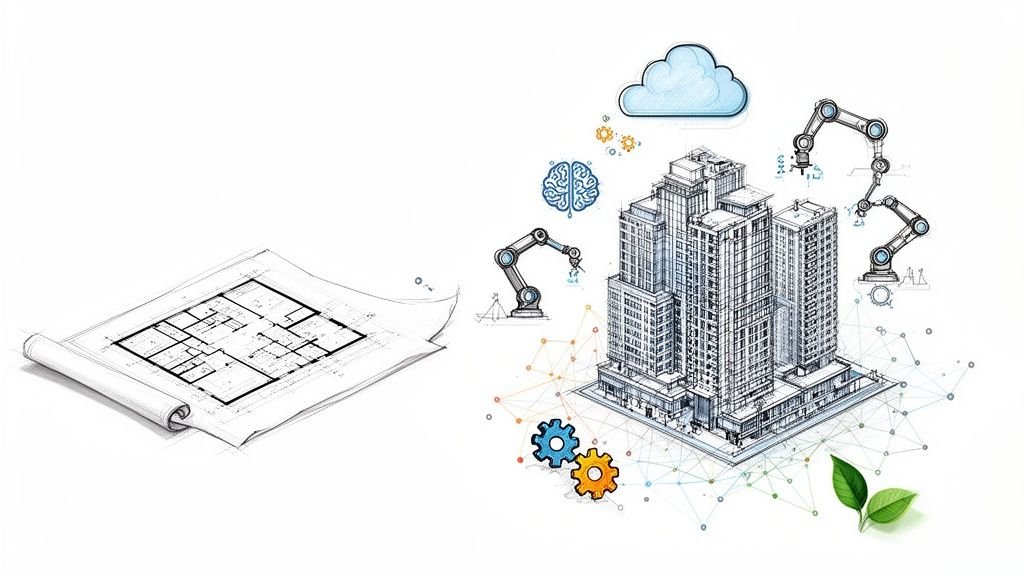
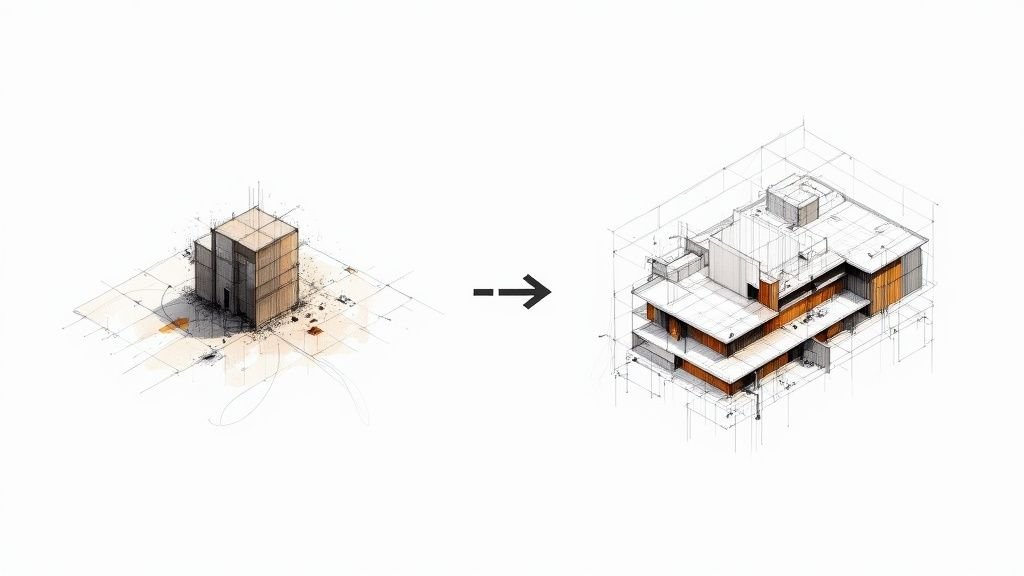
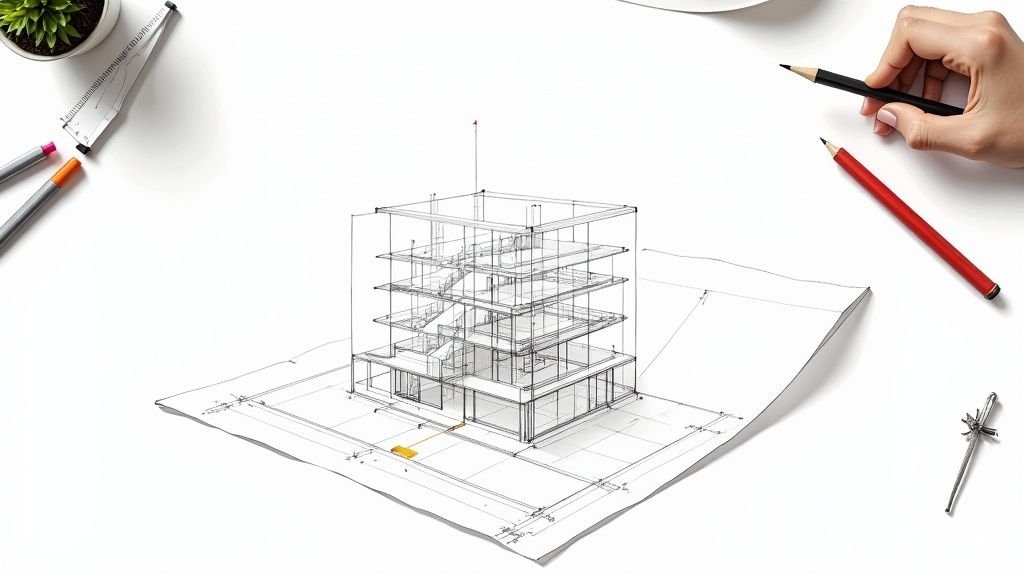
Hiring a construction project management consultant isn't about adding another manager to the payroll. Think of it as a systems intervention—a targeted effort to bring clarity, discipline, and predictability to complex builds. It’s how you transform chaotic workflows into reliable production systems that protect your margins and timelines.
Ending Project Chaos With a Systems-Based Approach
Picture a complex construction project as a world-class orchestra. You have incredibly skilled musicians—architects, engineers, trade contractors—all experts at their craft. But without a conductor to set the tempo and provide a unified score, all that talent just creates noise. This is the reality for too many project teams: immense skill undermined by a lack of operational structure.
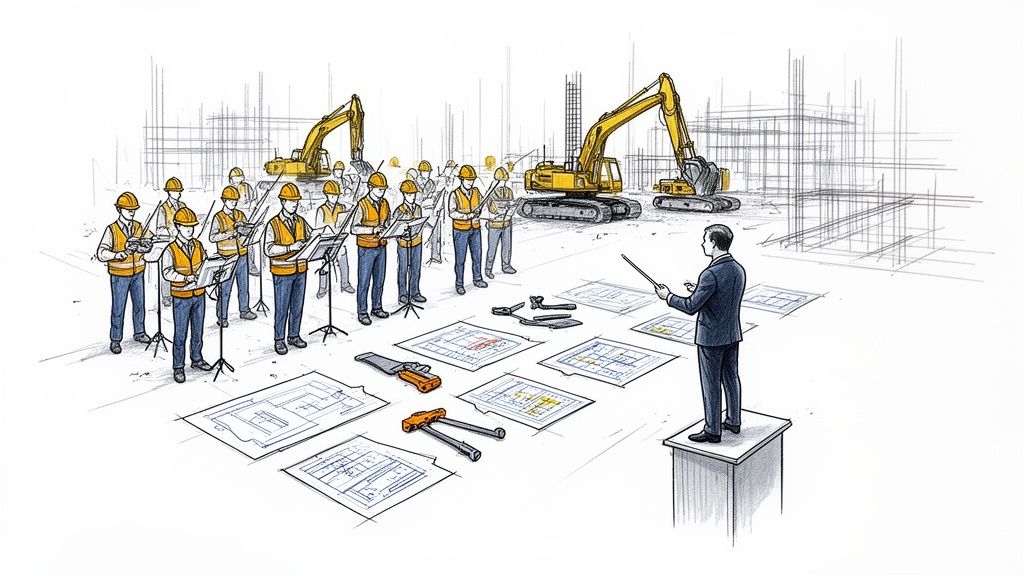
The root problem isn't a lack of talent; it's the absence of a resilient project operating system. When drawings arrive late, RFI bottlenecks form, and responsibilities are vague, the project spirals into daily firefighting. Your best people end up managing crises instead of driving progress.
The Real Cost of Unstructured Projects
This reactive state isn't just frustrating—it directly chews through your profits. One of the biggest challenges in construction is the staggering rate of underperforming projects. A striking 61% of US project owners have had to deal with at least one failing venture. This often stems from poor estimating, a problem that plagues 83% of construction firms. These numbers scream for expert intervention to bring accuracy and discipline back to the process.
An external consultant brings the framework that internal teams, buried in the day-to-day chaos, rarely have the bandwidth to build themselves. This isn't staff augmentation. It's about implementing battle-tested AEC project management workflows that create operational consistency and stop the bleeding.
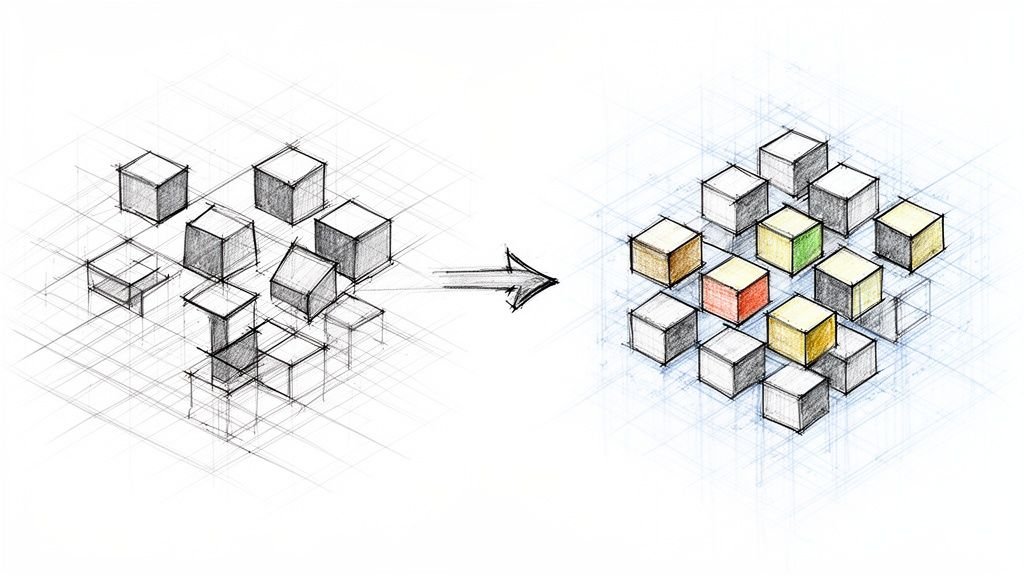
From Ambiguity to Accountability
The goal of a PM consultant is simple: replace ambiguity with accountability. Instead of running on assumptions, a consultant establishes clear rules of engagement. They introduce proven tools and processes that keep every stakeholder aligned and responsible for what they need to deliver.
It's helpful to see the "before and after" of this kind of intervention. Many teams don't even realize how much friction they're dealing with until they see a better way.
Symptoms of Project Chaos vs Outcomes of Structured Consulting
| Common Symptom of Chaos | Result of Consulting Intervention |
|---|---|
| Deadlines are constantly missed. | Predictable Timelines: Milestones are met consistently through proactive scheduling and clear task ownership. |
| The budget keeps ballooning. | Cost Control: Budgets are protected with rigorous change order management and accurate progress tracking. |
| Teams are pointing fingers. | Clear Accountability: Responsibility matrices eliminate "it's not my job" and ensure everyone knows their role. |
| Rework is a common occurrence. | Improved Quality: Standardized BIM protocols and decision checkpoints catch errors before they hit the field. |
| Communication is fragmented. | Centralized Communication: A defined communication plan keeps all stakeholders informed and aligned. |
This table illustrates the direct impact of moving from a reactive to a proactive management style.
By focusing on these foundational elements, a project shifts from a state of constant reaction to one of controlled, predictable execution. These systems bring order where there is chaos, delivering projects on time, on budget, and without all the drama. To truly end project chaos, managers must also weave in proactive construction security strategies from the very beginning to protect assets and keep schedules on track.
Moving from Firefighting to Forward Planning
Reactive problem-solving is the default for too many construction projects. The day is a blur of putting out fires—an unexpected RFI, a trade conflict, or a missing drawing—leaving no time for strategic management. This constant crisis mode feels productive, but it’s a direct assault on your timeline and budget. Construction project management consulting is the intervention that breaks this cycle.
Think of it as installing a durable "operating system" for your project. Instead of relying on gut feelings and frantic phone calls, a consultant builds the frameworks that bring discipline to the entire workflow. This isn’t about adding bureaucracy; it’s about creating clarity so your team can focus on execution, not chaos. The goal is to move from a state of constant reaction to one of proactive control.
This shift starts on day one. A seasoned consultant introduces systems that stop common problems before they can derail progress, changing the entire team’s mindset from reactive to proactive.
Establishing Day-One Discipline
The best project delivery consulting starts long before the first shovel hits the ground. It begins by setting clear rules of engagement that kill ambiguity from the get-go. We’ve seen project timelines stabilize just by introducing weekly decision checkpoints and clear model governance rules.
A few key interventions make all the difference:
- Structured Kickoff Frameworks: This is more than a simple meet-and-greet. A real kickoff defines project goals, communication protocols, stakeholder expectations, and key milestones, making sure everyone is on the same page from the start.
- Responsibility Matrices (RACI): A RACI (Responsible, Accountable, Consulted, Informed) chart is a simple but powerful tool. It maps out exactly who does what for every major task, eliminating scope gaps and the classic "I thought they were handling that" excuse that grinds projects to a halt.
- Decision Checkpoints: By formalizing decision-making with scheduled checkpoints, you prevent bottlenecks. It forces critical choices to be made on time, with the right people involved, and documents everything to avoid future disputes.
These first steps build a foundation of accountability. Everyone on the team knows their exact role, their deadlines, and how their work plugs into the bigger picture. This foundation is especially critical when you need to understand how to manage multiple projects without letting important details slip through the cracks.
Building Robust QA/QC Workflows
Quality issues are a massive source of rework and cost overruns. A reactive approach waits for an inspector to find a problem on-site, forcing expensive and time-consuming fixes. A proactive system, guided by expert construction PM services, is designed to prevent those errors in the first place.
A consultant designs QA/QC workflows that are embedded directly into the production process. The aim isn't just to catch errors but to create a system where they are far less likely to happen.
This is done by implementing template discipline and repeatable verification steps at critical points. For example, a consultant might set up a multi-stage drawing review process that includes peer reviews, clash detection cycles, and constructability checks before the documents are ever issued for construction.
This focus on process improves production maturity. Instead of relying on individual heroics to catch mistakes, the entire system is engineered for quality. This structured approach ensures that whether you’re preparing for permitting or coordinating complex BIM models, every deliverable has been verified and validated against a clear, repeatable standard. Ultimately, this proactive stance protects your margins by minimizing the costly domino effect of rework and delays.
Four Pillars of a High-Performing Project Workflow
Effective construction project management consulting isn't some vague, abstract service. It's a systematic intervention built on distinct pillars that bring order to the natural chaos of a job site. A good consultant installs discipline in a few key areas, moving a project from a state of constant fire-fighting to one of predictable delivery.
These four pillars are the bedrock of any high-performing project workflow. They're what turn reactive teams into proactive, margin-focused units. This isn't about hoping for the best; it's about building a system that actually delivers it. Let's break down how each one tackles the real-world pain points that eat away at profits and schedules.
Pillar 1: Scope and Documentation Clarity
A vague scope is the number one reason projects go off the rails. It’s the source of countless disputes, endless change orders, and soul-crushing rework. The very first thing any credible consultant does is hammer down an unshakeable foundation of clarity.
This goes way beyond a simple scope of work document. It means creating and maintaining meticulous documentation that leaves zero room for interpretation. We're talking about detailed decision logs that track every critical choice—who made it, when, and why. This simple habit completely shuts down the "he said, she said" arguments that pop up weeks or months down the line. This level of rigor is your single best defense against scope creep.
Pillar 2: Communication and Coordination Cadence
Great teams don't just talk; they communicate with a disciplined, predictable cadence. Without a structured flow of information, you get siloed teams, conflicting priorities, and a project where the right hand has no idea what the left is doing. A consultant’s job is to install a reliable communication rhythm.
This is usually achieved through a few key mechanisms:
- Structured Meetings: Replacing disorganized, rambling calls with agenda-driven meetings that have clear objectives, the right attendees, and concrete action items.
- Unified Reporting Dashboards: Creating a single source of truth for project status. This ensures everyone from the field to the back office is working from the same playbook. The right tools are essential here; modern construction project management software can be the central nervous system connecting your entire operation.
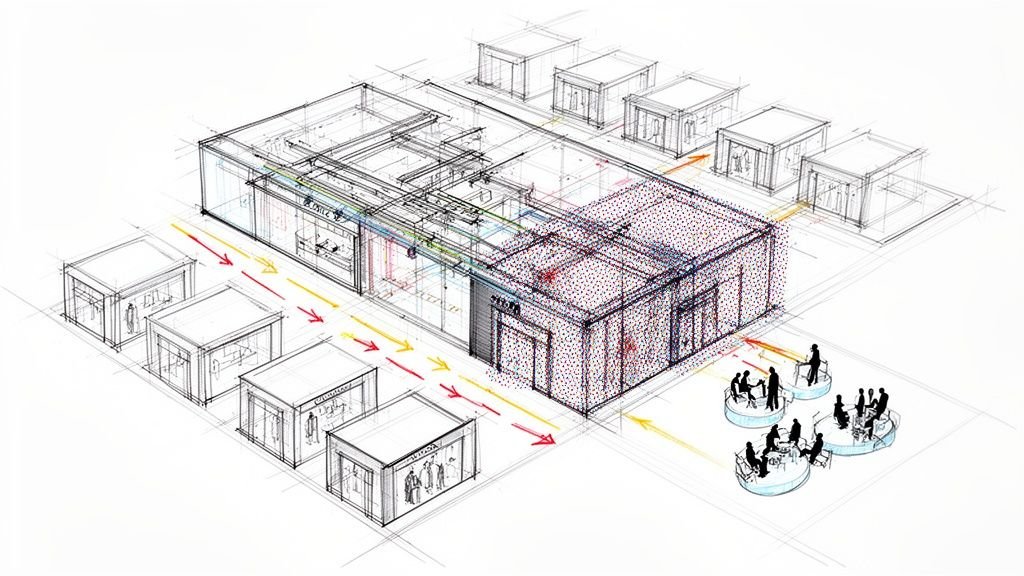
- Clear BIM Coordination Rules: Establishing a firm set of rules that governs model exchanges, clash detection cycles, and how issues get resolved. This prevents coordination meltdowns before they can even start.
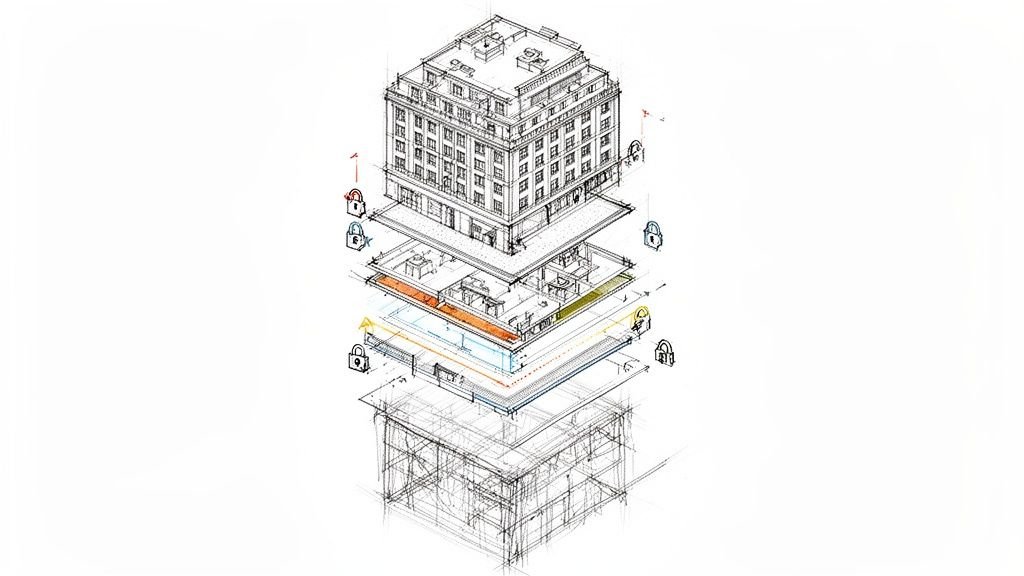
This diagram shows how these core elements—clear frameworks, defined roles, and quality checks—are the backbone of proactive project management.
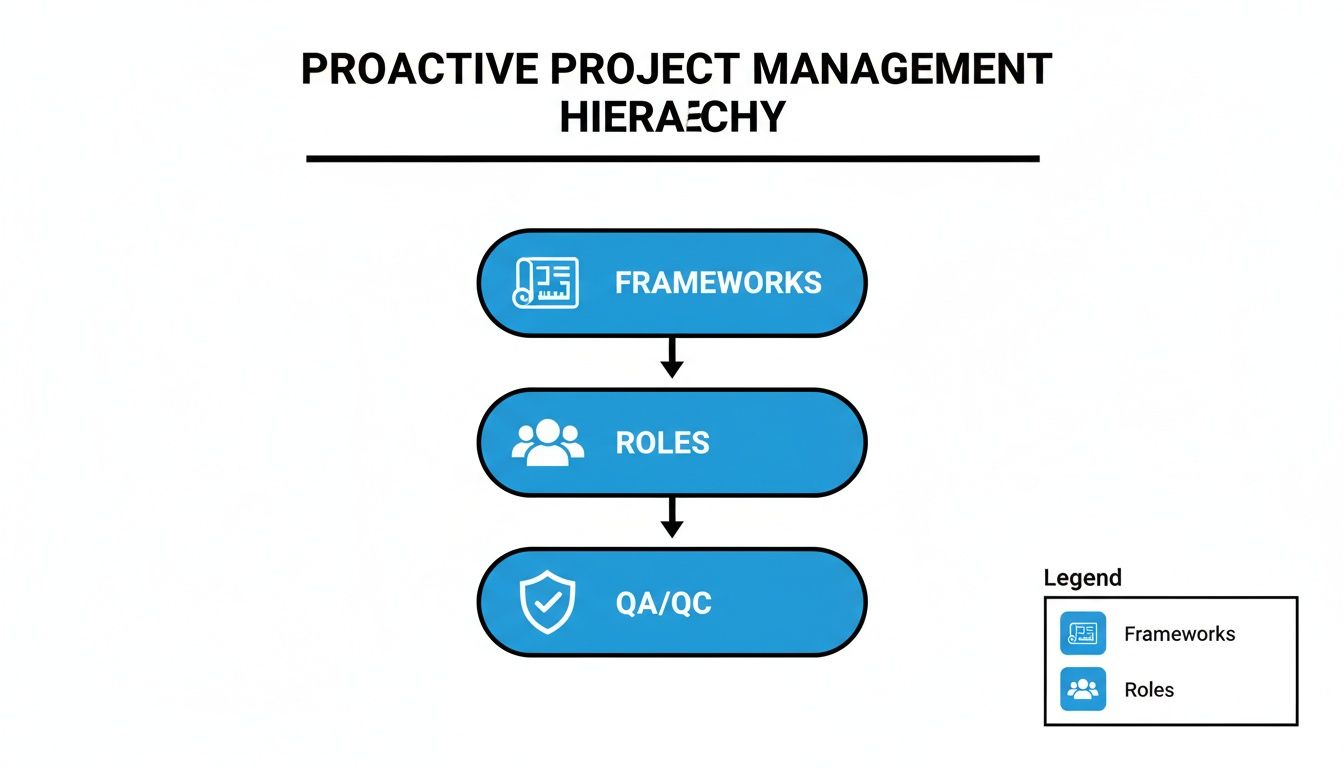
The hierarchy is clear: without established frameworks and well-defined roles, any quality control process is just built on shaky ground.
Pillar 3: Proactive Risk and Schedule Management
Most project teams react to schedule slips after they happen. A high-performing workflow anticipates them. This third pillar is all about shifting the team’s entire mindset from reactive damage control to proactive risk mitigation.
A consultant makes this happen by implementing disciplined sequencing and schedule alignment sessions that force honest conversations about dependencies. Instead of just tracking dates on a Gantt chart, the focus shifts to spotting potential roadblocks—late material deliveries, permit delays, trade stacking—and having contingency plans ready before they turn into full-blown crises. It's this forward-looking stance that separates projects that finish on time from those that are perpetually behind schedule.
Pillar 4: Scalable Delivery and Accountability
Finally, a successful project shouldn't be a happy accident. True operational maturity comes from creating repeatable, scalable systems that allow your firm to deliver consistent results, project after project.
This is where a consultant introduces concepts like "delivery pods"—small, agile teams with clearly defined roles and repeatable processes. By standardizing workflows, templates, and QA checklists, you build a system that depends less on individual heroics and more on a proven process. This approach ensures every new project benefits from the lessons learned on the last one, fostering a culture of continuous improvement and genuine accountability.
To see how these abstract pillars translate into concrete results, the table below maps specific consulting actions to the business outcomes they produce.
Key Interventions and Their Direct Impact on Project Health
| Consulting Tool/Process | Problem It Solves | Primary Business Outcome |
|---|---|---|
| Detailed Decision Logs | "He said, she said" disputes & scope arguments | Reduced legal risk and fewer unbilled change orders. |
| Agenda-Driven Meetings | Wasted time in unproductive, directionless calls | Increased team productivity and faster decision-making. |
| Unified Reporting Dashboards | Conflicting information and stakeholder confusion | A single source of truth that aligns all parties. |
| Proactive Schedule Reviews | Reacting to delays after they've already occurred | Fewer schedule overruns and improved on-time delivery. |
| Standardized QA Checklists | Inconsistent quality and costly rework | Higher quality of work and protected profit margins. |
Ultimately, each pillar is designed to replace guesswork with a system, turning chaotic processes into a well-oiled machine that delivers predictable, profitable outcomes.
How BIM Workflows Supercharge Project Management
In modern construction, treating construction project management consulting as separate from a solid BIM strategy just doesn't work anymore. Building Information Modeling (BIM) has become the digital spine of the entire project. But here's the catch: without strong governance, BIM can introduce more chaos than clarity, leading to ugly coordination breakdowns and rework that blows up your budget.
This is where an expert consultant becomes indispensable. Their job isn't just to manage BIM, but to establish disciplined, repeatable workflows that transform a 3D model from a pretty picture into a powerhouse project management tool.
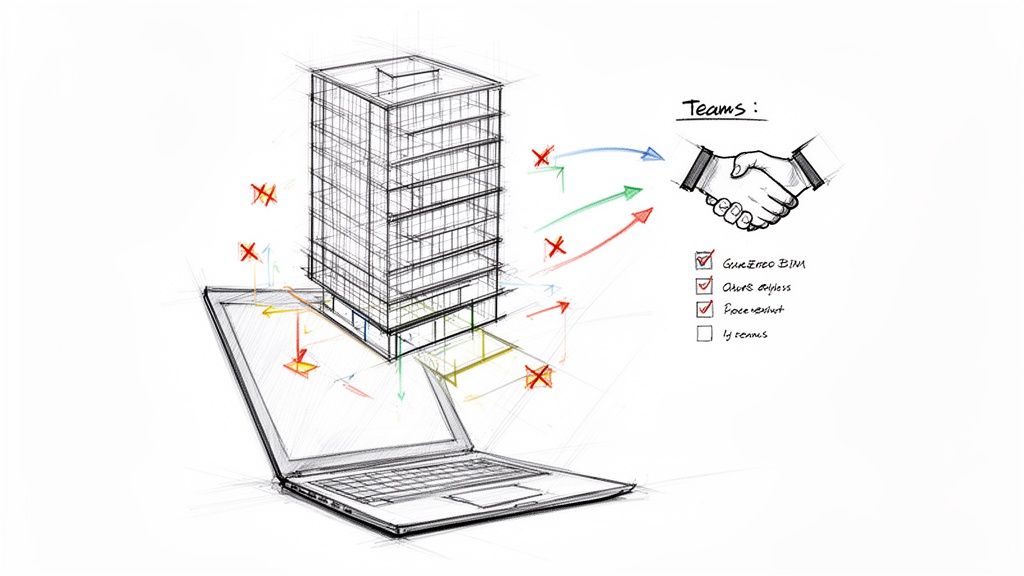
It all starts with a comprehensive BIM Execution Plan (BEP). Think of the BEP as the official rulebook for the project's digital twin. It spells out exactly how models will be built, shared, and used by every single stakeholder—from the architect to the boots on the ground. This isn't just a technical spec sheet; it's the foundational agreement that eliminates the ambiguity plaguing so many complex jobs.
A consultant uses the BEP to enforce template discipline and clear standards, making sure every team member is reading from the same playbook.
From CAD Ambiguity to BIM Clarity
The jump from 2D CAD to 3D BIM was a massive leap forward, but plenty of firms are still stumbling through the transition. They treat their BIM models like glorified digital drawings, completely missing out on their potential for coordination and data management. An experienced consultant shepherds this CAD-to-BIM evolution, turning it into a genuine strategic advantage instead of just an expensive software subscription.
This guidance translates directly into tangible project controls:
- Defining Level of Development (LOD): The BEP clearly outlines the required LOD for model elements at each phase. No more time wasted over-modeling or frustrating information gaps from under-modeling.
- Governing Model Exchange: Strict protocols are established for how and when models are passed between architects, engineers, and trade contractors. This simple step prevents teams from working with outdated information—a classic source of error.
- Structuring Clash Detection Cycles: Instead of random, panicked clash reviews, a consultant implements a formal, scheduled process. This turns clash detection from a reactive fire drill into a proactive quality control measure.
This structured approach is the bedrock of successful digital project delivery. For a deeper look at the nuts and bolts, our guide on BIM project management covers the specific methodologies that create a reliable digital foundation for any build.
Enforcing Rules for Coordination and Communication
Let's be honest: without clear rules, BIM coordination meetings can quickly devolve into finger-pointing sessions where nothing gets solved. A consultant brings order to this chaos by establishing a clear governance structure. They define who is responsible for resolving specific clashes, set firm deadlines for solutions, and track every single issue in a centralized log.
We've seen project timelines stabilize simply by introducing weekly decision checkpoints and model governance rules. This single change prevents small coordination issues from snowballing into major schedule delays.
This level of discipline transforms the BIM workflow into a powerful risk mitigation tool. It creates a single source of truth that heads off the design ambiguity and communication breakdowns that spawn RFIs, change orders, and on-site conflicts. By embedding these AEC project management workflows directly into the digital process, a consultant ensures the model isn't just a picture of the building—it's an active, reliable tool for managing its construction.
This system is a direct line to margin protection and operational consistency. When the digital foundation is solid, predictable, and governed by clear rules, the entire project runs smoother, protecting your bottom line from the high cost of preventable mistakes. It's the ultimate shift from reactive problem-solving to proactive project control.
Choosing a Consultant Instead of a Staffing Vendor
The line between true construction project management consulting and simple staff augmentation has gotten incredibly blurry. Lots of firms will offer to place a warm body on your project, billing by the hour to fill a temporary gap. But that’s not a real solution. It’s just a patch that does nothing to fix the deep-rooted issues causing your delays and cost overruns.
You don't need another person running the same broken plays. You need an expert who can rewrite the playbook entirely.
A genuine consultant zeroes in on your systems, not just staffing. They’ll talk about things like production maturity, template discipline, and scalable delivery pods. A staffing vendor, on the other hand, talks about resumes and hourly rates. The difference in conversation says everything you need to know about the difference in value. One sells hours; the other sells clarity, predictable outcomes, and operational muscle that stays with you long after they're gone.
The Litmus Test for a True Systems Partner
So, how can you tell the difference? A true project delivery consulting expert will immediately steer the conversation toward your operational pain points. Their questions are diagnostic, designed to get to the root of your project chaos.
A real consultant will want to see:
- Your RFI Logs: They’re looking at the volume, response times, and recurring themes to pinpoint breakdowns in communication and documentation.
- Your Change Order History: This is a goldmine of information, revealing weaknesses in scope definition, coordination, and decision-making.
- Your Meeting Cadence and Agendas: Are your meetings structured and purposeful, or just chaotic, reactive discussions? They can tell.
- Your BIM Governance Documents: A lack of clear rules for model exchanges or clash detection is a huge red flag they'll want to fix.
The goal is to find a partner who invests in building your team’s capability, not just filling a seat. They should be focused on implementing durable AEC project management workflows that make your internal team stronger and more self-sufficient over time.
This distinction has never been more critical. The demand for project management talent is exploding, with a global need for 25 million new professionals by 2030. That talent gap is especially painful in construction, where labor shortages can grind projects to a halt. This makes it absolutely vital to partner with consultants who provide robust systems and deep expertise, not just temporary bodies.
From Temporary Help to Lasting Improvement
Here's the bottom line: a staffer is paid to manage the existing chaos. A consultant is paid to eliminate it. Their value is measured by the operational transformation they deliver, not the hours they clock.
When you're vetting potential partners, ask for case studies. Look for proof that they've improved a client’s workflows, slashed their RFI volume, or stabilized their project schedules.
The right construction PM services act as a force multiplier for your team. They bring the frameworks and discipline that empower your own people to execute more effectively. This is a far better investment than simply outsourcing tasks—much like how specialized knowledge elevates the process when you consider the benefits of outsourcing drafting services. You're not just buying temporary support; you're investing in a more resilient, profitable, and predictable way of delivering projects.
How to Implement Structure Without Disrupting Your Team
Let’s be honest. When you hear "outside consultant," you might picture someone coming in to enforce a top-down mandate, forcing new processes on a team that’s already stretched thin. It’s a common fear, but effective construction project management consulting doesn’t work that way. It’s a partnership, not a prescription.
The goal isn't to bulldoze what you've built. It's about working alongside your crew to find the real bottlenecks. A good consultant acts more like a coach than a commander, taking the time to see how information moves, where decisions get stuck, and what daily frustrations are draining your team's energy.
A Collaborative, Not Combative, Process
This whole thing is about co-creating solutions. When you involve your team in diagnosing the problems—whether it’s disorganized RFIs or fuzzy BIM coordination rules—they become part of the solution. That collaboration is everything for getting buy-in and making sure the changes feel helpful, not disruptive.
The most successful engagements begin with listening. A consultant’s first job is to understand the team’s lived experience on a project and then introduce tools that make their jobs easier, not harder.
Forget about sweeping overhauls. The focus is on small, incremental improvements that deliver value right away and build momentum. These aren’t abstract theories; they're practical, field-tested adjustments that work.
Building Momentum with Small Wins
Real operational change doesn't happen overnight. It’s built on a series of small, strategic wins that prove their worth and get people on board. This approach respects your team’s expertise while gently introducing a new layer of discipline.
Here’s what that looks like in practice:
- Introducing a standardized RFI template: This simple tool can instantly cut down on ambiguity and speed up response times. It’s an immediate fix for a common headache.
- Implementing weekly decision checkpoints: A short, structured meeting focused only on clearing roadblocks can stop small issues from snowballing into major delays.
- Clarifying roles with a simple responsibility matrix: When you map out who owns what, you eliminate confusion and empower team members with clear ownership.
These aren't disruptive changes; they’re enabling ones. By focusing on AEC project management workflows that solve actual problems, the consultant becomes a supportive partner. The end goal is to leave your internal team with better processes and tools, making their jobs more effective and a lot less stressful. True project delivery consulting leaves a team stronger and more capable than it was before.
Frequently Asked Questions
Still have a few questions? We get it. Here are some of the most common things builders, architects, and developers ask about construction project management consulting.
What Does a PM Consultant Actually Do?
Think of them as the architect of your project's operating system. A consultant doesn't manage the day-to-day grind; instead, they design the framework that makes everything run smoothly. This means creating clear communication plans, setting documentation standards, building QA/QC workflows, and designing reporting dashboards.
Their job is to build a reliable machine that lets your team run the project predictably and profitably. It’s all about maturing your processes, not just adding another manager to the payroll.
Is This Only for Large, Complex Projects?
Not at all. While the big, complicated projects definitely benefit, the core principles of structured management apply to any build. If you're wrestling with missed deadlines, scope creep, or razor-thin margins on any size project, a consultant can help diagnose the problem.
The real value of project delivery consulting is in creating repeatable systems that keep chaos at bay. That discipline protects your bottom line whether you're building a custom home or a commercial high-rise.
How Is This Different from Just Hiring Another Project Manager?
It’s a fundamentally different role. A project manager works within the system you already have. A consultant comes in to fix or build a better system from the ground up.
Hiring a PM is about adding more hands to the deck. Bringing in a consultant is an investment in your company's long-term operational strength. They install durable AEC project management workflows and train your team to use them, leaving behind value that outlasts any single project.
Can a Consultant Help with Our BIM Coordination Issues?
Absolutely. A huge part of modern construction PM services is establishing solid BIM governance. Without it, the model can quickly become a source of conflict and expensive rework.
A consultant brings discipline to the digital workflow by creating a clear BIM Execution Plan (BEP), defining Level of Development (LOD) requirements for everyone involved, and structuring the clash detection and resolution cycles. They turn the model into the reliable coordination tool it's meant to be.
Ready to bring more structure and predictability to your projects? At BIM Heroes, we help firms build resilient workflows that deliver clarity and control from day one. Download our free Project Responsibility Matrix Template to start defining clear roles and eliminating scope gaps on your next build.