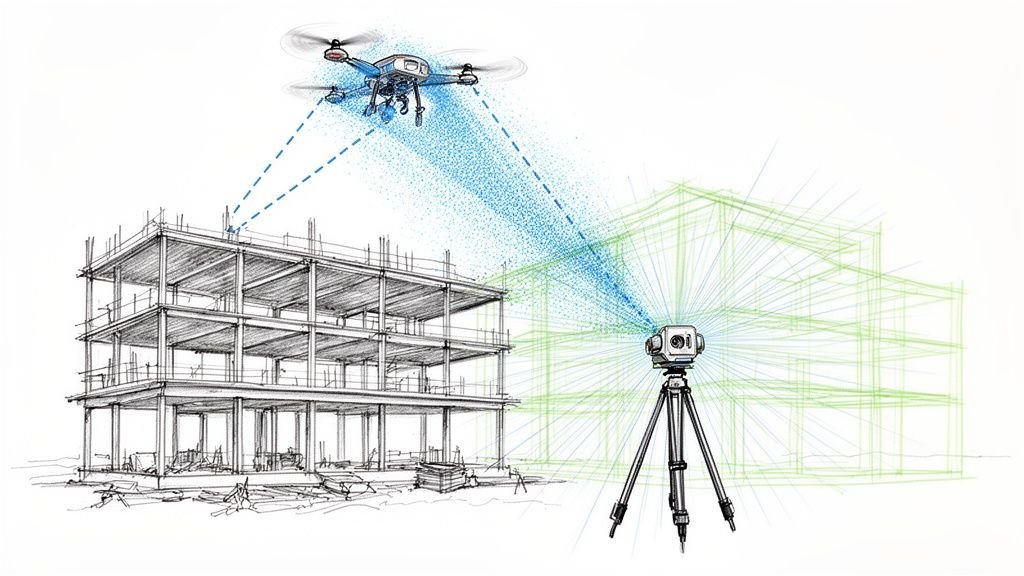
Mechanical, electrical, and plumbing design—or MEP—is more than a stack of technical drawings for a building's guts. True mep design services are about strategic coordination and proactive decisions that protect a project's budget, timeline, and architectural intent.
Rethinking MEP: From Technical Task to Strategic Discipline
Too often, MEP is treated as a downstream task—a technical puzzle to solve after the architectural vision is locked in. This reactive approach is a direct path to margin erosion. It’s the root cause of late-stage redesigns when a duct won’t fit, structural beams clash with plumbing risers, or an undersized electrical room forces painful compromises to the floor plan.

The core lesson learned in the field is simple: MEP design services succeed when systems are planned early, coordinated tightly, and modeled with constructability in mind—not when they are pushed downstream and forced to fit. It's an interconnected system of logic, not just a collection of parts.
The Shift from Reaction to Prevention
Treating MEP as a coordination discipline from day one is how you prevent the problems that blow up budgets and schedules. It’s about making informed decisions when they have the most impact, such as:
- System Selection: Choosing between VAV or VRF isn't just a mechanical detail; it directly impacts ceiling heights, plenum space, and structural loads. Make that call early.
- Spatial Planning: Defining zones for risers, shafts, and equipment rooms before the architectural model is set in stone ensures everything fits without gutting the design intent.
- Routing Logic: Establishing clear pathways for major services avoids the chaotic, clash-filled routing that buries you in RFIs and on-site conflicts.
This discipline isn't just good practice; it's a critical component of project delivery. The value of getting it right is reflected across the industry, with insights on the global MEP services market showing its significance.
A project’s predictability is determined long before ground is broken. It’s secured in the early design phases when MEP is treated as a strategic partner to architecture and structure, not an afterthought.
The difference in outcomes is stark. When MEP is planned early, it moves from a source of conflict to a driver of project clarity.
From Reactive to Proactive: A Clear Contrast
This table contrasts the outcomes of treating MEP design as a downstream task versus an integrated, early-stage discipline, highlighting the direct impact on project metrics.
| Project Aspect | Traditional (Reactive) MEP Approach | Integrated (Proactive) MEP Approach |
|---|---|---|
| Coordination | High number of clashes discovered late | Clashes are identified and resolved in the model |
| RFIs | A constant flood of requests for information | RFIs are minimized and more strategic |
| Change Orders | Frequent and costly due to unforeseen issues | Change orders are rare and manageable |
| Schedule | Prone to significant delays and rework loops | Timelines are predictable and met consistently |
| Budget | Overruns are common; margin erosion is high | Costs are controlled and predictable |
| Design Intent | Architectural vision is often compromised | Design integrity is preserved |
Ultimately, a proactive approach moves a project from a state of constant problem-solving to one of predictable execution, protecting margins and client trust.
The True Deliverable: Clarity and Consistency
High-quality MEP engineering services don’t sell hours; they deliver clarity and operational consistency. When the process is built on disciplined templates, rigorous QA checks, and defined decision checkpoints, the entire workflow is transformed.
The goal is a seamless handoff from a perfectly coordinated design model to clean shop drawings and fabrication. This protects your margins, ensures the building performs as promised, and prevents the costly surprises that derail projects.
Ready to build more predictability into your projects? Our MEP Design Coordination Readiness Guide provides a practical framework for integrating MEP strategy from the start.
The Foundation: Early System Strategy and Spatial Planning
Great buildings are strategically planned, not just designed. This is especially true for the complex systems humming behind the walls. Success starts long before the first pipe is routed—it begins with a solid early system strategy and smart spatial planning. This is the bedrock that prevents the most common and expensive downstream headaches.
It all comes down to asking the right questions upfront. Choosing between commercial HVAC system types like VAV (Variable Air Volume) or VRF (Variable Refrigerant Flow) isn't a technical footnote; it’s a decision that shapes the architecture itself. This single choice impacts plenum space, ceiling heights, and structural loads. Decide too late, and you're stuck with painful architectural compromises that were completely avoidable.

Locking Down Non-Negotiable Zones
One of the most critical first steps is carving out and protecting dedicated zones for major MEP equipment. This isn't guesswork. It’s about running preliminary load calculations against the architectural program to right-size these spaces from day one.
Making these calls early helps you sidestep classic project disasters:
- Undersized Electrical Rooms: A room planned without a true grasp of the building’s power demands will always need to expand, stealing valuable square footage from leasable or programmable areas.
- Misaligned Risers: When shafts don't stack perfectly from floor to floor, you get a domino effect of inefficient routing, wasted space, and frustrating construction hurdles.
- Inaccessible Equipment: Placing large equipment without a thought for future maintenance access is a surefire way to drive up operational costs and create nightmares for facilities teams.
The point of early spatial planning is to weave MEP infrastructure into the architectural fabric, not just cram it in later. This protects both the design intent and the project's bottom line.
This disciplined approach transforms mechanical electrical plumbing design from a reactive clean-up crew into a proactive, value-adding partner.
From Load Validation to Logical Pathways
Once systems are selected and equipment rooms are locked in, the focus shifts to creating a clear routing logic. Instead of a free-for-all where pipes and ducts are run wherever they fit, a strategic plan defines primary pathways. This brings order and predictability to the design, making detailed modeling infinitely simpler.
This is where you lay the groundwork for effective BIM coordination. By setting clear rules and designated zones upfront, the entire team moves into the next phase aligned. It’s a production-minded approach that designs out the very conflicts that cause a flood of RFIs and costly on-site rework. The most significant coordination challenges are solved before detailed modeling even begins.
Execution: BIM-Based Routing and Clash Avoidance
Once a solid strategy is in place, high-quality MEP design services shift from big-picture decisions to precise, disciplined execution. This is where Building Information Modeling (BIM) becomes a production environment, transforming design intent into a coordinated, buildable digital asset. It's how smart workflows enforce routing logic and eliminate problems before they happen.
This isn’t a chaotic free-for-all of drawing pipes wherever they might fit. It's a systematic process built on established standards and templates. These foundational elements ensure every team member models components the same way, uses the right data, and adheres to project rules. This turns a 3D model into a reliable single source of truth.

Enforcing Logic With LOD and Modeling Standards
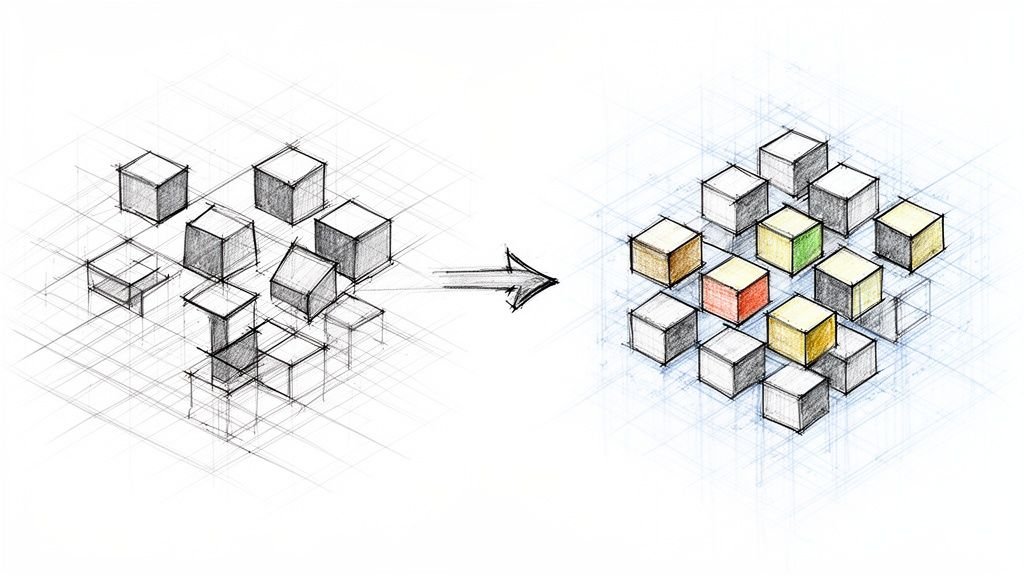
A clearly defined Level of Development (LOD) strategy is essential. An LOD plan spells out exactly how much detail the model needs at each phase, preventing teams from over-modeling too early or under-modeling, which leaves contractors guessing.
A typical progression might follow:
- LOD 200 (Design Development): The model shows approximate size and location of major equipment and main routes to confirm spatial claims.
- LOD 300 (Construction Documents): Components are modeled with actual sizes, shapes, and locations for serious coordination and clash detection.
- LOD 350 (Fabrication-Ready): The model includes details necessary for fabrication, like connections, supports, and precise assembly info.
This phased approach ensures effort is spent where it counts, matching model detail to the decisions at hand.
From Clash Detection to Clash Avoidance
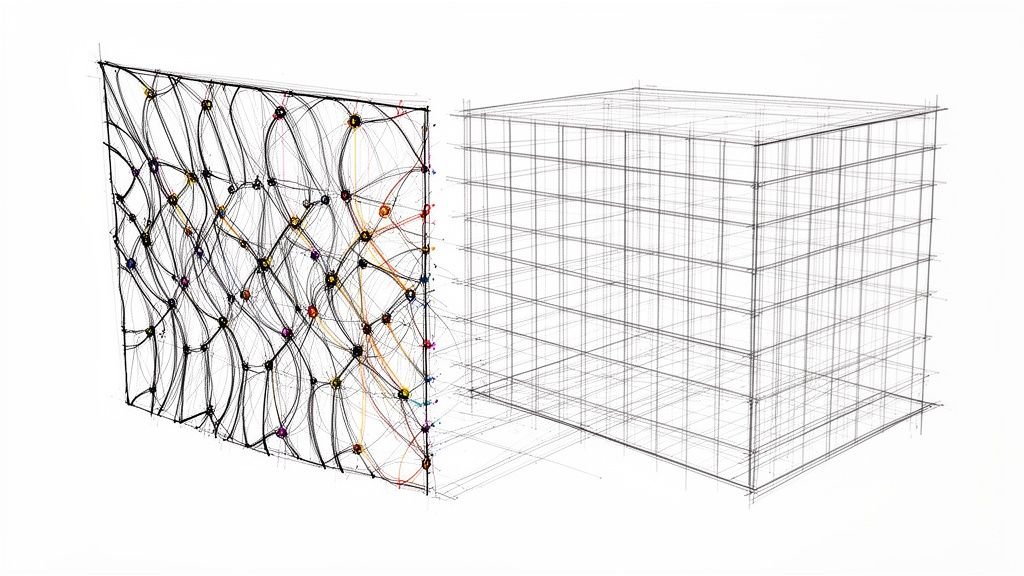
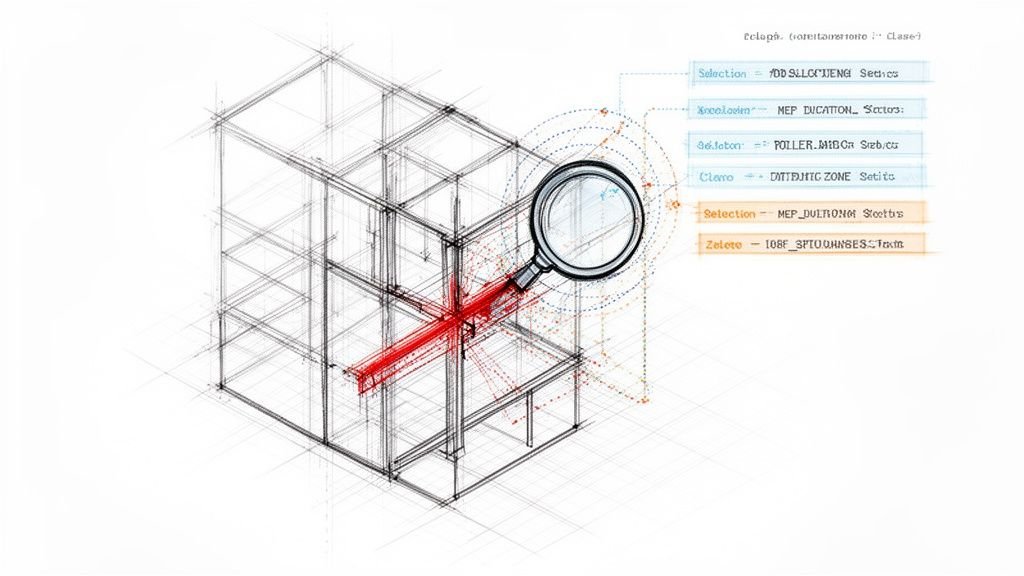
A mature MEP BIM services workflow is about more than finding clashes; it’s about proactively avoiding them. While automated clash detection is a great safety net, a production-minded approach designs out conflicts from the start by setting up clear routing zones and priorities within the model.
The goal isn’t to run more clash reports. It’s to build a model so well-coordinated that clash reports become a final check, not your main coordination tool.
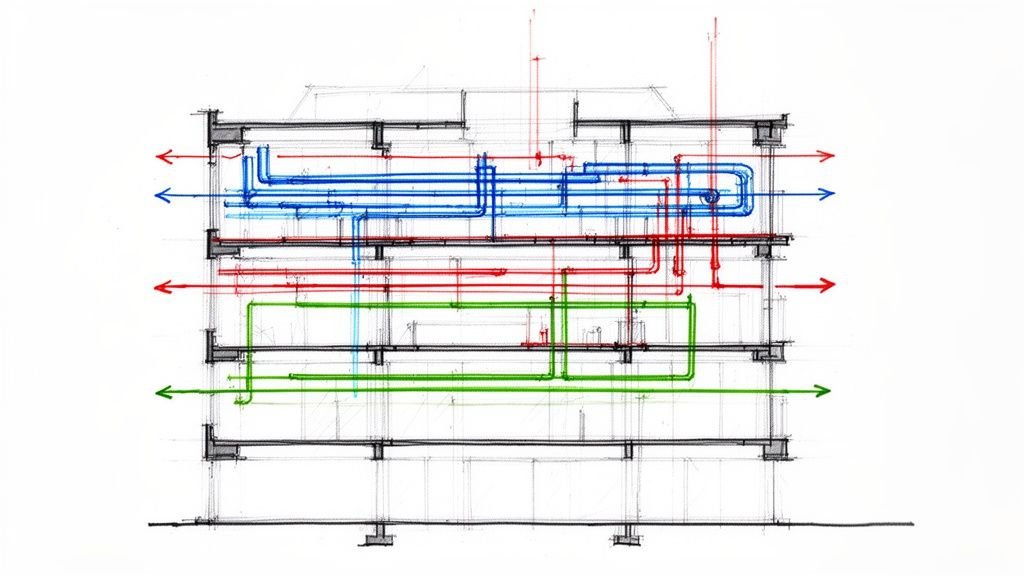
This means major ductwork gets priority in the ceiling plenum, with plumbing and electrical systems routed around it according to a pre-agreed hierarchy. By baking this logic into the modeling process, teams avoid the endless cycle of finding and fixing hundreds of tiny interferences, a key way to reduce construction costs.
By translating early strategy into a rigorously managed BIM environment, the process moves seamlessly from theory to a precise, virtual construction. This delivers a digital twin that is logically sound and ready for the real world.
The Real-World Test: Constructability and Maintainability
A perfectly coordinated, clash-free model is a huge win, but it’s only half the battle. The true test of great MEP design is whether it can be built efficiently on-site and maintained for years to come. This is where constructability and maintainability checks protect your profit margins.
A design that looks clean on a monitor but can’t be assembled in the field is a failure. It leads to frantic calls, on-the-fly modifications, and a flood of change orders. A proper constructability review process asks the tough, practical questions before the design is finalized.
From Digital Model to Physical Reality
Constructability is about thinking like the crew in the field. Can a 24-inch duct physically fit into that tight ceiling plenum? Is there enough room to weld pipe connections? Can hangers and supports be reached?
It’s a reality check that prevents costly improvisation. A mature design process bakes in checkpoints for:
- Sequencing and Access: Can plumbing go in before main ductwork boxes everything out? Is there a clear path to get large equipment into the mechanical room?
- Tool and Body Clearance: Is there space for a tech to swing a wrench, use a drill, or fit their arm in to make a connection?
- Material Constraints: Does the design account for standard lengths of pipe or duct to minimize waste?
Answering these questions during design separates a merely coordinated model from a truly buildable one.
Designing for Day Two and Beyond
Once the building is handed over, the focus shifts to maintainability—routing systems with an eye toward future access. A system that’s a nightmare to service drives up the owner's long-term operational costs.
Good maintainability means placing valves where they can be reached without tearing down a wall. It ensures filters can be easily swapped and equipment has clearance for routine service or replacement.
An inaccessible valve or a control panel buried behind ductwork isn't just an inconvenience—it's a latent design defect guaranteed to frustrate facility managers and cost the owner money.
This foresight is becoming non-negotiable as clients demand smarter buildings. The U.S. market for MEP services is projected to grow from USD 51.81 billion in 2025 to USD 100.42 billion by 2030, according to market research from Precedence Research.
A mechanical electrical plumbing design that passes the tests of constructability and maintainability delivers incredible value. It reduces on-site friction, prevents rework, and gives the owner an asset that’s efficient to run for decades.
The Clean Handoff to Fabrication and Installation
The final, critical phase of an MEP design workflow is the handoff from the digital model to fabrication and installation. A beautifully coordinated design can fall apart if the information passed to trade contractors is ambiguous or incomplete.
A clean handoff is the direct result of disciplined processes. When the design model is built with a clear Level of Development (LOD) strategy, it contains the exact information fabricators need to create their shop drawings without guesswork. That clarity is the single best way to prevent the avalanche of RFIs that can grind a project to a halt.
From Design Intent to Fabrication-Ready Models
The goal is to deliver a model that acts as a crystal-clear set of instructions. A fabrication-ready model is packed with specific details trade partners need to build components off-site with confidence.
Modern MEP engineering services ensure that a contractor’s model includes:
- Precise Dimensions and Spacing: Every component is modeled to its exact size and location, leaving no room for interpretation.
- Clearance and Access Zones: The model respects the space needed for installation tools and future maintenance.
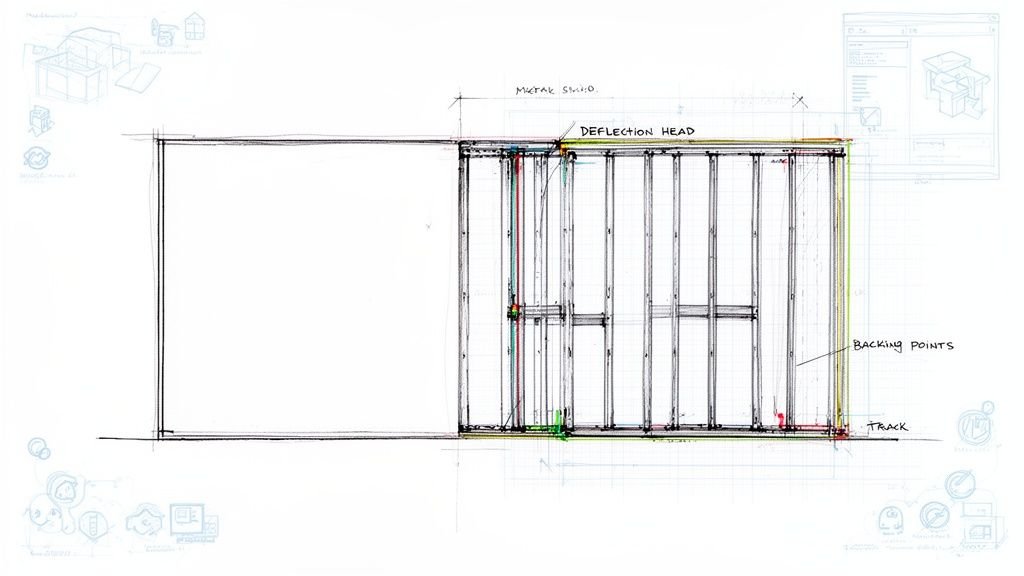
- Connection and Support Points: Critical details for hangers, supports, and system connections are defined.
A high-LOD model pays for itself. Instead of fabricators sending questions back and forth, they can get straight to work, protecting the project schedule and bottom line.
A design model isn't finished until it can be handed to a fabricator with minimal clarification. The number of RFIs at this stage is a direct measure of the design team's production maturity.
The Final Quality Checkpoint
The MEP design team's job doesn't stop once the model is issued. Reviewing shop drawings submitted by trade contractors serves as the final quality control checkpoint, ensuring fabrication plans align with the original engineering intent.
This review is where a deep understanding of mechanical electrical plumbing design becomes indispensable. The team can spot subtle deviations that might compromise system performance or create unforeseen conflicts. You can see how detailed these documents get in this in-depth shop drawing example.
By acting as a diligent final reviewer, the MEP team safeguards the project against costly installation errors, ensuring the building that gets built is the same one designed in the digital environment.
Building Predictability Into Every Project
High-performance MEP design services are not a commodity. They are a system for injecting predictability into projects. When done right, the chaotic, reactive nature of construction flips into a controlled, proactive process that protects your project's outcome.
It starts with early system strategy, moves into disciplined MEP BIM services for coordination where conflicts are engineered out, and wraps with robust constructability reviews. Each step systematically builds on the last, stripping risk out of the project.
From Design to Fabrication
This integrated approach is about protecting margins and delivering a consistent, repeatable result. It makes the handoff from a digital model to boots on the ground seamless.
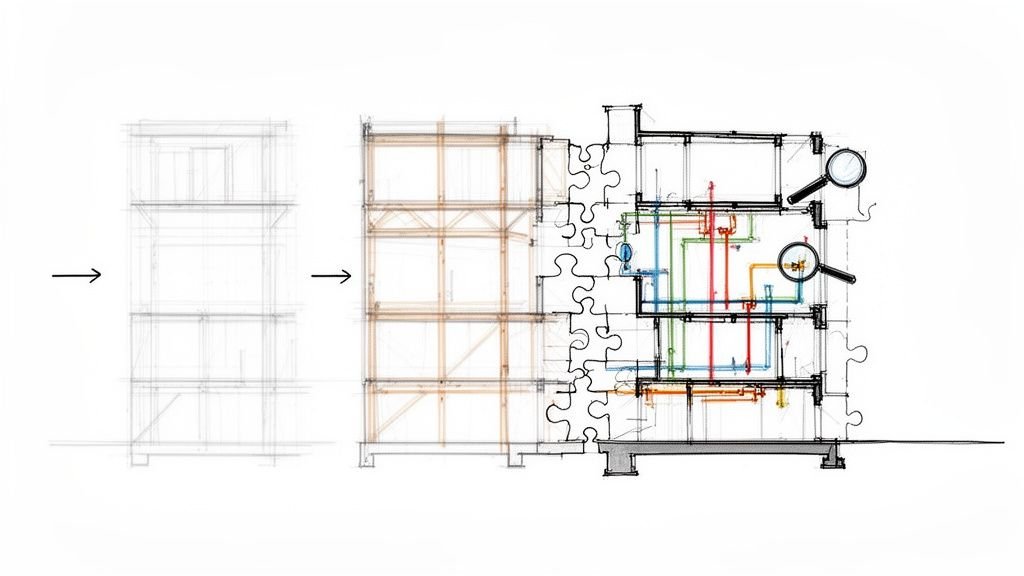
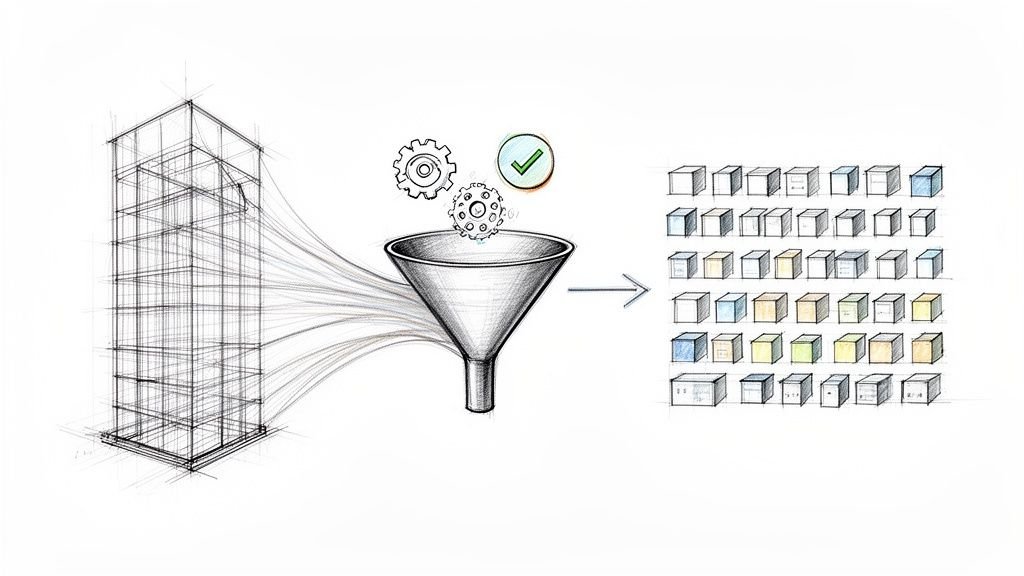
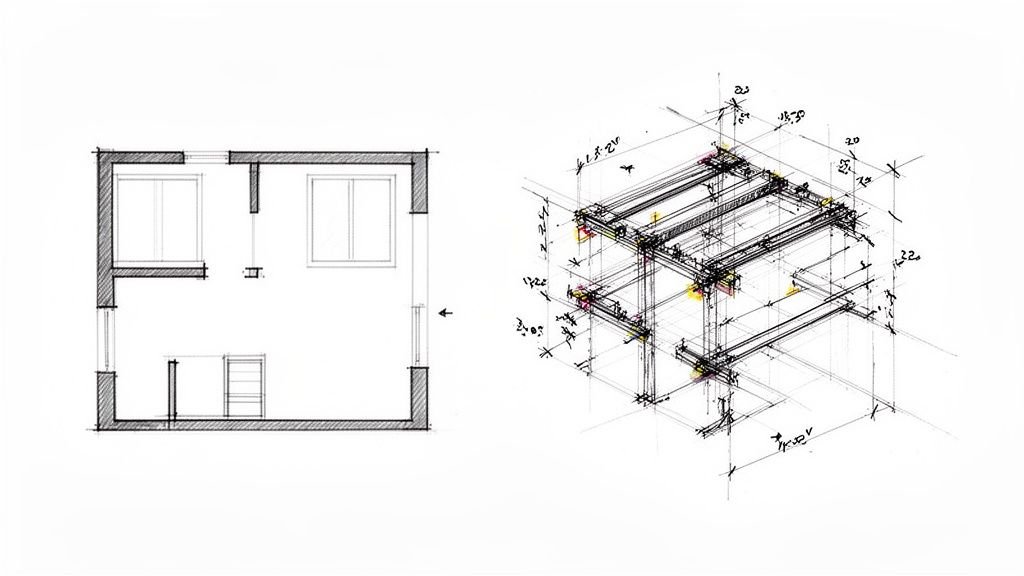
The flow below shows how clean that transition can be—moving from a coordinated design model to shop drawings and, finally, to fabrication.

This visualizes how a well-defined model becomes the single source of truth for clean shop drawings, enabling efficient off-site fabrication.
This is a production-matured reality. By investing in this upfront discipline, you drastically slash RFIs that trigger delays and kill the costly change orders that eat away at profitability. Predictability isn't a bonus—it's the core deliverable.
The real value of mature MEP engineering services is not just in the calculations, but in the systemized process that guarantees a coordinated and constructible outcome. It’s the difference between hoping for a good result and engineering one.
This proactive mindset is fundamental to project success. It ensures the architectural vision is preserved, budgets are respected, and the final building performs as intended. It’s about building with clarity, not just concrete and steel.
Ready to implement these principles on your next project? Our MEP Design Scope Checklist offers a practical tool to help you define clear requirements and ensure your projects are set up for success from day one.
Frequently Asked Questions About MEP Design Services
Here are straight answers to the questions we hear most often from architects, project managers, and developers.
At what project stage should we engage MEP design services?
As early as possible, ideally during the Schematic Design (SD) phase. Getting the MEP team involved early is the single best way to protect your architectural vision and budget.
When the MEP team is part of the early conversation, they can influence critical decisions about floor-to-floor heights, shaft locations, and equipment room sizes. Waiting until Design Development (DD) forces you to shoehorn systems into a defined shell, which almost always leads to messy layouts and redesigns.
What is the difference between MEP design and MEP BIM services?
MEP design is the engineering brain—sizing equipment, running load calculations, selecting systems, and ensuring code compliance. It answers the "what" and "why."
MEP BIM services are the modern method for executing that design. It’s the "how." This involves building an intelligent 3D model to coordinate every component and eliminate clashes before they happen on-site. In reality, any high-quality MEP design service today is delivered through a disciplined BIM workflow.
How do you measure the ROI of high-quality MEP design?
The return is measured in risk mitigation and cost avoidance. A well-executed mechanical electrical plumbing design makes the entire project more predictable and protects your margins.
Track these metrics:
- Fewer RFIs: A sharp drop in questions from the field about MEP clashes or layouts.
- Minimal Change Orders: Solving problems in the model eliminates expensive on-site rework.
- Schedule Adherence: Solid coordination prevents MEP-related delays that have a domino effect.
- Lower Lifetime Costs: Properly designed systems are more energy-efficient and easier to maintain.
The real ROI is a project that stays on schedule and on budget, leading to happier clients and a more efficient team.
What should I look for in an MEP design services provider?
Look past standard credentials and zero in on their production maturity. The best partners don’t just talk about software; they emphasize their systems, workflows, and quality control.
Ask to see their BIM execution plans, modeling standards, and internal QA/QC checklists. A mature provider is focused on demonstrating template discipline and the decision checkpoints they use to guarantee constructability. Their obsession with a clean handoff to fabricators is the hallmark of a team that truly understands how buildings get built.
At BIM Heroes, we deliver the clarity and operational consistency your projects demand. Our production-focused MEP design and BIM services are built to ensure predictability from day one. See how our disciplined workflows can protect your margins and deliver reliable outcomes.
Learn more at https://www.bimheroes.com.