True project management for architects isn’t about managing schedules; it’s the craft of managing information, decisions, and production. It’s about building a predictable system where design intent, technical accuracy, and client expectations move forward in a controlled, disciplined rhythm. This is how you protect margins, ensure consistency, and deliver reliably every time.
Why Your Firm Needs Discipline, Not Heroics
Many architecture firms run on adrenaline and last-minute heroics. Teams pull all-nighters during a CD crunch, scramble to fix coordination busts, and squeeze in eleventh-hour design changes. This chaotic cycle feels productive, but it’s silently killing profitability and burning out your team.
This model is unsustainable. It comes from a misunderstanding of what project management means inside an architecture firm, where design complexity, technical accuracy, and permit-driven deadlines collide daily. Generic PM theory—all Gantt charts and rigid task lists—falls apart.
The Real Job of an Architectural PM
The core challenge isn't tracking tasks; it’s managing the relentless flow of information. Lost markups, unclear responsibilities, last-minute design updates, and inconsistent drawings are the real enemies of a solid architectural project delivery system. Without structure, teams rely on “heroics” and hope—a recipe for RFIs and eroded margins.
We’ve seen architectural teams deliver more consistently once project management focused on information flow rather than task lists. This requires ditching reactive habits for disciplined systems.
The AEC sector has a project execution problem. On average, only 35% of projects are completed successfully. But that success rate jumps 2.5 times higher when structured project management practices are fully implemented. With over 61% of US construction owners dealing with underperforming projects, the need for discipline couldn't be clearer.
From Reactive Chaos to Structured Clarity
A structured architecture project workflow doesn't kill creativity. It protects it. It builds a framework where design can flourish without the constant threat of preventable errors blowing up the schedule and budget. This is what a discipline-driven approach looks like in practice.
| Challenge Area | The Common Reactive Approach | The Structured PM Solution |
|---|---|---|
| Project Kickoff | A quick intro meeting; teams dive in assuming rules are understood. | Establish decision protocols, a communication plan, and a decision log from day one. |
| Documentation | Each team member uses their own templates; standards are "suggestions." | Enforce strict template discipline and modeling standards to guarantee consistency and quality. |
| Coordination | "We'll sync up when something breaks." Fire-drill meetings become the norm. | Implement weekly coordination cycles with structured agendas to resolve issues before they become emergencies. |
| QA/QC | A frantic, last-minute check right before a deadline submission. | Integrate quality assurance as an ongoing process with defined checkpoints, not just a final step. Catch errors early. |
This disciplined system is the foundation for operational consistency. It allows your firm to scale predictably and protect its hard-earned margins, moving you from a studio that survives on heroics to one that thrives on process.
How to Run an Architecture-Specific Project Kickoff
The most critical moment in architectural project management isn’t drawing the first line. It’s the project kickoff—a strategic session where you lay down the rules of engagement for the entire project.
Skipping this discipline is a fast track to scope creep, murky responsibilities, and decision-making chaos. We’ve seen it happen too many times. Successful project management focuses on the flow of information, not just a task list. The kickoff is where you build the channels for that flow, ensuring clients, consultants, and your team are perfectly aligned.
Beyond the Basic Agenda
A generic kickoff covers scope, schedule, and budget. An architecture-specific kickoff goes deeper, focusing on the unique pressures of design and production. The goal is to leave with zero ambiguity about how the project will run.
Your agenda must address the "how," not just the "what."
- Decision-Making Protocol: Who has the final say on design changes? What is the expected turnaround for client feedback? Introduce a decision log here. This becomes the single source of truth for every critical choice.
- Communication Plan: Define the channels. Does the client contact the Project Architect directly? Are all consultant communications routed through one person? This prevents conflicting instructions and protects your team’s focus.
- BIM & Production Standards: Walk through the core components of the BIM Execution Plan (BEP). Clarify file naming conventions, model sharing protocols, and QA checkpoints.
Setting Clear Expectations and Boundaries
The project kickoff is your best opportunity to establish a predictable architecture project workflow. This isn’t about being rigid; it’s about creating a framework that protects the project’s integrity, your team’s time, and the client’s investment. This all hinges on a solid project definition; you can find guidance on writing an effective design project brief to set you up for success.
Think of this meeting as preventing future pain.
By formalizing how decisions are made, information is shared, and quality is checked, you transform the project from a reactive scramble into a proactive, controlled process. This meeting sets the rhythm for the entire project delivery.
A disciplined kickoff creates clarity. The client understands their role, consultants know the coordination schedule, and your team knows the production standards. This isn't bureaucracy. It’s removing the friction that leads to errors, delays, and margin erosion—the foundational step for reliable architectural project delivery.
Structuring Your Architectural Project Workflow
A successful project shouldn’t feel like a series of last-minute fire drills. It should have a predictable rhythm, moving from schematic design through construction documents. That’s not luck—it's the result of a deliberately structured architecture project workflow. The aim is to create a cadence for production, coordination, and key decisions.
When that structure is missing, teams improvise. Responsibilities blur, redlines disappear, and consultant coordination becomes a reactive mess. Firms that deliver consistently focus their project management on the flow of information, not just ticking off tasks. You're building a system that anticipates needs before they become problems.
This discipline is critical. The demand for skilled project managers in architecture is high, yet there’s a competency gap. NCARB’s ARE 5.0 exam pass rates for Project Management hover at just 63%. This talent crunch creates risk, with 44% of workers reporting projects abandoned due to poor planning. You can dig into more project management statistics on monday.com.
Creating a Weekly Production Rhythm
The core of a predictable workflow is the weekly coordination cycle. This isn't just another meeting; it’s the project’s heartbeat. It forces proactive communication and holds everyone accountable for moving the project forward. A structured weekly process reinforces the ground rules established at kickoff: team alignment, scope definition, and clear expectations.
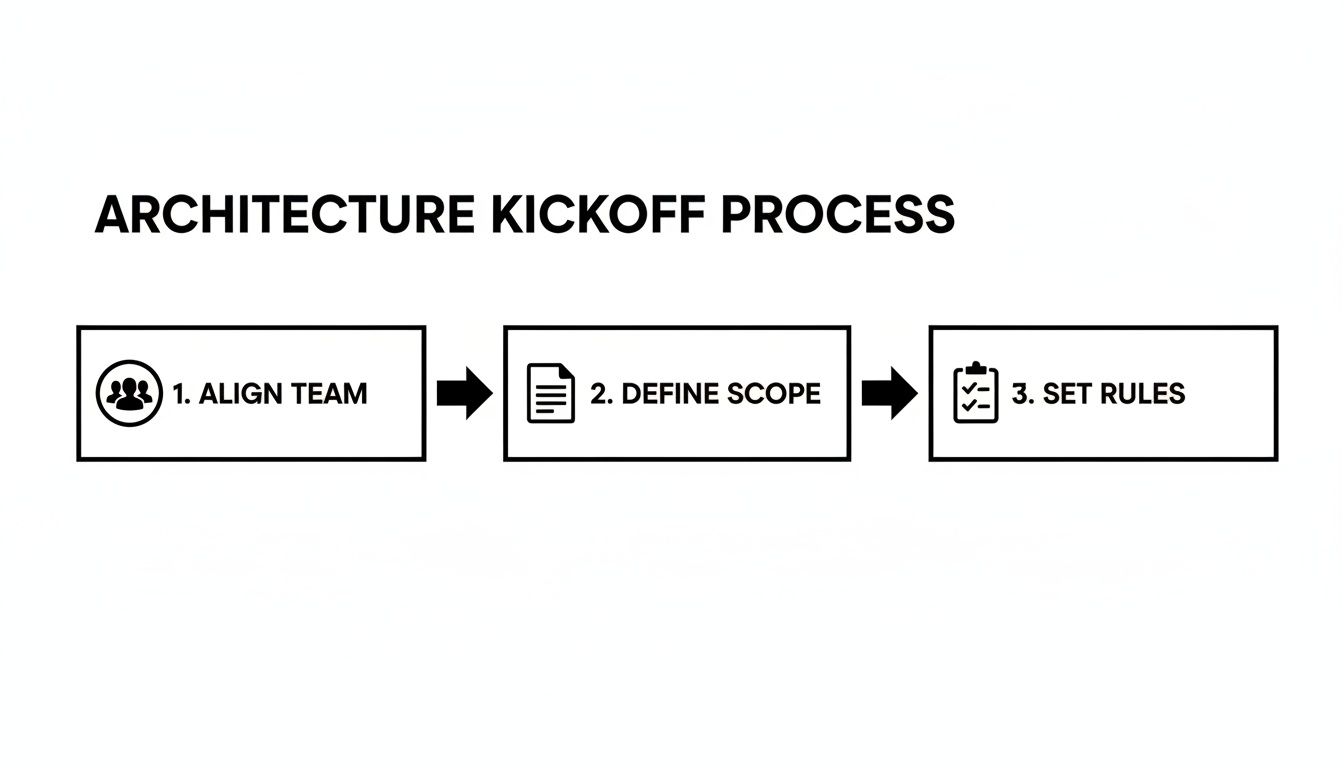
These foundational elements must be maintained weekly to have any real effect. An effective cycle has a few key checkpoints:
- Monday Morning Stand-Up: A quick, 15-minute sync for the internal team. What are the top three priorities this week? Any roadblocks?
- Mid-Week Consultant Coordination: A dedicated, agenda-driven meeting with engineers and consultants to hunt for clashes and solve technical problems before they get locked into drawings.
- Friday Milestone Review: A quick huddle to review progress against the week's goals and tee up next week’s priorities. It closes the loop and keeps momentum going.
This simple rhythm prevents the "CD crunch" by breaking documentation into manageable sprints. It makes progress measurable and problems impossible to hide.
Enforcing Template and Model Discipline
Inconsistent drawings are a direct threat to your firm’s reputation and bottom line. The only solution is rigorous discipline around project templates and modeling standards. This is a non-negotiable component of architectural PM best practices and the key to a smooth architectural project delivery.
A project’s quality is a direct reflection of its underlying systems. When you allow deviations in documentation standards, you invite errors, rework, and coordination failures that erode your margins.
Your project templates—for drawings, specs, even meeting agendas—are production tools that guarantee consistency. Similarly, a clear BIM modeling standard is essential for preventing coordination chaos, ensuring all models speak the same language.
By building your workflow around these weekly cycles and strict standards, you stop relying on hope and hustle. You replace them with predictability and control, creating a production system that protects your team from burnout and your firm from unnecessary risk.
Mastering Information Flow to Prevent RFIs
Effective project management for architects is really information management. RFIs, change orders, and coordination busts are the expensive result of a thousand tiny information breakdowns—lost markups, undocumented phone calls, and outdated consultant models steal your profit margin.
A disciplined QA/QC process is your best defense. But it can't be a last-minute checklist. To be effective, quality assurance must be woven into your team's daily rhythm, creating a system that catches conflicts and clarifies intent long before they become expensive problems on site.
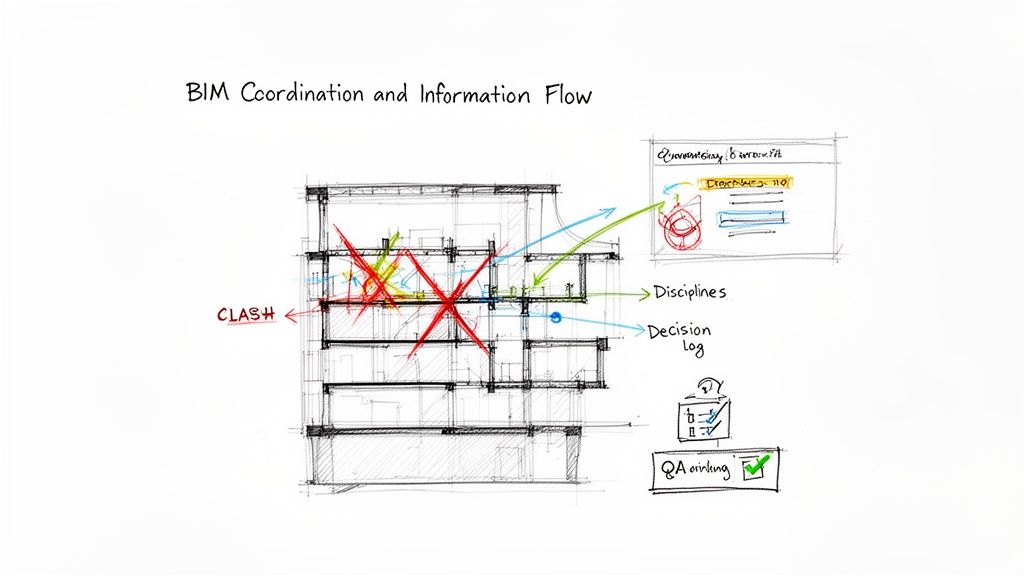
We’ve seen it time and again: architectural teams deliver more consistently the moment their project management shifts focus from tracking tasks to controlling information. The goal is to build a production system where doing things right is the path of least resistance.
Integrating QA Into Your Production Rhythm
Instead of treating QA as a final hurdle, think of it as a series of checkpoints embedded in your design and documentation phases. This proactive approach is central to modern architectural PM best practices.
- Internal Peer Reviews: Before a drawing set goes out, have it formally reviewed by a senior team member who isn't on the project's front lines. A fresh pair of eyes is invaluable for catching inconsistencies a project team becomes blind to.
- Structured Consultant Reviews: Coordination meetings need structure. Pull up a shared model and a live issue log. Identify clashes, assign responsibility, and resolve them in real-time.
- Decision Checkpoints: At key milestones—like the end of SD or at 50% DD—hold a formal review focused on one thing: confirming the design aligns with every logged client decision. This stops teams from modeling based on old assumptions.
These aren't bureaucratic hoops. They are the mechanics for controlling information flow and making sure everyone works from the same playbook.
Proactive RFI prevention isn't about finding every mistake. It's about building a system where mistakes are harder to make and easier to catch early. This discipline separates predictably profitable firms from those constantly putting out fires.
The Role of BIM and Modeling Discipline
Your BIM standards are the technical backbone of your QA/QC process. A clearly defined BIM project management strategy isn’t just for big firms; it's a critical tool for ensuring technical accuracy on any project. When everyone—including consultants—follows the same modeling rules, you slash the risk of coordination errors.
A solid BIM Execution Plan (BEP) should define:
- Level of Development (LOD): Define how much detail is required in the model at each phase to prevent over- or under-modeling.
- Model Ownership: Clarify who is responsible for modeling specific elements (e.g., structural columns, MEP mains) to eliminate duplicated work and gaps.
- Clash Detection Cycles: Set a regular schedule for running automated clash detection, turning a reactive process into a routine quality check.
When you master information flow through disciplined QA/QC and rigorous BIM standards, you transform your firm's architectural project delivery. You move from constant firefighting to control and predictability, where RFIs become the rare exception, not the rule.
Scaling Your Firm with Repeatable Delivery Systems
How does an architecture firm grow without imploding? Not by finding more rockstars to burn the midnight oil. It’s about building repeatable delivery systems that make excellence the default, not a heroic one-off effort.
This is the core of mature project management for architects: shifting from a model that leans on a few indispensable people.
Growth exposes every crack in your workflow. What one brilliant project architect can muscle through on a single project becomes chaos across three teams. Without documented systems, consistency evaporates, and quality control becomes a roll of the dice. The fix is to think in terms of scalable "delivery pods"—small, self-sufficient teams equipped with standardized processes and tools. The goal is to capture your firm's hard-won lessons and make them accessible to everyone.
Building Your Firm’s Production Playbook
A "playbook" isn't about rigid bureaucracy. It’s about establishing clarity so your teams can focus on creative problem-solving, not reinventing project setup every time. It’s your firm’s institutional knowledge turned into actionable tools.
A solid playbook includes:
- Standardized Templates: Everything from title blocks and sheet setups to meeting agendas and client emails. Template discipline is the bedrock of a professional, unified brand.
- Project Kickoff Checklists: A bulletproof list ensuring every project starts with the same rigor—covering scope alignment, decision protocols, and communication plans.
- QA/QC Frameworks: A documented process for peer reviews and consultant coordination at key milestones, formalizing quality control so it's not a last-minute scramble.
- BIM Execution Plan (BEP) Shells: A ready-to-go BEP outlining your firm’s non-negotiables—modeling standards, file naming, and coordination rules—that can be quickly tailored to each project.
When you standardize these elements, you lay the groundwork for a predictable architecture project workflow. We’ve watched firms transform their capacity once they focused on building their internal architecture production systems. It lets them onboard new people faster and with more confidence.
Your firm’s growth isn't limited by your ability to find more star players. It's limited by your ability to replicate the processes that allow your current stars to succeed. A documented system is how you scale their expertise.
This approach creates the operational consistency that predictable profitability is built on. When your teams follow a proven framework, projects run smoother. They need less hand-holding from principals and are far less likely to fall victim to the scope creep and coordination busts that eat away at your margins. You stop selling hours and start delivering a reliable, high-quality system.
Architectural Project Management FAQs
Here are straight answers to common questions architects and firm owners ask about putting real project management systems in place.
How Can a Small Firm Implement These Practices Without a Dedicated PM?
For a small studio, hiring a dedicated PM can feel like a non-starter. The key isn't adding another person—it's baking lightweight, repeatable processes into the project architect's role. This isn’t about more admin work; it's about reducing confusion and saving time.
Start with one or two simple changes that deliver the biggest impact:
- Create a standardized project kickoff checklist. This ensures every project starts with the same clarity.
- Make a shared decision log template. This becomes your single source of truth for client choices, preventing "I thought we decided…" conversations.
- Draft a basic BIM Execution Plan to align everyone on modeling standards from day one.
Start small, prove the value, and build from there.
What Is the Biggest Project Management Mistake Architects Make?
By far, the most common mistake is treating project management as a separate, administrative task—something a PM does to the project team. This creates a dangerous disconnect, leading to PMs who track schedules in a vacuum, detached from technical and design realities.
The best architectural project management is completely integrated with design and production. It’s not about managing a Gantt chart; it’s about guiding the flow of information, decisions, and quality through the entire project.
When project management is just about deadlines and not about the work itself, things fall apart. That's the root of most major breakdowns in an architecture project workflow.
How Do You Get Client Buy-In for a More Structured Process?
Frame it as a direct benefit to them. This isn't about your internal process; it's about protecting their investment. A structured process means fewer surprises, clearer decision points, and a more predictable schedule and budget.
Instead of saying, "We need you to follow our process," say, "To ensure we capture all your decisions accurately and keep the project moving, we use a shared decision log that you'll have access to 24/7."
When clients see the structure is there to protect their interests and give them clarity, they’ll almost always get on board.
What Tools Are Essential for Architectural Project Management?
The specific tool is less important than the system you build around it. A well-defined process on a spreadsheet will always beat a chaotic one in a fancy app. That said, a solid toolkit usually includes:
- A centralized file location, like a shared server or Dropbox.
- A task management tool to track milestones and responsibilities, like Asana or Monday.com.
- Robust BIM software for coordination.
But the most critical "tool" is a set of standardized templates. Your kickoff agendas, decision logs, and communication plans are the foundation. They ensure consistency and are the bedrock of effective architectural project delivery.
At BIM Heroes, we help firms build the production systems and BIM workflows that make reliable delivery the norm. If you're ready to move beyond constant fire drills and build a more predictable, profitable practice, we're here to help.
Tired of project chaos? Download our Architecture Project Kickoff Checklist—a practical framework to start your next project with clarity and control.
Explore our Architectural Production Services.