It’s a scene every architect knows too well. The owner is asking for the final record drawings, but your team is completely swamped, desperately trying to reconstruct a project's history from a jumble of job site redlines, contradictory PDFs, and a black hole of untracked emails. This isn't just a drafting problem; it's a process failure that quietly kills profit margins.
Why Understanding the Full Documentation Lifecycle Matters
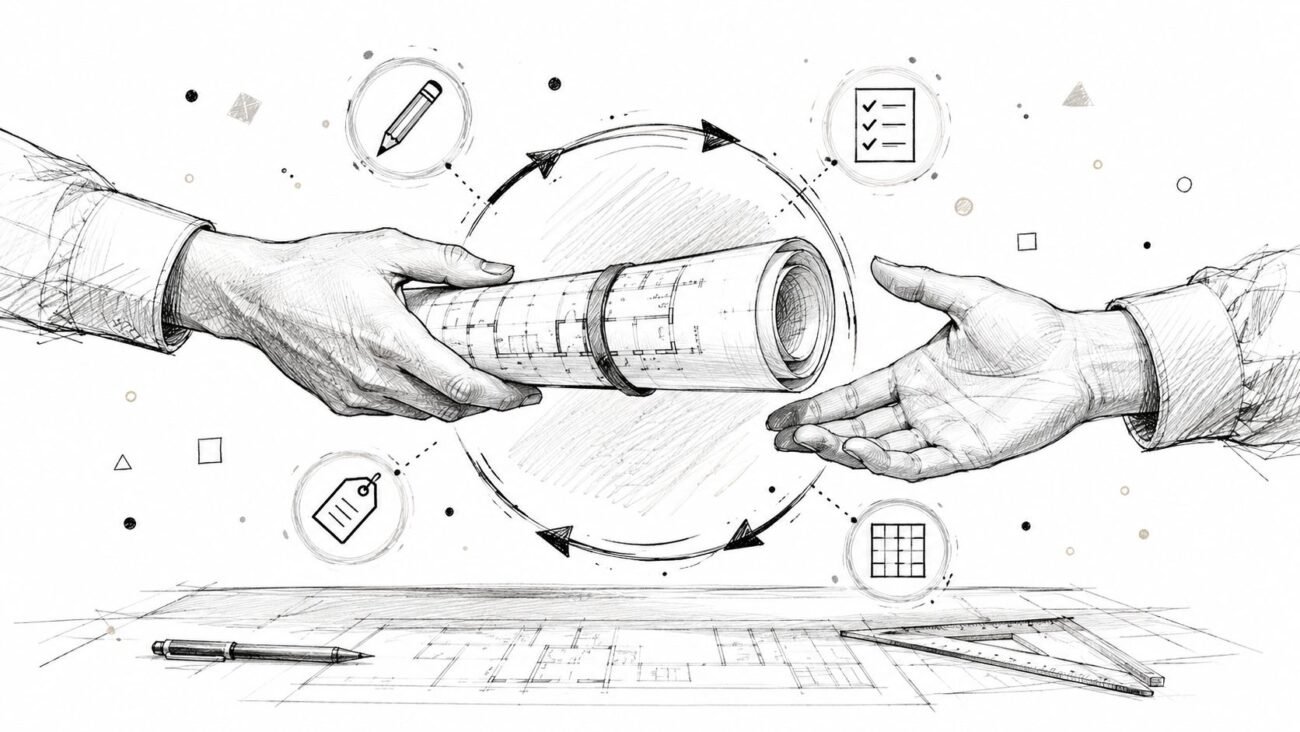
That last-minute panic to assemble record drawings is a clear symptom of a bigger issue. It happens when architectural documentation is treated like a series of static hand-offs instead of what it really is: a living system that evolves with the project. When documents are created in one phase and just tossed over the wall to the next, crucial information falls through the cracks, compounding into expensive problems later.
Firms that deliver projects with predictability don't just make great drawings; they actively manage the entire documentation lifecycle from day one. They understand that a decision undocumented in Design Development will almost certainly become a coordination disaster during the Construction Documents phase. It's this discipline that protects margins, ensures operational consistency, and prevents the chaos of RFIs and change orders.
The real problem isn't a lack of documentation. It’s the absence of a system that ensures documents stay accurate as the project moves from initial sketch to final closeout.
The True Cost of a Disconnected Process
When architectural documentation is managed in isolated silos, the consequences are always expensive. The pain ripples across the whole project team, from project managers struggling to protect the budget to construction administrators drowning in paperwork.
This chaos shows up in a few familiar ways:
- Drawings get sent for permit but are nowhere near ready for construction, forcing a costly and inefficient re-documentation effort.
- Redlines pile up in a construction trailer, capturing critical field changes that never make it back into the master set of documents.
- Architect's Supplemental Instructions (ASIs) and bulletins are issued but never systematically tracked, leaving everyone guessing which set of plans is the most current.
- Months are wasted after substantial completion trying to piece together an accurate project history to create record drawings, often relying on spotty memories and scattered emails.
This reactive approach traps your firm in a constant state of firefighting. In contrast, a well-managed documentation lifecycle turns the creation of final record drawings into a simple act of assembly, not a frantic forensic investigation. We’ve seen firms slash their closeout documentation time by over 70% just by implementing consistent redline capture protocols during construction. When the process is right, the record drawings practically build themselves.
The Complete Documentation Lifecycle: An Overview
Solid architectural documentation isn't something that just appears overnight. It’s a process, evolving through distinct, disciplined phases that take a project from a simple idea to a buildable reality. Skipping steps or ignoring the unique purpose of each stage is a fast track to the chaos of RFIs, change orders, and painful project closeouts.

The evolution of these documents isn't just about adding more lines to a drawing. It’s about methodically capturing decisions, coordinating complex systems, and translating design intent into a clear, unambiguous set of instructions. Each phase builds on the previous one, making early-stage discipline critical for downstream success.
Phase 1: Schematic Design (SD) Documentation
Schematic Design is where the project’s big idea takes its first real form. The architectural documentation created here isn’t for building—it’s for communicating. The primary audience is the client, and the goal is to get everyone on the same page about the project’s scope, scale, and overall character.
Documents at this stage are intentionally broad, focusing on the fundamentals. They usually include:
- Conceptual site plans showing building massing and circulation.
- Basic floor plans that lay out room relationships and approximate sizes.
- Key elevations and sections to define the building's architectural form.
The handoff from SD to the next phase is a critical decision checkpoint. You need the owner to sign off on these big-picture concepts before your team pours hours into fleshing out the details. Failing to lock in the vision here is a recipe for expensive backtracking down the road.
Phase 2: Design Development (DD) Documentation
During Design Development, the approved schematic concepts get real. This is where you refine those broad strokes into a cohesive architectural and engineering solution. All the building's systems—structural, mechanical, electrical, and plumbing—are integrated, and the level of detail ramps up significantly.
The DD phase is where a firm’s production maturity truly shows. It’s the last best chance to solve complex coordination issues on paper before they become expensive change orders in the field.
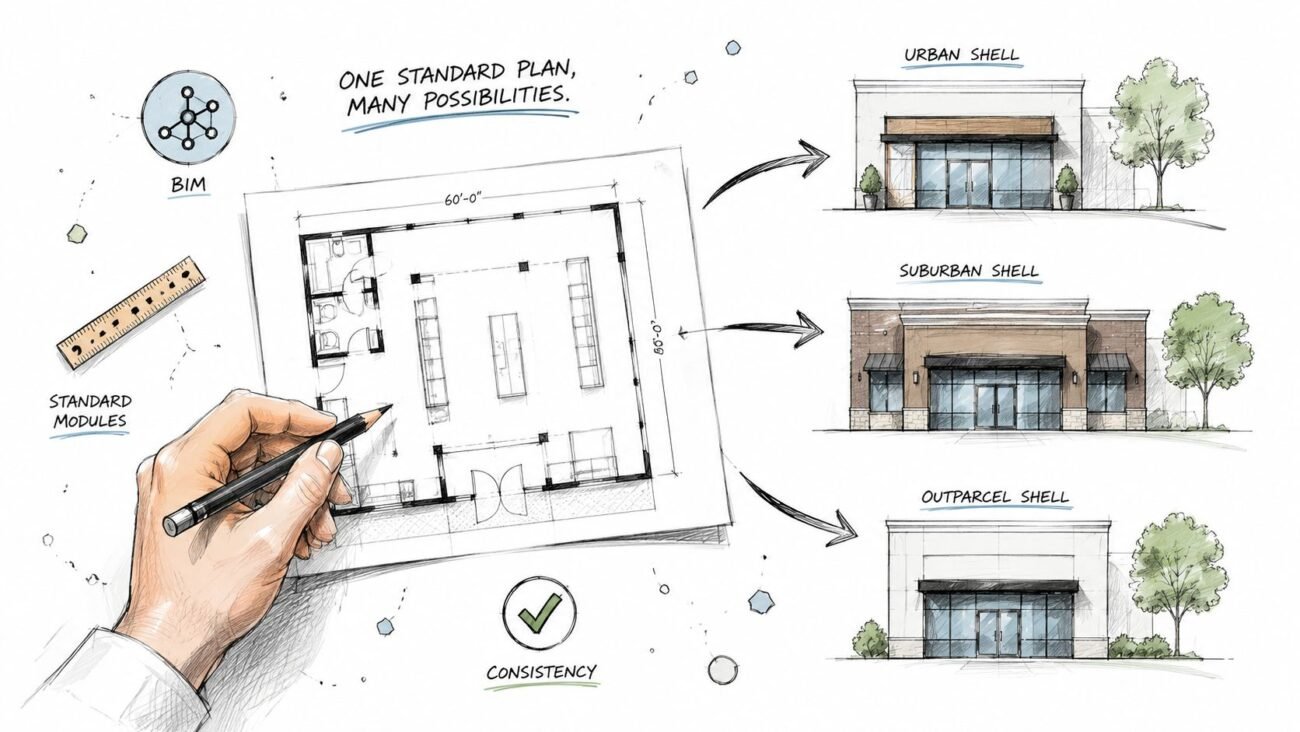
The documentation here gets much more specific, including detailed dimensions, material selections, and specific assemblies. This is also where BIM workflows really start to pay off, enabling clash detection between consultant models and ensuring all the systems actually fit within the architectural shell. The DD set gives a comprehensive picture of the project, detailed enough for accurate cost estimates and a final owner sign-off before the all-out push to create construction documents.
Phase 3: Construction Documents (CD)
The Construction Documents (CD) phase is all about production. Here, your team creates the final, exhaustive set of drawings and specifications the contractor will use to build the project. Think of it as a legally enforceable instruction manual. Quality control is everything; every single line, note, and detail must be clear, correct, and coordinated.
From this master CD documentation set, you'll often issue a few different subsets for specific purposes:
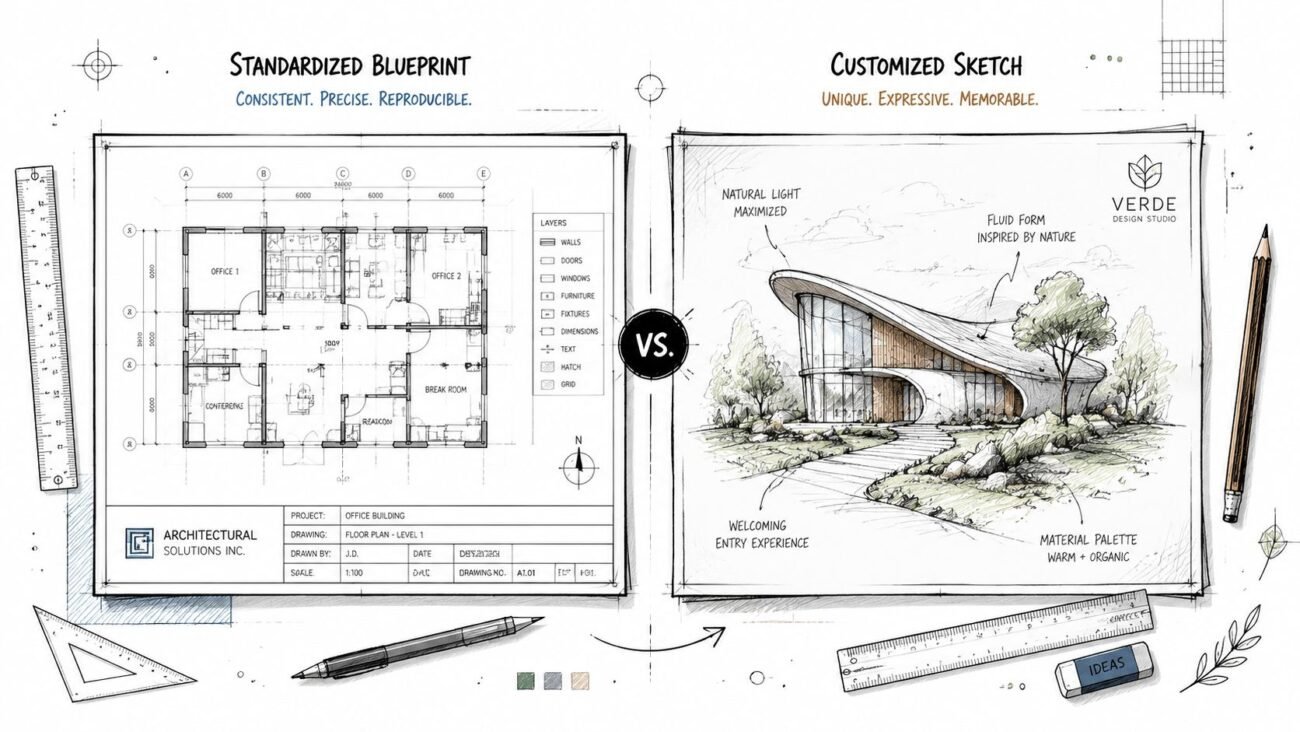
- Permit Set: Contains just the information your local jurisdiction needs to grant a building permit. It might not have all the nitty-gritty construction details.
- Bid Set: This is what goes out to contractors for pricing. Any changes made after it’s issued have to be tracked with formal addenda.
- Construction Set: The final, official set that goes to the field. It incorporates any addenda and becomes part of the construction contract.
A disciplined process ensures that a change made for the permit set is folded back into the main documents before the final construction set is issued. This systematic approach prevents the common headache where the permitted drawings and construction drawings are out of sync, creating instant conflicts on site.
Phase 4: Permit and Bid Documentation
This phase is about managing the formal issuance of documents for legal and contractual purposes. The key is rigorous document control.
- Permit Set: Requirements are highly jurisdiction-specific. A clear checklist of what the local authority demands is essential to avoid multiple submission rounds. Any changes required by the permit office must be tracked and reconciled with the bid set.
- Bid Set: Once issued, this set is "frozen." Any clarifications or changes must be managed through formal, numbered addenda to ensure all bidders are pricing the same project.
Tracking changes between these sets is where many firms stumble. A change made to satisfy a permit reviewer must be communicated to bidders via an addendum, or you risk contractual disputes over scope.
Phase 5: Construction Phase Documentation
Once construction kicks off, the controlled environment of the design office is gone. Your architectural documentation system is now stress-tested in real-time. Disciplined construction administration documents are the procedural glue holding the project together.
Common documents in this phase include:
- Architect's Supplemental Instructions (ASIs): Directives to clarify drawings or make minor changes with no impact on cost or schedule.
- Bulletins and SK Drawings: Documents issued to describe a proposed change that will impact cost or schedule, initiating a change order process.
- RFI Responses: Formal answers to contractor questions that become part of the project record.
- Submittal Reviews: Records of reviewed shop drawings and product data.
Failure to log and track these items systematically creates a massive gap between the contract documents and the built reality, leading to disputes and a nightmare closeout.
Phase 6: Redlines and Field Documentation
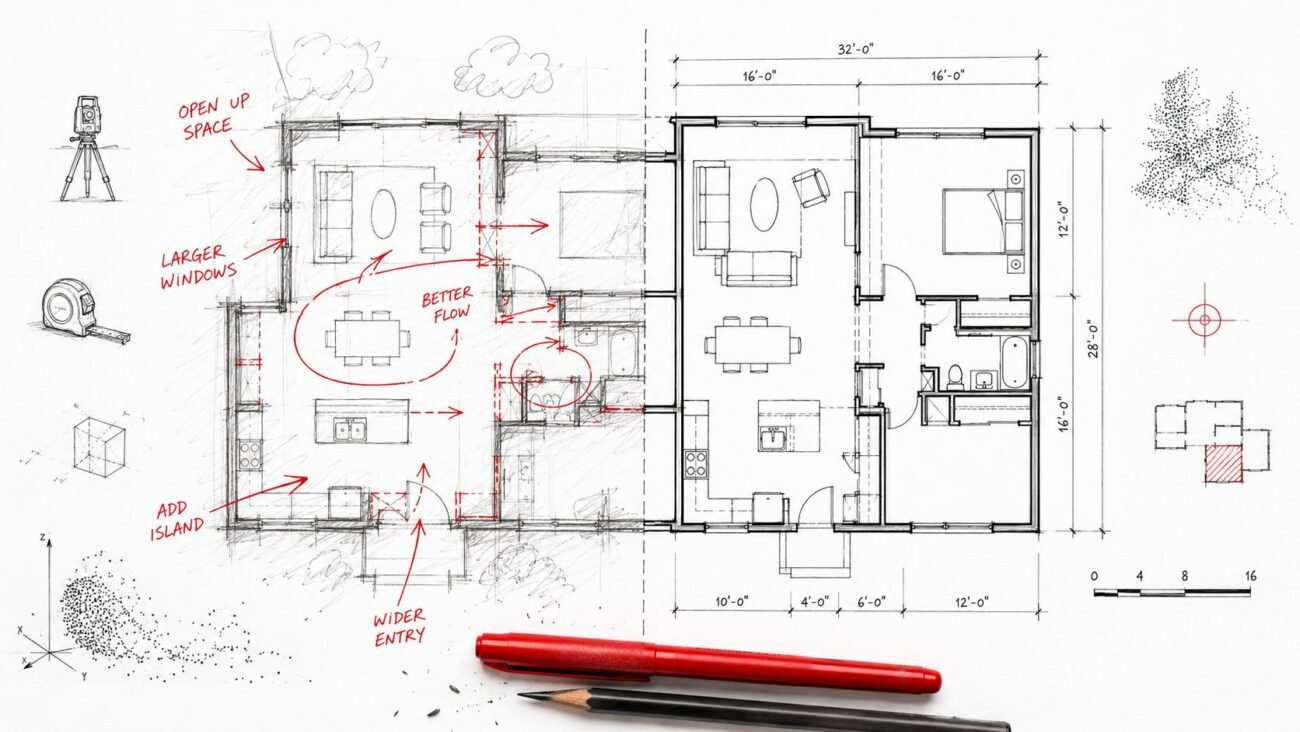
Redlines are the critical, messy link between the digital model and the job site reality. They are the field markups, typically made by the contractor, showing deviations from the issued documents.
- Capture Method: Traditional paper redlines are a recipe for lost information. Digital tools like Bluebeam Revu or platforms like Procore allow for real-time, collaborative markup, creating a single source of truth.
- Responsibility: The contractor is typically responsible for maintaining an accurate set of redlines. The architect is responsible for collecting and verifying this information.
- Common Failure: The most common failure is not the capture of redlines, but the integration. A pile of redlined drawings is just another silo of unverified data until it's incorporated back into the working documents.
Phase 7: Record Drawings
This is the architect's final deliverable, and it's where a disciplined process pays off. It is not the same as as-built drawings.
- Record Drawings (Architect's Responsibility): The clean, final set of documents prepared by the architect for the owner. It incorporates verified information from contractor redlines, ASIs, change orders, and RFI responses.
- As-Built Drawings (Contractor's Responsibility): The set of redlined drawings maintained by the contractor throughout construction, documenting what was actually built.
A complete record drawing set provides the owner with a reliable manual for the building's entire lifecycle. It's compiled from all the construction-phase documentation you've been systematically tracking all along.
Document Control Throughout the Lifecycle
Predictability doesn’t happen by accident. It comes from discipline. A solid documentation system relies on a few core rules that everyone on the team must follow, no exceptions. This is how you protect your profit margins and establish scalable delivery.

Core Document Control Protocols
- Numbering and Revision Protocols: Every drawing and revision must follow a strict standard. Put a revision block on every sheet and ensure it clearly notes the date, a description of the change, and who made it. This history is priceless during construction administration.
- Transmittal Tracking: Never send a document without a formal transmittal. Whether you use a simple email log or a feature inside a platform like Procore, every issuance must be recorded. This log is your definitive proof of who got what, and when.
- Version Control Best Practices: Use cloud-based management to ensure everyone is working from the latest file. This is especially critical for version control for BIM projects best practices, where multiple team members are in the same model.
These simple rules are the bedrock of a system that prevents someone from working off an old drawing—one of the costliest and most avoidable mistakes in our industry.
Common Lifecycle Failures and How to Prevent Them
Documentation breakdowns are predictable. They almost always stem from a lack of process discipline at key handoff points.
- Failure: SD decisions aren't formally signed off and get revisited during DD, causing rework.
- Prevention: Institute a formal SD sign-off gate. No DD work begins until the owner has approved the core concept and scope.
- Failure: The CD set is issued for construction without fully resolving consultant coordination.
- Prevention: Implement mandatory, multi-disciplinary BIM clash detection sessions at the 50% and 90% DD milestones.
- Failure: Redlines are lost, ignored, or pile up until the end of the project.
- Prevention: Mandate digital redlining and schedule bi-weekly "redline integration" sprints to update the working model.
- Failure: ASIs and other construction-phase changes are not integrated into the documents.
- Prevention: Use a "progressive record drawing" approach. As changes are approved, they are immediately modeled in a "record" workset within the primary design file.
5 Best Practices for Lifecycle Management
- Adopt a Progressive Record Drawing Approach: Don't wait for closeout. Update your master documents with verified field changes and ASIs in regular, disciplined cycles throughout construction.
- Establish Clear Phase-Handoff Protocols: Use checklists and formal sign-offs as "quality gates" between SD, DD, and CD. This ensures decisions are locked in before moving forward.
- Mandate Consistent Naming and Numbering: A strict firm-wide standard for file names, sheet numbers, and revisions is non-negotiable. It's the foundation of findability and version control.
- Define Roles and Responsibilities Clearly: Everyone on the project—architect, contractor, owner, consultant—must know who is responsible for creating, tracking, and verifying documents at each phase.
- Use Technology to Enforce Discipline: Leverage tools like Autodesk Construction Cloud or Procore not just for storage, but to automate transmittals, manage versions, and create an unchangeable audit trail.
Roles and Responsibilities in the Documentation Lifecycle
A breakdown in documentation often traces back to confusion over who owns what. Clarity is key.
- Architect: Owns the creation and integrity of the design documents through all phases (SD, DD, CD). During construction, the architect issues and tracks clarifications (ASIs) and change proposals (Bulletins) and is ultimately responsible for producing the final Record Drawings for the owner.
- Contractor: Responsible for building according to the construction documents. During construction, they are responsible for submitting RFIs, tracking field conditions, and maintaining the As-Built Drawings (redlines).
- Owner: Responsible for providing timely decisions and approvals at key milestones. The owner also defines the final requirements for the Record Drawing deliverable, often specified in the contract.
- Consultants: Responsible for producing and coordinating their respective engineering documents (structural, MEP, etc.) and ensuring they are integrated with the architectural set at each phase.
Technology Tools to Support the Lifecycle
Technology doesn't fix a broken process, but it is an incredibly powerful tool for enforcing discipline and creating efficiency.
- Centralized Document Management: Platforms like Autodesk Construction Cloud (BIM 360) or Procore create a single source of truth, managing versions and tracking transmittals automatically.
- Digital Redline Capture: Tools like Bluebeam Revu (especially with Studio Sessions) or field apps like PlanGrid are essential for capturing field markups in real-time, eliminating the risk of lost paper redlines.
- Progressive BIM Documentation: Using Revit to progressively update the model with verified field changes is the most efficient path to accurate record drawings. Worksets or phasing can be used to separate record information from the original design.
Architectural Documentation Lifecycle Checklist
To ensure no step is missed, a phase-by-phase checklist is an invaluable tool for production maturity.
- Schematic Design (SD):
- Conceptual site plan & floor plans complete
- Key elevations & sections developed
- Narrative scope of work defined
- Formal owner sign-off obtained
- Design Development (DD):
- All room layouts and dimensions finalized
- Major building systems coordinated (Structural, MEP)
- Outline specifications complete
- BIM coordination & clash detection run
- Formal owner sign-off obtained
- Construction Documents (CD):
- All drawings fully detailed and dimensioned
- Full project specifications integrated
- Internal QA/QC review complete (all disciplines)
- All sheets checked for standard compliance
- Permit/Bid:
- Permit set issued to AHJ
- Bid set issued with formal transmittal
- Addenda log established and maintained
- Construction Administration:
- RFI, ASI, and Submittal logs are active and current
- Digital redline process established with GC
- Regular (bi-weekly) redline integration sessions scheduled
- Closeout:
- Final contractor as-builts received
- As-built information verified against ASIs/Change Orders
- Master model/drawings updated to Record status
- Final Record Drawing package transmitted to owner
Mastering the architectural documentation lifecycle isn't about documenting more—it's about documenting systematically. By treating your documents as a living system, your firm can move from a state of reactive firefighting to one of predictable, profitable delivery.
Ready to bring this level of process discipline to your projects? Download our Architectural Documentation Lifecycle Checklist to start building a more predictable production workflow today.