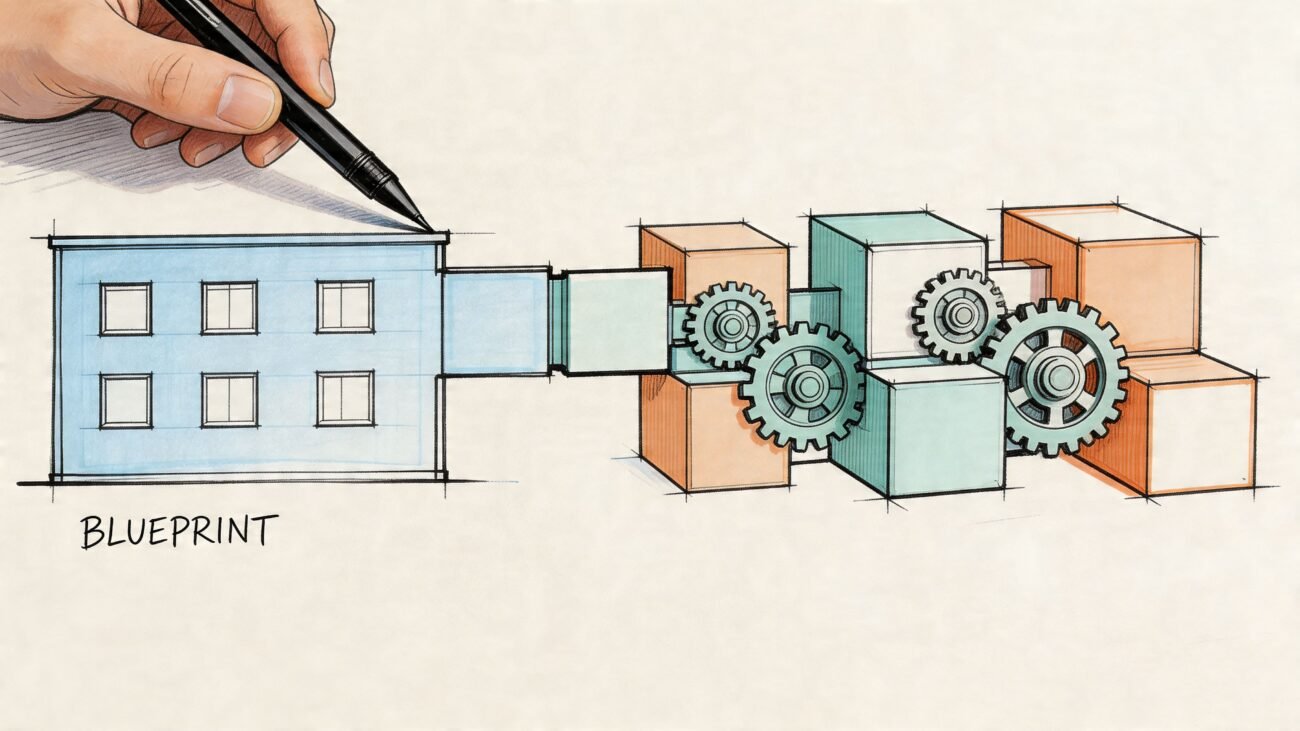
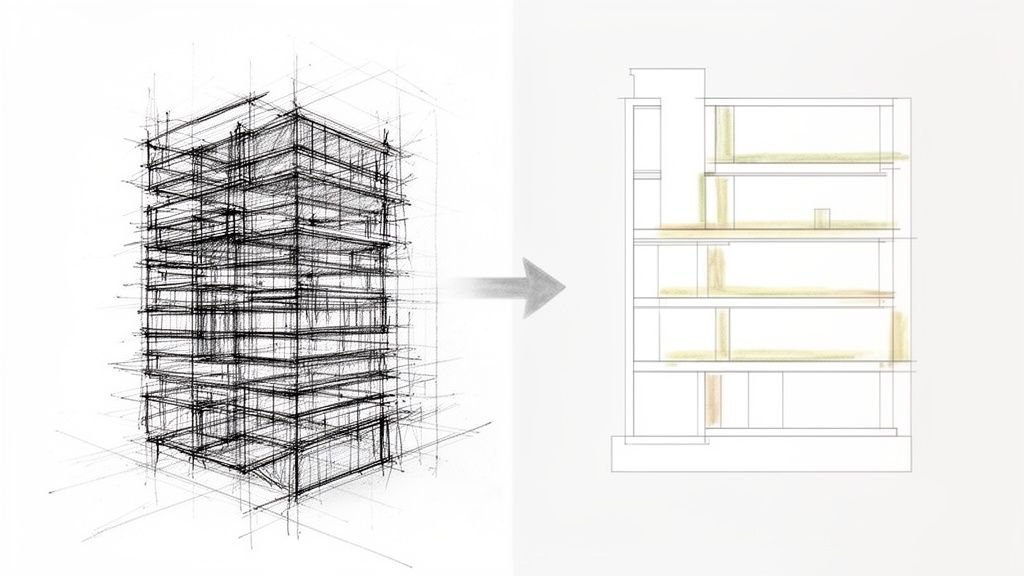
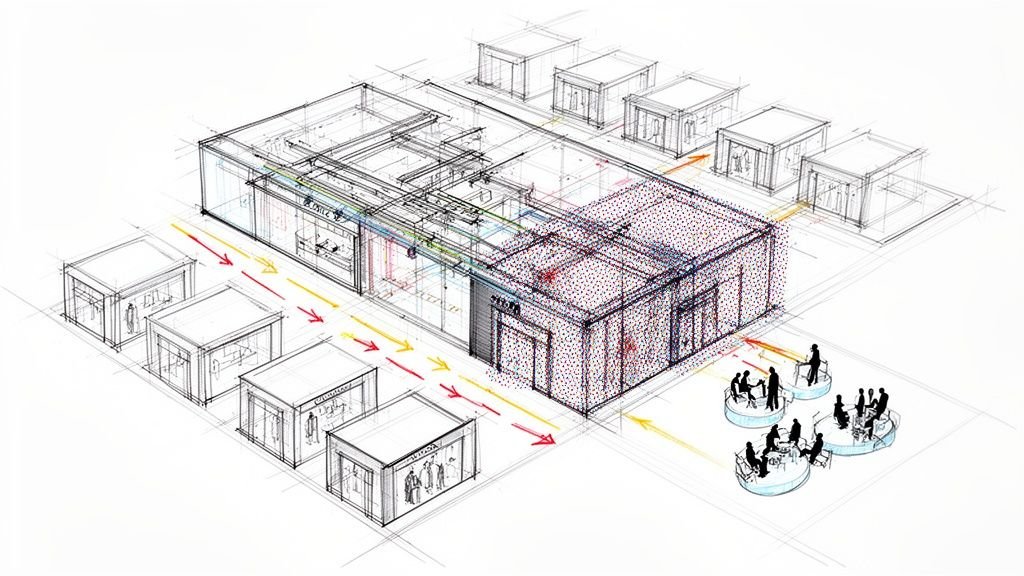
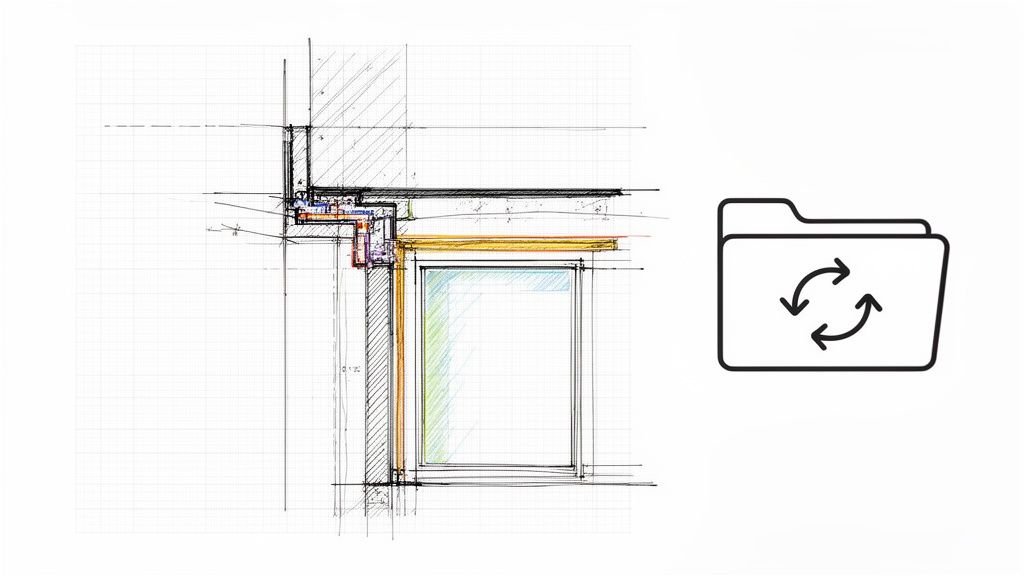
You’re probably dealing with curtain wall the way most project architects do. The concept design is approved, the elevation rhythm looks resolved, and then the critical questions start. Is this truly curtain wall or window wall? Is the spandrel deep enough to support a tested perimeter condition? Will the slab edge and anchor zone still work once the glazing contractor develops the shop package?
That’s where curtain wall architecture stops being a facade idea and becomes a production problem.
On commercial projects, curtain wall carries a strange burden. It’s the most visible part of the exterior and one of the most coordination-heavy systems in the building. It has to manage structure, movement, water, air, thermal performance, and life-safety at every floor line. If the basis of design is loose, the consequences show up fast. RFIs multiply. Submittals stall. Slab edge conflicts surface late. Interior ceilings suddenly clash with stack joints. The team starts solving problems that were locked in months earlier.
The architects who do this well aren’t trying to out-engineer the curtain wall consultant or glazing contractor. They understand enough to make better early decisions, document the right constraints, and review submittals with a clear sense of what matters. That’s usually the difference between a facade package that stays predictable and one that starts bleeding time, fee, and trust.
Introduction The High Stakes of Curtain Wall Design
Curtain wall sits at the intersection of design intent and construction reality. It shapes the building’s public face, but it also has to perform as a weather barrier, thermal envelope, and movement-tolerant enclosure attached to a structural frame that never behaves exactly as cleanly as the early elevations suggest.
That combination is why this system deserves more respect than it usually gets during schematic design and DD. A line on an elevation can trigger downstream decisions about mullion depth, anchor placement, spandrel build-up, fire stopping, field tolerances, crane sequencing, and submittal duration. Those aren’t separate problems. They’re all built into the same facade choice.
Practical rule: If a curtain wall decision changes geometry at the floor line, it’s probably also changing cost, schedule, and coordination risk.
Architects don’t need to become facade engineers to manage this well. They do need to understand the system’s logic. That means knowing how the loads move, where the tolerance lives, what the glazing contractor will need from the permit set, and which details can’t be left vague without creating procurement or code-review problems later.
The payoff is straightforward:
- Fewer RFIs: Better-defined slab edge, spandrel, and transition conditions reduce interpretation gaps.
- Cleaner submittal review: You can evaluate the contractor’s package against real design constraints instead of aesthetics alone.
- More predictable delivery: When the facade package is coordinated earlier, the enclosure schedule is less likely to drift.
- Better margin protection: Production teams spend less time undoing avoidable ambiguity.
Defining Curtain Wall vs Other Glazing Systems
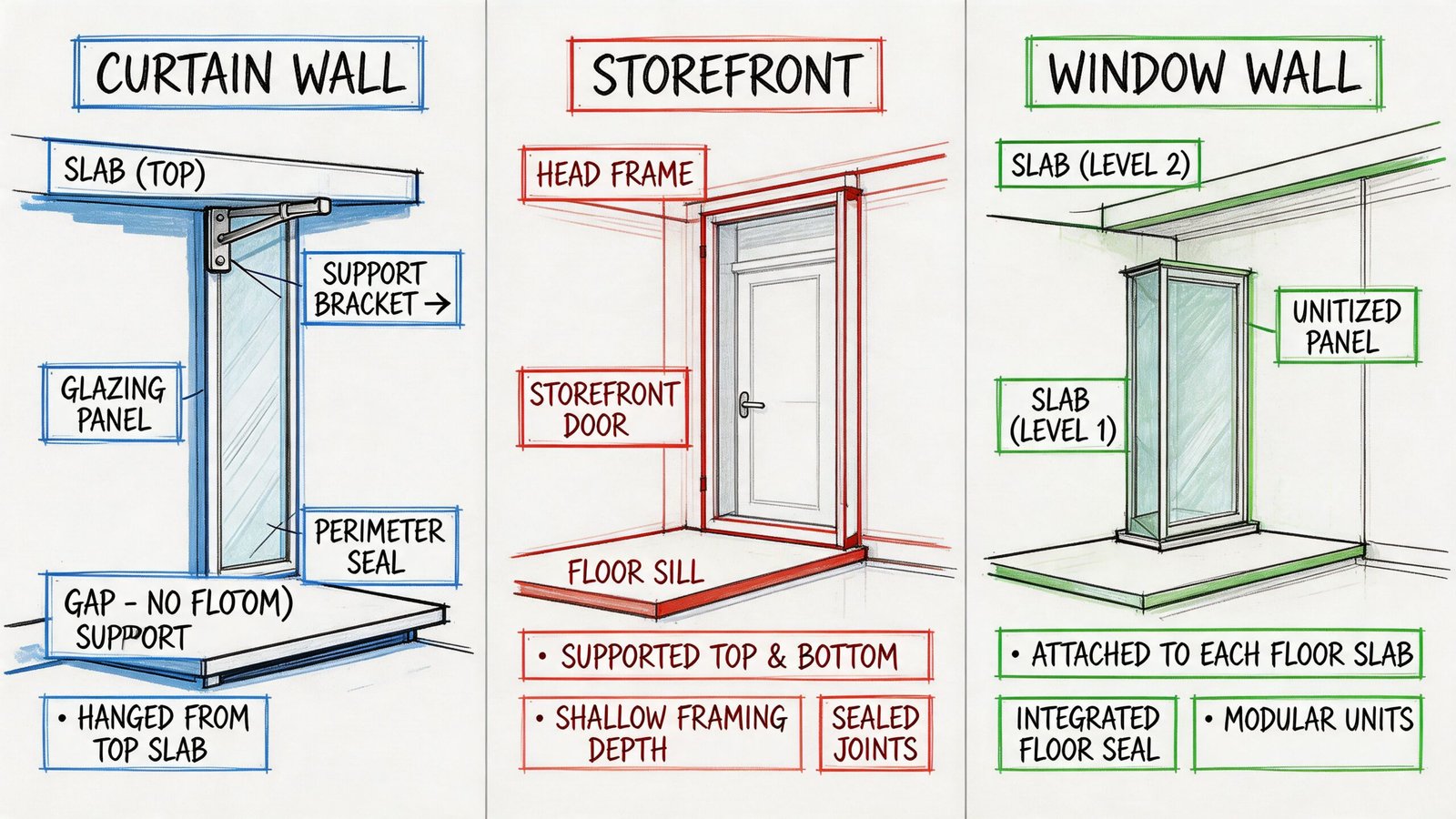
A curtain wall is a non-load-bearing exterior facade system that’s anchored to the building’s primary structure. It carries its own dead load and transfers lateral loads such as wind back to that structure. It does not support floor or roof loads.
That distinction matters because people often use “curtain wall” as a catch-all term for any aluminum-and-glass facade. On drawings and in specifications, that shortcut creates trouble. Different systems behave differently, get detailed differently, and carry different performance expectations.
A good historical marker helps clarify the definition. The Home Insurance Building in Chicago, completed in 1885, is widely recognized as a foundational milestone in curtain wall architecture, marking the shift from load-bearing masonry to non-structural facades supported by steel frames. Its design allowed for window openings comprising about 40% of the facade, compared with 20-30% in traditional masonry construction according to the curtain wall architecture history summary on Wikipedia).
Curtain wall versus storefront
Storefront is also aluminum-framed and glazed, which is why teams mix the terms up. But storefront is generally used at the ground floor for entries, retail fronts, and lobby conditions. It’s meant for lower heights and simpler loading conditions.
Curtain wall is built for larger spans, multi-story conditions, and the movement demands of the primary structure. If you call for storefront performance where a true curtain wall condition exists, the basis of design is off before submittals even start.
A useful field test is simple:
- Storefront: single-story frontage, pedestrian-scale application, more limited structural demand
- Curtain wall: multi-story enclosure, attached back to slabs or structure, heavier coordination burden
Curtain wall versus window wall
Window wall often gets confused with curtain wall because both can create a similar exterior appearance. The structural behavior is different. Window wall typically bears on the slab below and is captured at the slab above. Curtain wall is hung or anchored back to the structure rather than relying on that same bearing logic.
That changes several things at once:
- Thermal bridging risk: slab edge relationships become a bigger issue with window wall
- Anchor detailing: the support condition isn’t the same
- Movement strategy: the system accommodates building movement differently
- Documentation approach: perimeter details need a different level of precision
Curtain wall versus punched openings
A facade with punched windows in concrete or masonry isn’t curtain wall, even if the glazing is large and the aluminum finish is similar. The wall remains the primary enclosure and structural background. The windows are discrete inserted assemblies, not a continuous hung skin.
A lot of downstream confusion starts with a simple naming error. If the team hasn’t correctly identified the glazing system, the spec, details, and performance review won’t line up.
For architects, this is the first decision checkpoint. Before discussing curtain wall system types, details, or submittal strategy, make sure the drawings are naming the right system.
The Core Components of a Curtain Wall System
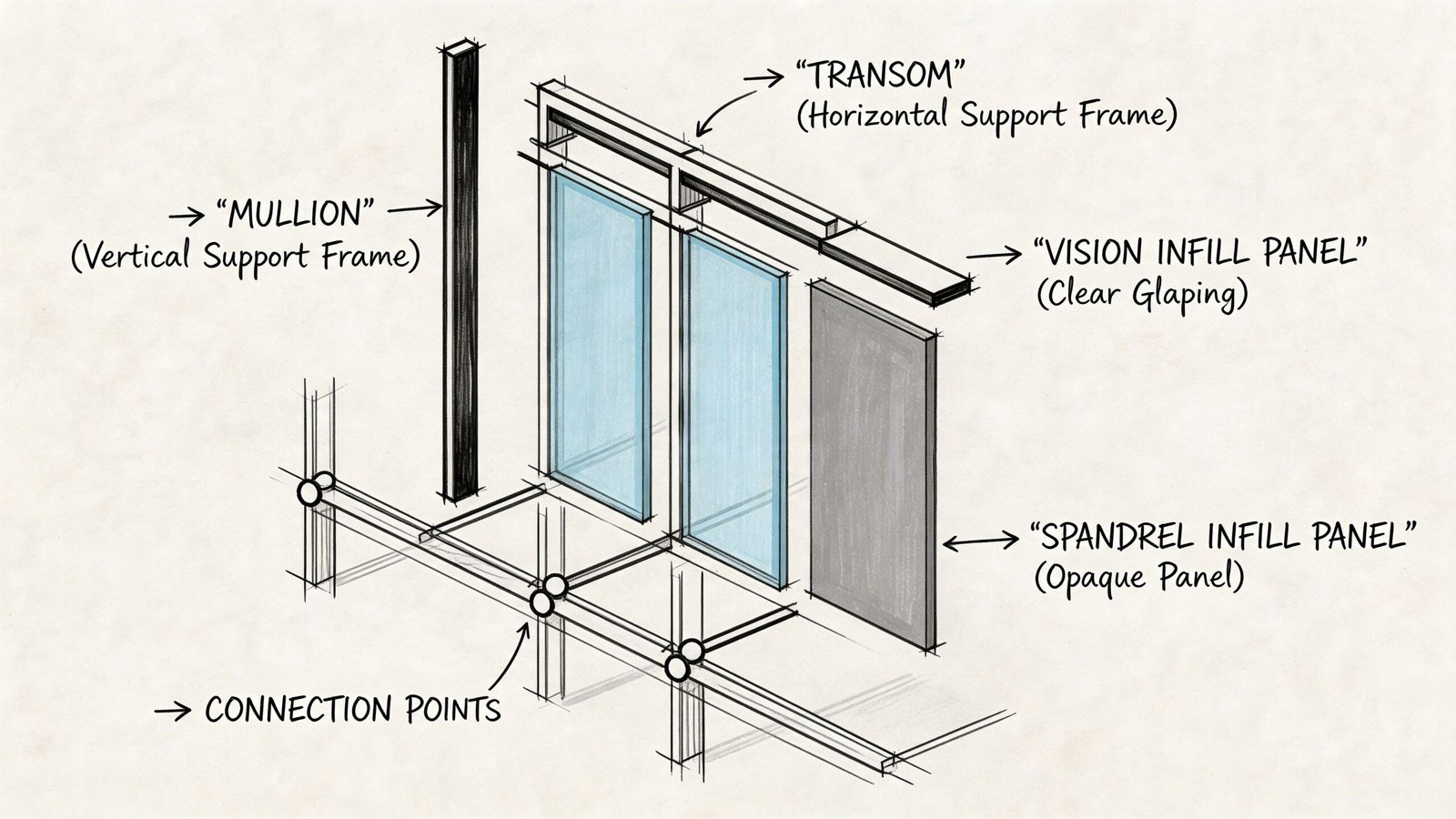
If you want to review a curtain wall package with confidence, start with the system anatomy. Most coordination failures happen because one of these components was treated as graphic rhythm rather than functional hardware.
Mullions
Mullions are the primary vertical framing members. They resist wind loads and transfer those loads back to the structure through the anchor system. On many commercial projects, the mullion is the member that implicitly determines whether the facade remains elegant or becomes bulky.
The structural check that matters most is deflection. Mullion deflection limits are commonly set at L/175 for spans under 13 feet-6 inches and L/240 + 1/4 inch for longer spans, as described in Structure Magazine’s discussion of structural curtain wall design. Exceeding those limits can stress the glass, damage seals, and contribute to water infiltration.
That has direct modeling and design consequences:
- Depth grows fast: if wind pressure, span, or module width increases, mullion depth usually follows
- Profile choice affects interiors: deeper members can change shadow lines and perimeter ceiling conditions
- Thermal breaks matter: they’re not optional trim. They’re part of the system’s thermal performance and condensation control
Transoms
Transoms are the horizontal framing members spanning between mullions. They support glazing and help define the visual panel layout, but their real importance is often hidden at the floor line.
The transom location frequently sets the spandrel zone depth. That one decision affects how much room is available for opaque infill, insulation, safing, and the perimeter condition behind the facade.
Architects often use transoms to tune facade proportion. That’s valid. But it only works when proportion is checked against buildability. A visually tight sill line can leave too little space for the actual concealed assembly.
Infill panels
Infill panels fall into two broad groups:
| Component | Typical role | Primary concern for architects |
|---|---|---|
| Vision glass | Transparent occupied-area glazing | Daylight, appearance, thermal and solar performance |
| Spandrel panel | Opaque area at floor line or concealed zone | Concealment of slab edge and support of enclosure assemblies |
Vision glass is usually specified as an insulating glass unit. In practice, architects need to think less about the generic term IGU and more about whether the assembly intent is coordinated with the project’s energy, visual, and documentation goals.
Spandrel deserves separate attention because it isn’t just an opaque version of vision glass. A curtain wall spandrel panel conceals structure and creates the enclosure depth needed for concealed components that can’t be improvised later.
Anchors
Anchors transfer curtain wall loads back to the building structure. They’re engineered by the curtain wall team, but the architect still owns an important part of the problem. The slab edge geometry, embed zone, and interface with adjacent assemblies need to be coherent in the permit set.
When anchors aren’t considered early, several failures show up later:
- embed conflicts with reinforcing
- insufficient edge distance at slabs
- geometry changes between structural and facade models
- late redesign of slab edge trims or closures
Gaskets, sealants, and drainage
A curtain wall isn’t waterproof because of one perfect bead of sealant. It works because the system manages water in stages. Gaskets, pressure plates, cavities, and weeps are all part of a drainage strategy.
The teams that document curtain wall best don’t assume water stays out. They assume some water gets in, then they make sure the system knows how to get rid of it.
That’s why transitions matter so much. The weak point usually isn’t the center of the standard module. It’s the joint at the sill, corner, parapet, or tie-in to another wall type.
A practical review lens
When reviewing curtain wall components on elevations, sections, or shop drawings, ask five direct questions:
- What is carrying the wind load? Usually the mullion.
- Where is the dead load going? Follow the anchors and support points.
- How is movement accommodated? Look for stack joints and tolerances.
- Where does water drain? Don’t assume. Trace the path.
- What is concealed behind the opaque zone? That answer drives the hardest details.
Stick-Built vs Unitized Curtain Wall Systems
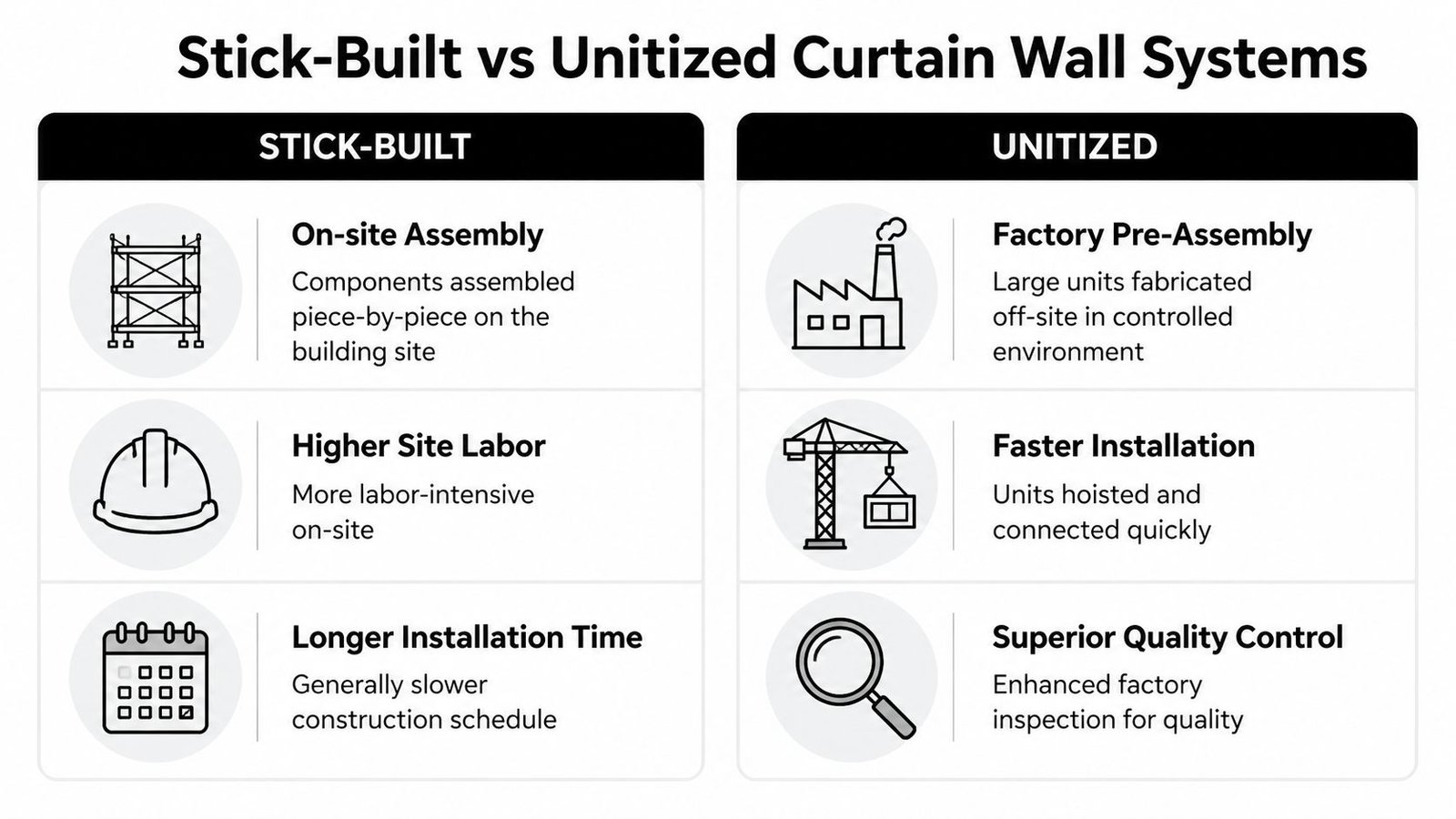
The biggest early system choice is usually stick built vs unitized curtain wall. This isn’t just a procurement preference. It changes sequencing, labor assumptions, shop drawing timing, and how much late design flexibility the team will have.
What stick-built usually gets right
Stick-built systems are assembled on site from individual mullions, transoms, and infill components. For low- to mid-rise work, they remain a practical option because they allow more field adaptation.
That flexibility matters when the project has:
- irregular geometry that’s still evolving
- a less predictable existing condition
- tight access that complicates panel delivery
- a budget structure that favors lower fabrication cost over faster enclosure
The downside is that quality control shifts heavily to the field. Site labor, weather exposure, and installation sequence have a bigger effect on the final outcome.
Where unitized systems win
Unitized systems arrive as pre-assembled panels, usually fabricated and glazed in controlled conditions before being installed on site. On taller buildings, that factory-built approach often improves schedule reliability and consistency.
A key structural advantage is movement tolerance. Unitized systems can typically absorb 1.5 to 2 times greater interstory deflection than stick systems because of the gasketed joints between units, according to Alucolux’s explanation of unitized curtain wall movement capacity.
That matters most when the building is tall, slender, or expected to move more under service conditions.
The real trade-off is schedule certainty versus design flexibility
The comparison is easier to manage when viewed through production risk:
| Issue | Stick-built | Unitized |
|---|---|---|
| Fabrication approach | Assembled in field | Pre-assembled in factory |
| Site labor demand | Higher | Lower |
| Field adjustment capacity | Better | More limited |
| Installation speed | Slower | Faster |
| Best fit | Low- to mid-rise | Mid- to high-rise |
Unitized systems reward teams that lock geometry early. They punish teams that keep treating the facade as adjustable after fabrication release. Once production starts, late changes can become expensive and disruptive very quickly.
For architects working with prefabricated enclosure strategies, the same planning discipline shows up in adjacent delivery methods too. The coordination habits used in off-site construction workflows map closely to unitized facade planning. Fix the geometry early, define interfaces clearly, and don’t leave critical tolerances to interpretation.
If your project culture depends on late design cleanup in the field, unitized curtain wall will expose that weakness fast.
The Critical Spandrel Zone Detail
The most under-detailed part of many curtain wall packages is the spandrel zone. That’s also where some of the most serious coordination and life-safety problems live.
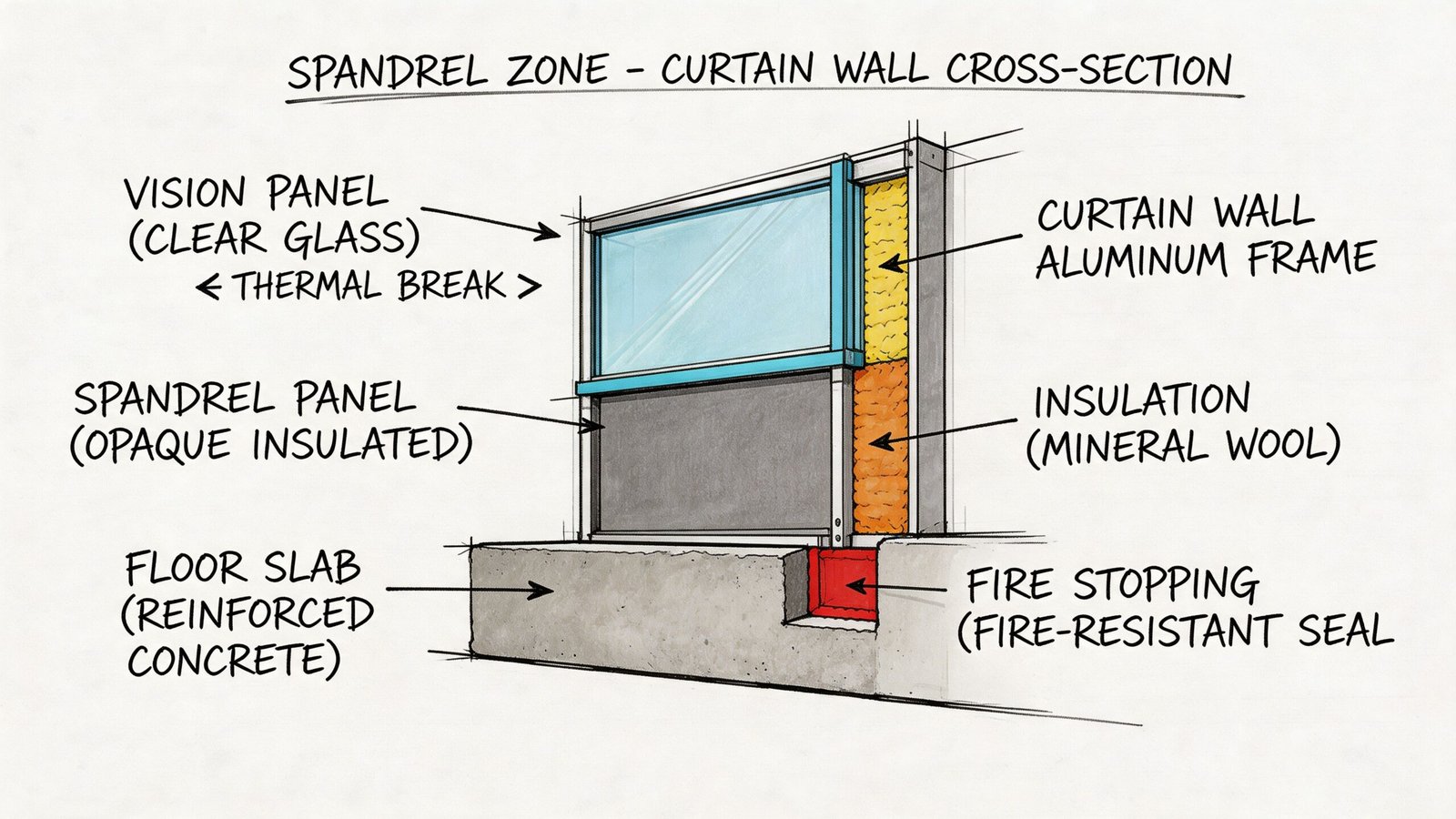
On the elevation, the spandrel often reads as a neat opaque band. In the building, it has to conceal slab edge conditions, insulation, perimeter fire stopping, back-pan logic, and the interior-exterior transition at one of the most vulnerable locations in the facade.
What sits behind the spandrel panel
A typical spandrel area isn’t empty space. It’s a packed coordination zone.
That concealed build-up often includes:
- Spandrel panel facing: opacified glass, metal panel, or another opaque infill
- Back pan or concealed support layer: depending on the system design
- Insulation in the opaque cavity: part of thermal and fire-resistive intent
- Safing at the slab edge gap: the joint protection condition between floor edge and curtain wall
- Sealants and closure elements: continuity at the perimeter
When that space gets compressed for visual reasons, the detail usually breaks first in section, then again during submittals, then again in the field.
Why the perimeter condition can’t stay generic
Architects sometimes leave notes like “mineral wool insulation at spandrel” or “fire safing by contractor.” That isn’t enough for a serious commercial project. The concealed edge-of-slab condition needs to be understood as an assembly, not a material callout.
The core issue is compatibility. Gap width, framing depth, panel type, and the relationship between slab edge and curtain wall all affect what can be used. If the built geometry doesn’t align with the tested or accepted condition the contractor is relying on, the team ends up chasing substitutions, clarifications, or special judgments late in the process.
The architectural mistake that causes the most pain
The recurring failure is simple. The team draws a shallow spandrel because it looks cleaner on the elevation, but nobody confirms whether that depth can accommodate the concealed assembly and associated life-safety requirements.
That single oversight can trigger:
- RFI cycles during submittals
- Redesign of mullion or transom locations
- Interior finish coordination changes
- Delayed facade release
- Pressure on the contractor to solve an architectural decision in fabrication
The spandrel isn’t just an opaque band. It’s the service cavity for one of the most sensitive facade conditions in the building.
What to document clearly
A stronger curtain wall package doesn’t need to fabricate the glazing contractor’s work. It does need to define enough for the contractor to price, engineer, and coordinate the system correctly.
At minimum, show and coordinate:
- Spandrel depth at every floor line
- Relationship between slab edge and vision zone
- Opaque panel type intended at each condition
- Interior ceiling line where it affects stack or transom location
- Adjacency to other wall systems and perimeter closures
A dedicated enlarged detail is usually worth the drawing space. It answers questions earlier and prevents facade assumptions from drifting between disciplines.
A better production habit
Review the spandrel as a mini-assembly before DD is frozen. Don’t evaluate it only from the outside. Cut sections through typical floor edge, corner, parapet, and transition conditions and test whether the cavity is realistic.
That review should include architecture, structure, and whoever is checking enclosure performance. If the team waits for glazing shop drawings to surface the issue, the least flexible phase of the project is doing the most expensive problem-solving.
Key Performance Parameters for Specification
Curtain wall specs fail when they stay descriptive instead of measurable. If the basis of design isn’t tied to performance requirements, submittal review becomes subjective and enforcement gets weak.
For architects, the specification should define the required behavior of the assembly, not just the desired appearance. That usually means getting clear about structural limits, air and water performance expectations, thermal criteria, finishes, and how retrofit conditions are treated where existing facades are involved.
Structural and movement criteria
Structural performance starts with building-specific engineering, but the specification still needs to establish the acceptance framework. That includes design wind assumptions from the project engineer and the allowable framing deflection criteria called for by the system.
For curtain wall design considerations, the practical issue isn’t only whether the facade stands up. It’s whether it stays serviceable without overstressing glass, damaging seals, or distorting joints. If those criteria are vague, the contractor may still submit a technically engineered system that doesn’t align with the project’s serviceability expectations.
Air, water, and finish requirements
Most architects are familiar with the test names even if they don’t work in them daily. What matters is using them deliberately.
A sound curtain wall spec typically addresses:
- Air infiltration: identify the required test standard and acceptable leakage threshold for the project
- Water infiltration: define the test basis and acceptance criteria for uncontrolled penetration
- Finish durability: call the required coating standard for exposed aluminum components
- System testing expectations: align field and mock-up review with the project’s risk profile
Generic notes create false comfort. “High-performance glazing system” doesn’t help much in a submittal dispute. Measurable criteria do.
Thermal performance is now a retrofit issue too
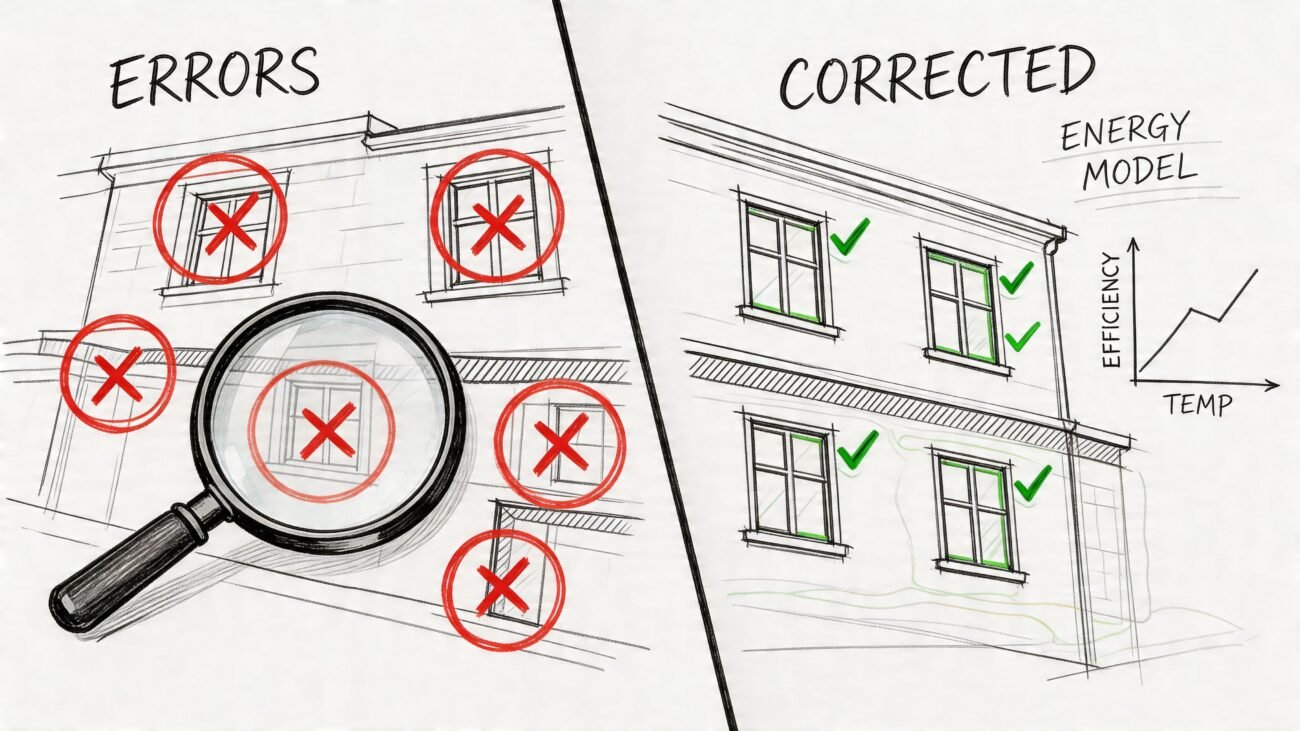
Thermal requirements aren’t limited to new construction. Retrofit work is now pushing this topic much harder. Post-2024 IECC updates in states like California and New York require 25-40% U-value improvements for pre-1980 buildings, and the US curtain wall retrofit market reached $4.2B in 2025, while 75% of firms cited missing BIM workflows for assessment and upgrade planning, according to Architizer’s overview of energy-efficient curtain wall retrofit pressures.
That matters because many firms are now touching aging facades that weren’t documented to modern standards. In those projects, specification quality and digital coordination quality become linked. If the model, scan data, and assembly assumptions are weak, the spec alone won’t save the project.
Good specifications reduce ambiguity. Great specifications also match what the team can actually coordinate, procure, and verify.
Modeling Curtain Walls in BIM for Production
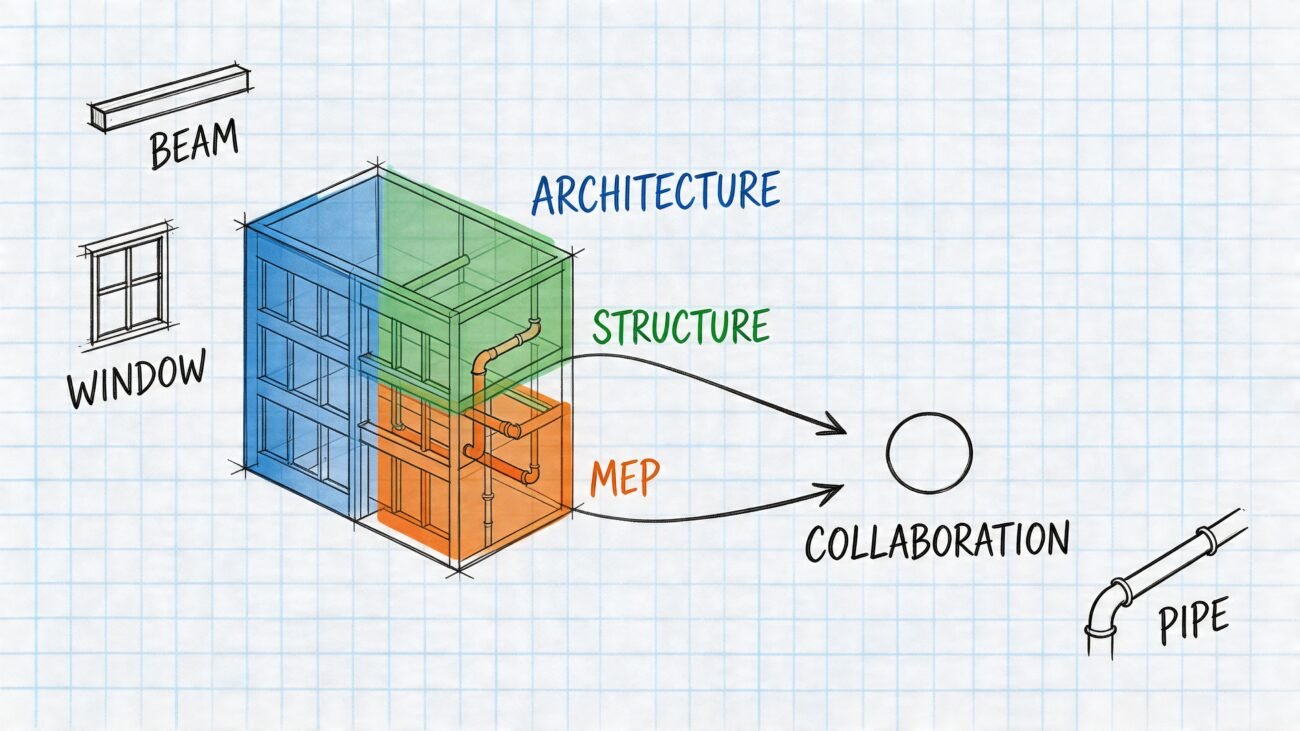
Curtain wall is one of the clearest examples of the gap between design modeling and fabrication modeling. Architects usually model intent. Glazing contractors model manufacture and installation. Problems start when the architectural model looks finished but doesn’t carry the information needed for coordination.
At permit stage, the goal isn’t to fake LOD 400. The goal is to produce a model that is disciplined enough to support pricing, review, and handoff without forcing the downstream team to rebuild the logic from scratch.
What the architectural model needs to own
A reliable permit-level curtain wall model should lock down the items that affect coordination across disciplines.
That usually includes:
- Panel module dimensions
- Mullion spacing and grid logic
- Sill and head relationships to floor levels
- Spandrel depth by condition
- System identification in parameters or schedules
- Clear slab-edge coordination zones
Many teams often under-model the facade. The elevations may look resolved, but the section and parameter structure aren’t. That creates unnecessary reinterpretation during shop drawing development.
Why complex geometry drives rework
The risk gets worse with sloped, faceted, or irregular enclosures. A 2024 survey of US firms found that 68% reported 20-30% rework in sloped or complex curtain wall models, often tied to inadequate mullion rotation parameters and glazing panel parameterization. The same source noted a 15% rise in sloped facade permitting in NYC in 2025, according to Senior Architectural’s article discussing current curtain wall modeling challenges.
Those numbers track with what production teams already know qualitatively. Complex curtain wall fails less from dramatic engineering mistakes than from parameter discipline breaking down in ordinary tasks:
- slanted panels that don’t report correctly
- custom profiles that aren’t flexible enough
- inconsistent corner logic
- schedules that no longer match modeled geometry
The handoff has to be intentional
A contractor’s facade model will add profile-specific geometry, anchors, fabrication joints, drainage logic, and other details not present in the permit model. That’s normal. The mistake is expecting that handoff to happen cleanly without a shared structure.
For teams coordinating glazing scopes, it helps to keep the model aligned with the broader window glazing and glass documentation workflow, especially where schedules, panel identity, and drawing output need to stay consistent across packages.
A good production model doesn’t overpromise detail. It gives the next team a stable base. That’s what reduces rework.
Preventing Common Coordination Failures and Next Steps
Most curtain wall failures aren’t mysterious. They’re ordinary coordination misses that compound because the facade touches so many scopes at once.
The same patterns show up again and again on commercial projects.
Four failures that keep repeating
- Anchor zones collide with structure: If slab edge geometry and curtain wall attachment zones aren’t coordinated early, the conflict often appears after structural work is already moving.
- Spandrel depth is too shallow: The elevation works graphically, but the concealed condition doesn’t fit.
- Stack joints ignore interiors: A facade joint lands in the wrong place relative to ceilings or sightlines.
- Transitions stay under-detailed: The interface with adjacent wall systems becomes the weakest point for constructability and enclosure continuity.
None of these are exotic. They’re production issues. The teams that avoid them usually build in decision checkpoints before the facade package hardens.
A better review rhythm
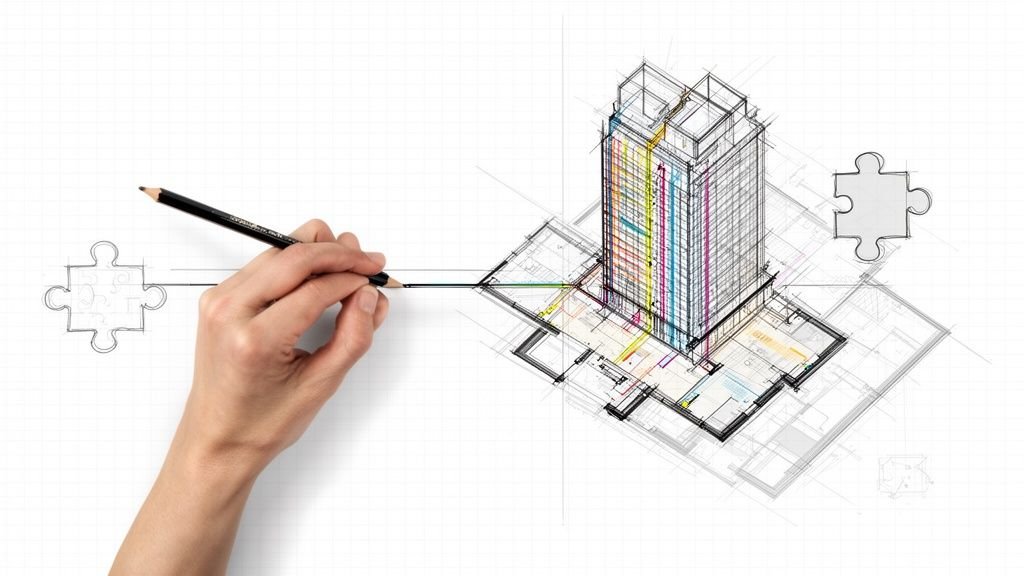
Use a coordination pass that treats curtain wall as an interface system, not an isolated elevation exercise. That means checking it against structure, interiors, roof edges, fire protection intent, and adjacent cladding before the consultant or contractor is forced to solve the ambiguity.
A simple review sequence often works better than a long one:
- Confirm system type
- Validate floor-line geometry
- Test slab-edge and anchor zones
- Check interior alignment at critical joints
- Detail transitions with adjacent systems
For teams formalizing that process, a disciplined constructability review workflow helps catch the kinds of facade issues that otherwise surface too late to solve cheaply.
Curtain wall projects go sideways when teams confuse visual resolution with technical resolution.
The upside is that these issues are preventable. Architects who understand the mechanics of curtain wall architecture make better early calls, issue stronger documents, and spend less time reacting during construction. That doesn’t mean owning every engineering decision. It means setting the project up so the right decisions can happen on time, with the right information, and with fewer surprises built into the handoff.
If your team is working through a commercial facade package and needs clearer production support, BIM Heroes helps architects and contractors with the documentation side that often decides whether curtain wall stays coordinated or turns into an RFI machine. If it’s useful, reach out for practical help with facade drawing sets, BIM standards, or review frameworks that make curtain wall delivery more predictable.