A bold prediction? Maybe. But it’s backed by market realities reshaping the AEC industry. The smart firms are already making the transition.
The architecture industry is approaching a tipping point. Within the next six years, the vast majority of firms will rely on external partners for architectural production to deliver their projects. This isn't speculation. It's an inevitable response to converging market forces that are making traditional in-house production models unsustainable.
If your firm is still handling all production internally, you're not just missing an opportunity—you're actively choosing a more expensive, less predictable, and ultimately less competitive path forward. We don’t sell hours; we sell clarity, systems, and reliable delivery.
The Perfect Storm Forcing a New Production Model
Labor Shortage + Specialization = Impossible Math
The AEC industry faces a skilled worker shortage that shows no signs of improving. According to the Associated General Contractors of America, 88% of construction firms report difficulty filling positions—and architecture firms face the same crunch for BIM specialists, production coordinators, and technical documentation experts.
But it's not just about finding bodies. Today's projects require increasingly specialized skills:
- Mature BIM Workflows: From initial setup to final handover.
- Template Discipline: Ensuring consistency across all deliverables.
- CAD-to-BIM Evolution: Modernizing legacy data with precision.
- Rigorous QA Processes: To prevent RFIs before they happen.
- Permitting Prep: Creating sets built for swift approval.
The days when one talented drafter could handle everything are gone. You now need specialists—but most firms can't afford to keep multiple specialists busy full-time, which is where outsourcing architectural services becomes a strategic necessity.
The Economics of In-House Production No Longer Work
Here's the math that’s forcing this transition to protect your margins.
Cost of building a 3-person in-house production team:
- Senior BIM Specialist: $75,000-$95,000 annually
- Production Coordinator: $60,000-$80,000 annually
- Junior Modeler: $45,000-$60,000 annually
- Benefits, overhead, software, and training: adds 40-50%
- Total Fixed Annual Cost: $280,000-$350,000
That’s before factoring in recruitment costs, management overhead, productivity gaps, and the risk of a key person leaving. It’s a massive fixed cost that drags on profitability.
The strategic production partnership alternative:
- Project-based pricing that scales with your workload.
- No fixed overhead during slow periods.
- Immediate access to scalable delivery pods with specialized expertise.
- Predictable delivery with built-in QA processes and decision checkpoints.
The economic advantage becomes overwhelming. Most firms struggle to keep production staff at 80%+ utilization. A production partner aggregates demand, running at 90%+ utilization. That efficiency is passed on to you as predictability and operational consistency.
What "Outsourcing" Actually Looks Like Today
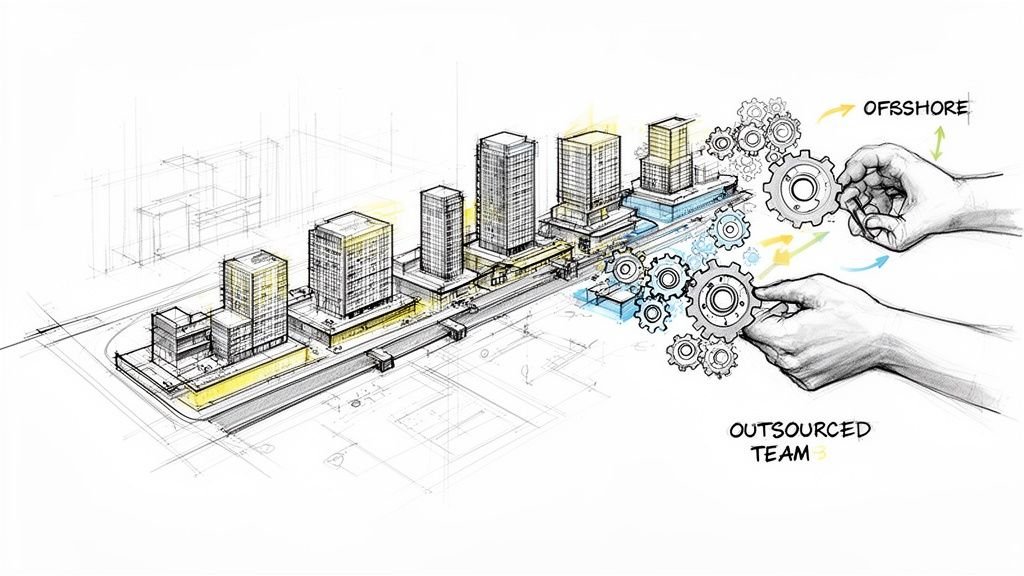
Forget the old image of shipping work overseas just to cut costs. Modern architectural production partnerships are strategic relationships that make your firm more capable, not less.
The Integrated Partnership Model
Successful arrangements operate like a high-performance pit crew for your design team. Your designers focus on client relationships and creative strategy, while the production partner handles the technical execution with machine-like reliability.
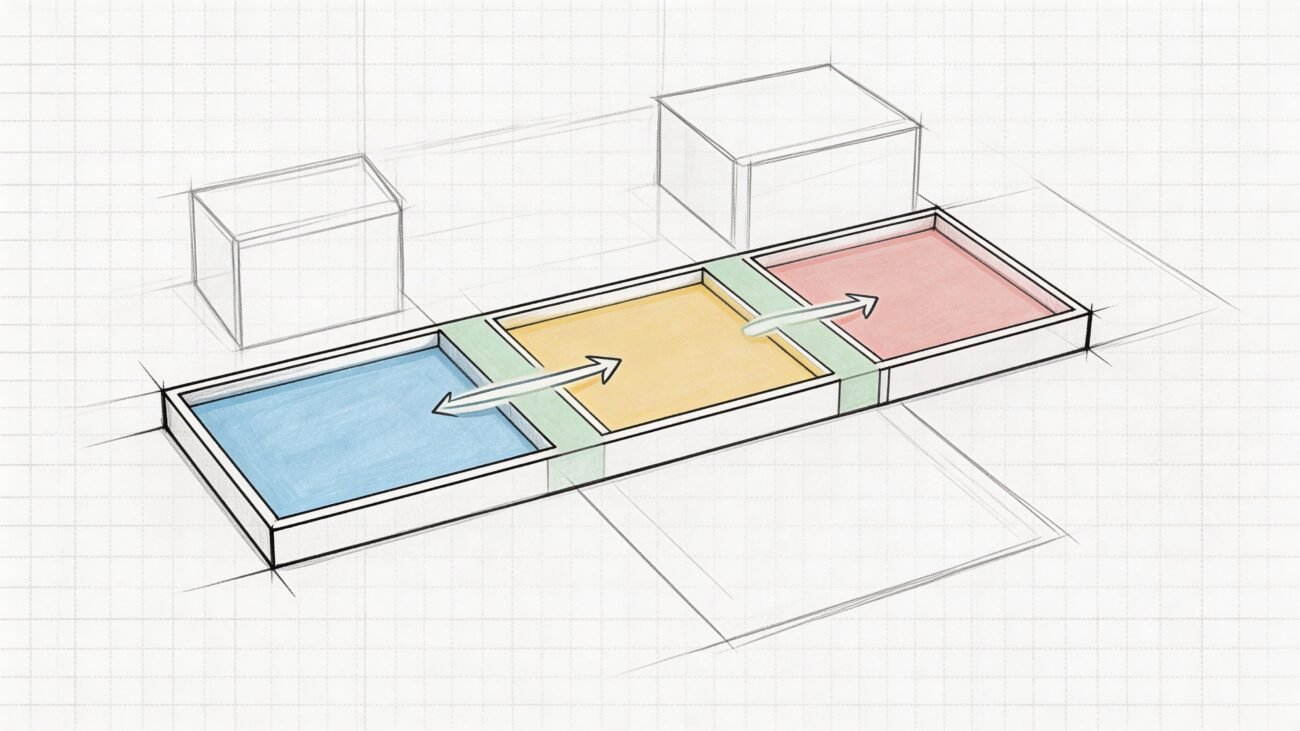
- Integrated Team Structure: Your design team and the partner’s delivery pod work in lockstep through shared platforms and regular check-ins.
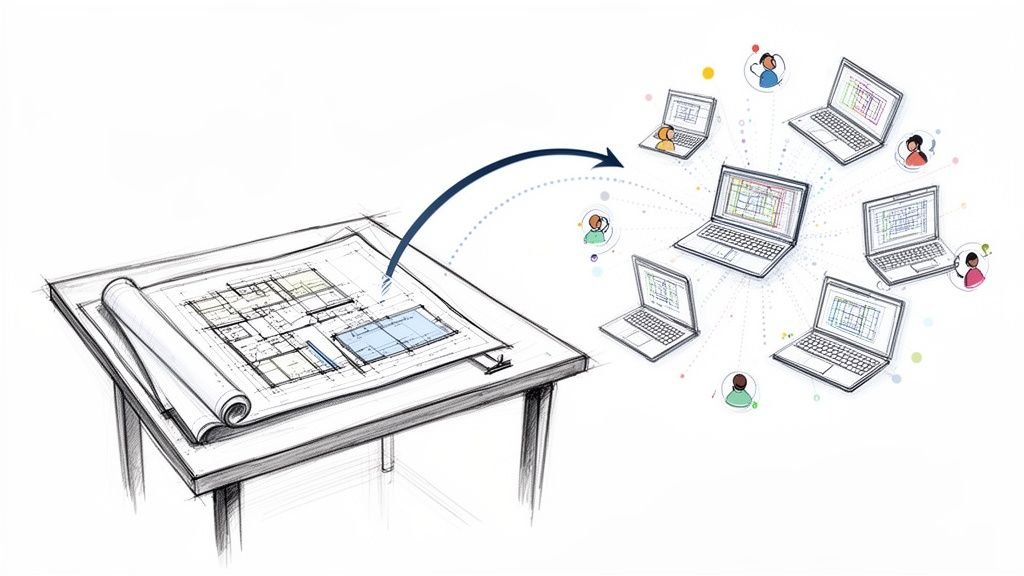
- Flexible Capacity: Scale production up for a big deadline or down during a quiet spell. Access specialized skills for complex MEP coordination or permitting prep without a full-time hire.
- Predictable Delivery: Timelines are fixed based on scope. Workflows are established to reduce coordination errors and prevent RFIs, protecting your project margins.
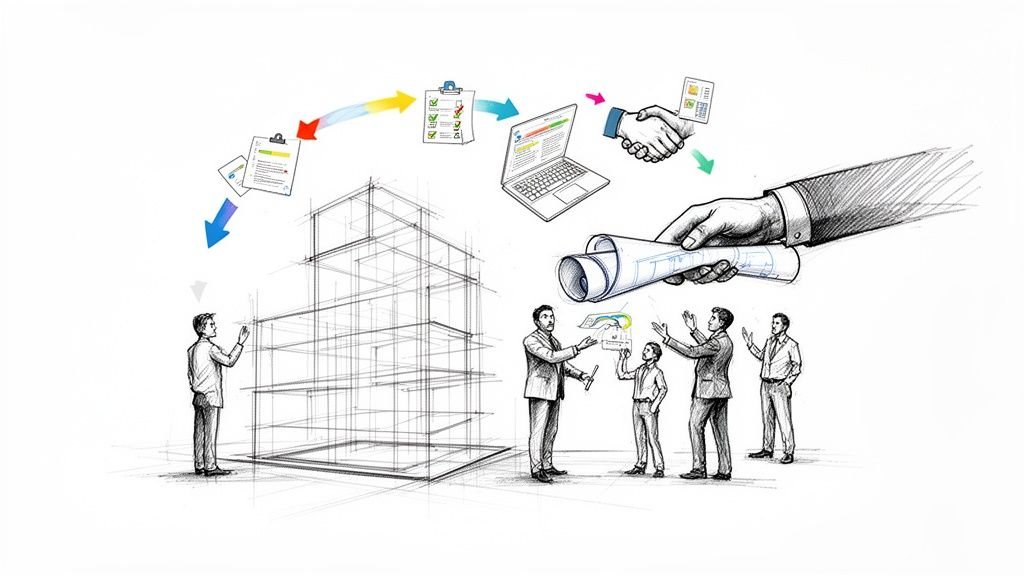
[IMAGE: Flowchart showing integrated team structure between architecture firm and production partner]
The firms that resist this shift? They're spending more time managing production bottlenecks than serving clients.
Is Your Firm Ready for a Production Partner?
Red Flags That Signal It's Time
Production Bottlenecks:
- Projects are regularly delayed waiting for production capacity.
- Your design team spends 40%+ of their time on technical documentation.
- Quality control issues are popping up from overloaded staff.
Financial & Growth Limitations:
- Production staff utilization is consistently below 75%.
- You’re turning down projects because you lack the bandwidth.
- You can't bid on complex jobs because you lack the specialized BIM workflows.
Management Headaches:
- Principals are spending too much time on production management.
- You’re constantly firefighting delivery timelines instead of focusing on growth.
- The thought of your lead production person leaving keeps you up at night.
Questions That Reveal The Truth
- What percentage of your design team's time is spent on production vs. design? If it's over 40%, you're misallocating expensive talent.
- How often do you turn down work due to production constraints? Every "no" is lost revenue.
- What is your actual all-in cost for production work? Most firms underestimate this by 30-50%.
- How confident are you in your delivery timelines? If the answer is "it depends," you have a capacity problem.
What the Smartest Firms Are Already Doing
Forward-thinking firms aren't waiting for a crisis. They've been building these partnerships for years and are now reaping the rewards. They can bid more aggressively, take on more complex projects, and deliver more consistent quality than competitors.
The Strategic Transition
They don't flip a switch overnight. The transition is methodical:
- Pilot Project: Test the partnership on a medium-complexity project to align on template discipline and QA processes.
- Capacity Overflow: Use the partner during peak periods to augment your core team.
- Specialized Projects: Outsource work requiring specific expertise, like CAD-to-BIM evolution or complex modeling.
- Strategic Partnership: Evolve to a model where the partner handles the bulk of routine production, freeing your team for high-value work.
[IMAGE: Timeline showing typical transition phases over 12-18 months]
Why a 90% Adoption Rate by 2030 is Realistic
The forces driving this shift are only accelerating.
- Labor Market: The skilled worker shortage will worsen, and remote work will favor specialized service providers.
- Technology Acceleration: Cloud collaboration makes location irrelevant, while BIM complexity demands dedicated expertise.
- Economic Pressures: Clients demand faster delivery, and competition from firms with lean operational models will intensify.
The 10% that maintain large in-house teams will be massive global firms or highly niche specialists. For the other 90%, the question isn't if you will transition, but how quickly you can do it strategically to protect your margin, improve predictability, and ensure operational consistency.
Your Next Move: From Insight to Action
The architecture firms thriving in 2030 won't be the ones with the largest in-house production teams. They'll be the ones that built the best networks of specialized partners, freeing their core teams to focus on design innovation and strategic growth.
The shift toward architectural production partnerships is about competitiveness. The question facing every firm leader: Will you lead this transition, or will competitive pressure force you into it?
We find that firms ready for this conversation often start by asking better questions. To help, we’ve put together a checklist of questions designed to vet a potential partner’s production maturity, not just their price list. It helps you see if they truly understand how to deliver clarity and reliable outcomes.
Download our complimentary Production Partner Vetting Checklist to start a more strategic conversation about your firm’s future.