Meta description: Why accurate as-built models for tenant improvements matter. Learn how verified existing-condition BIM reduces clashes, supports permitting, improves TI construction documentation, and protects budgets in existing buildings.
Most tenant improvements don’t get into trouble because the design intent was wrong. They get into trouble because the team trusted a floor plan that looked complete and wasn’t. A landlord sends over a record set. There’s a floor plan, maybe an RCP, maybe some old MEP sheets from a prior fit-out. The project starts. Then demolition opens the ceiling, and the space in the drawings and the space in the building turn out to be two different things.
That gap is where TI projects lose money.
In older buildings, and in buildings that have been modified by multiple tenants over time, “good enough” documentation usually isn’t good enough at all. A partition shift affects sprinklers. A new conference room conflicts with a duct run no one modeled. A restroom upgrade triggers code review against conditions nobody verified. What looked like a straightforward fit-out becomes redesign, RFIs, field fixes, and arguments over who owns the miss.
As-built models tenant improvements work differently when the existing conditions are verified. The project team stops designing against assumptions and starts coordinating against reality. That changes decisions in pre-design, in permit, and in the field.
The True Meaning of As-Built for Tenant Improvements
In TI work, the term as-built gets used too loosely. A lot of teams say “as-built” when they really mean “the latest drawings we could find.” Those are not the same thing.
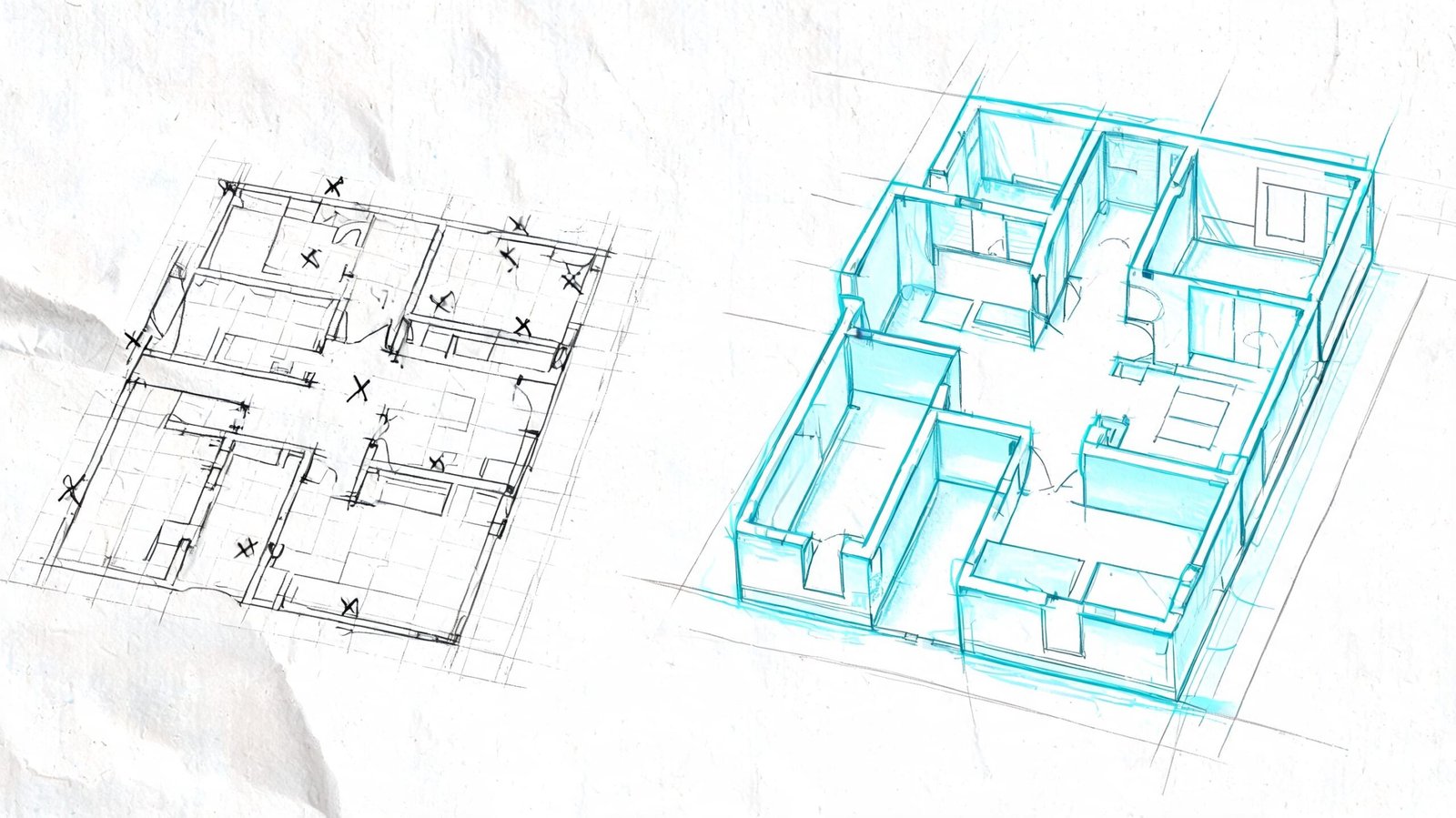
Record drawings are not verified conditions
A record set is usually a historical reference. It may reflect original construction. It may reflect a previous tenant improvement. It may also include redlines that were never fully incorporated. In many buildings, especially leased office space, no one updated those sheets after ceiling work, branch power changes, thermostat relocation, or restroom modifications.
That matters the moment a contractor starts cutting, drilling, or laying out walls.
A 2D record drawing is static. It can’t tell your architect, MEP engineer, and contractor how existing systems relate spatially. It doesn’t reliably expose whether the duct turn sits lower than expected, whether a beam pocket affects head height, or whether the wall you plan to extend lands directly under a sprinkler branch line.
A verified as-built model is a production dataset
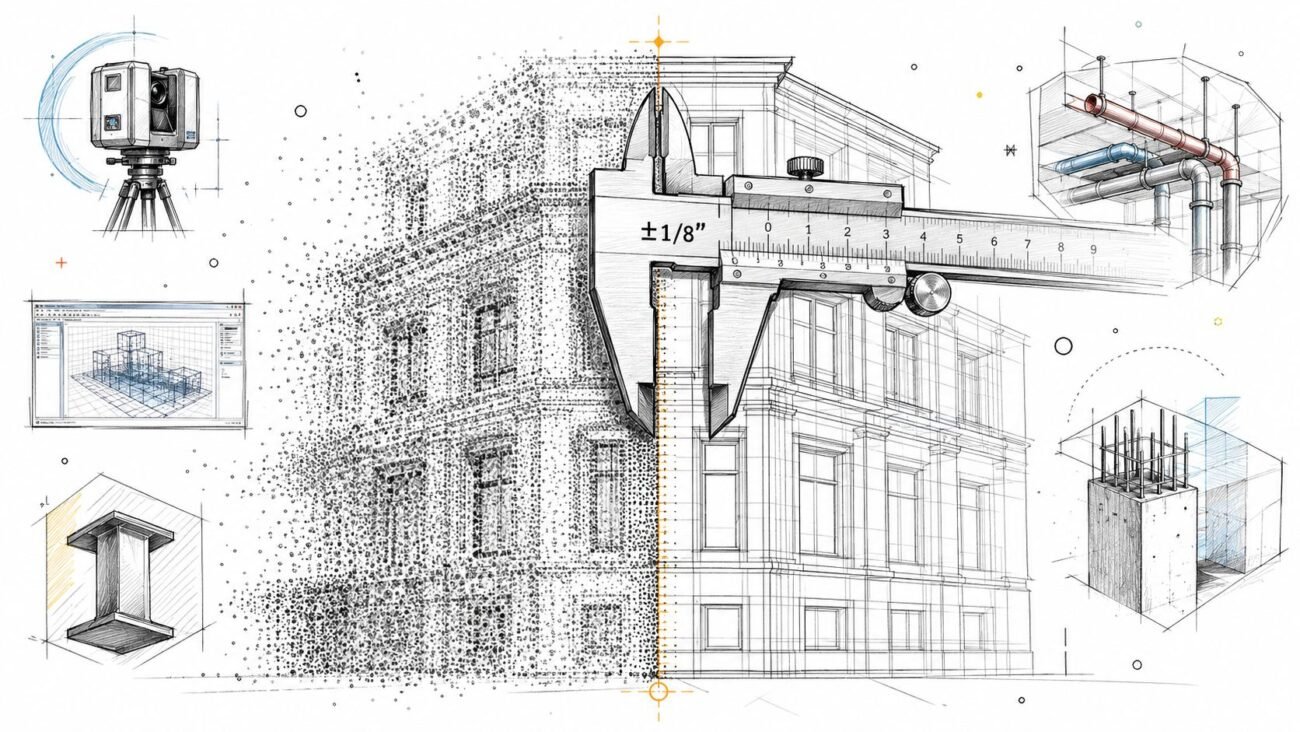
A real as-built BIM for tenant improvements is a field-verified model of existing conditions. It’s coordinated in three dimensions and built to support decisions, not just documentation. That distinction is the difference between drafting and project control.
For TI teams, that model becomes the base file for layout, engineering, permit sheets, coordination, and construction sequencing. It also makes downstream deliverables more dependable, including details, coordination views, and even fabrication-oriented packages that relate back to shop drawing workflows.
Practical rule: If the model hasn’t been verified against field conditions, it’s not an as-built. It’s a guess with cleaner graphics.
Landlord-provided plans still have value. They help identify likely systems, old scope, and lease boundaries. But they should be treated as reference input, not ground truth. On tenant improvements, the foundation needs to be measured, modeled, and checked before design starts depending on it.
Where Inaccurate As-Built Data Derails TI Projects
Most expensive TI problems are framed as “construction issues.” A lot of them are documentation failures that showed up late.
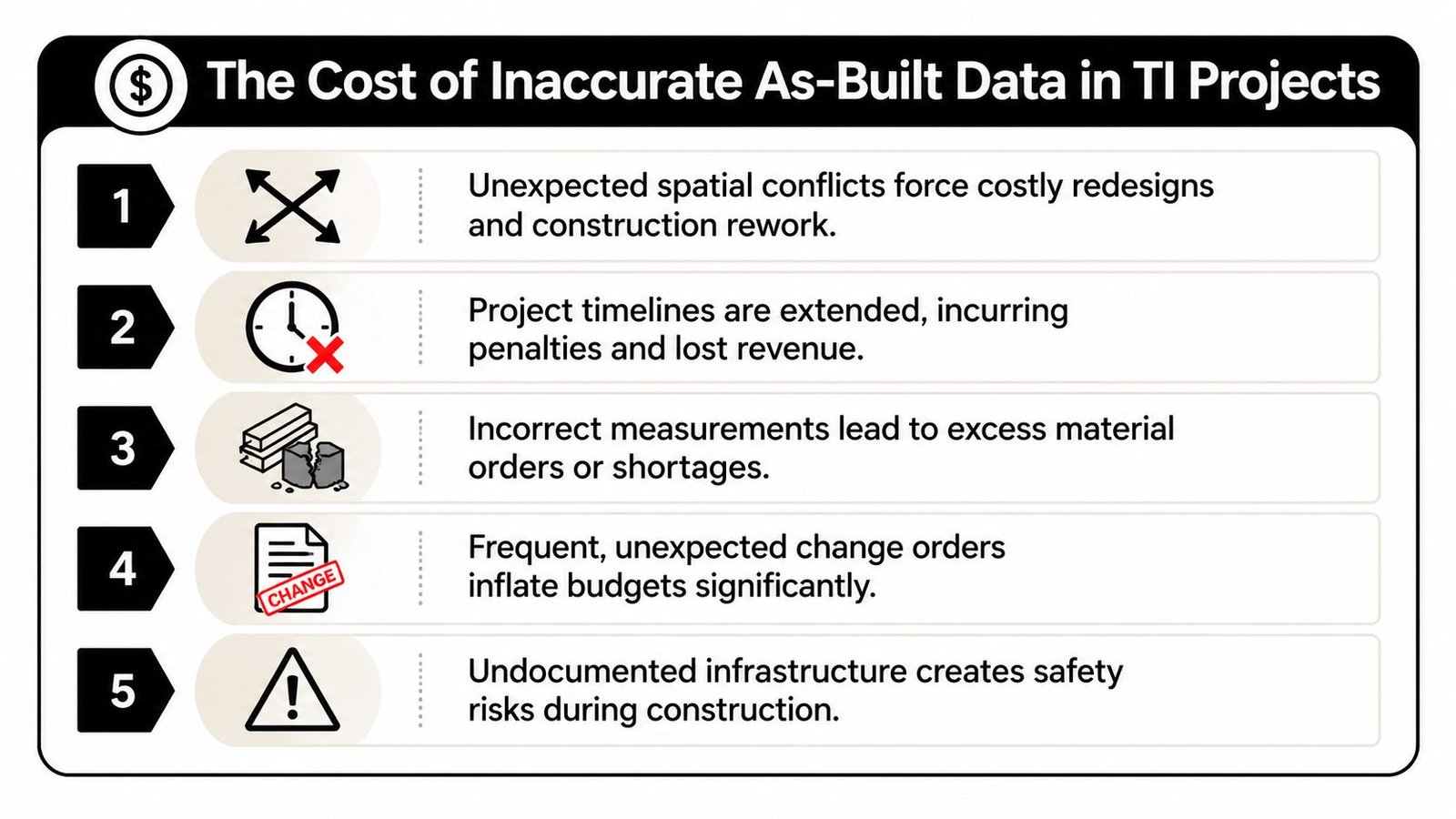
Structural conflicts discovered after layout
A plan may show open area where the building has a drop beam, offset column face, or framed obstruction. On paper, the partition works. In the field, it collides with structure or forces a lower ceiling condition than the design assumed.
That kind of miss doesn’t stay isolated. One shifted wall can affect door hardware, glazing, lighting layout, sprinkler spacing, soffits, and millwork dimensions. By the time demolition reveals it, the design team is revising a live job instead of controlling one.
Ceiling space is where small changes become expensive
This is one of the most common TI traps. A team moves a wall or adds a door and treats it like a minor architectural revision. Above the ceiling, it rarely stays minor.
The Colliers note on the ceiling domino effect makes the point clearly. A small change like adding a door can trigger modifications to sprinklers, lights, and mechanical systems, potentially adding $10 per square foot to the project budget. That’s exactly the kind of cost that shows up when ceiling infrastructure was never properly documented before design.
Ceiling coordination is where “simple TI” jobs stop being simple.
In older office stock, hidden conditions usually include rerouted branch ducts, abandoned conduit, undocumented low-voltage runs, and devices shifted by prior tenants. Without accurate existing-condition modeling, the new design gets developed in a false void.
Slab and ceiling assumptions break compliance fast
Reflected ceiling plans are often based on nominal dimensions, not measured ones. That’s a problem when actual slab-to-slab height, beam depth, or MEP congestion reduces available headroom. Suddenly the planned ceiling elevation doesn’t work, sprinkler heads need to move, and egress clearance becomes harder to maintain.
These aren’t abstract BIM benefits. They are field consequences. The drywall sub, sprinkler sub, and mechanical contractor all price and sequence work based on documented geometry. When that geometry is wrong, coordination turns into rework.
Existing nonconforming conditions become your permit problem
Permit review has a way of turning old building issues into current project obligations. A restroom that “worked fine for the last tenant” may not satisfy current accessibility review once you touch adjacent scope. Door clearances, turning radii, ramp slopes, or fixture layouts that were never verified can trigger comments at exactly the wrong point in the schedule.
A verified existing-condition model helps the team identify these conditions early enough to decide whether to correct them, isolate them, or redesign around them before plan check forces the issue.
Bad data distorts bids before the job even starts
Subcontractors react to uncertain existing conditions in two ways, neither good for the owner. They either carry extra contingency because they don’t trust the drawings, or they bid lean and recover later through change orders once field reality appears.
Both outcomes damage predictability.
- Heavy padding: The project pays for uncertainty up front.
- Thin bids: The project pays for uncertainty later, usually with more friction.
- Confused scope splits: Trades assume someone else owns demolition findings, patching, or relocations tied to hidden conditions.
When the base documentation is unreliable, procurement gets noisy. The job may still get built, but not with the operational control they expected to have.
What an Accurate As-Built Model Unlocks at Each Stage
An accurate Revit as-built model doesn’t just reduce surprises. It changes the quality of decisions all the way through the TI lifecycle.
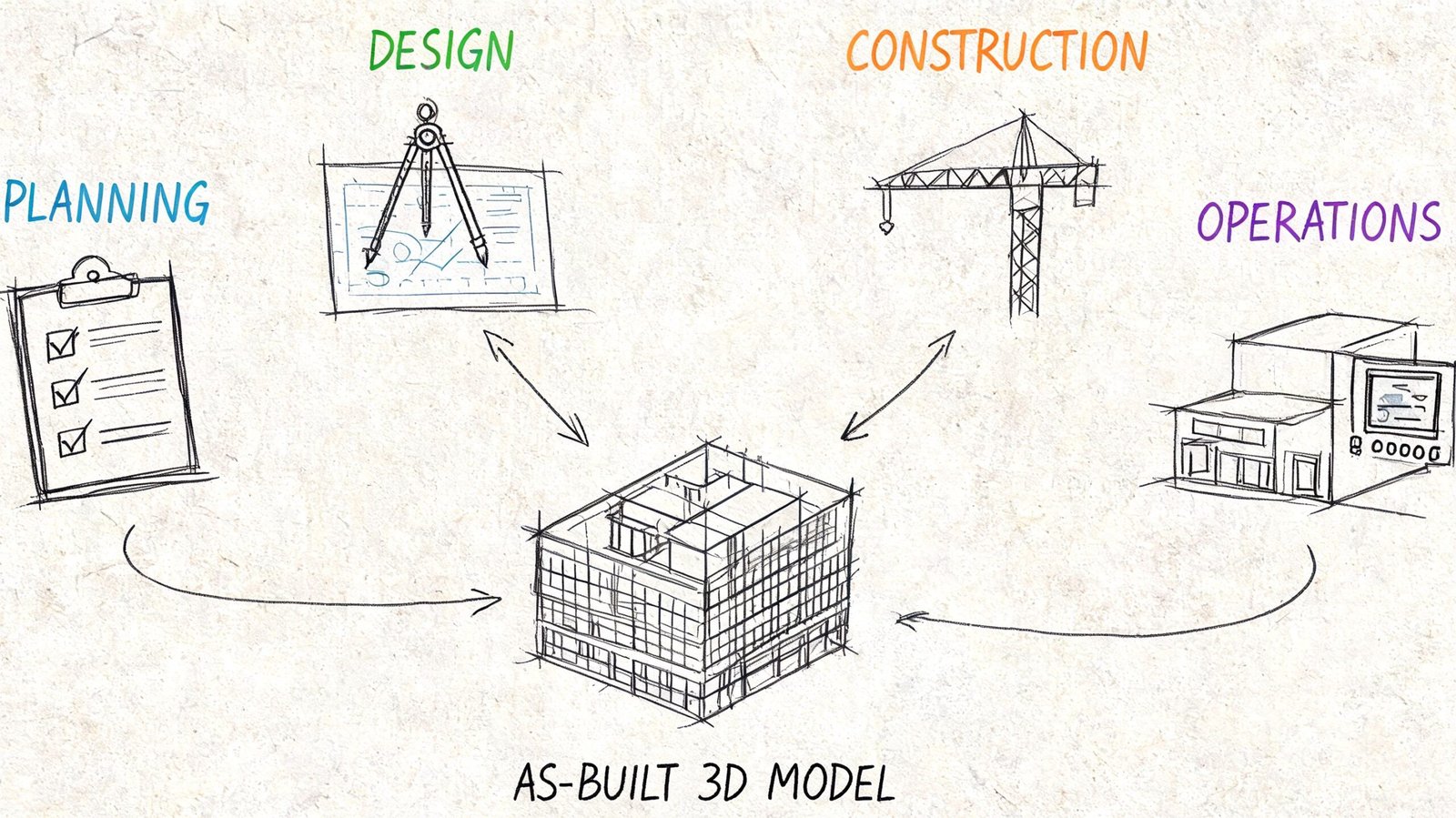
Pre-design decisions get grounded in real constraints
Programming goes faster when the team knows the actual room envelope, existing riser locations, main duct routes, and usable ceiling zone. That affects early choices about conference room placement, break areas, demising walls, open office densities, and whether a proposed concept is even worth advancing.
For owners and tenant reps, this also improves the lease-side conversation. The Mastt guide on tenant improvements notes that tenants can utilize TIAs for BIM-enabled modular designs that adapt to remote and hybrid shifts, reducing future refit costs by as much as 15-25%. Those negotiations only work if the existing conditions are documented accurately enough to support future-proofing decisions.
Design development gets coordinated instead of corrected
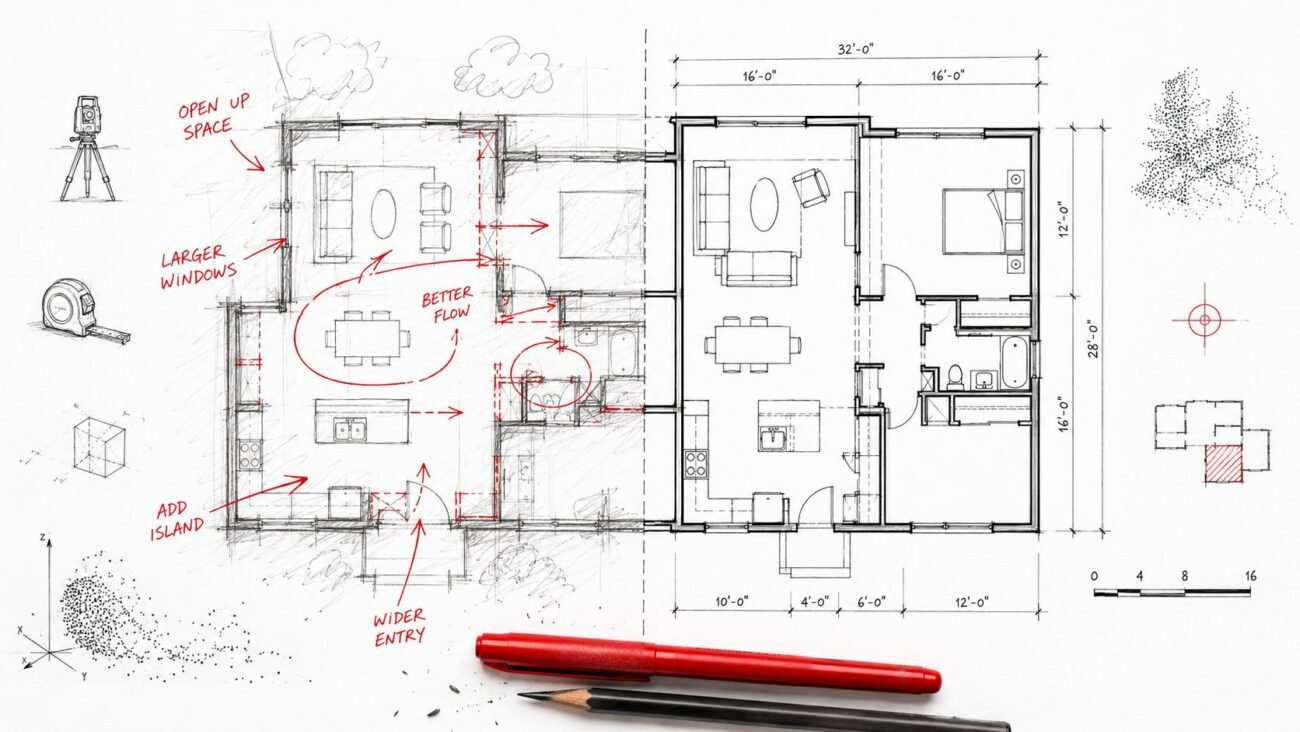
A reliable model lets the architect and engineers work in context. New partitions can be tested against actual structure. Diffusers, light fixtures, and branch circuits can be coordinated against what already exists. Equipment access, ceiling transitions, and bulkheads can be resolved in model space before they become field improvisation.
TI construction documentation improves. Not because drawings look nicer, but because the sheets are based on geometry the trades can trust.
An accurate base model moves design effort upstream, where revisions are cheaper and faster.
For production teams, that creates cleaner decision checkpoints. You can hold internal QA around real conflicts, not hypothetical ones. You can flag unresolved conditions before permit. And you can issue sets with fewer disclaimers about “field verify.”
Permitting becomes less reactive
Plan reviewers can’t solve undocumented conditions for you. If existing walls, restrooms, egress paths, or ceiling conditions are represented loosely, review comments tend to widen. Once that starts, permit turnaround suffers because the reviewer isn’t just checking scope. They’re questioning the reliability of the existing-condition baseline.
A well-built as-built model supports permit sheets that reflect the actual building. It also helps the team isolate existing nonconforming conditions early, document them correctly, and avoid creating accidental scope through sloppy background information.
Construction gets fewer existing-condition RFIs
On TI jobs, many RFIs are not design failures. They are existing-condition discoveries that should have been known before the set was issued. When the model is accurate, layout improves, subcontractor coordination gets tighter, and field teams spend less time stopping work to ask what the building really looks like.
That matters most in active buildings where schedule windows are narrow and access is limited. If the electrician, sprinkler fitter, and mechanical installer are all working from dependable geometry, sequencing holds better.
A verified model also creates durable value after closeout. Owners who maintain accurate building documentation don’t have to restart discovery from zero on the next fit-out. The next TI begins with a usable baseline instead of inherited uncertainty.
How Accurate As-Built Models Are Made
The method matters less than the output, but the output depends on the method.
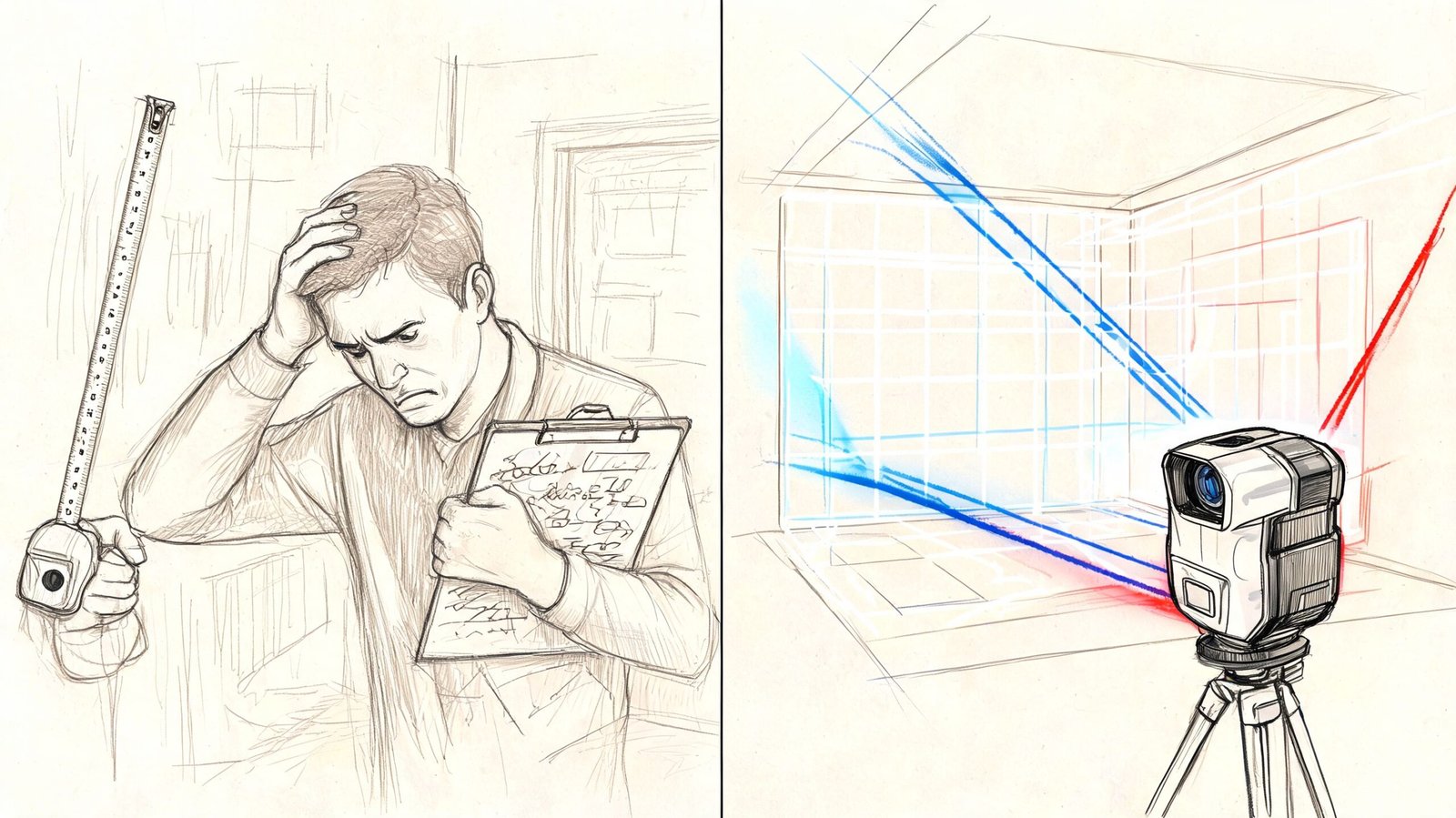
Field tape checks versus scan to BIM
Traditional field measurement still has a place on small, simple scopes. But on TI projects with congested ceilings, irregular existing walls, or older building stock, manual measurement breaks down fast. Teams capture obvious dimensions and miss the exact geometry that later drives clashes.
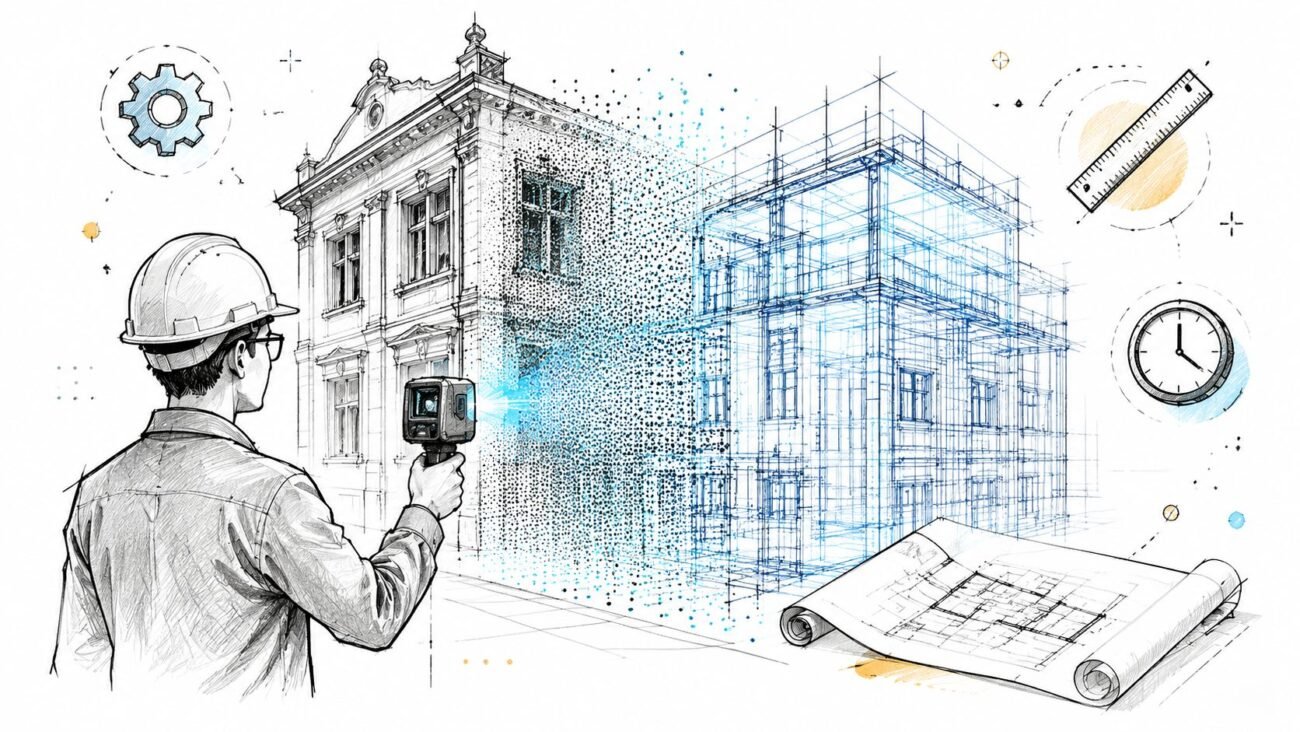
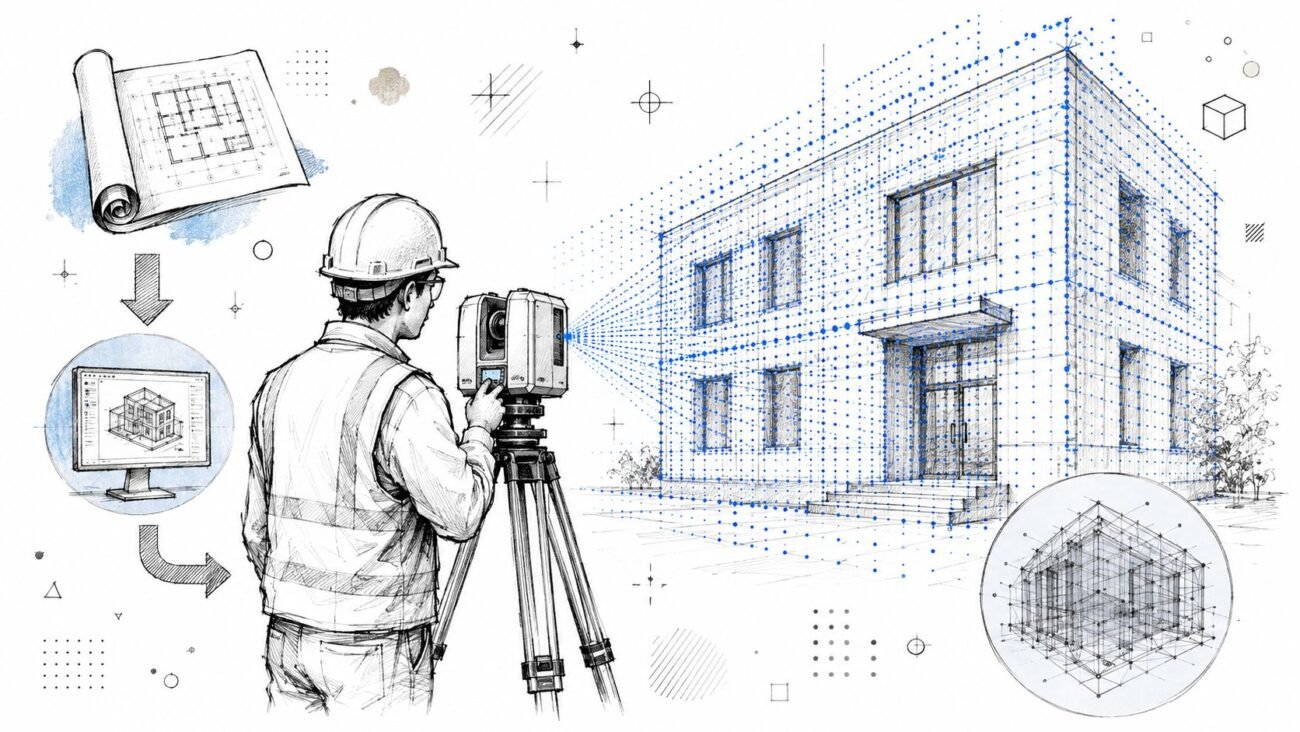
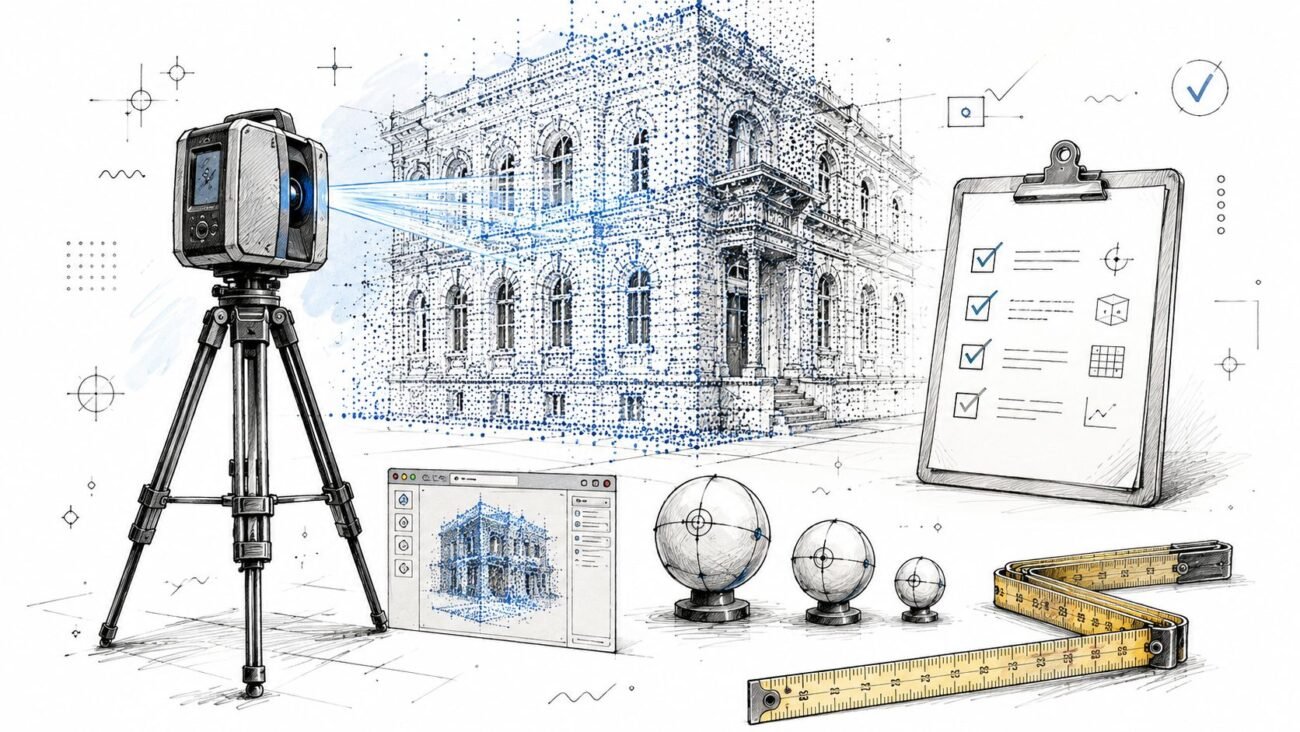
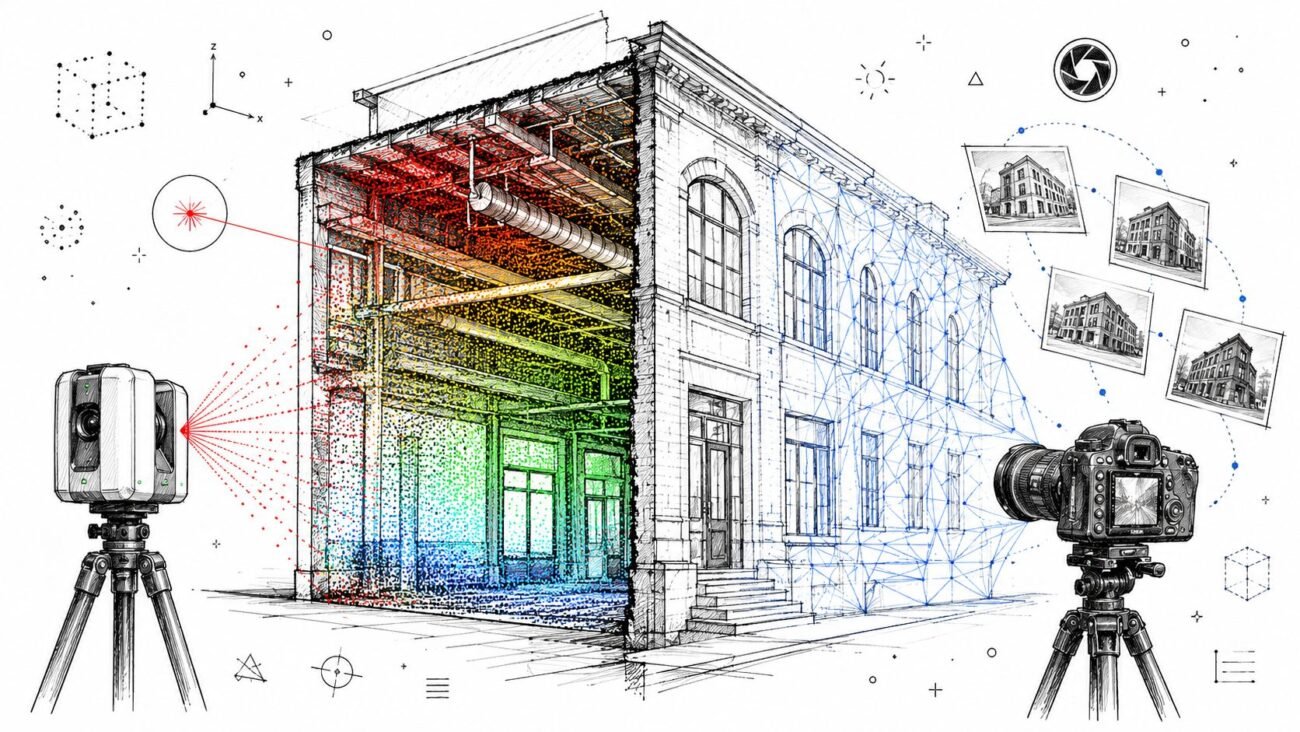
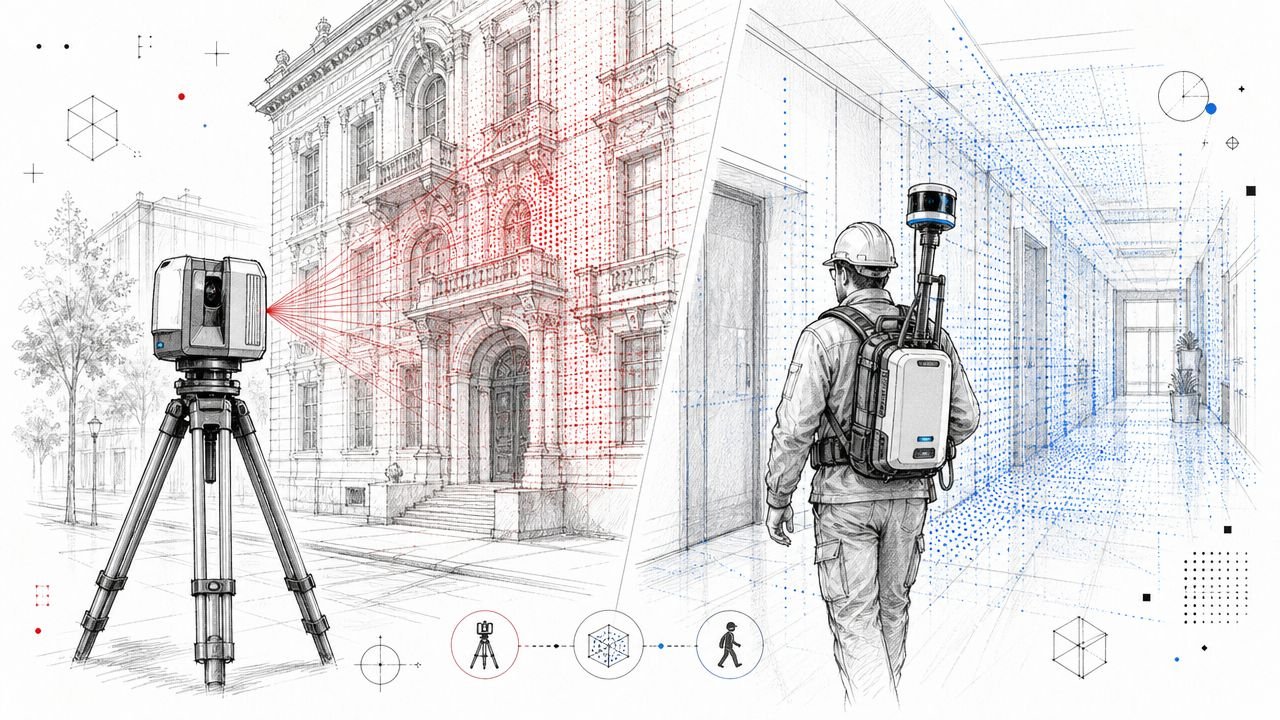
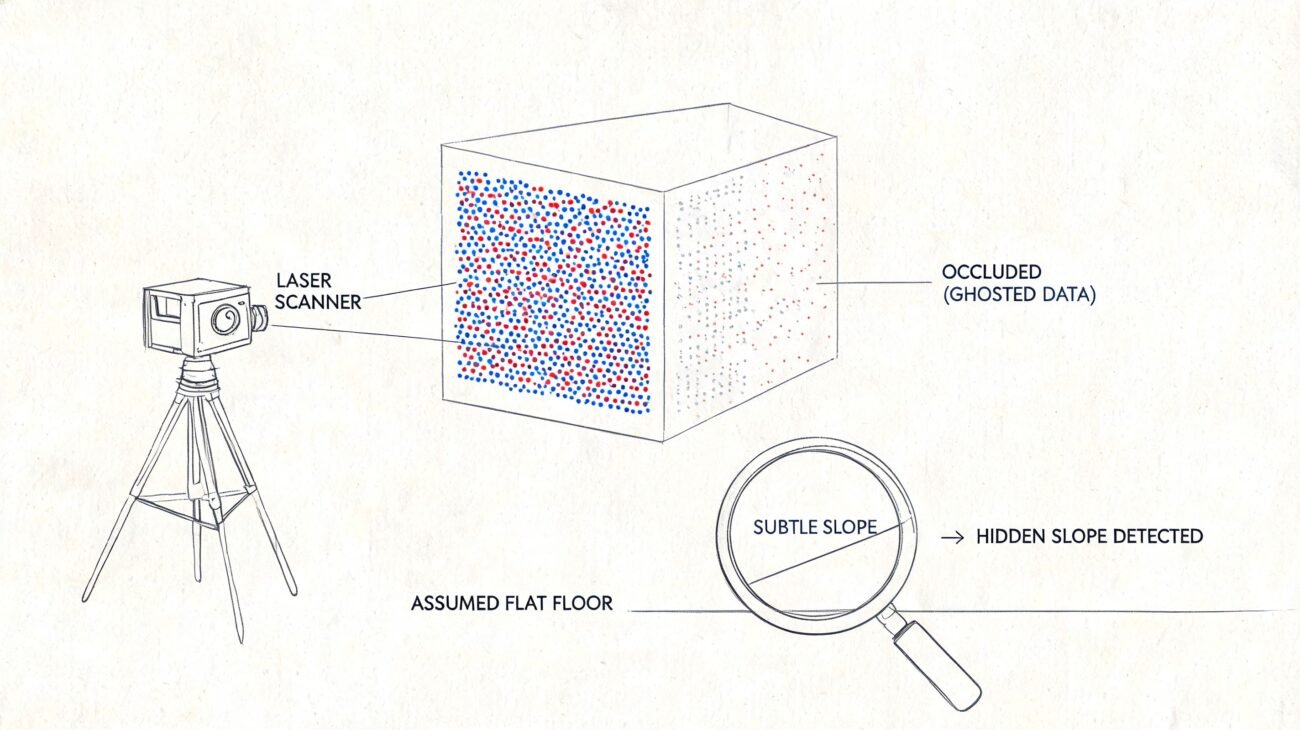
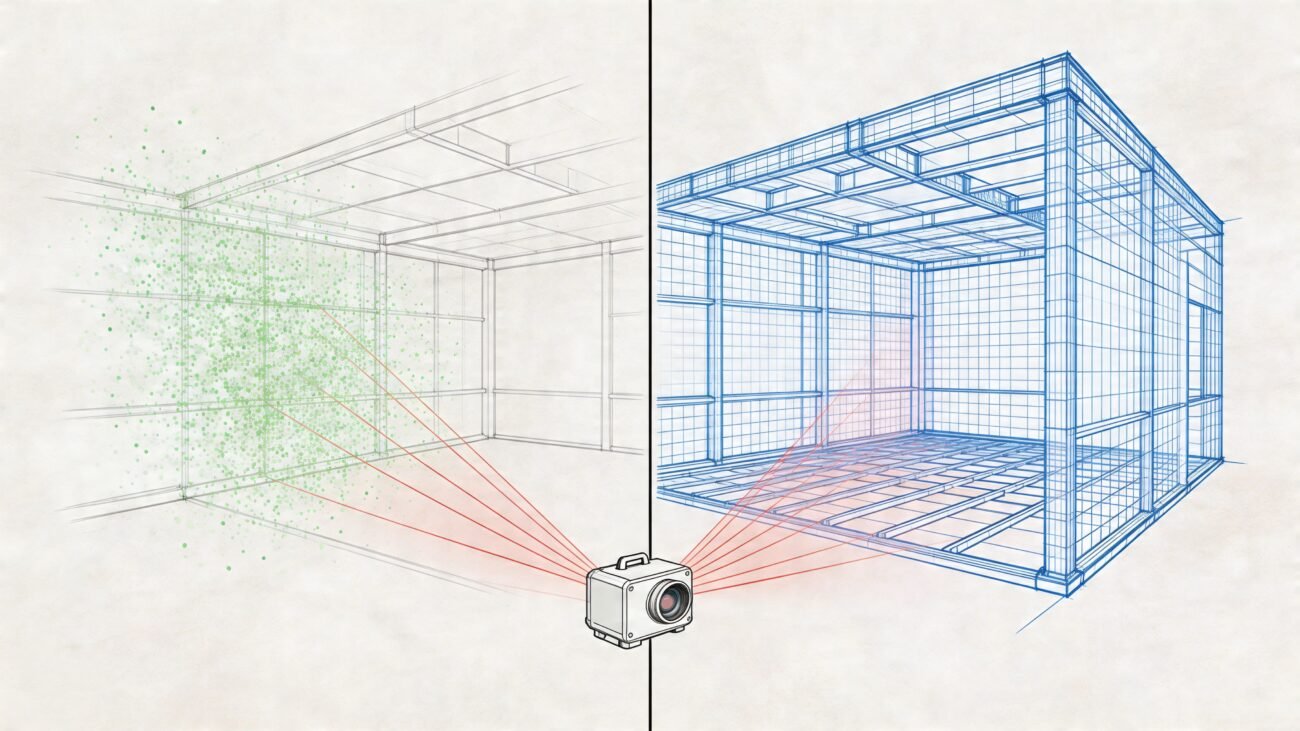
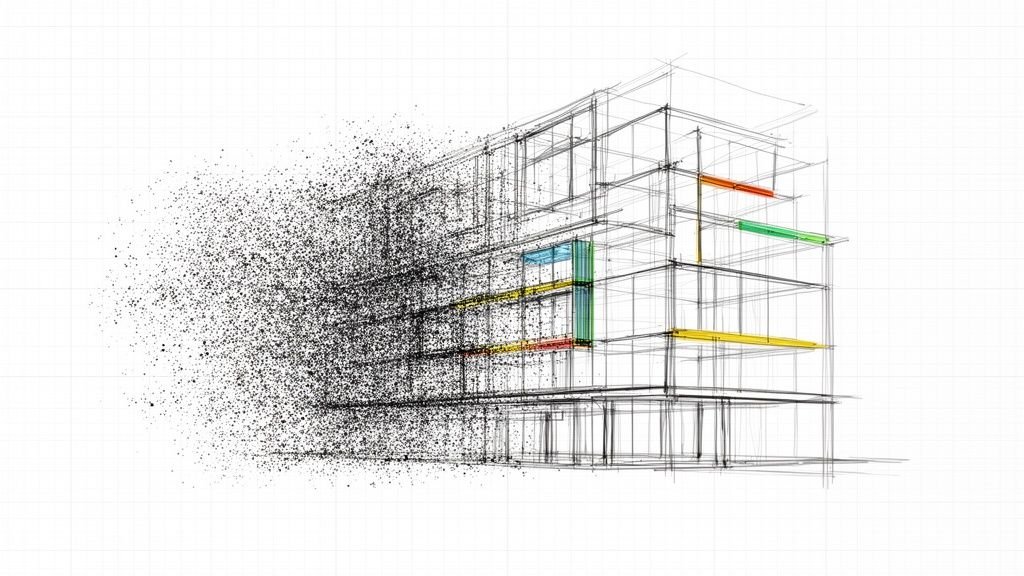
That’s why scan to BIM tenant improvement workflows have become more practical. Laser scanning captures dense site data. That scan data is then translated into a model, often in Revit, where walls, floors, ceilings, structure, and visible MEP systems are built to match the measured environment.
If your team is evaluating that route, this overview of scan to BIM services is the right category of deliverable to compare against project needs.
Accuracy has to match the intended use
Not every TI project needs the same model depth. A loose planning model might support test fits. A coordination model needs much more discipline. The problem starts when teams ask for “as-built drawings” without defining what decisions the deliverable has to support.
A practical way to think about it:
| Use case | What the model needs to do |
|---|---|
| Early space planning | Represent rooms, primary walls, major openings, and basic heights |
| Design coordination | Include verified structure, ceilings, and key visible MEP routing |
| Construction support | Capture enough existing geometry to test clashes and support trade coordination |
Performance and code requirements depend on the baseline
Modern TI work isn’t just moving walls. It has to align with system performance and code requirements. The Modern NW overview of tenant improvements notes that interior partitions require a minimum STC rating of 50, flooring requires a minimum coefficient of friction of 0.60, and ceiling materials require a minimum Noise Reduction Coefficient of 0.70. Those requirements are easier to design and verify when the existing-condition model is accurate enough to support real coordination.
The right as-built isn’t the one with the most objects. It’s the one that captures the conditions that can break the job.
In practice, that means defining the deliverable around TI use. Space planning, permit, MEP coordination, and construction support are different scopes. The model should be built accordingly.
The Business Case for Upfront Documentation
The objection is predictable. Scanning and modeling cost money. They also take time at the start of a project, when everyone wants to move.
That objection makes sense until the first real miss shows up in the field.
When owners commit major TI dollars, waste inside the existing-condition baseline becomes harder to justify. In major U.S. office markets, landlord concessions have expanded sharply. Northspyre’s review of tenant improvement projects reports that New York City averaged $145 per square foot in 2023, up 41% since 2019. When that much capital is being deployed, an accurate model helps keep the allowance focused on improvements the tenant values instead of absorbing unforeseen conditions.
Upfront cost is controlled. Field discovery is not.
A verified model is a scoped preconstruction cost. Redesign during demolition isn’t. Neither is trade downtime while the team resolves undocumented MEP conflicts, nor permit delay caused by poorly represented existing conditions.
That’s the business case. Accurate as-built drawings and models protect margin by converting unknowns into knowns before expensive people are waiting on answers.
The asset keeps paying back
For a one-off tenant, that value shows up in fewer surprises and cleaner closeout. For owners and portfolio managers, it’s bigger than a single job. Reliable scan to BIM documentation for existing buildings becomes a reusable planning asset for future TI cycles, lease negotiations, capital planning, and renovation sequencing across multiple spaces.
A building with dependable digital documentation is easier to reposition. A building with fragmented old PDFs and partial redlines keeps charging discovery costs every time a new project starts.
A Practical Checklist for Commissioning Your As-Built Model
It is understood that better building documentation is needed for renovations. The miss usually happens in timing or scope.
Commission the survey before design begins. If the architect starts test fits from unverified plans, the project has already accepted avoidable risk. Fixing the base model after design starts is slower than getting the baseline right first.
Ask for the deliverable in terms of intended use, not just file type.
- Define the purpose: Is the model for test fits, permit, MEP coordination, or construction support?
- Specify model scope: Identify which existing elements must be modeled, including ceilings, structure, major MEP, shafts, and openings.
- Request verification material: If laser scanning is used, ask for the point cloud along with the model so your team has a reference layer.
- Check building history: In multi-tenant properties, ask the landlord whether a building-wide model already exists, when it was created, and whether later tenant work was incorporated.
- Align internal QA: Make one person responsible for checking that the model supports the decisions the project has to make.
If you’re starting tenant improvements from drawings that haven’t been verified against the field, the risk isn’t theoretical. It’s already in the job.
If you need a reliable baseline before design starts, BIM Heroes produces Revit as-built models from scan data for renovation and TI projects. If you’re comparing options, start with a simple checklist: what must be verified, what level of model detail the project needs, and which decisions depend on that data first. That conversation usually reveals whether your current “as-built” is usable or just familiar.