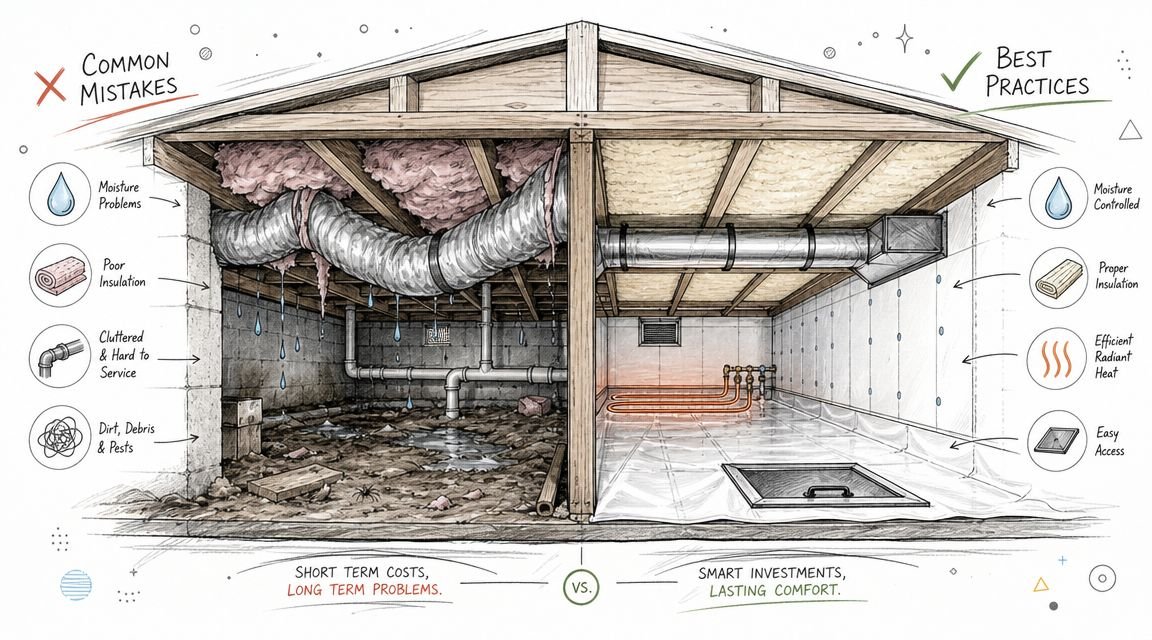
Imagine this: a restaurant’s grand opening is delayed by six weeks because the grease interceptor was sized for the original menu concept, not the expanded grill line added during design development. This isn’t hypothetical. It's a real-world, $40,000 mistake that a single coordination meeting could have prevented. This is the painful reality of poor restaurant design coordination, a challenge uniquely complex compared to other project types.

Unlike a standard office build-out, restaurants involve unusually high MEP density, specialized equipment with specific utility requirements, strict health and fire codes, and aggressive schedules. This requires multiple specialized consultants—architects, interior designers, MEP engineers, and kitchen consultants—who don't always speak the same technical language.
Coordination failures in restaurant design show up fast and hit hard—during health department inspections, equipment installation, or worse, opening week. Proactive coordination isn't optional; it's essential for survival.
The Real Pain of Coordination Failures
These aren't simple scheduling mix-ups. They are deep, technical conflicts that burn budgets and reputations. We’ve seen it all:
- Kitchen equipment arrives on-site and doesn't fit the rough-in.
- Exhaust hoods are undersized for the cooking equipment below, filling the kitchen with smoke.
- Grease traps are in the wrong location for health department approval.
- Electrical panels can’t handle the actual equipment loads, tripping breakers during dinner service.
- Floor drains are misaligned with equipment legs, creating sanitation hazards.
These problems happen not because consultants are incompetent, but because no one owns the intersections between disciplines. Kitchen consultants design equipment layouts, MEP engineers design building systems, and architects design spaces. The connections between equipment and systems fall through the cracks unless someone actively manages them with clear protocols.
In a well-coordinated project, equipment schedules drive restaurant MEP design from day one, utility requirements are verified before rough-in, and health department walks result in approval, not a punch list. This guide outlines the practical workflows that prevent expensive field failures and ensure predictability. While essential restaurant interior design ideas shape the guest experience, flawless coordination ensures the doors open on time.
The Players: Who Does What in Restaurant Design
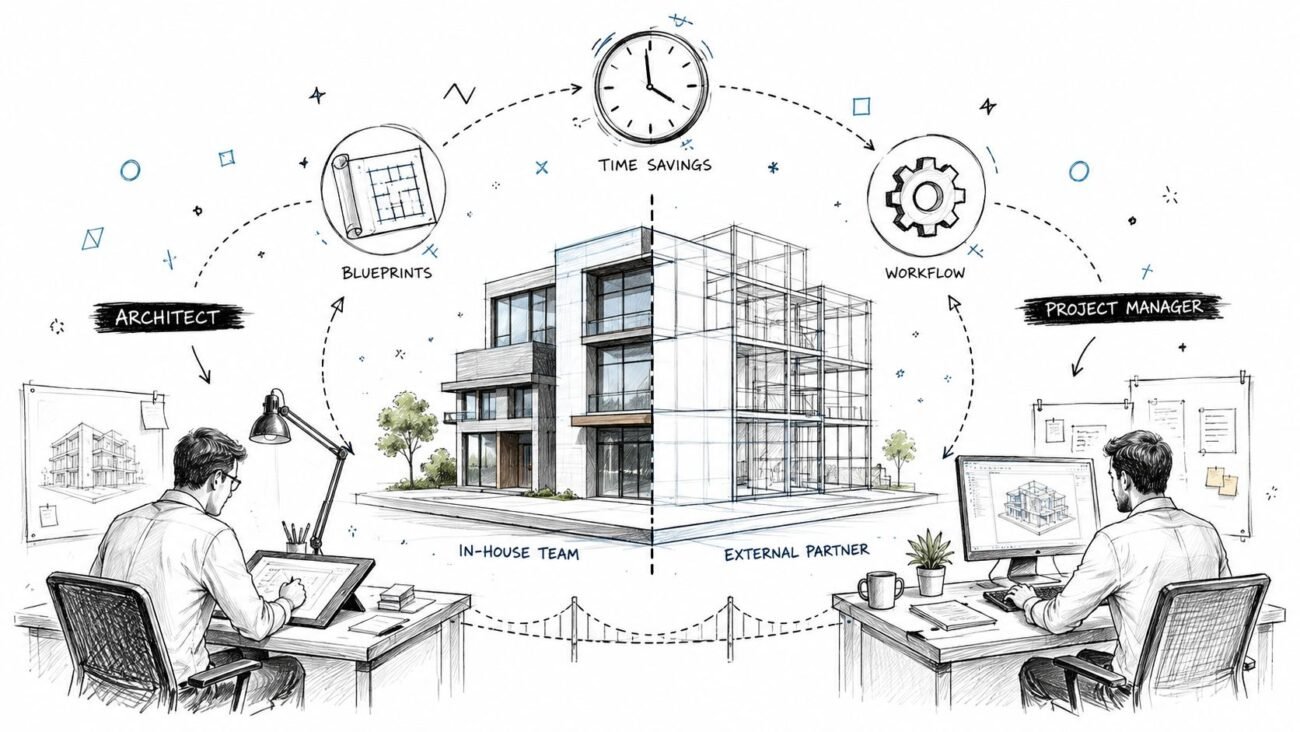
A successful restaurant is a collaboration between specialized experts. But when those experts operate in silos, scope gaps and technical clashes are inevitable. The first step to preventing chaos is defining who owns what. A clear delineation of responsibilities turns a reactive process into a predictable one, ensuring margin protection and operational consistency.
Architect's Role and Scope
The architect is the project lead, responsible for the overall building design, structural integrity, and code compliance. They create the foundational drawings—the shell and core—that define how the space functions and how people move through it. Their primary job is to ensure the restaurant is safe, accessible, and legally buildable.
Interior Designer's Role
The interior designer crafts the guest experience. They own the front-of-house (FOH) aesthetic, selecting finishes, furniture, and lighting to bring the brand to life. While their focus is on atmosphere, their decisions on materials and layout have significant impacts on acoustics, durability, and operational flow that must be coordinated.
Kitchen Consultant/Foodservice Designer
This is the master of the back-of-house (BOH). A professional kitchen consultant, often certified by organizations like the Foodservice Consultants Society International (FCSI), designs the kitchen layout for peak efficiency. They specify every piece of equipment and, most importantly, provide the critical utility data—electrical loads, gas BTUs, and plumbing requirements—that the entire engineering team depends on. Successful kitchen consultant coordination begins with their detailed documentation.
MEP Engineer
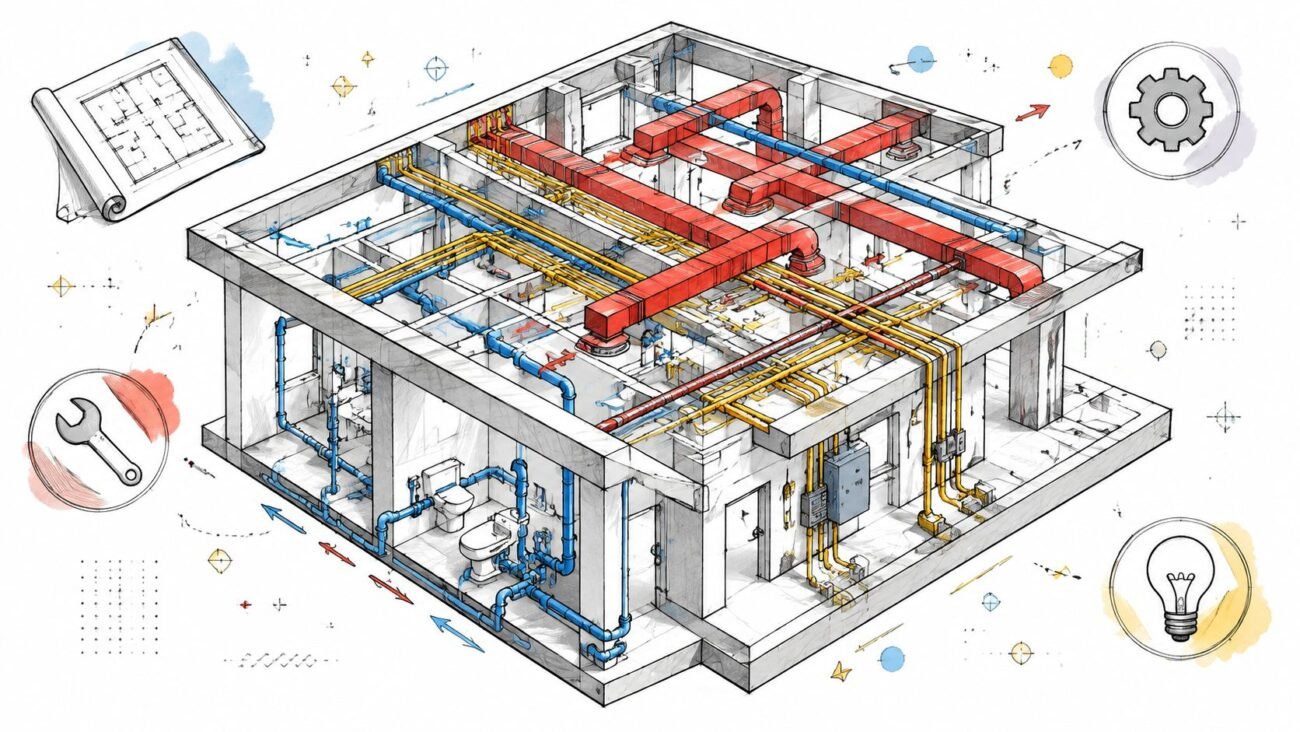
The Mechanical, Electrical, and Plumbing (MEP) engineer translates the kitchen consultant’s equipment schedule into the building’s life support systems. They size electrical panels, design HVAC and exhaust systems, and route all plumbing. An effective restaurant MEP design is impossible without precise, finalized data from the foodservice designer.
Fire Protection Engineer
This specialist designs the life-safety systems, including the kitchen’s Ansul fire suppression system and the building’s overall sprinkler layout. Their work is heavily regulated and must be perfectly coordinated with the kitchen consultant’s hood specifications and the architect’s ceiling plans.
General Contractor
The general contractor is responsible for construction execution, budget management, and subcontractor coordination. Involving them early in the design phase provides critical feedback on buildability and can prevent costly value engineering conflicts or constructability issues discovered too late.
Health Department (as Silent Stakeholder)
The local health department is a non-negotiable stakeholder. Their plan reviewers and inspectors enforce food safety and sanitation codes that dictate everything from sink placement to finish materials. Misinterpreting their requirements can lead to failed inspections and significant opening delays.
Common Collision Points: Where Restaurant Design Fails
Coordination failures happen where disciplines overlap. These technical disconnects lead to expensive, project-killing mistakes that stay hidden until it’s too late to fix them cheaply. Understanding these common collision points is the first step toward preventing them.
Kitchen Consultant vs. MEP Engineer
This is the most common failure point. The kitchen consultant provides equipment specs, but if that data is preliminary or changes aren't communicated, the MEP engineer designs systems based on bad information. This results in undersized electrical panels, incorrect gas pipe sizing, or improperly located plumbing rough-ins.
Kitchen Consultant vs. Architect
The kitchen consultant specifies a walk-in cooler, and the architect lays out the structural grid. On-site, the contractor discovers a steel column running through the cooler box. This classic coordination gap between equipment footprints and the building shell can halt construction and require expensive redesigns.
MEP Engineer vs. Architect
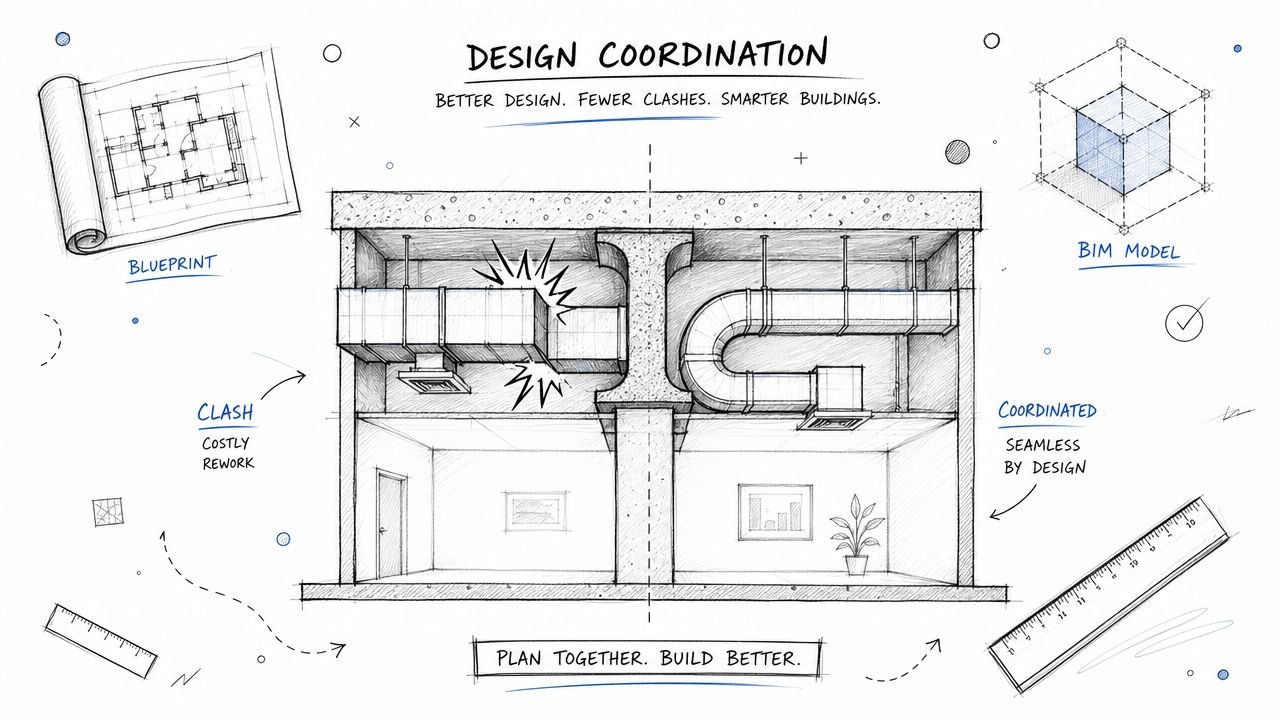
The MEP engineer needs space to run large exhaust ducts and utilities. The architect wants to maximize ceiling heights and maintain clean sightlines. Without early and frequent coordination meetings, these competing priorities lead to conflicts where ductwork clashes with structural beams or drops below the finished ceiling, compromising the design intent.
Interior Designer vs. Kitchen Consultant
An interior designer may select a specific flooring material for its aesthetic appeal, but the kitchen consultant knows it won't stand up to the grease and harsh cleaning chemicals in a commercial kitchen. Or, the designer places a decorative light fixture where it interferes with the kitchen exhaust hood’s capture efficiency.
Fire Protection vs. Kitchen Exhaust
The fire protection engineer designs the Ansul system based on the initial hood specified by the kitchen consultant. If the owner later upgrades the cooking equipment, the hood size may change, rendering the original Ansul nozzle layout non-compliant. This requires a costly redesign and re-permitting.
Everyone vs. Health Department Requirements
All disciplines must design to meet local health codes. The architect’s layout must allow for proper clearances, the interior designer’s specified finishes must be non-porous and cleanable, and the MEP engineer must provide adequate hot water for sanitation. A single misinterpretation can result in a failed inspection and a mandatory, expensive fix before opening.
The Equipment Schedule: Foundation of All Coordination
In restaurant design, the kitchen equipment schedule is the Rosetta Stone. It’s the single source of truth that translates a chef's vision into a technical roadmap for the architect, MEP engineer, and builder. Without a detailed and finalized schedule, the entire project is built on guesswork.

This document is more than a list of model numbers; it’s a database of technical requirements that drives all coordination.
What Data Kitchen Consultants Provide
A professional kitchen consultant provides a schedule with precise utility data for every piece of equipment. This is the non-negotiable information the MEP engineer needs to begin their design.
- Electrical: Voltage (120V, 208V, 240V, 480V), phase (single-phase vs. three-phase), amperage, and connection type (cord-and-plug vs. hardwired).
- Gas: Total BTU/hr load for each appliance, which dictates pipe sizing and meter capacity.
- Water: Hot and cold water GPM (gallons per minute) requirements and required PSI (pounds per square inch).
- Drainage: Type of drain needed (e.g., floor sink for indirect waste), its required size, and its exact location on the unit.
- Exhaust: Required exhaust airflow in CFM (cubic feet per minute) and any special requirements for grease or heat capture.
Utility Requirements and Cut Sheets
Along with the schedule, the kitchen consultant must provide manufacturer cut sheets for each item. These documents show the precise dimensions, clearances, and utility connection points. An MEP engineer cannot finalize rough-in locations without them.
Why MEP Cannot Design Without a Final Equipment Schedule
Designing an electrical panel or plumbing system from a preliminary list is a recipe for disaster. If the equipment changes, the systems are instantly undersized or incorrectly located, leading to a cascade of expensive changes during construction. The entire restaurant MEP design hinges on the accuracy and finality of this schedule.
Managing Equipment Changes During Design
To protect project margins and schedules, enforce an equipment schedule freeze date, typically at the end of the Design Development (DD) phase. After this date, any owner-requested change must go through a formal construction change order process, forcing a clear-eyed review of its impact on cost and schedule. This discipline is essential for predictable delivery.
Exhaust and Ventilation Coordination: The Air Battle
Nowhere is kitchen equipment coordination more critical than in the exhaust and ventilation system. An undersized or poorly balanced system can render a kitchen unusable and create life-safety hazards.
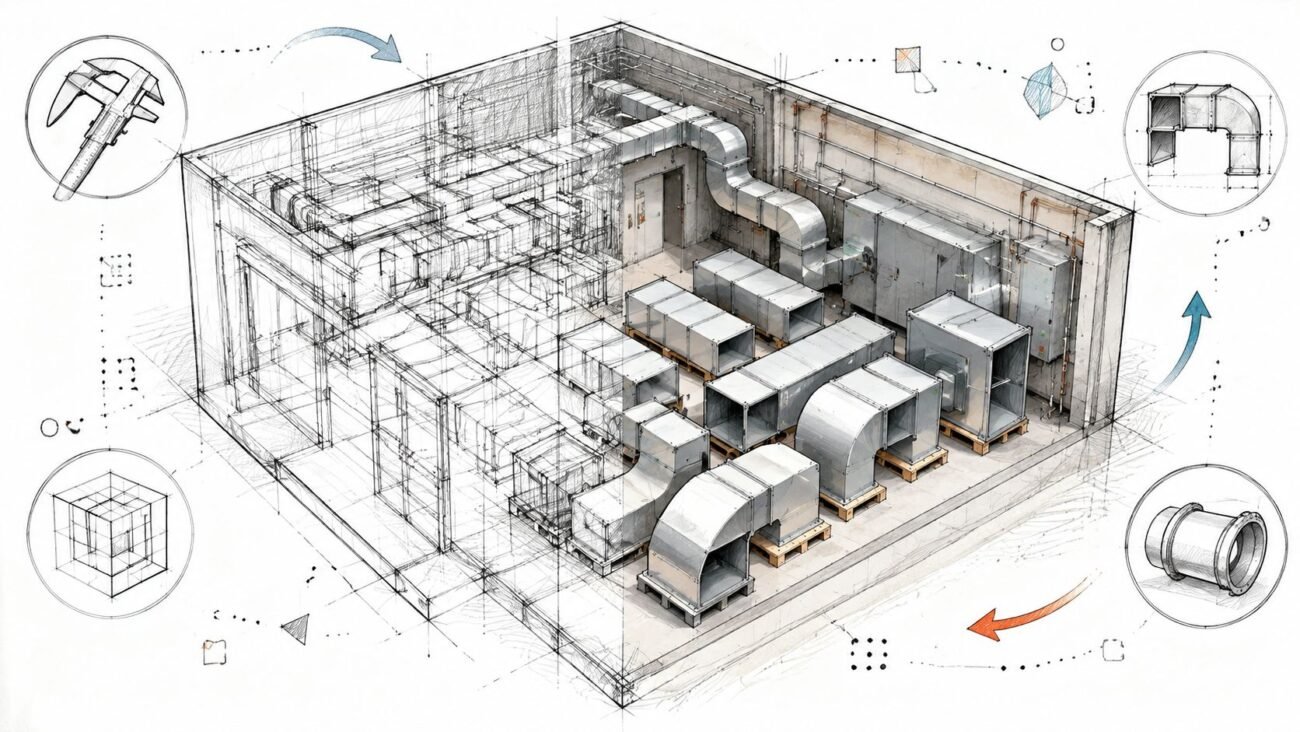
- Hood Sizing and Equipment Coverage: The exhaust hood must be large enough to extend beyond the edges of the cooking equipment below it, ensuring proper capture of heat, smoke, and grease-laden vapors.
- Exhaust CFM Requirements: The required exhaust rate in CFM is calculated based on the type of cooking equipment. A heavy-duty charbroiler requires significantly more exhaust than a standard oven.
- Make-Up Air Balance: The exhaust system removes huge volumes of air, which must be replaced by a make-up air (MUA) unit. A rule of thumb is to replace 80-90% of the exhausted air. Failure to balance the system creates negative pressure, which can cause doors to be difficult to open, extinguish pilot lights, or pull contaminated air from restrooms into the kitchen.
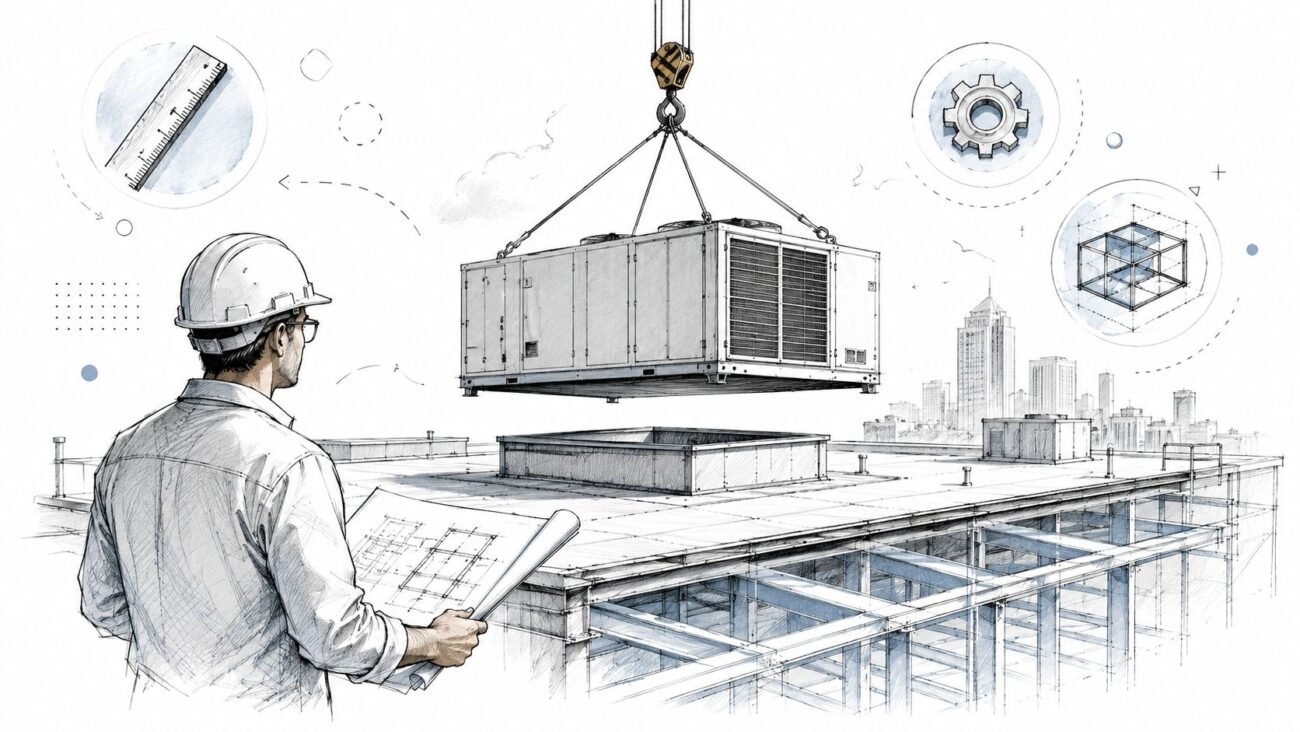
- Rooftop Equipment Coordination: The exhaust fan and MUA unit on the roof must be coordinated with structural supports and kept clear of other building systems and property lines.
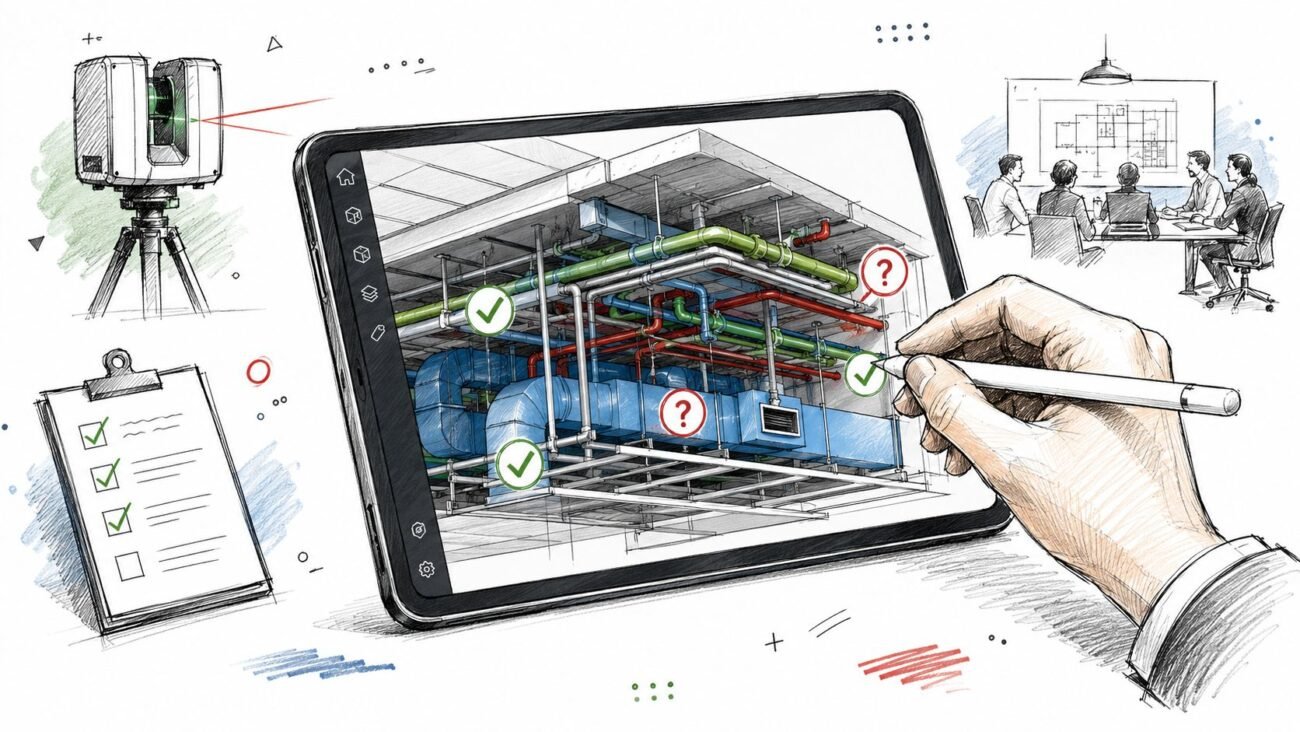
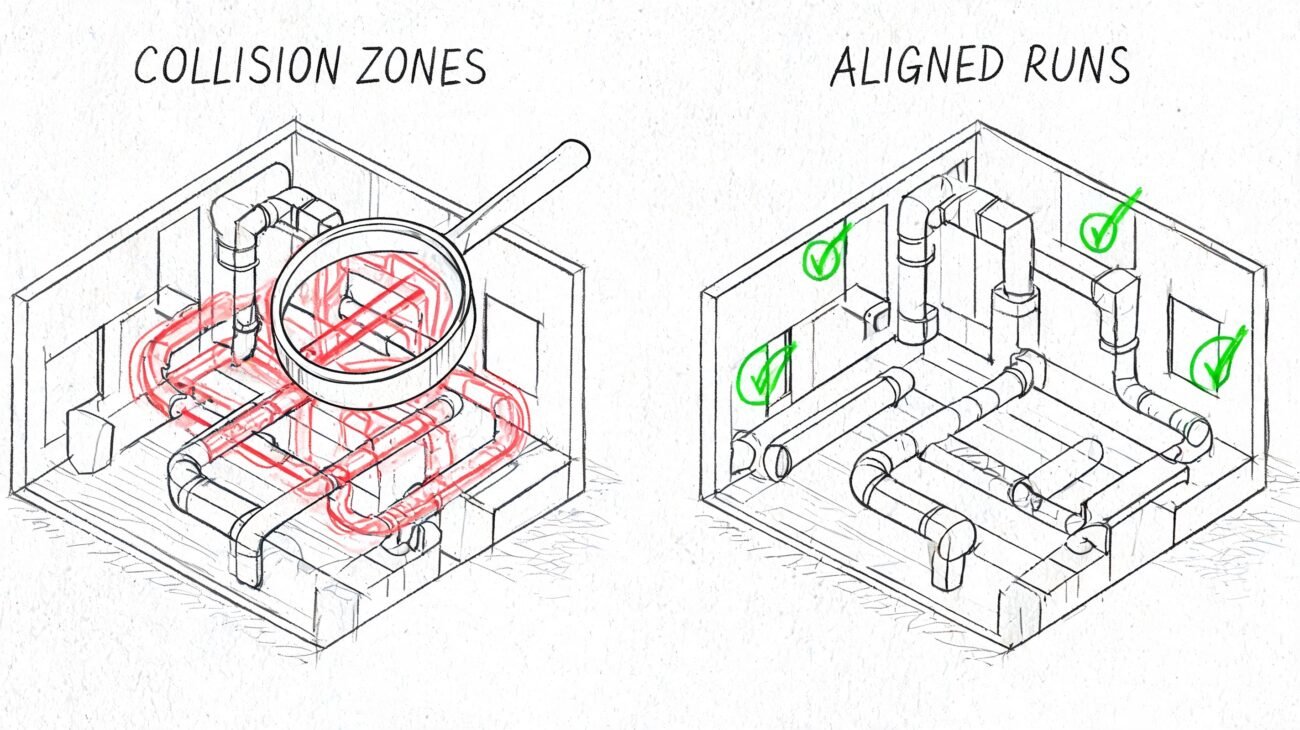
- Ductwork Routing and Structural Conflicts: Exhaust ductwork is large and must be routed from the hood to the roof. This path is a common battleground, frequently clashing with structural beams, plumbing, and electrical conduits. Early clash detection in a BIM model is the best way to prevent these conflicts.
- Fire Suppression (Ansul) Integration: The kitchen fire suppression system is designed in lockstep with the hood. Nozzles must be precisely placed for full coverage, and the system must be interlocked with the gas valve to automatically shut off fuel in a fire.
A common failure: the hood is sized for a 6-burner range, but the owner upgrades to a 10-burner model late in design. The exhaust is now undersized, and the kitchen fills with smoke on opening night—a failure a simple documentation update could have prevented.
Plumbing Coordination: Drains, Grease, and Hot Water
In a commercial kitchen, water and waste are everywhere. Misplacing a drain by inches can lead to sanitation nightmares and instant health code violations.
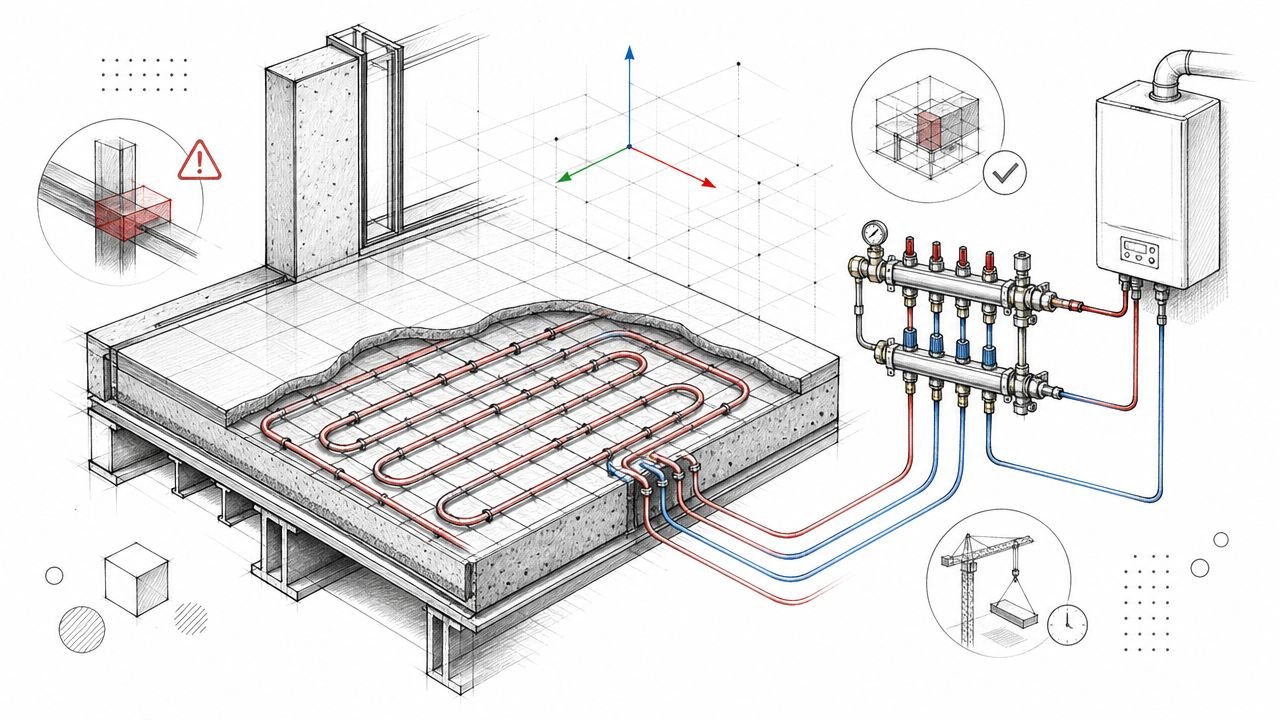
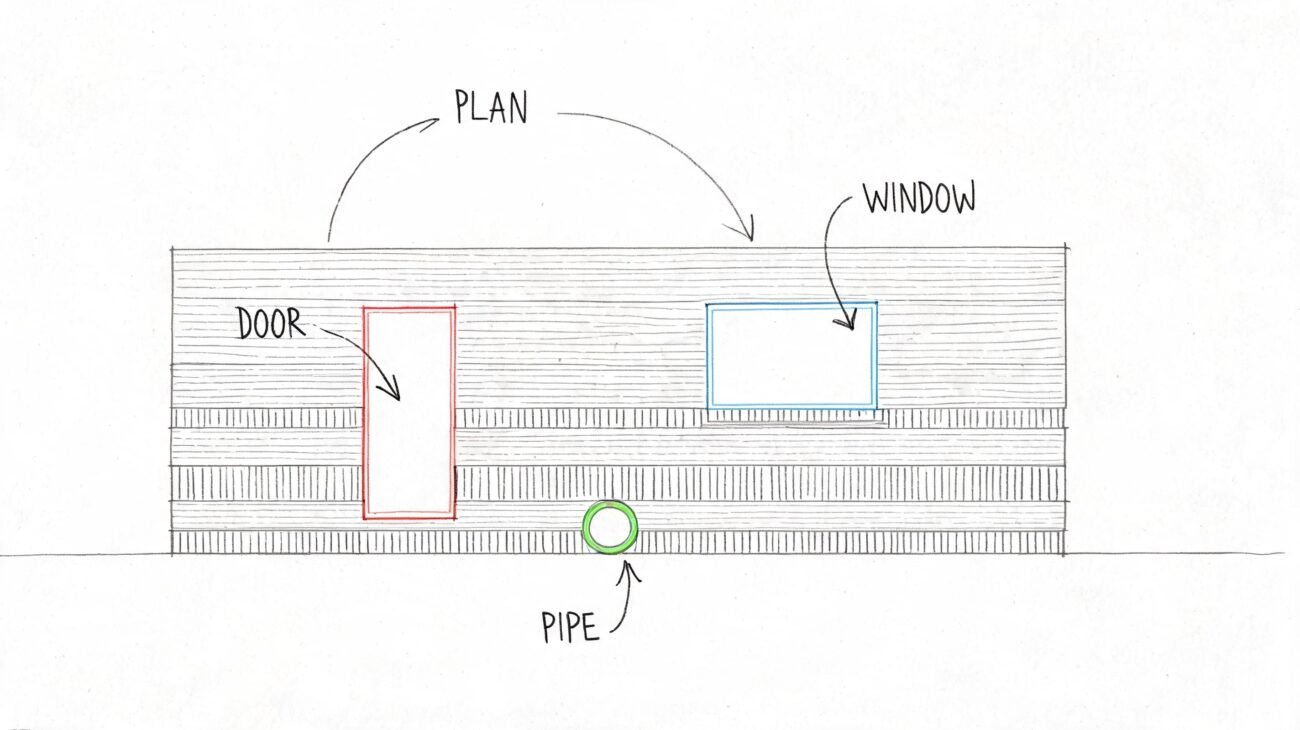
- Floor Drain and Floor Sink Locations: Their placement must be driven by the final equipment cut sheets, not a preliminary layout. A floor sink for a combi oven must align perfectly with its drain outlet. We've seen a brand-new epoxy floor cut open to move a drain six inches—a $5,000 mistake.
- Equipment with Drain Requirements: Every piece of equipment that produces condensation or waste—ice machines, steam kettles, dishwashers—needs a dedicated, properly located drain.
- Indirect Waste Connections: To prevent backflow contamination, many pieces of equipment require an indirect waste connection with an air gap, typically draining into a floor sink.
- Grease Interceptor Sizing and Location: The grease interceptor (or grease trap) must be sized based on the total drainage fixture units (DFUs) of all connected sinks and equipment. Its location is critical for both service access and health department approval.
- Hot Water Demand Calculations: The hot water system must be sized for peak demand. An undersized system can’t supply water at the 180°F required for dishwasher sanitation, resulting in an immediate health inspection failure.
- Hand Sink and Three-Compartment Sink Locations: The placement of these sinks is strictly mandated by health codes for hand washing and ware washing protocols.
Electrical Coordination: Powering the Kitchen
The electrical system is the central nervous system of a restaurant. An MEP engineer cannot properly size panels or circuits without a final, locked-in equipment schedule.
- Total Connected Load Calculations: The engineer must calculate the total electrical load to size the main service and distribution panels.
- Panel Sizing and Location: Panels must have enough capacity for the current load plus spare capacity for future needs. Their location must be accessible but not interfere with kitchen workflow.
- Circuit Requirements by Equipment: Each piece of equipment requires a dedicated circuit with the correct amperage and overcurrent protection.
- Voltage Variations: Commercial kitchens use a mix of voltages (120V, 208V, 240V, 480V) and phases (single-phase vs. three-phase). Each connection must be specified correctly.
- Cord-and-Plug vs. Hardwired Equipment: The connection type determines whether an outlet or a junction box is needed at the final location.
- Emergency/Standby Power: Critical equipment like walk-in cooler refrigeration and POS systems may require backup power to prevent product loss or operational disruption during an outage.
A common failure: An owner swaps a 208V combi oven for a 480V model after electrical rough-in. The result is an expensive change order to run new conduit and pull new wire.
HVAC and Kitchen Interaction: The Balancing Act
The HVAC system must work with the kitchen, not against it. This is a delicate balancing act of air pressure and temperature.
- Dining Room HVAC vs. Kitchen Exhaust Balance: The massive kitchen exhaust system will pull air from the dining room if not properly balanced by the MUA system. This can create drafts and pull kitchen odors into the guest area.
- Supply Air Diffuser Placement: Placing a supply air diffuser too close to the cookline can disrupt the thermal plume rising into the exhaust hood, reducing its capture efficiency. Diffusers blowing directly onto hot food or diners also create problems.
- Temperature Differentials Between Zones: The system must maintain a comfortable temperature in the dining room while managing the intense heat loads in the kitchen.
- Odor Control and Air Pressure Relationships: A well-designed system keeps the kitchen at a slight negative pressure relative to the dining room, ensuring that air flows into the kitchen, not out of it, to control odors.
Fire Protection Coordination: Life Safety First
Fire protection in a restaurant is non-negotiable and heavily regulated. Coordination between the fire protection engineer, kitchen consultant, and architect is critical.
- Ansul System Coverage and Nozzle Locations: The fire suppression nozzles must provide complete coverage for all cooking appliances beneath the hood.
- Gas Valve Interlocks: The Ansul system must be electrically interlocked with a solenoid valve on the main gas line to automatically shut off fuel during a fire.
- Sprinkler Placement Around Hoods: Sprinkler heads must be placed according to code, maintaining required clearances from high-temperature hoods to prevent accidental discharge.
- Fire-Rated Separations: Walls separating the kitchen from other areas may require specific fire ratings, which impacts architectural design and construction methods.
- Alarm Integration: The fire suppression system must be integrated with the building’s main fire alarm system.
Health Department Requirements: The Final Gatekeeper
The health department has the final say. Their requirements drive much of the coordination effort, as a failed inspection can delay an opening indefinitely.
- What Health Officials Review: They scrutinize everything from food preparation flow to finish materials, equipment certifications (NSF), and proper sink placement.
- Common Health Code Conflicts with Design: Common failures include insufficient space between raw and cooked food prep areas, non-cleanable finishes, and improper hand sink placement.
- Hand Sink Proximity Requirements: Health codes mandate hand sinks within a certain distance of all food prep and dishwashing areas.
- Three-Compartment Sink Placement: The location and setup of the three-compartment sink for manual ware washing is strictly defined by code.
- Food Preparation Flow: The layout must prevent cross-contamination by logically separating different stages of food handling.
A Coordination Workflow That Works
A disciplined process turns chaos into clarity. It’s not about more meetings; it’s about having the right meetings at the right time, with a razor-sharp agenda that forces decisions.
Coordination Meeting Cadence and Agenda
- Schematic Design (SD): Kickoff meeting with architect, kitchen consultant, and MEP engineer to align on vision and roles. Kitchen consultant provides preliminary layout to validate flow.
- Design Development (DD): Critical coordination meeting where the kitchen consultant presents a detailed equipment schedule. MEP engineers confirm their design direction. Set the equipment schedule freeze date.
- Construction Documents (CD): At 50% CDs, hold a dedicated clash detection meeting to overlay all discipline drawings.
- Pre-Construction: Full team meeting with the general contractor to walk through the final drawing set, align on installation sequencing, and establish RFI protocols.
Documentation Requirements
- Equipment Utility Schedule: A standardized schedule format is the single source of truth for all MEP design.
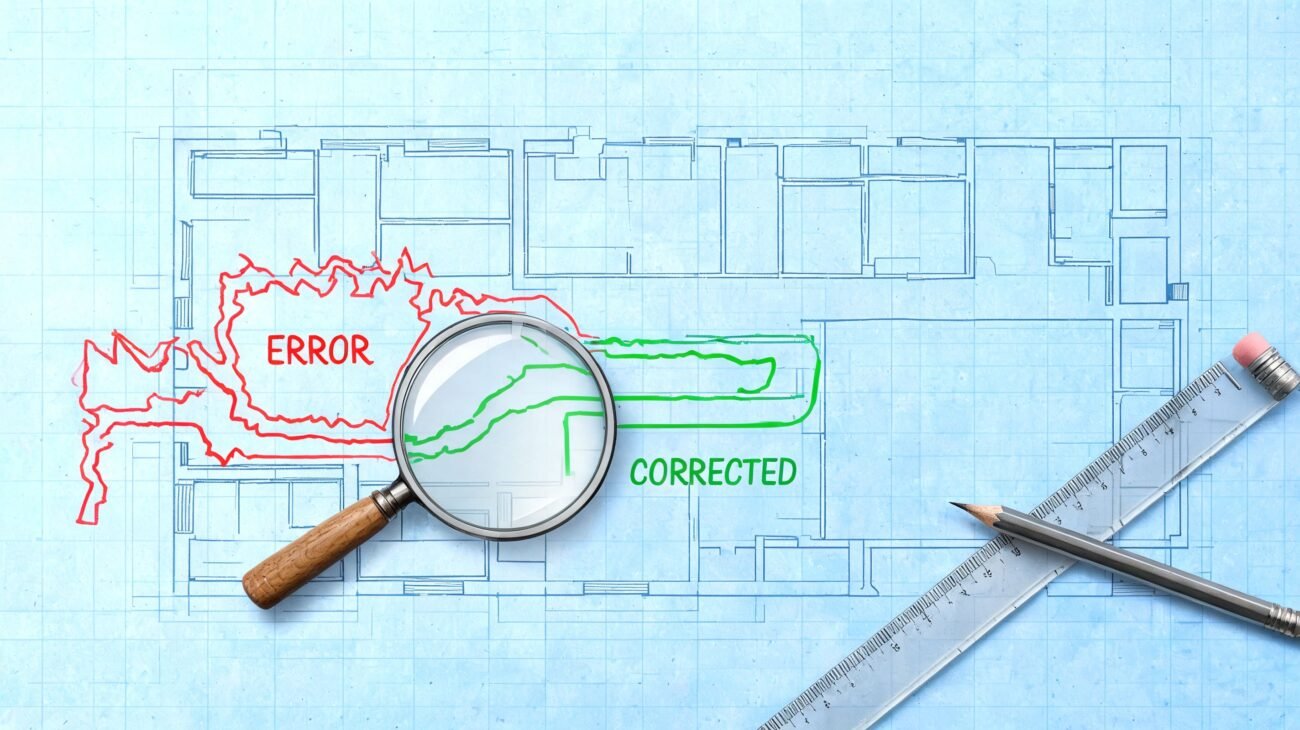
- Coordination Drawings: Overlays of all disciplines are essential for visual clash detection.
- Shop Drawing Review Process: All equipment and fabrication shop drawings in construction must be reviewed by the architect, kitchen consultant, and MEP engineer before approval.
- As-Built Documentation: Accurate as-built drawings after project completion are critical for future maintenance and renovations.
BIM Coordination for Restaurants
For complex projects, Building Information Modeling (BIM) is a game-changer. It enables 3D clash detection that allows the team to virtually build the restaurant and solve problems before breaking ground. Modeling equipment families with accurate clearance and utility data de-risks the most congested areas of the project. This is how you achieve the production maturity needed for predictable delivery. Explore our guide on modern MEP systems to see how BIM transforms coordination.
Preventing the Common Failures
- Design Phase Checkpoints: Use the phased meeting cadence to force decision-making and cross-disciplinary review.
- Pre-Construction Coordination Verification: Before the first shovel hits the dirt, verify all utility rough-in locations against the final equipment cut sheets.
- Installation Sequence Coordination: The GC must coordinate the installation sequence to avoid conflicts, such as installing ceilings before large equipment is moved into place.
- Final Walkthrough Before Health Inspection: The core design team and GC should conduct a final punch walk specifically focused on health code compliance before the inspector arrives.
Restaurant design coordination fails not because consultants are incompetent—it fails because no one owns the intersections between disciplines. The solution is a clear, disciplined workflow that defines who owns each interface. This is how you protect margins, ensure predictability, and deliver a successful opening.
For teams looking to implement these protocols, our Restaurant Design Coordination Checklist and Kitchen Equipment Utility Schedule Template provide a battle-tested framework for success. These resources are designed to help you establish the systems that lead to reliable delivery.
Managing the intense demands of restaurant projects requires production maturity and disciplined workflows. At BIM Heroes, we provide the architectural production support and BIM consulting that empowers firms to deliver clarity, systems, and reliable project outcomes.
Discover how our scalable delivery pods can help your team execute flawlessly.