Meta description: MEP coordination fails less from software limits and more from broken process. Learn how ownership, sequencing, model standards, and verification shape reliable BIM coordination.
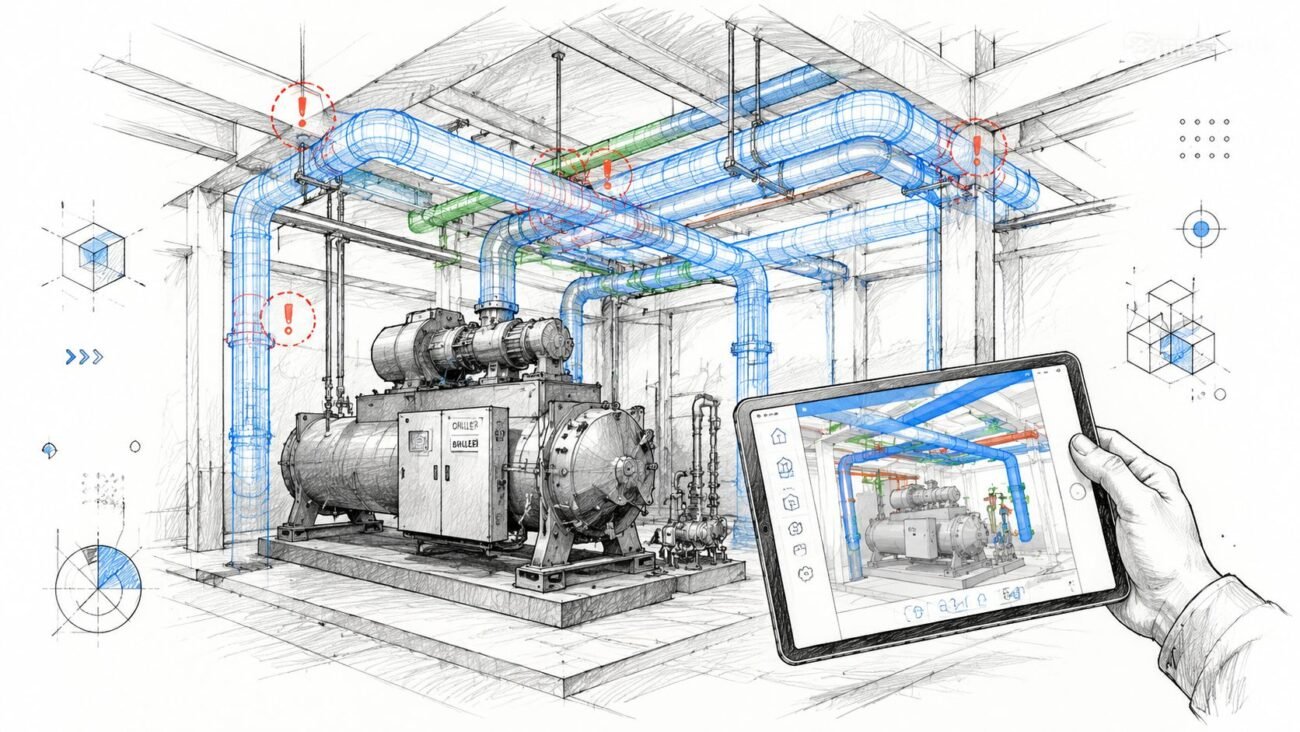
A duct hits steel in the field. The superintendent sends photos. The clash looks familiar because it is. The team saw it months ago in Navisworks, discussed it in a coordination meeting, and marked it resolved.
That’s the moment most firms ask the wrong question. They ask whether they need better software, a different clash rule set, or a faster machine. But if the clash was found, the software already did its job. The failure happened somewhere between detection, decision, model update, communication, and installation.
That’s why MEP coordination keeps breaking down on teams that already own Revit, Navisworks, and a cloud platform. The tools are necessary. They are not the system. On real projects, recurring coordination failures usually come from weak ownership, undefined sequence, inconsistent model standards, and no reliable way to confirm that a model decision made it to the field.
The MEP Coordination Problem Hiding in Plain Sight
The most expensive coordination failures rarely look dramatic at first. They show up as familiar irritations. A clash that returns in three meetings. A field RFI tied to a supposedly coordinated shaft. A trade foreman installing around a conflict because waiting for an answer would stop the floor.
By the time that happens, the team often says the same thing. “But we ran clash detection.”
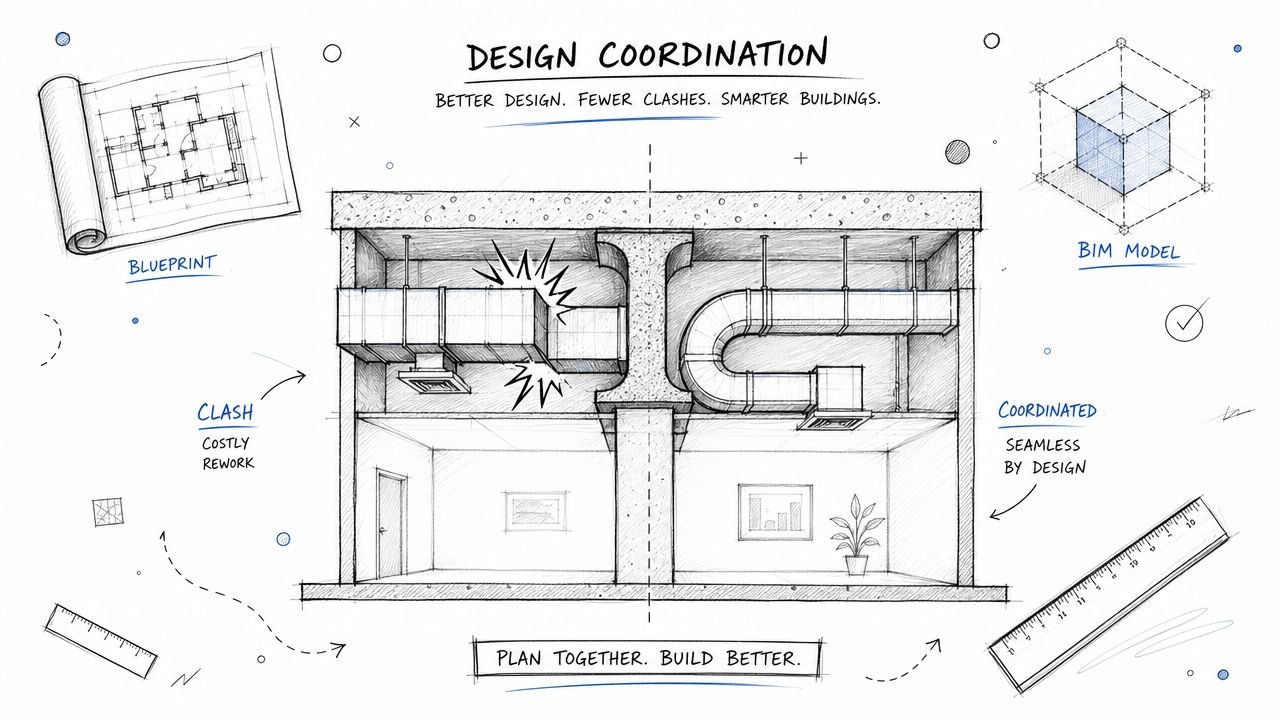
That statement confuses MEP clash detection with coordination. They are not the same task. Clash detection identifies interference. Coordination requires a chain of decisions and confirmations after that point. When that chain is broken, the project pays later.
One reason early coordination matters is simple cost timing. Resolving clashes during design development at the 50% CD phase avoids 70% to 90% of expensive field rework, based on the inverse cost-of-change curve described by Calmor Consulting’s guide to MEP coordination.
The model can be correct for one day and wrong for the next pour if nobody owns the update cycle.
Teams don’t lose control because the software missed everything. They lose control because the process around the software never became enforceable.
Beyond Clash Detection What Coordination Really Requires
Most firms already have enough technology to run a solid MEP BIM coordination process. What they don’t always have is agreement on how decisions move through the project. That is where the actual gap exists.
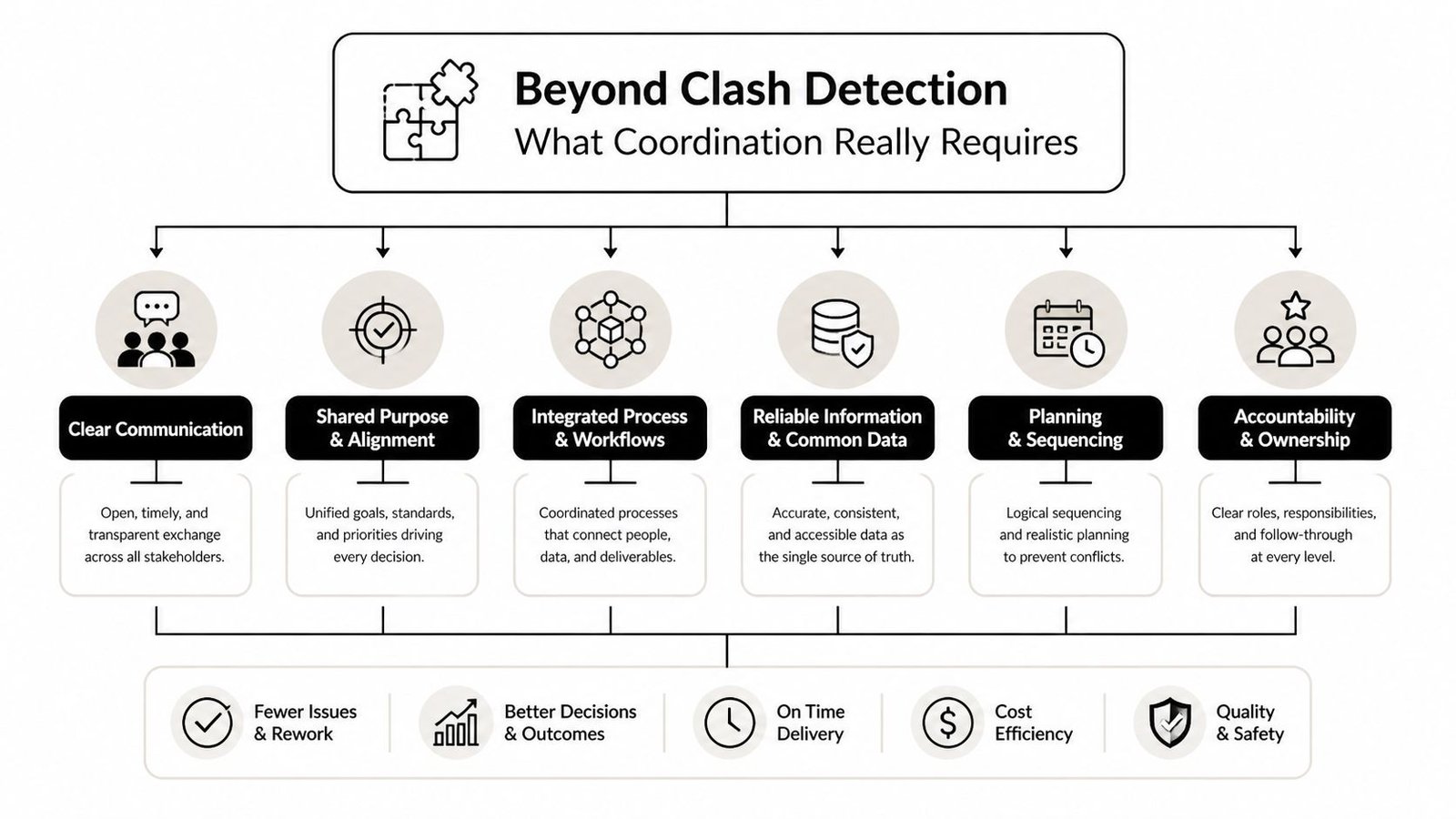
A functional coordination system has five moving parts. If one is weak, the software starts looking worse than it is.
Five parts that make coordination work
Ownership with authority
Someone has to lead coordination, not just host the meeting. That person needs the authority to decide who moves, who holds, and when an issue escalates.A defined sequence
Trades need a pre-agreed order for routing and yielding space. Without it, every clash becomes an argument instead of a decision.Enforceable model standards
Model quality drives coordination quality. If one trade is modeling with installable geometry and another is still at design intent, the federated model gives false confidence.A real resolution workflow
Finding clashes is easy. Assigning them, reviewing proposed fixes, confirming updates, and maintaining a usable issue log is where projects either stabilize or drift.Verification back to the field
Coordination isn’t done because a clash view is clean. It’s done when the installation matches the coordinated condition.
A lot of teams skip at least one of those steps and still expect predictable outcomes. That’s why the same issues keep resurfacing.
A better diagnostic question
If your BIM coordination process keeps failing, don’t start with software. Start with this: which one of those five parts is broken?
That question usually leads to a more honest conversation than “should we buy something new?” It also points to practical fixes faster. A useful reference point is this guide to BIM coordination services and workflows, especially if your team is trying to separate modeling effort from decision accountability.
Practical rule: If the meeting ends without a named owner, a due date, and a model update deadline, the clash is not resolved.
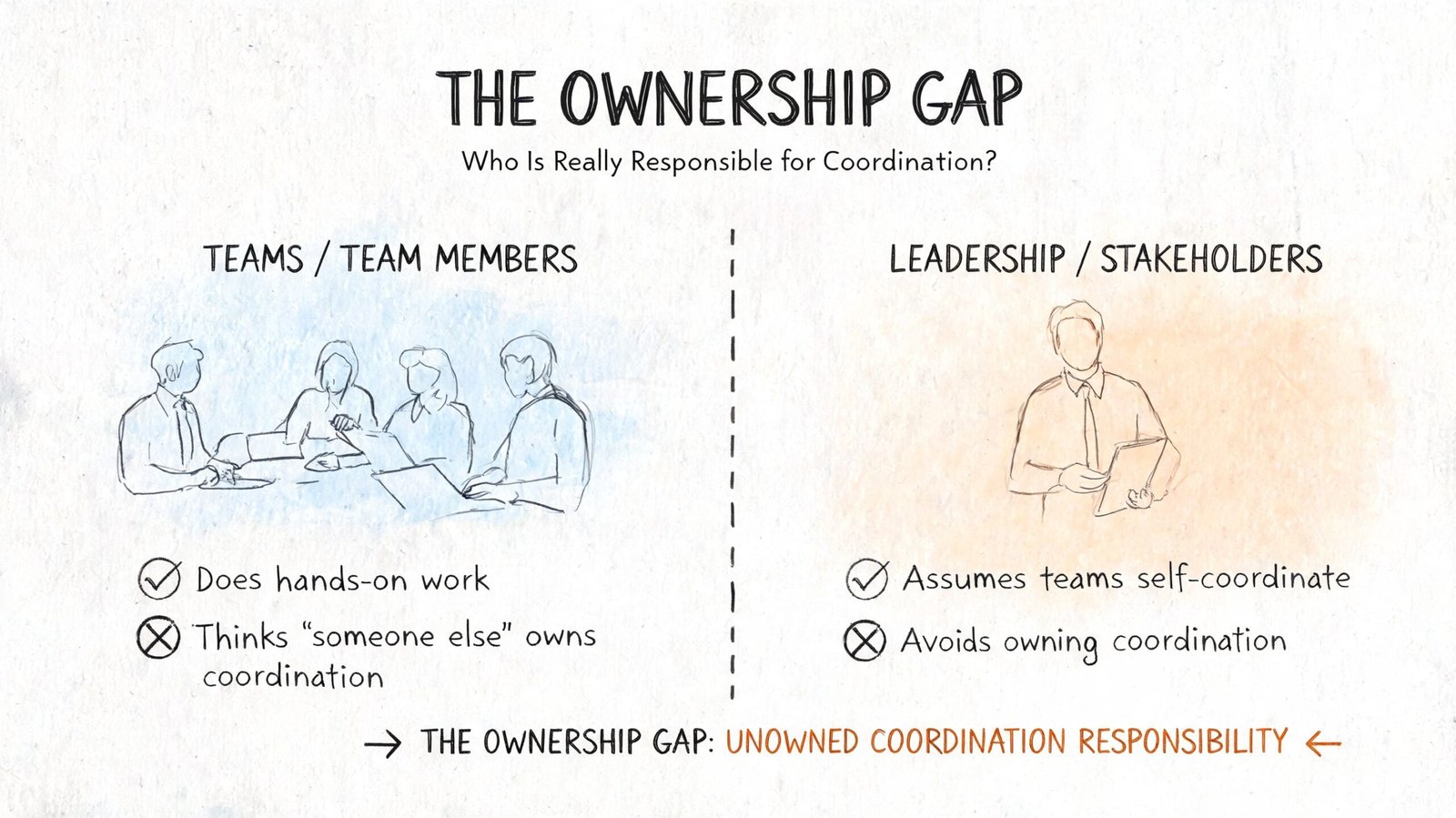
The Ownership Gap Who Is Really Responsible for Coordination
On many projects, coordination leadership exists only as an assumption. Everyone believes someone else has it. The architect thinks the GC is driving. The GC assumes the mechanical contractor will sort it out in the model. The trades expect the engineer to bless every routing move before anything changes.
That’s how meetings turn into review sessions instead of decision sessions.
Three common structures and where they fail
Here’s what I see most often.
| Coordination lead setup | Works when | Breaks when |
|---|---|---|
| Architect-led | The architect has BIM depth, active engagement, and authority to drive interdisciplinary decisions | The architect limits the role to review comments and pushes routing decisions back to others |
| GC-led | The GC has dedicated VDC staff and clear control over issue closure | The GC delegates coordination to one trade but never gives that trade authority over the rest |
| MEP trade-led | The project is straightforward and one system clearly dominates the space claim | Architectural, structural, or access issues sit outside the trade’s power to resolve |
The point isn’t that one model is universally right. The point is that someone must be explicitly assigned, resourced, and authorized.
Authority matters more than meeting attendance
A coordination lead without authority is just a note taker. The role has to include decision rights. If every duct offset, sleeve relocation, and rack shift has to be re-approved by three separate parties after the meeting, the model freezes while the field moves ahead.
That lag creates the exact mismatch teams complain about later. The coordinated model reflects one decision path. The installed work reflects another.
Ownership also needs scope. A coordination lead should know:
- What they control: routing decisions, meeting cadence, clash prioritization, escalation triggers
- What requires approval: code-impacting changes, major design deviations, structural penetrations
- What closes an issue: updated model, accepted resolution, and communication to affected trades
If nobody can say who has final say on a plenum conflict, the project does not have a coordination lead. It has a calendar invite.
A lot of frustrated teams don’t need new software. They need a responsibility matrix that people will follow.
Why Your MEP Coordination Sequence Matters
Even with the right lead in place, projects still stall when the sequence is undefined. Consequently, many Revit MEP coordination efforts go sideways. The model becomes a container for competing assumptions.
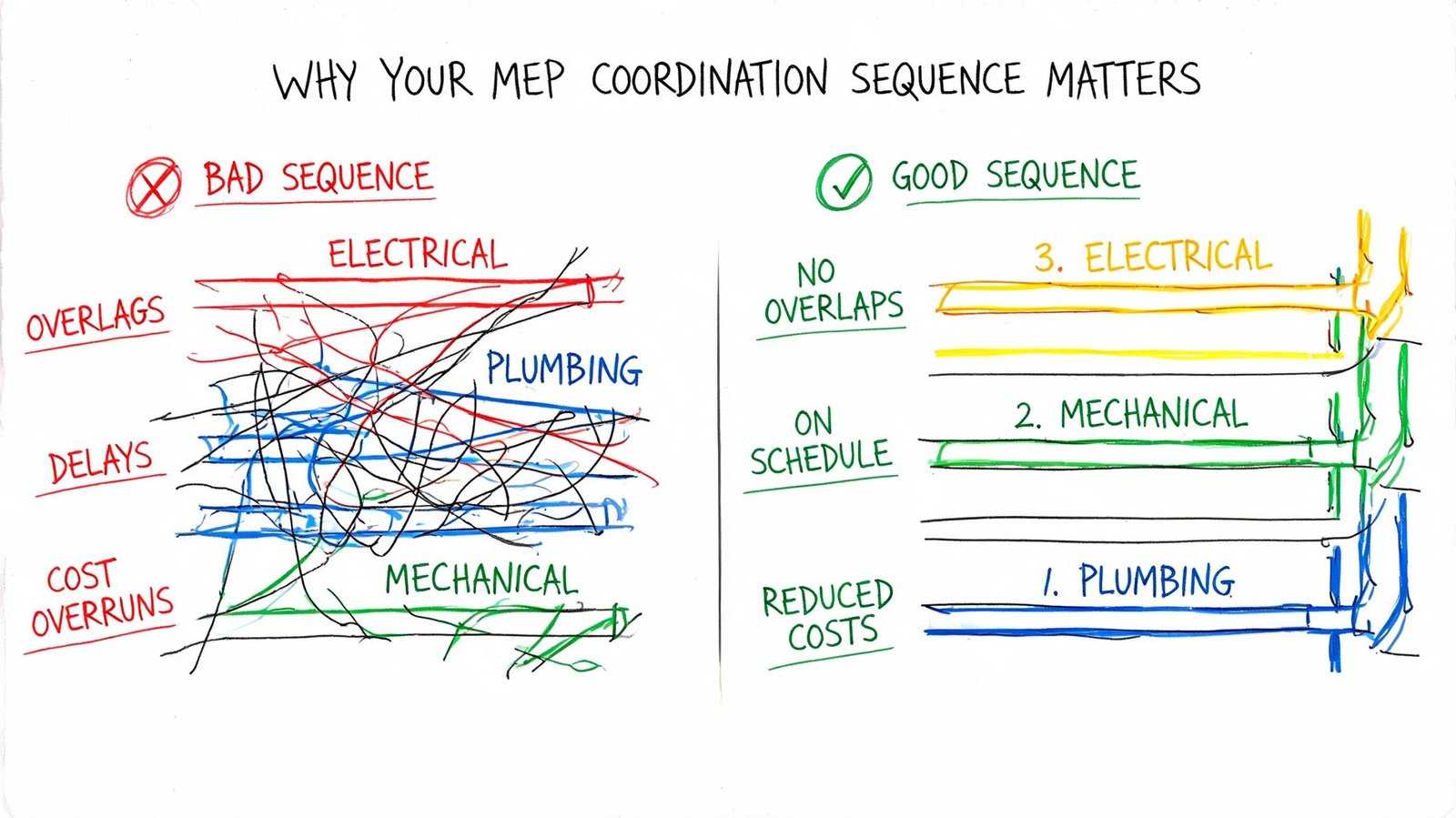
Sequence is not a software setting. It is a project agreement about who models first, who claims space first, and who yields when conflicts appear.
What a usable sequence looks like
The exact order changes by project type, but the logic usually follows constructability and physical constraint. Structure establishes the hard container. Large and less flexible systems route before smaller and more adaptable ones. Gravity and access requirements need to be considered early, not after the ceiling is full.
A practical sequence often looks something like this:
- Structural constraints locked first: beams, bracing, slab edges, openings, and shaft limits need to be reliable
- Primary mechanical routes next: major duct mains and equipment connections typically consume the most volume
- Plumbing mains and gravity systems after that: these need slope and often have less routing freedom than people assume
- Electrical distribution and conduit runs after primary pathways are clear: especially in dense corridor and plenum conditions
- Fire protection coordinated with actual remaining space: not imagined space
Without that order, every trade models to its own preference and defends it later.
What failure looks like in the field
Poor MEP coordination contributes to up to 20% of project delays, according to SmartCAD’s article on early MEP coordination. That number makes sense to anyone who has watched the field wait while teams re-negotiate space they should have assigned earlier.
Common sequence failures are painfully predictable:
- Mechanical modeled before structural constraints settle: ductwork gets routed at an ideal elevation, then steel coordination closes that path
- Fire protection modeled after the plenum is already consumed: now sprinkler mains are forced into awkward offsets or access conflicts
- Electrical added late as if it’s infinitely flexible: then conduit banks and tray runs disturb systems that were already considered resolved
This is why the sequencing discussion has to happen before serious modeling begins.
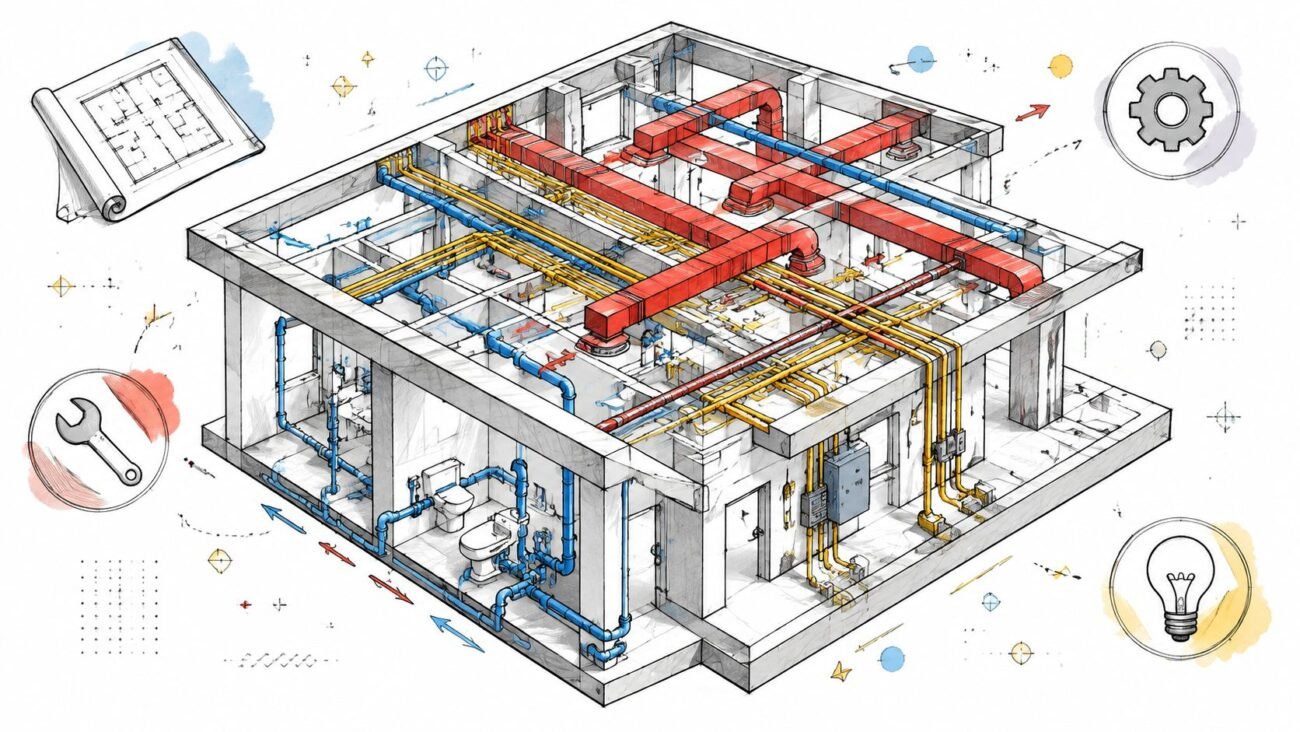
For firms dealing with dense service zones, hospitals, manufacturing, or multi-story commercial work, the biggest gains usually come from standardizing this upfront. A structured view of MEP systems coordination helps teams set those routing priorities before the first clash report turns into an argument.
A coordination model without sequence is just a 3D record of everybody disagreeing in the same file.
The Model Standards Problem of Garbage In Garbage Out
A lot of teams overestimate what clash detection can do with weak input. If the models are unreliable, the clash report becomes noisy in the wrong places and silent in the dangerous ones.
Mechanical electrical plumbing coordination depends on discipline long before the first Navisworks test.
LOD mismatch is one of the fastest ways to fake progress
For effective BIM-based MEP coordination, models need to reach LOD 300 to 400 so clash detection tools can identify real interferences and resolve 80% to 90% of spatial conflicts pre-construction, as described by Virtual Building Studio’s article on BIM-based MEP coordination.
If mechanical is modeled at installable sizes and elevations while electrical is still schematic, the coordination model can look cleaner than reality. The software isn’t wrong. The assumptions are.
Standards that usually break first
The recurring issues are rarely glamorous:
- Mixed LOD across trades: one model is ready for coordination, another is still placeholder geometry
- Stale linked files: the federated file doesn’t reflect the latest trade revision
- Inconsistent naming: clash rules become unreliable when system names vary from file to file
- Loose template discipline: families, parameters, and workset habits differ by contributor, so the model behaves differently depending on who touched it
A project-specific BEP has to do more than exist. It has to be enforceable. That means defined LOD by milestone, update frequency, file exchange rules, naming conventions, and model audit checkpoints.
For teams trying to stabilize upstream quality before coordination starts, a consistent Revit modeling workflow matters more than another software add-on. If the source model is inconsistent, every downstream coordination meeting becomes cleanup.
Closing the Loop with Resolution and Verification
A clash log is not proof of coordination. It is proof that someone found a problem.
That distinction matters because many teams stop too early. They identify the issue, assign it in the platform, and assume the process is working. Then the same conflict returns in the next upload, or worse, it returns in the field.
What real resolution looks like
A usable workflow is boring on purpose. It should be repetitive and hard to misunderstand.
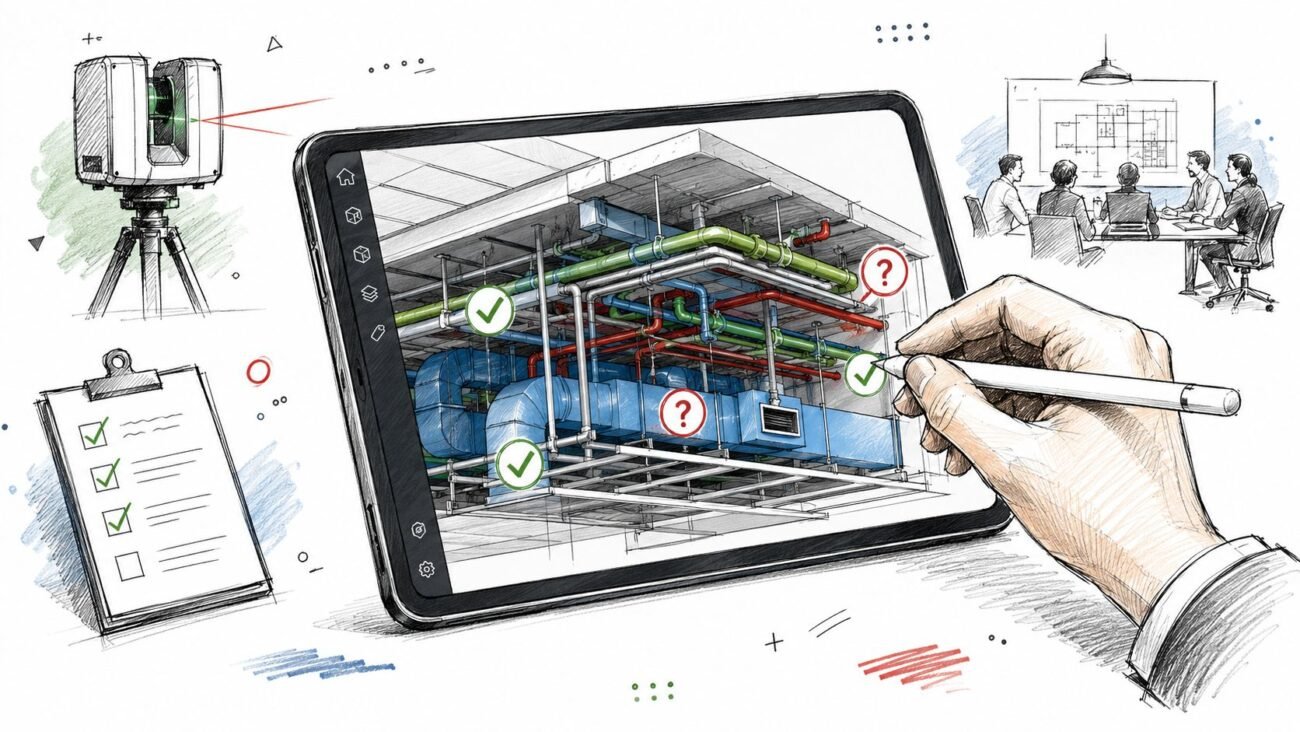
- Issue identified in the federated model.
- Responsible party assigned with a due date.
- Proposed fix reviewed by the coordination lead and affected disciplines.
- Native model updated by the responsible team.
- Clash re-run to confirm the interference is gone and no new one was introduced.
- Issue status closed only after the revised condition is visible in the current coordination model.
That process sounds obvious. It still gets skipped all the time, especially when teams are rushing submittals, permit sets, or fabrication releases.
The field is where bad assumptions get exposed
The bigger gap is verification. A clash can be resolved in the model and still appear on site if someone installs from an old sheet, substitutes a component with different geometry, changes support strategy, or makes a field adjustment without feeding it back into the coordinated model.
That’s why coordination has to continue through installation, especially on phased work. A clean report from one month ago does not protect today’s area if the design changed, procurement substituted equipment, or one trade moved faster than the update cycle.
The clash is only closed when the model, the issued documents, and the installed condition all say the same thing.
Teams that get this right treat coordination as a living control process, not a design exercise that ends when the report gets shorter.
Building a Functional MEP Coordination System
When coordination works, it doesn’t feel magical. It feels structured. The meetings are shorter. The clash counts are more meaningful. Fewer issues come back. Field questions become more specific and less chaotic.
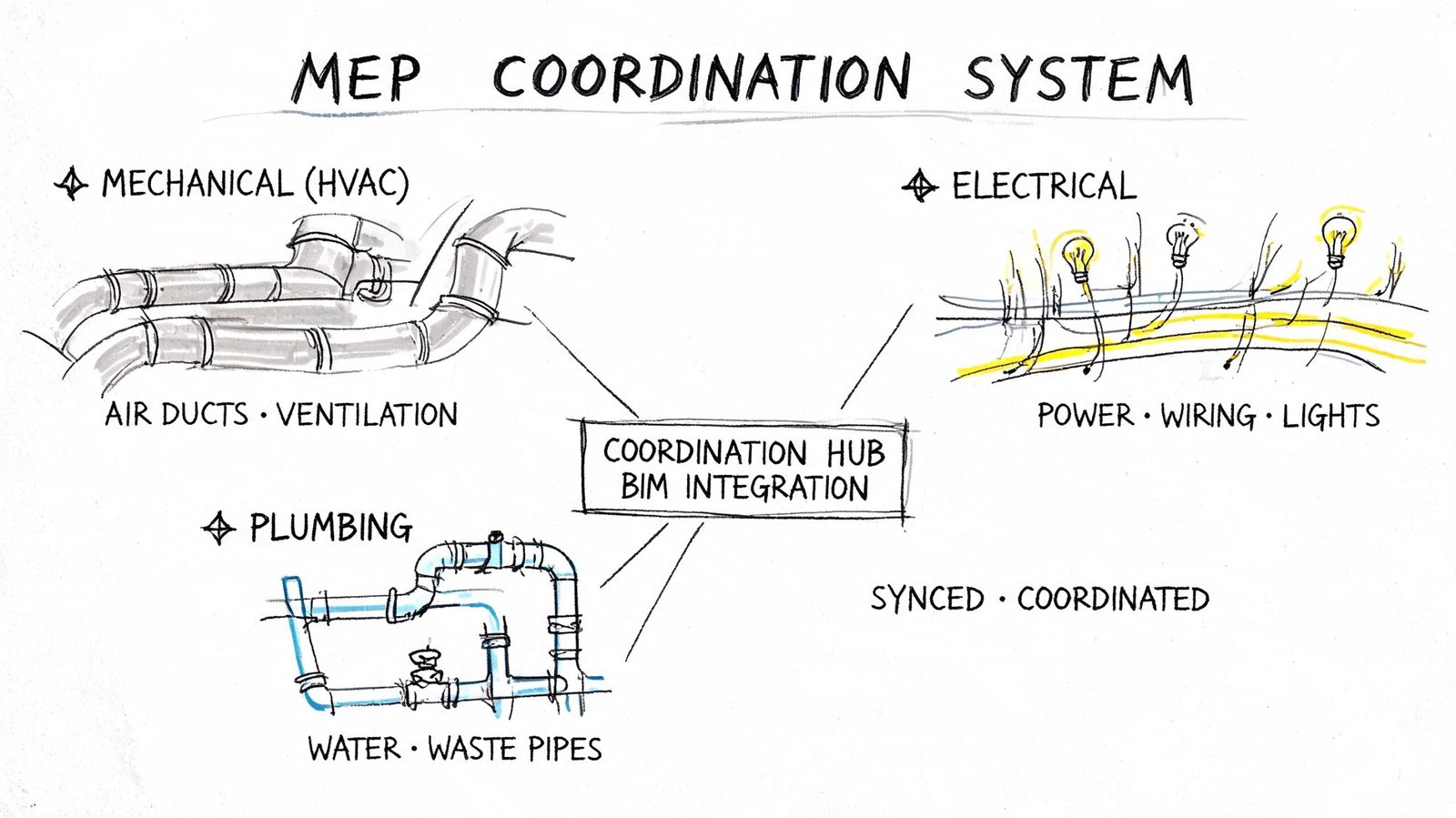
The firms that build that kind of consistency usually treat coordination as an operating system, not a model review task. That mindset matters. In 2025, large MEP firms with manufacturing-like operations, including advanced MEP coordination, achieved a 14.5% median revenue growth, compared with the 4.5% industry median, according to the 2025 State of MEP findings summarized by ABC Carolinas. The point isn’t size alone. The point is process discipline.
What the system needs
A functional MEP coordination workflow usually includes these elements:
- An assigned lead with decision authority: not a symbolic role, a working role
- A written sequence agreement: who routes first, who yields, and how priorities are applied
- A project BEP tied to deliverables: LOD, naming, sharing protocol, update frequency, and QA checkpoints
- Decision-focused meetings: not screen sharing for its own sake, but issue closure with accountable parties
- A maintained clash log: status, owner, due date, and closure evidence
- A field verification routine: compare installed work to coordinated intent before deviations stack up
What it doesn’t require
It does not require a dramatic software overhaul. Revit, Navisworks, ACC, and similar tools are already capable enough for most project teams. The primary work is operational.
That’s also where embedded support can help. Firms sometimes bring in coordination capacity not because they lack licenses, but because they need stronger production discipline, model QA, or clearer issue management inside the system they already use. BIM Heroes fits in that category as one option, working with AEC teams on BIM consulting and production support inside existing project workflows rather than replacing them.
If your team keeps having the same coordination problems, the next move probably isn’t to ask what tool you’re missing. It’s to ask which part of the system is still informal.
If your coordination meetings keep producing the same surprises, that usually means the workflow needs structure more than the software needs replacing. BIM Heroes helps AEC teams strengthen production systems around BIM, including coordination workflows, model QA, and repeatable delivery processes. If you want a practical checklist, template, or outside read on where your current setup is breaking, that’s a good conversation to have.
Category: MEP Engineering