Meta description: A practical ASHRAE 90.1 HVAC compliance checklist for commercial buildings, focused on permit-ready drawings, Section 6 documentation, economizers, DCV, ERV, and 90.1-2022 updates.
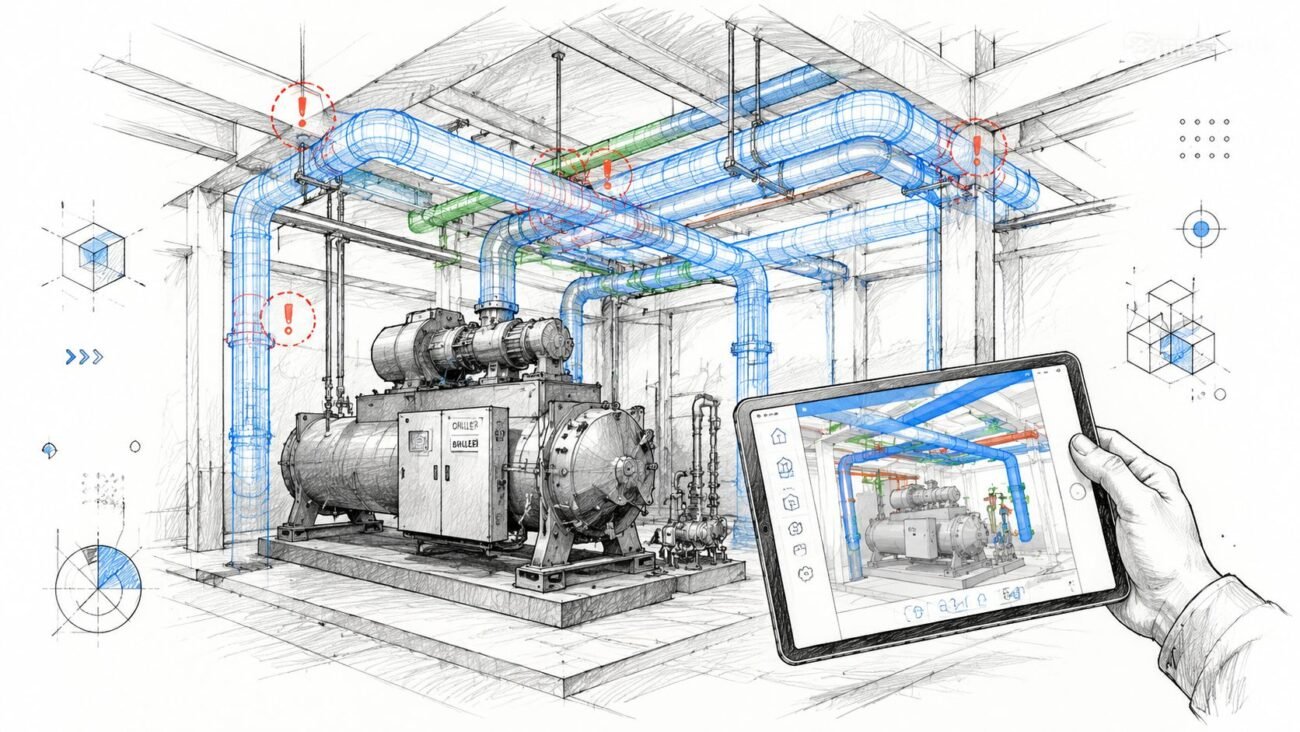
A permit set can look clean, coordinated, and still get kicked back because the HVAC energy compliance story isn’t visible on the drawings.
That usually happens the same way. The engineer selected solid equipment, the compliance report passed, and the schedules seemed complete. Then plan review comes back asking where the economizer control type is documented, how demand control ventilation is triggered, or whether the scheduled unit efficiency matches the actual compliance path. None of those comments are design failures. They’re production failures.
That’s why a usable ASHRAE 90.1 HVAC compliance checklist commercial buildings teams can apply sheet by sheet matters more than another generic code summary. Section 6 of ashrae 90.1 governs commercial HVAC energy compliance, but in practice the practical challenge is translating the standard into notes, schedules, control narratives, and coordinated model data that an AHJ can verify without guessing.
This guide is keyed to ASHRAE 90.1-2022 HVAC requirements as the current national edition. Jurisdiction adoption still varies, so the first check on any project is confirming the version your state or city has adopted. If your team is aligning compliance workflows across projects, it helps to pair this checklist with a broader energy code compliance process so the model, schedules, and narrative stay in sync from DD through permit.
Introduction From Code Headaches to Permit Approval
Most mechanical engineers have seen the same comment set more than once. Economizer shown on the rooftop unit schedule, but no control method identified. DCV mentioned in the sequence, but no sensor locations on plans. Equipment efficiency listed on a cut sheet, but not carried into the permit set where the reviewer can verify it.
Those comments cost time because they don’t show up in one place. They sit at the seam between energy compliance, controls, scheduling, and sheet production. A COMcheck pass or energy model output doesn’t automatically fix that seam.
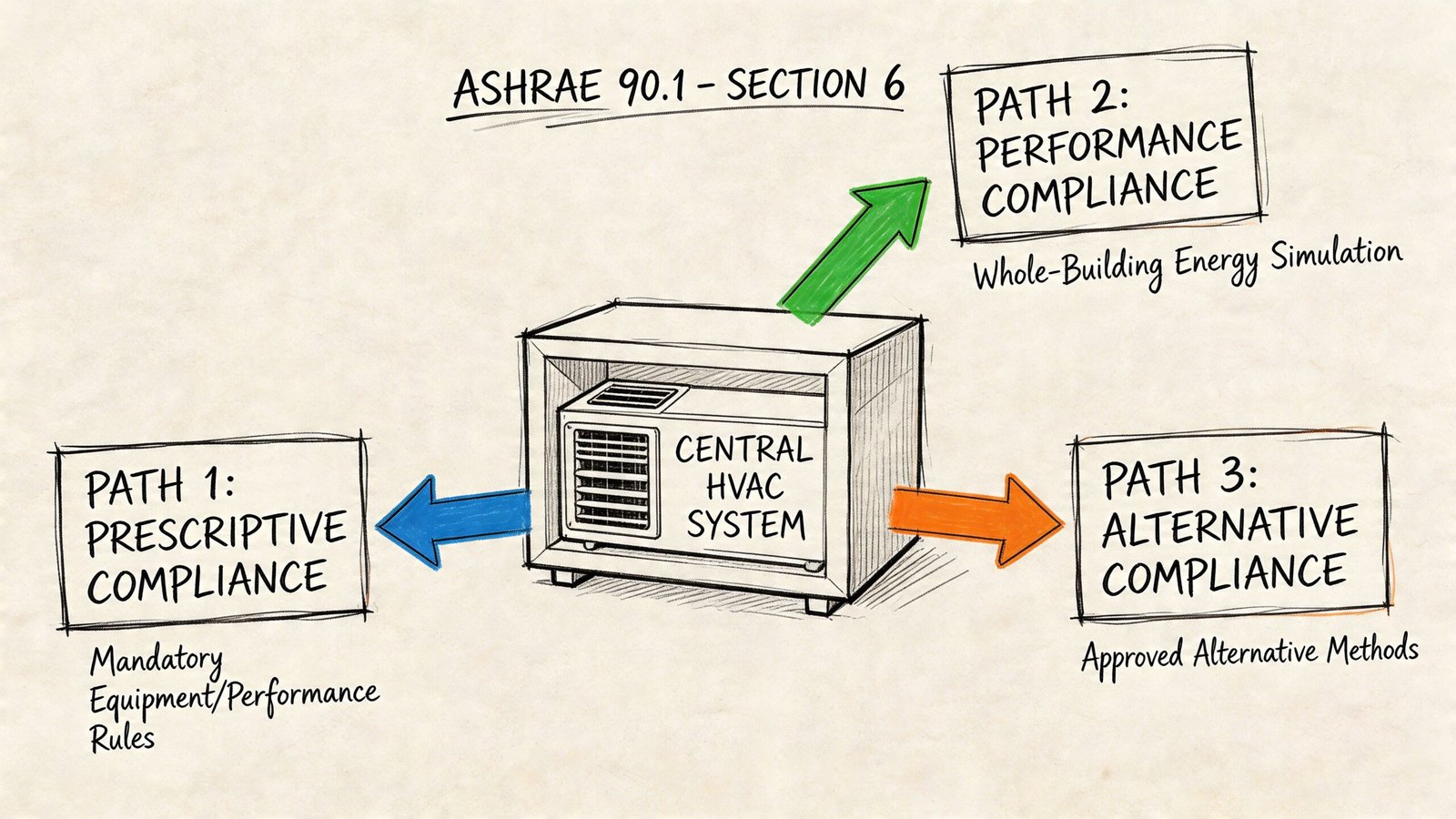
ASHRAE 90.1 Section 6 is where that problem starts for most commercial projects. It contains mandatory provisions, prescriptive requirements, and an alternative system-level path. Each route changes what must be shown, not just what must be designed.
Practical rule: If a reviewer has to infer compliance from scattered notes, expect an RFI or correction notice.
The way through it is simple, but not easy. Build the permit set so the reviewer can trace each energy requirement directly from system selection to schedule, controls note, and plan symbol. When that chain is visible, review moves faster and margins stay intact.
How ASHRAE 90.1 Section 6 Is Structured
ASHRAE 90.1 has been shaping commercial energy compliance for a long time. It began in 1975 as ASHRAE 90-75, the first national energy code in the United States, later split in 1989 into 90.1 for commercial buildings and 90.2 for low-rise residential, and moved to continuous maintenance in 1999 so it could be updated regularly, as summarized by Van Meter’s history of ASHRAE 90.1.
Mandatory provisions come first
Section 6 isn’t a menu where you pick one path and ignore the rest. The mandatory provisions apply regardless of whether the project uses prescriptive compliance, a system performance method, or whole-building modeling. If your drawings miss mandatory items, the rest of the compliance package won’t save you.
That matters in production because teams often bury mandatory requirements in office master specs and assume they’re covered. Plan reviewers don’t review assumptions. They review visible documentation.
The three paths engineers actually deal with
Most commercial jobs land in one of these buckets:
| Compliance path | How it works | Best fit |
|---|---|---|
| Prescriptive | Checks components against required criteria and efficiency tables | Typical offices, retail, tenant improvements, straightforward new construction |
| TSPR or MSPR path | Evaluates the HVAC system as an integrated whole | More complex systems where tradeoffs matter |
| Performance path | Uses energy modeling under Appendix G or Section 12 | Projects already committed to detailed modeling |
The prescriptive path is still the most common on mid-sized commercial work because it’s easier to review and easier to document. The tradeoff is rigidity. Every selected component has to line up cleanly with the required tables and control provisions.
The Total System Performance Ratio path in 2022 gives more flexibility, but it asks for stronger system-level documentation. That’s usually a better fit for complex mechanical plants than for ordinary permit sets moving quickly through review.
Why structure matters for drawing production
When a team understands the structure, sheet setup gets better fast. Mandatory items go into standard notes, schedules, and control narratives on every qualifying job. Path-specific items get layered in only where that path applies.
The cleanest permit sets separate “always required” information from “path-dependent” information before sheet production starts.
That one distinction prevents a lot of rework. It also keeps the Revit schedule parameters and compliance narrative aligned instead of forcing a late-stage cleanup.
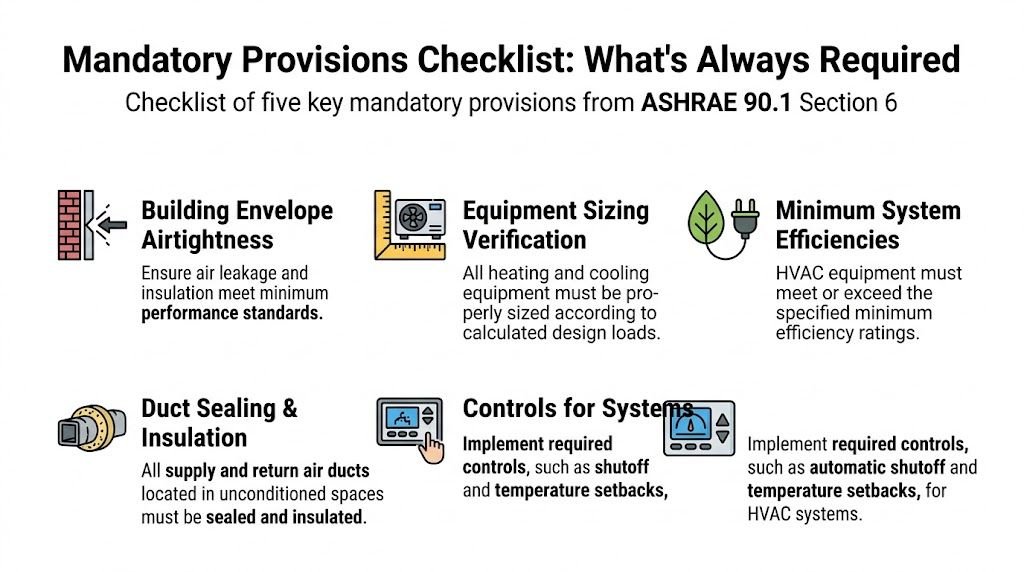
Mandatory Provisions Checklist What Is Always Required
Mandatory provisions are where most avoidable review comments start. The equipment may be fine, but the drawings don’t prove the controls logic, setback capability, damper shutoff, insulation, or monitoring requirements clearly enough.
Controls and occupancy response
Start with zone control. Every zone needs its own thermostat or control device, and the system has to support setback during unoccupied periods. On a DDC job, that usually means the sequences should show automatic setback, optimum start, and zone isolation in a way the reviewer can see without opening a vendor controls package.
Common miss: the mechanical sheets show thermostats, but the sequence never states the unoccupied control strategy.
A tighter production check is to confirm these items in three places:
- Zone plans: thermostat or sensor tags are shown and coordinated
- Control narrative: occupied and unoccupied operation is stated
- Schedules or notes: system control type is identified
Automatic shutoff and outdoor air damper control
ASHRAE 90.1 expects HVAC systems to shut down automatically during unoccupied hours unless an exception applies. That can be handled by schedules, occupancy-based controls, or a BAS sequence, but it needs to be explicit.
Outdoor air dampers also need automatic shutoff capability when the system isn’t running. Reviewers often flag this when the sequence talks about ventilation rates but says nothing about damper closure.
If your office standard uses a generic rooftop unit note, update it. “Provide economizer and code-required controls” is too vague to carry a permit set.
Demand control ventilation
Demand control ventilation ASHRAE issues are easy to miss because the decision isn’t just about whether the space is large. It depends on occupancy and area triggers. In the 2022 edition, DCV also became more climate-zone-specific and tied to ASHRAE 62.1 rates. For buildings over 25,000 ft², Section 8 also requires energy monitoring through BAS with 15-minute interval data retention, and the same source notes that climate-zone-specific DCV can cut outdoor air energy use by 20% in Climate Zone 3 office buildings, according to Envigilance’s summary of 90.1-2022 monitoring and ventilation updates.
That’s the code side. The drawing side is more practical.
For every space likely to trigger DCV, check these items:
- Space identification: classrooms, conference rooms, assembly areas, and similar high-density rooms are flagged early
- Sensor location: CO₂ or other control sensors appear on plans, not only in controls notes
- Sequence language: the control narrative states how outdoor air resets with occupancy demand
- Schedule coordination: the serving unit schedule doesn’t contradict the sequence
Simultaneous heating and cooling
This is one of those requirements that can disappear inside system complexity. The standard restricts unnecessary simultaneous heating and cooling except where an exception applies, such as humidity control or process-driven needs.
Plan reviewers may not do a full psychrometric review, but they will notice obvious contradictions. A reheat terminal schedule paired with a vague sequence and no stated exception invites comments.
If you need a legitimate exception, document the reason on the drawings. Don’t expect the reviewer to reverse-engineer your intent.
Economizer fault detection and diagnostics
Economizer FDD is a repeat offender in plan review. Teams note the economizer on the schedule, but they don’t show automated fault detection capability in the sequence or controls notes.
If the system qualifies, the permit set should make the FDD requirement visible. Don’t leave it buried in deferred controls submittals if the AHJ expects it at permit.
Duct and piping insulation
Insulation requirements usually fail in one of two ways. Either the spec covers them but the drawings are too generic, or the drawings use one blanket note that doesn’t distinguish duct location, service, or system type.
A better checklist looks like this:
| Item | What should appear on drawings |
|---|---|
| Supply duct insulation | Insulation type and required application by location |
| Return and relief duct insulation | Clear distinction between interior and exterior conditions |
| Outside air duct insulation | Notes that address condensation risk and routing condition |
| Hydronic piping insulation | Pipe service, insulation thickness basis, and applicable temperature range |
| Plenums | Clarify when insulation is not applied and why |
Equipment sizing and verification
Even though teams often focus on HVAC equipment efficiency requirements 90.1, sizing still matters operationally and in review. Oversized equipment can complicate controls, economizer operation, and sequencing.
The safest production habit is to tie load calculations, selected capacity, and schedule data together before permit. If those three don’t agree, reviewers and contractors will both find the gap.
Prescriptive Path Equipment Efficiency Checklist
Most mid-sized commercial projects still follow the prescriptive path because it’s easier to administer and easier for an AHJ to verify. That doesn’t make it forgiving. It just means each piece of equipment has to stand on its own.
The main production problem here is simple. Engineers may select compliant equipment, but the permit set doesn’t show the right metric, edition, or performance data in a reviewable format. That’s where HVAC compliance COMcheck output often falls short. It can show pass or fail, but it doesn’t replace schedule-level documentation.
What to verify on every scheduled unit
The checklist below works best during mechanical schedule QA, not after permit comments arrive.
- Metric check: confirm the equipment is shown with the metric used by the adopted edition
- Edition check: manufacturer literature must align with the jurisdiction’s adopted standard, not just current marketing cut sheets
- Schedule visibility: efficiency values belong on the equipment schedule or in a directly referenced compliance note
- Path consistency: if the project uses a system-based path, don’t document it like pure prescriptive compliance
For teams doing early selections, it helps to validate loads first and lock equipment families later. A solid HVAC load calculation workflow reduces late schedule churn because the selected capacities and energy metrics have a firmer basis.
Common equipment categories that need close review
Some categories create more trouble than others.
Unitary air conditioners and heat pumps need special attention because the 2022 edition introduced updated metrics such as SEER2 and HSPF2 for smaller equipment and increased stringency for some commercial rooftop unit metrics. If your schedule still uses legacy labels copied from an older template, the numbers may be impossible to review correctly even if the equipment itself is acceptable.
Air-source heat pumps with heat recovery also need careful schedule language. If heat recovery is part of the selection basis, the schedule and cut sheets should reflect the applicable performance metric clearly.
Boilers are another trap. In 90.1-2022, large boilers in new construction must achieve at least 90% efficiency, which effectively pushes selections toward condensing equipment. If the basis-of-design narrative says one thing and the schedule shows a generic boiler note, expect questions.
Chillers and heat rejection equipment should be listed with the exact performance basis used for compliance, not just a generic manufacturer efficiency statement.
Fan systems need more than airflow and static pressure. If the system triggers variable speed requirements, the schedule should show motor horsepower and drive type. If the system falls under fan power limits, the review set should make the basis traceable.
Quick reference table for schedule review
Because the verified data provided here doesn’t include numeric minimums by equipment type, the safest quick-reference format is qualitative rather than invented values.
| Equipment type | Metric to confirm on documents | 90.1-2019 to 90.1-2022 review issue |
|---|---|---|
| Small unitary AC and heat pump | SEER2 or HSPF2 where applicable | Older schedule templates may still list SEER or HSPF only |
| Commercial RTU | IEER and related commercial efficiency data | Some thresholds increased, so older basis-of-design units may no longer fit |
| Heat recovery equipment | Heat recovery performance metric used by selection | Often omitted from permit schedules |
| Large boiler | Thermal efficiency basis for new construction | Non-condensing assumptions may no longer work |
| Chiller | Capacity and type-specific efficiency basis | Generic cut sheet language isn’t enough |
| Cooling tower or heat rejection equipment | Table-based efficiency basis | Commonly deferred to submittal stage |
| Fan-powered systems | Fan horsepower, control type, and VFD indication | Missing drive information creates plan review questions |
What doesn’t work in permit review
Three habits create predictable problems:
- Copying manufacturer literature into the submittal folder without carrying the data into the drawings
- Using office standard schedules built for earlier code editions
- Letting controls intent live only in specifications while the plans stay silent
A reviewer can’t approve what the drawings don’t state, even if the engineer has the right equipment in mind.
If you want the prescriptive path to move cleanly, make the schedule behave like a compliance document, not just a procurement list.
Air Economizer Requirements A Common Compliance Pitfall
Economizers generate an outsized share of HVAC energy comments because they sit at the intersection of equipment selection, climate response, and controls documentation.
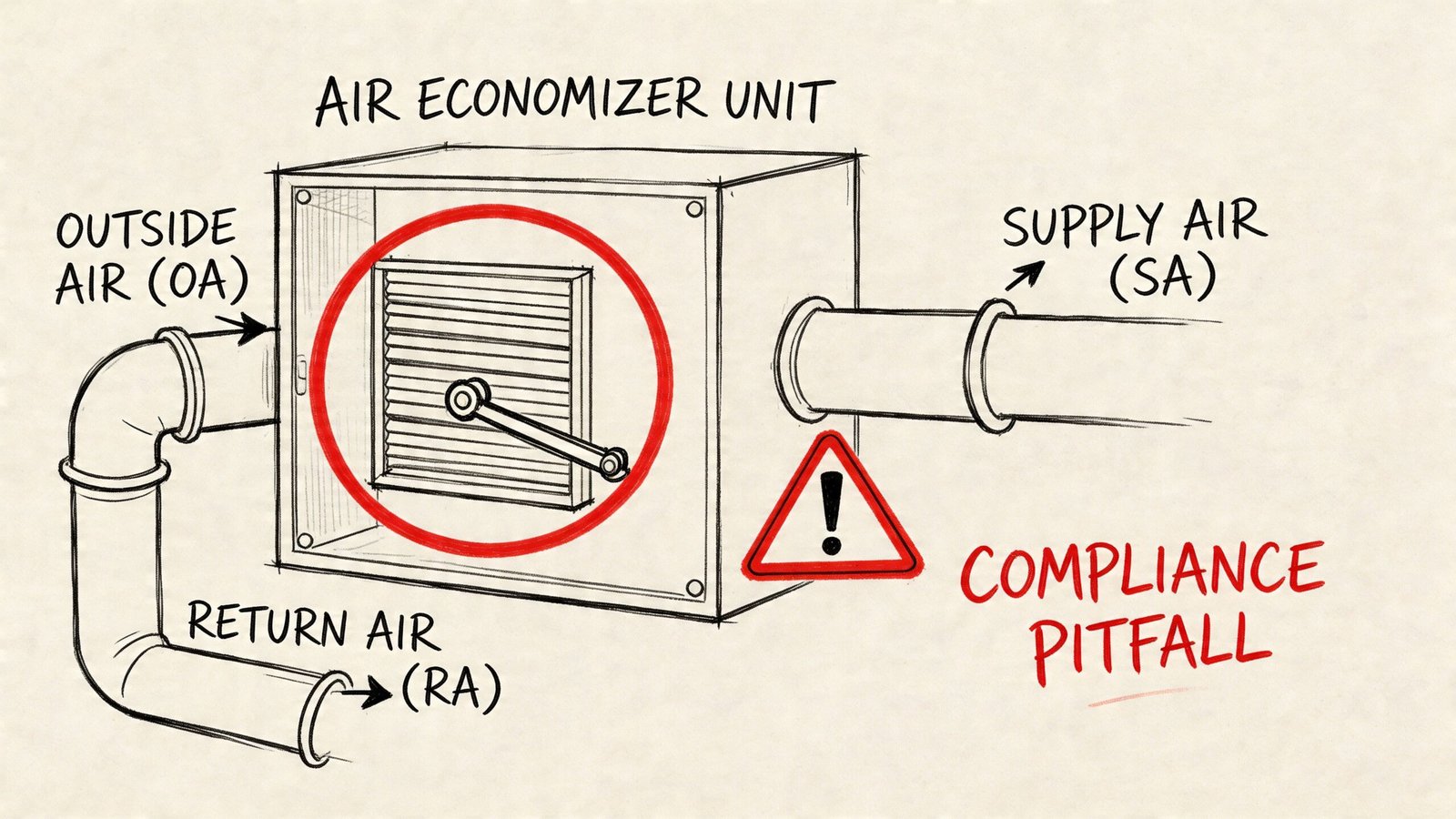
A typical failure pattern looks like this: the rooftop unit schedule says “economizer included,” but the set never identifies whether the control is fixed dry bulb, differential dry bulb, fixed enthalpy, or differential enthalpy. Then the reviewer asks how the high-limit shutoff works, where the sensors are, and whether the chosen control method is acceptable for that climate zone.
Threshold and applicability
For comfort cooling systems above 54,000 Btu/h, air economizers are required in most climate zones, with exceptions for certain humid zones and some system types. That’s the trigger many engineers know.
The harder part is documenting the exception when one applies. If your project is in a climate where the exception matters, state that directly in the energy narrative or permit notes. Don’t force the plan reviewer to guess why the economizer is absent.
Control strategy matters
Not every control strategy works in every climate. That’s where “air economizer requirements commercial” questions usually appear in corrections.
A useful QA pass asks:
- What control method is specified
- Is that method acceptable for the project climate
- Where are the control sensors shown
- Does the sequence include high-limit shutoff
- Can the economizer provide full outdoor air when required
Integrated operation matters too. If the design caps outside air below full economizer capability, that can create compliance problems. Partial language copied from a manufacturer default sequence is a common source of confusion.
Show the sequence, not just the feature
The most reliable permit sets don’t stop at the equipment schedule. They show the economizer story in at least two coordinated places:
| Drawing location | What to include |
|---|---|
| Equipment schedule | Economizer provided, control type, and any applicable note |
| Control sequence | Enable logic, high-limit shutoff, integrated operation |
| Plans or control diagrams | Sensor locations and controlled dampers |
| Specifications | Detailed sequence and component performance language |
Water-side economizers can be a valid alternative path on some projects, but they need the same level of documentation discipline. If that strategy is part of compliance, the control narrative should make it clear how the system operates and under what conditions it is enabled.
A short note on a rooftop unit schedule isn’t enough. Economizers need a visible chain of evidence.
Energy Recovery Ventilation (ERV) Requirements
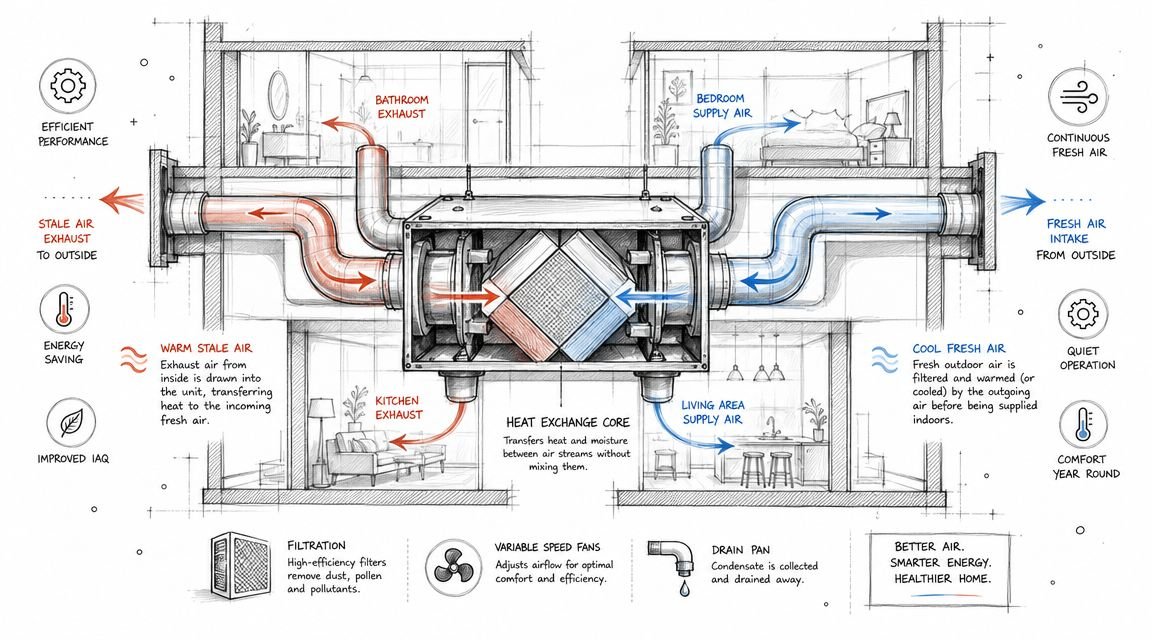
ERV requirements in 90.1-2022 deserve more attention than they usually get during permit production. Many firms still rely on legacy spec language that treats energy recovery as an accessory decision rather than a compliance trigger tied to outdoor air fraction, climate zone, and operating hours.
Where teams get tripped up
The threshold logic in Table 6.5.6.1 can be easy to miss if the outside air fraction isn’t calculated clearly early in design. By the time the permit set is being assembled, the unit may already be selected and the schedule may still be silent on recovery effectiveness or bypass control.
That creates a familiar problem. The engineer may know the unit includes recovery, but the reviewer doesn’t see enough on the drawings to verify it.
What should be documented
For projects where ERV is required, the permit set should identify these items clearly:
- Climate zone basis: the design condition that supports the requirement
- Outdoor air fraction: enough information to support why ERV is or isn’t triggered
- Minimum effectiveness: the recovery performance basis shown on schedules or referenced compliance notes
- Bypass or operational control: how the recovery device functions when economizer or other operating modes are active
- Exception basis: if the system is exempt because of contamination, hazardous exhaust, or limited operating hours, document that reason directly
Some exceptions are straightforward. Hazardous exhaust, grease hood systems, and certain contaminated airstreams are common examples. Systems with very limited operating hours can also fall outside the trigger. The key is not to treat the exception as self-evident.
Good ERV documentation answers the reviewer’s first question before it gets asked: why is recovery required here, or why isn’t it?
The cleanest sets carry ERV status into both the equipment schedule and the sequence narrative. When one says “ERV included” and the other says nothing, comments follow.
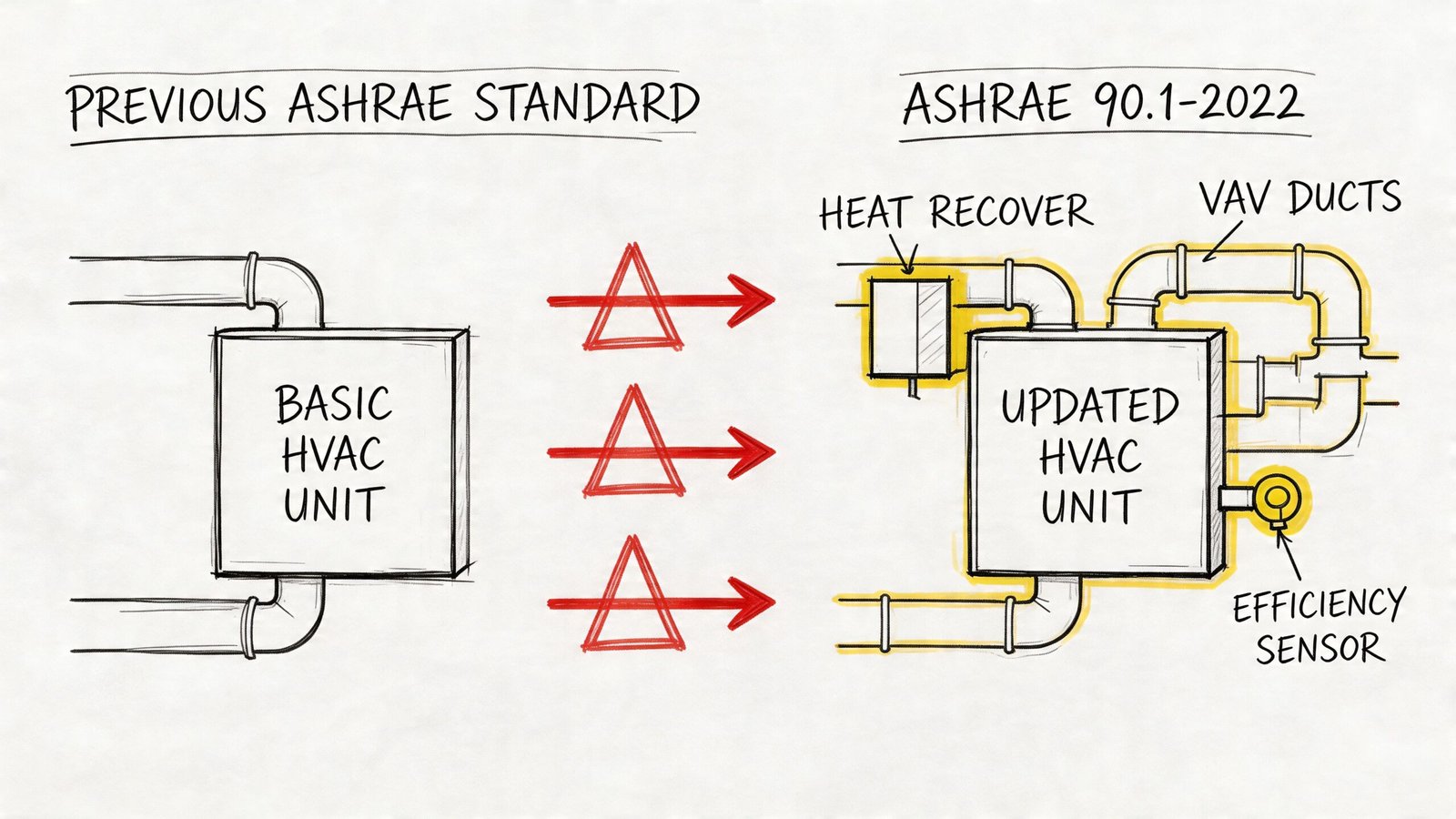
Key HVAC Changes in ASHRAE 90.1-2022
The 2022 edition changed the HVAC compliance workflow in ways that matter to production teams, not just designers.
TSPR changed the conversation
The biggest conceptual shift is the introduction of the Total System Performance Ratio path. Instead of checking only component-by-component minimums, the standard now allows an HVAC system to be evaluated more holistically.
That can be useful on complex buildings where integrated tradeoffs make more sense than rigid prescriptive compliance. It also raises the documentation bar because the system logic has to be explained more clearly. A loosely assembled set of schedules and generic sequences won’t support that path well.
Section 11 isn’t optional
One of the more important workflow changes in 90.1-2022 is that Section 11 energy credits sit on top of the baseline requirements. That means teams can’t stop at Section 6 and assume they’re finished.
On production-heavy jobs, this matters because selected credits need to show up in the compliance narrative and align with the mechanical drawings. If the energy consultant’s paperwork names one measure and the permit set reflects another, review gets messy fast.
Monitoring became part of construction documentation
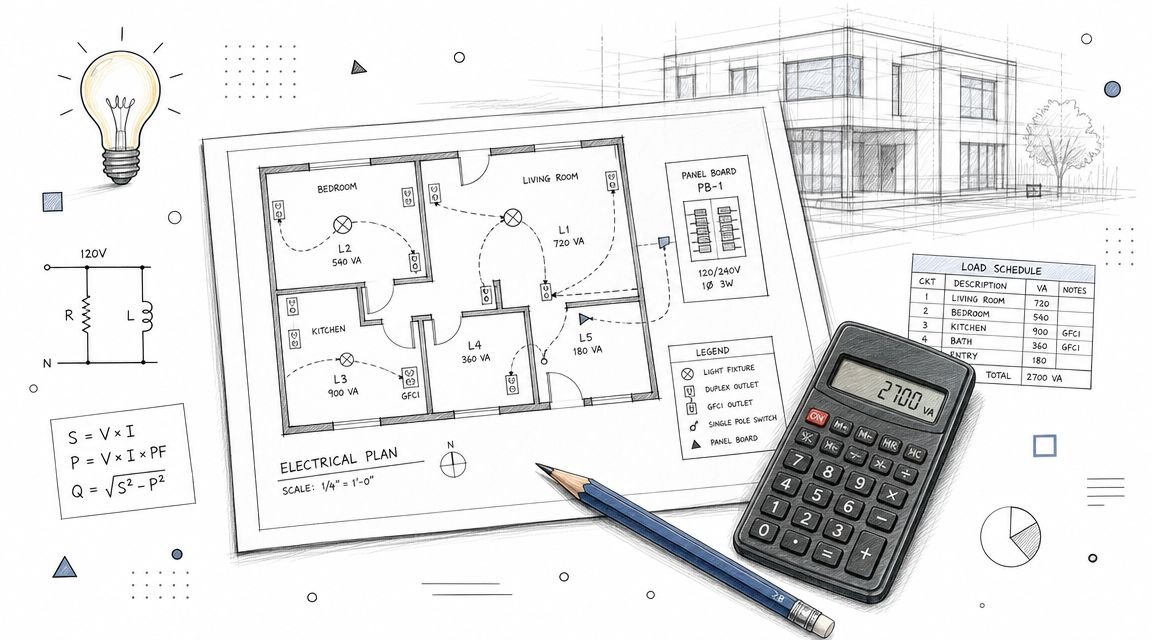
For buildings over the size threshold noted earlier, energy monitoring through BAS with interval data retention is a design and documentation issue, not just an operations issue. That pulls electrical, controls, and mechanical coordination closer together during permit production.
When teams miss that handoff, the drawings often show the major HVAC systems but not the metering architecture needed for compliance review.
Scope expanded, but guidance didn’t keep pace
ASHRAE 90.1-2022 also expanded its scope to include sites and multifamily structures four stories and above, while still leaving limited explicit guidance for mixed-use and adaptive reuse compliance decisions, as discussed in ANSI Blog’s overview of ANSI ASHRAE IES 90.1-2022.
That gap matters in real practice. Hybrid buildings rarely fit neatly into single-use assumptions, and existing-building alterations can blur the line between prescriptive and performance-based choices.
For PMs, the production takeaway is clear:
- Mixed-use jobs need an early compliance decision tree
- Adaptive reuse work needs tighter narrative documentation
- Template-driven sheet sets need project-specific edits sooner
- Coordination meetings should include compliance path confirmation, not just equipment selection
Engineers familiar with older editions usually don’t need a lesson in the standard. They need a revised workflow. That’s the primary shift in 2022.
How to Document HVAC Compliance on Permit Drawings
Permit reviewers don’t approve intent. They approve what appears on the sheets.
That’s why the gap between a passing compliance tool and an approvable set is usually a documentation gap. The mechanical design may already satisfy the standard, but if the equipment schedules, control notes, and details don’t expose the compliance logic, the project still burns time.
What should be visible in the set
A permit-ready package for ashrae 90.1 HVAC work should include, at minimum:
- Equipment schedules with efficiency metrics keyed to the adopted edition and the selected compliance path
- Economizer notes that identify the control type and operational basis
- DCV documentation showing applicable spaces and sensor locations
- ERV schedule data with effectiveness or referenced compliance basis
- VFD identification on motor-driven fan systems where required
- Energy compliance narrative that aligns with the actual mechanical sheets
- Monitoring coordination where building size and system scope trigger it
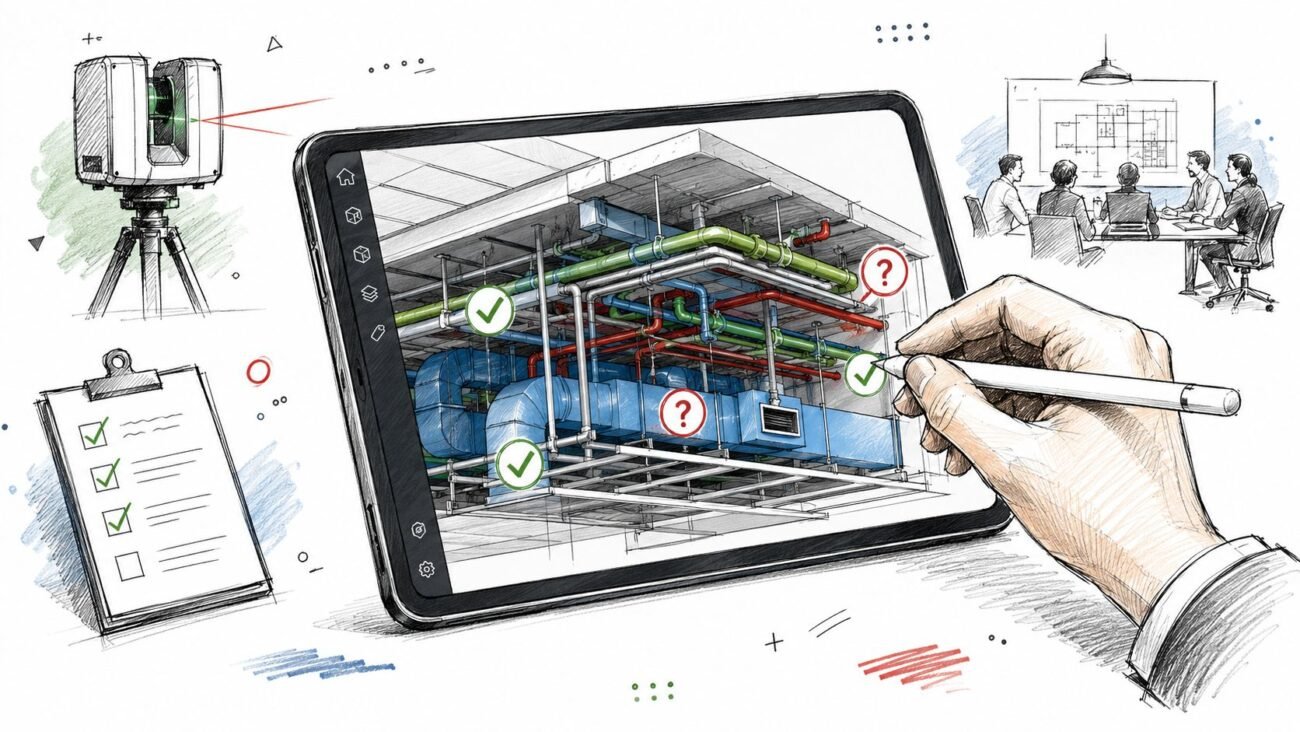
The best place to control this is in the model. When compliance parameters live in Revit families and populate schedules automatically, the team stops retyping critical data across multiple sheets. That reduces the hand-entry errors that generate comments.
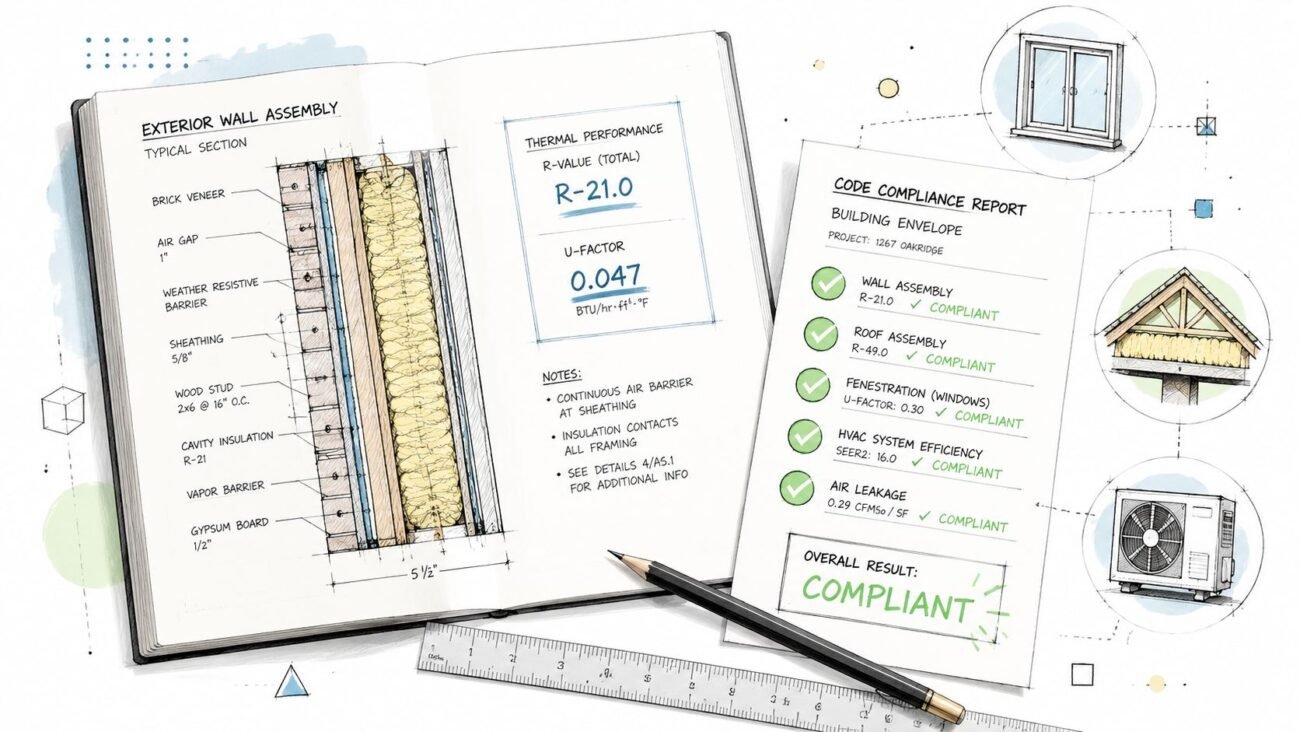
A similar lesson already shows up on the envelope side. ASHRAE 90.1-2022 updated steel-framed wall U-factor methodology to account for thermal bridging, which can increase heat loss by 20-50%, and non-compliance can lead to 5-10% higher modeled energy costs under Appendix G, according to the ASHRAE 90.1 standard resource page. For production teams using BIM, that means carrying performance-critical data directly in the model, not patching it in later. HVAC documentation benefits from the same discipline, especially in coordinated HVAC duct layout drawings.
What protects margin
The firms that move permits faster usually do three things well:
- They standardize schedule fields around current code editions
- They run QA against reviewer questions, not just internal design intent
- They treat controls notes as part of compliance documentation, not a deferred afterthought
That’s production maturity. It isn’t glamorous, but it saves real time.
Conclusion Turning Compliance into a Production Advantage
ASHRAE 90.1 compliance rarely falls apart because the team doesn’t know the code exists. It falls apart because the documentation chain breaks between design choice, equipment schedule, control narrative, and permit sheet.
That’s why an ASHRAE 90.1 Section 6 review should function like a production checklist, not just a code exercise. Mandatory provisions need to be visible. Prescriptive selections need the right metrics. Economizers, DCV, ERV, monitoring, and energy credits need to show up where the AHJ can verify them without interpretation.
When that’s handled well, plan review gets simpler. RFIs drop. Redlines get tighter. PMs spend less time reconciling mismatched schedules and consultant narratives. The engineering doesn’t change. The reliability of delivery does.
A passing compliance report is useful. A permit set that proves compliance clearly is what protects fee and schedule.
If your team wants a second set of eyes on mechanical production standards, schedule templates, or permit-ready Revit workflows, BIM Heroes can help assess where compliance documentation is breaking down and where a more disciplined delivery system would make the biggest difference.