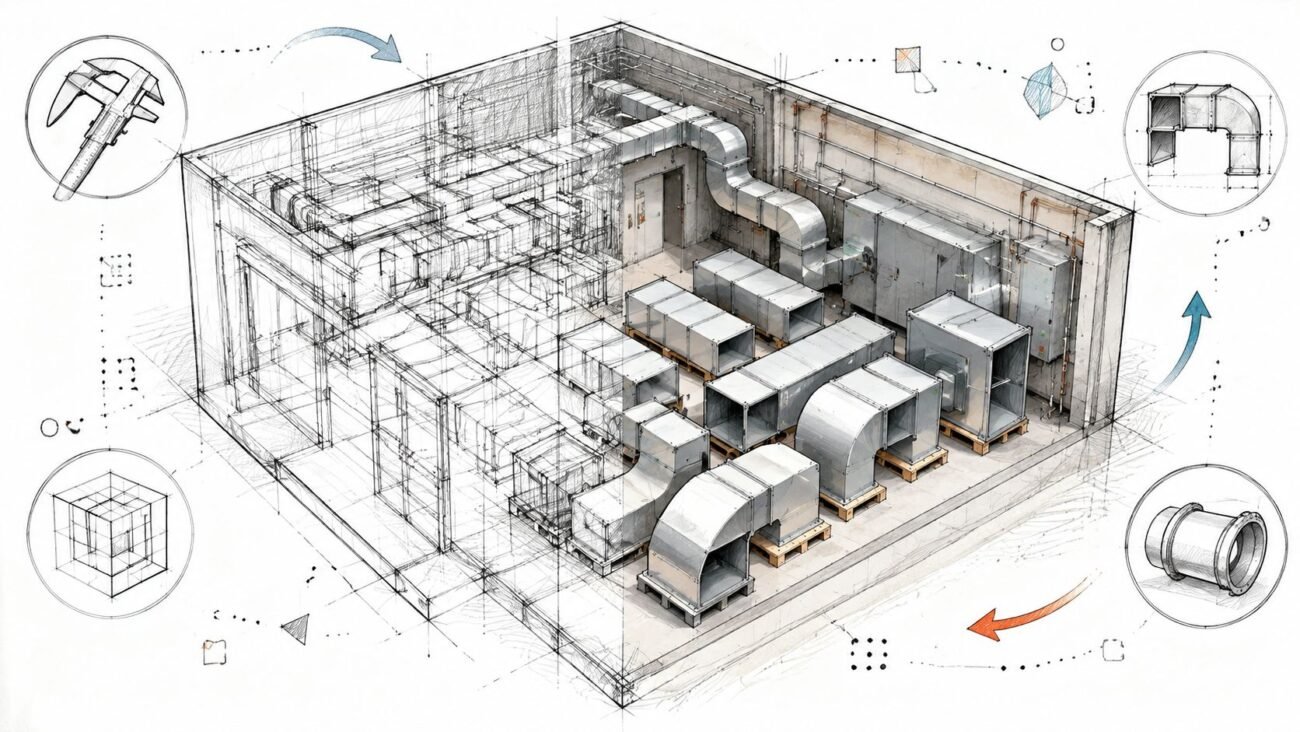
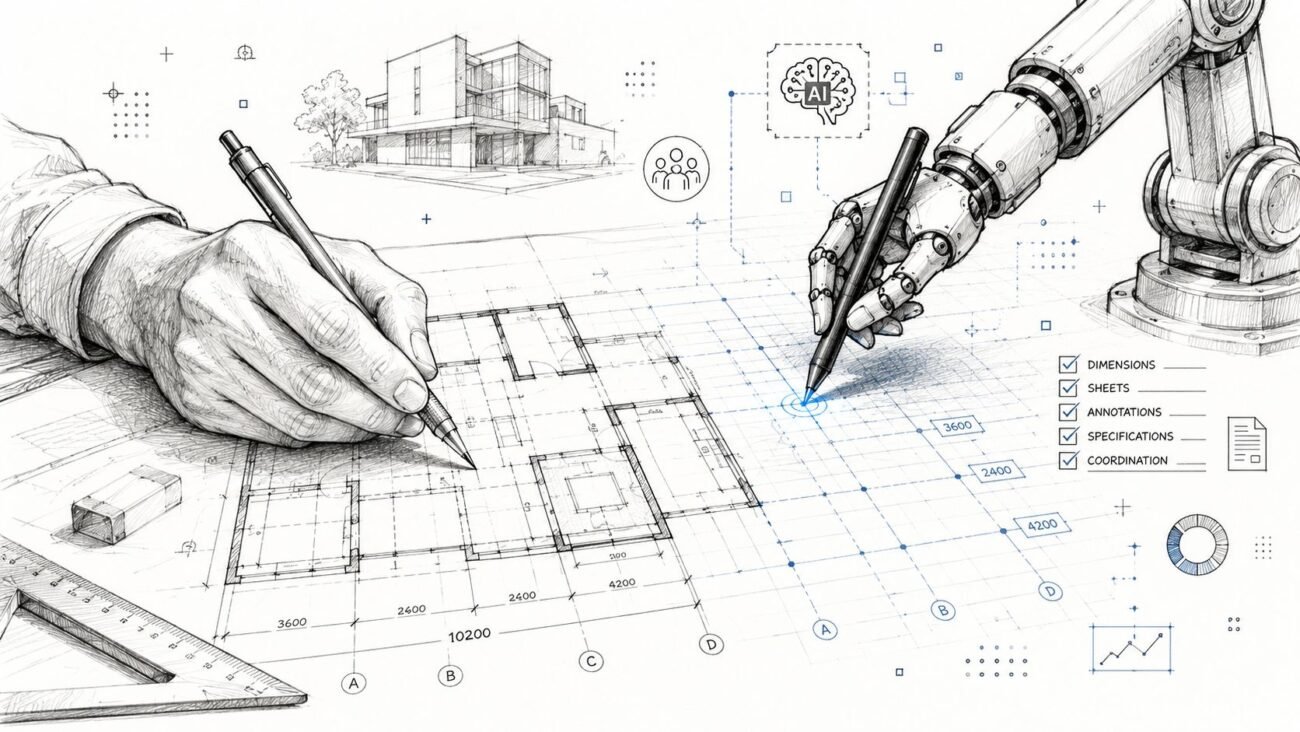
A mid-size MEP firm wins a hospital retrofit and discovers the problem isn't the contract. It's production capacity. The BIM manager is already protecting two active projects, the drafting team is committed through the next submission, and the principal doesn't want to hire permanent staff for a workload that may taper after delivery.
That situation is why construction outsourcing services have moved beyond emergency drafting support. Used correctly, outsourcing becomes a controlled production layer for BIM modeling, scan conversion, construction documentation, MEP coordination, shop drawings, and as-built deliverables. The in-house team keeps design authority and client responsibility. An external production pod handles defined work through the same templates, issue trackers, and review gates.
The difference between a useful partner and an expensive freelancer is operational discipline. You're not buying hours. You're buying predictable output, documented QA, and enough capacity to protect schedule and margin when the project pipeline changes.
Why AEC Firms Are Rethinking Construction Outsourcing Services
The MEP firm with the hospital retrofit has three options. It can reject the work, overload its current staff, or create a production arrangement that adds capacity without weakening technical control. The third option is increasingly practical because much of the work can be specified, reviewed, and delivered remotely through a common data environment.
Construction outsourcing services cover repeatable technical production across the AEC workflow. That can include outsourced Revit production, CAD-to-BIM conversion, point cloud to BIM modeling, construction documentation, sheet production, clash coordination, shop drawings, and model updates after field verification. The work still needs internal leadership, code interpretation, client communication, and approval. Those responsibilities shouldn't disappear into a vendor handoff.
The market remains small compared with total construction spending, but recent estimates point to rapid expansion. One market report valued global construction outsourcing services at about USD 2.08 billion in 2024, projected USD 2.28 billion in 2025 and USD 4.71 billion by 2033, with an implied CAGR of roughly 9.6%. A separate estimate placed construction engineering outsourcing at USD 13.85 billion in 2025, projecting USD 28.52 billion by 2032 at a 10.86% CAGR. These figures come from the construction outsourcing services market analysis.
The shift from ad hoc help to production infrastructure
Engineering outsourcing isn't new. A National Academies paper documented US construction-related design and management services growth of 12% from 2003 to 2004 and 11% from 2004 to 2005, while US exports of CAE services to India reached USD 107 million in 2004. The same research cited major international contractors generating USD 34.8 billion in revenue from international work. The point isn't that every firm should offshore everything. The point is that distributed technical delivery has been part of the industry for years.
What has changed is the buyer's expectation. Principals now need a partner that can follow a BEP, preserve template standards, manage version control, and return clean packages without creating a second management job. The firms that succeed treat outsourcing as a production system, not a staffing shortcut.
Core Service Models and What Each One Actually Covers
Start with the bottleneck, not the vendor's entire service menu. A firm that needs an existing-conditions model shouldn't buy a generic drafting package, and a contractor facing fabrication deadlines shouldn't treat shop drawing production like early design modeling.
Five service models worth separating
Outsourced BIM production converts design intent into structured Revit or other BIM deliverables at the required LOD. The scope may include model authoring, families, views, schedules, sheets, parameters, and exports. It fits design development, construction documentation, and model maintenance, provided the LOD matrix and acceptance rules are clear.
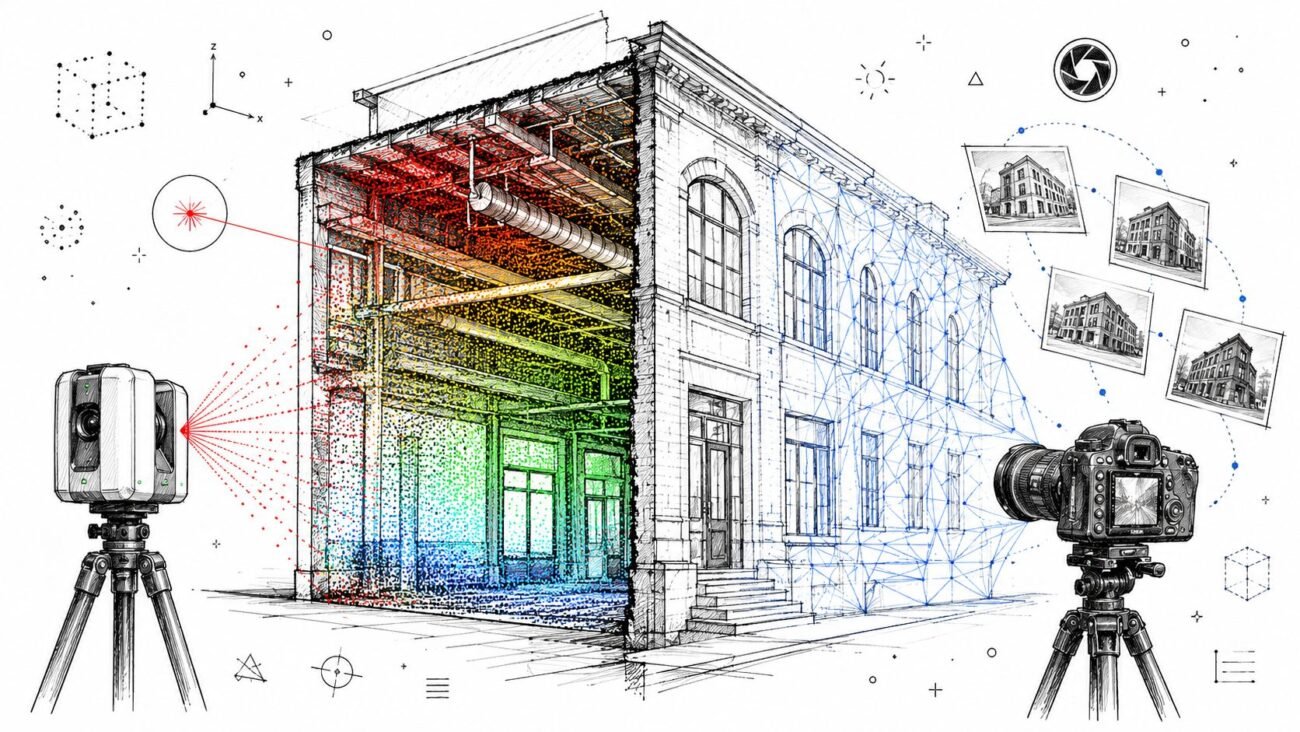
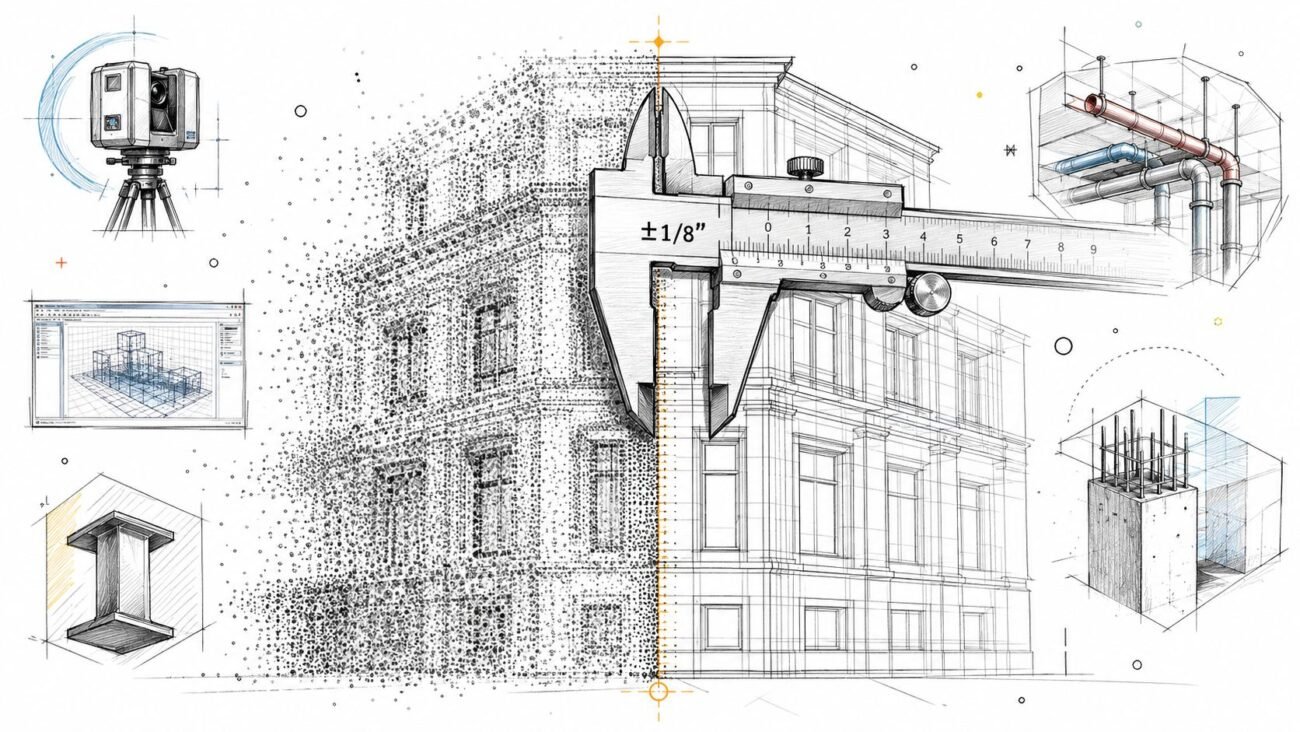
Scan to BIM turns laser-scanning or reality-capture data into an intelligent existing-conditions model. The deliverable can include RVT, IFC, DWG, NWD, or BCF files, depending on the project workflow. For firms holding unmodeled point clouds, scan to BIM services can create a usable base for renovation design, coordination, permitting preparation, and as-built documentation. BIM Heroes states that its process accepts Leica, FARO, Matterport, NavVis, Trimble, and DotProduct formats, with models delivered at LOD 200-350 and accuracy verified to ±1/8" with a deviation report on every model.
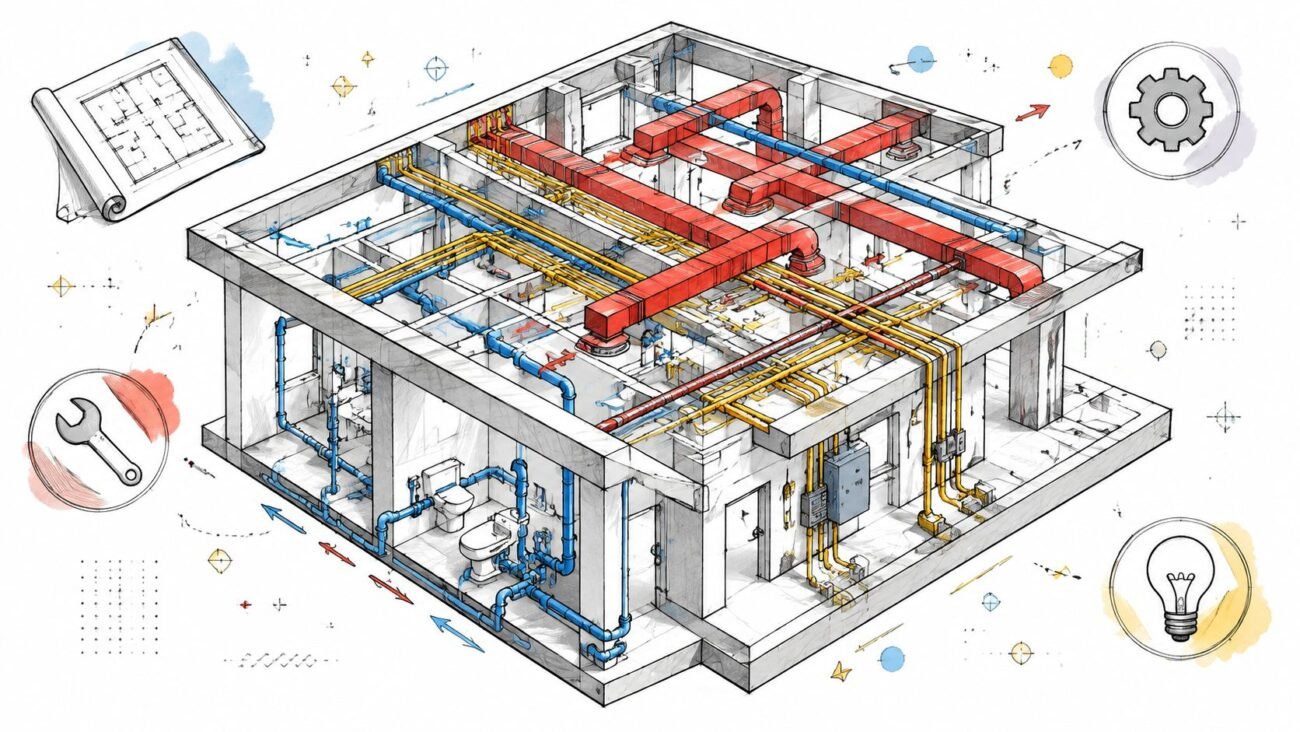
MEP coordination federates architectural, structural, and building-services models, identifies conflicts, and supports resolution tracking. It belongs before fabrication and installation, when design decisions can still prevent field disruption.
Shop and fabrication drawings translate coordinated design information into trade-ready views, dimensions, details, schedules, and installation information. They work best when the design is stable and the trade's detailing conventions are documented.
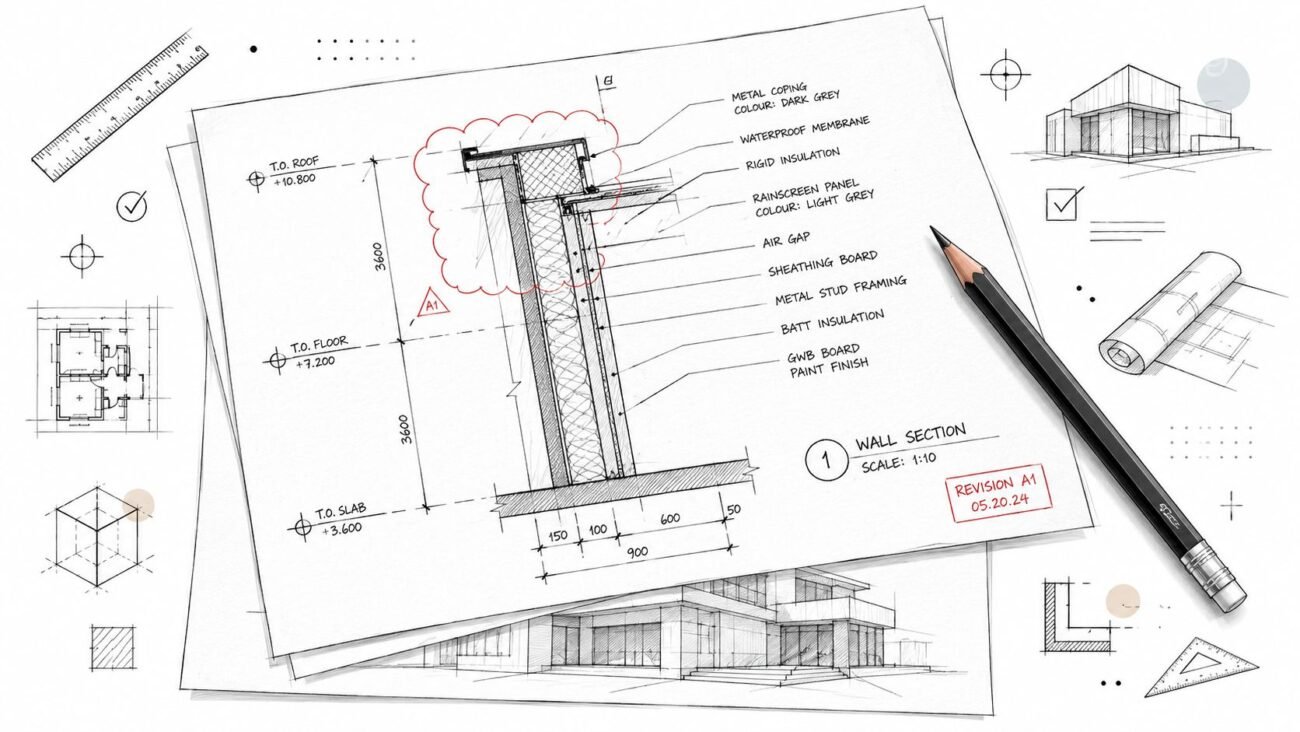
Construction documentation develops permit or construction sets from approved design information. Typical packages include plans, elevations, sections, details, schedules, reflected ceiling plans, and coordinated annotations. The internal architect or engineer remains responsible for professional decisions and jurisdictional compliance.
| Service Model | Typical Deliverables | Best-Fit Project Phase |
|---|---|---|
| BIM production | Revit models, families, views, schedules, sheets, exports | Design development through closeout |
| Scan to BIM | Existing-conditions models, deviation reports, point cloud references, as-built files | Survey, renovation, and field verification |
| MEP coordination | Federated models, clash reports, issue logs, coordinated layouts | Preconstruction and installation planning |
| Shop drawings | Trade drawings, fabrication details, schedules, installation views | Construction and fabrication |
| Construction documentation | Permit sets, CD sets, details, schedules, annotated plans | Permit and construction documentation |
For a broader view of how firms distribute architectural production, review architecture outsourcing services. The useful decision is always the same: define the package, identify the approval owner, and choose the model that removes a specific production constraint.
The Business Case Beyond Cost Savings
Cost matters, but it's a weak reason to outsource by itself. A lower hourly rate won't protect a fixed-fee project if the external team creates revision churn, misses a coordination issue, or forces your senior staff to manage every line item.
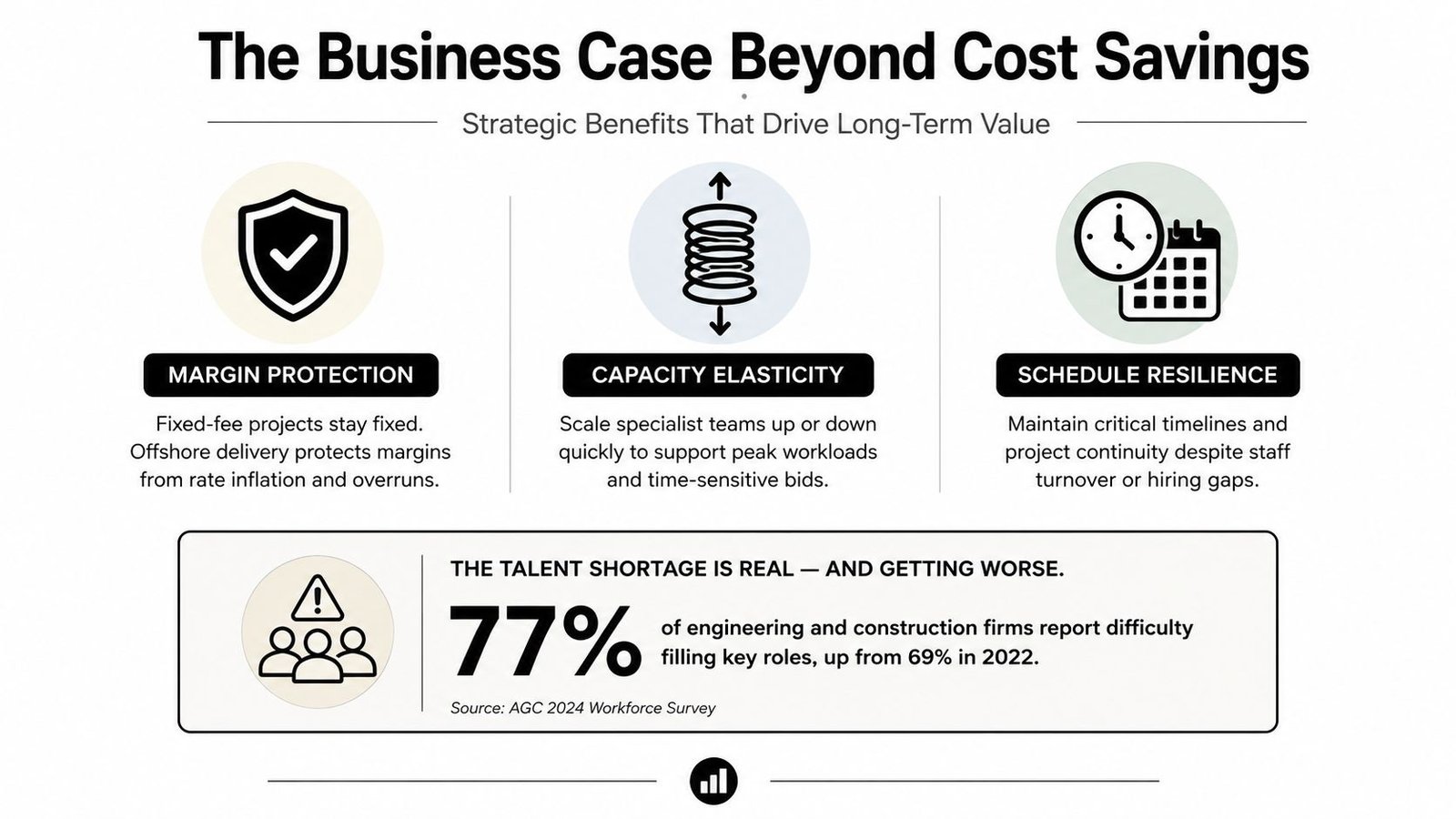
The stronger business case has three parts. Margin protection comes from moving repeatable production into a controlled variable cost instead of carrying permanent overhead for every demand peak. Capacity elasticity lets a firm accept work when its internal team is full without immediately adding long-term headcount. Schedule resilience gives project managers another delivery path when staff leave, workloads collide, or a specialist skill isn't available internally.
The labor market makes capacity a risk issue
The workforce problem is not theoretical. The AGC/NCCER 2025 survey found that 92% of firms had difficulty hiring, and AGC reported workforce shortages as a leading cause of project delays. The same source noted that new immigration enforcement affected nearly one-third of firms. These figures support a practical conclusion for US AEC leaders: external production can serve as a continuity strategy, not merely a labor-cost strategy. Review the AGC workforce survey release for the underlying workforce context.
Pricing references commonly place offshore drafting and modeling around $15 to $35 per hour, while specialized coordination and US-based delivery can exceed $100 per hour, according to the cited AEC outsourcing pricing reference. That differential can be useful on production-heavy scopes, but it doesn't automatically equal profit. One OECD study found that a 1 percentage point increase in outsourcing intensity reduced low-skilled labor productivity by 0.18% in the short run, which is a warning against sending poorly defined work over the wall.
Commercial rule: Outsource production that can be measured, not responsibility that can't be reviewed.
Separate hard savings from operational gains. Headcount, overtime, software seats, and office infrastructure are visible. Faster ramp-up, fewer interruptions to senior staff, and better backlog absorption are harder to model, but they often decide whether a project remains predictable.
How to Evaluate an Outsourcing Partner
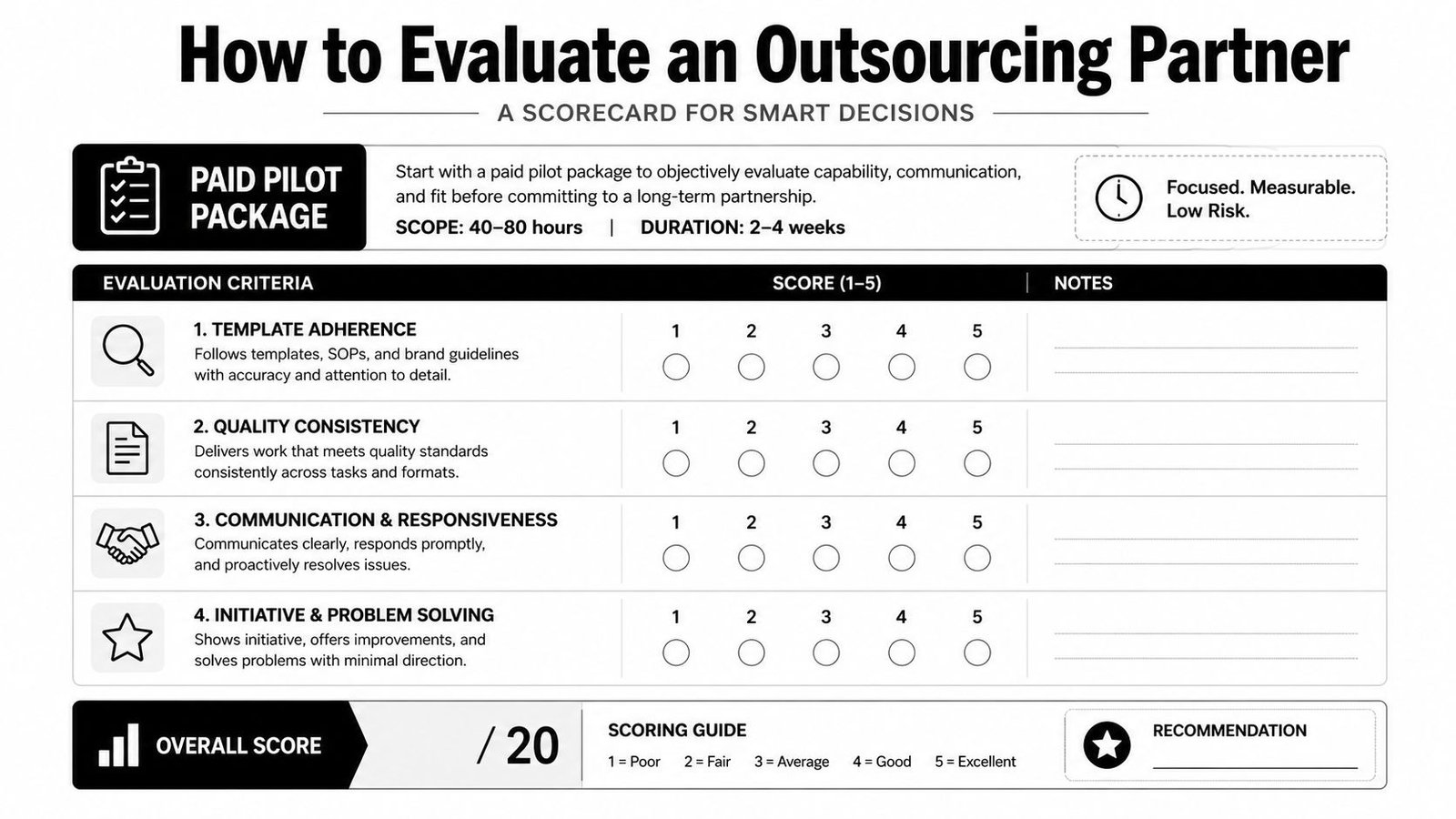
A sales presentation tells you what a vendor wants to sell. A pilot package tells you how the vendor works. Evaluate the partner as if you were auditing a production department that had to deliver your next submission.
Start with a paid pilot
Use 40 to 80 hours of real project work for the pilot, rather than a polished sample created outside your workflow. Give the team your template, naming conventions, reference sheets, model links, and an ordinary package with the ambiguities your staff encounters.
Grade the pilot against three practical tests:
- Template adherence: Does the team follow your structure without renegotiating every family, view, or sheet convention?
- Set consistency: Do annotations, linework, schedules, and title blocks remain consistent across a multi-page package?
- RFI response: How quickly does the team return a clear answer or identify the missing decision when the first question appears?
The pilot should produce a scorecard, not a feeling. Track deviations, reopened comments, missing inputs, and the time required for your internal reviewer to approve the work.
Test the sample and inspect the environment
Ask for a comparable LOD 350 sample, then redline it against your own QA checklist. Don't just inspect the finished model. Watch how the team closes comments. A vendor that responds defensively during a sample review will create friction at scale.
The production environment matters just as much as the model. Check file naming, worksharing, version control, cloud access, and the team's use of BIM 360 or Autodesk Construction Cloud. Confirm how the team handles Revit, ReCap, Navisworks, Leica Cyclone, and FARO Scene when point cloud or coordination work is involved.
Verify continuity, security, and accountability
You want a dedicated team with named roles, not a pooled bench that changes whenever the vendor has another deadline. Confirm whether the vendor can support signed NDAs, role-based access, data residency requirements, ISO 27001, SOC 2, and destruction certificates at handoff. Call references. Don't treat a reference list as proof until you ask about revision control, missed dates, and escalation behavior.
A reliable partner can explain its file structure, review gates, escalation path, and rework policy without hiding behind a generic quality statement.
Contracting Models and Pricing Structures
The contract should match the shape of the work. Fixed package pricing is effective when the scope, LOD, inputs, and deliverables are stable. Hourly pricing makes more sense when the team is exploring design options or resolving coordination issues whose volume can't be known at kickoff.
| Model | Best For | Risk Bearer | Watch Out For |
|---|---|---|---|
| Fixed package | Shop drawings, scan to BIM, as-built documentation, defined sheet sets | Vendor carries production risk within the agreed scope | Ambiguous inputs, unlimited revisions, unclear acceptance |
| Hourly or unit rate | Design assist, discovery, changing coordination work | Buyer carries utilization risk | Open-ended hours, weak reporting, no cap |
| Retainer | Dedicated production pod and recurring backlog | Risk is shared through committed capacity | Paying for unused capacity or unclear team continuity |
| Hybrid | Retainer floor plus fixed-price milestones | Shared by both parties | Conflicting definitions between monthly and milestone scopes |
Fixed pricing only works when your brief is clean. Define model version, LOD, sheet list, reference files, code responsibility, review rounds, exclusions, and the meaning of “complete.” For scan to BIM, specify accepted scanner formats, deliverable formats, deviation reporting, and the areas included in the model.
Hourly or unit-rate work needs a ceiling. Set approval thresholds, weekly burn reporting, and a rule that the vendor can't exceed the cap without written authorization. Retainers suit firms with a stable backlog and a genuine need for a dedicated production pod. A hybrid arrangement, such as a retainer floor with fixed-price milestones, can balance capacity access with package accountability.
Clauses that protect the package
Insist on:
- Defined revision rounds: State how many review cycles are included and what counts as a scope change.
- QA-linked payment: Tie milestone payment to documented acceptance, not merely file upload.
- IP assignment: Make ownership transfer explicit upon payment.
- Rework language: Separate vendor-caused correction from changed design intent or incomplete client input.
- Confidentiality and access: Cover project data, point clouds, models, credentials, and destruction at closeout.
Avoid open-ended hourly work for a package that could have been specified. That structure rewards activity when your business needs completed deliverables.
Quality Control and Production Workflows That Actually Work
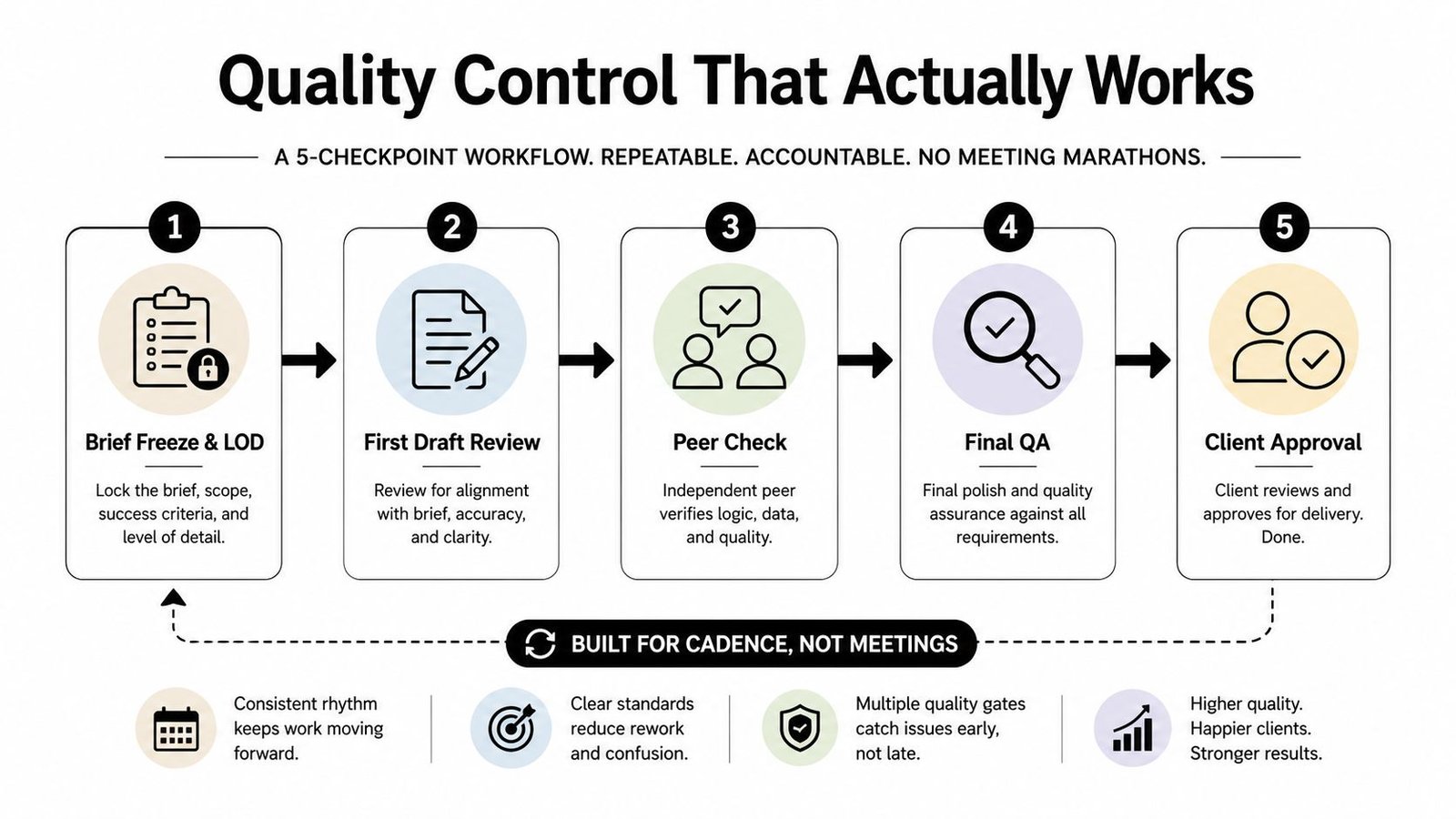
QA isn't a meeting. It's a cadence with evidence attached to every decision. The external team should know what happens before production, during the first review, at coordination milestones, and at closeout without waiting for a daily instruction from your BIM manager.
Build five checkpoints into the workflow
First, freeze the brief. Lock the LOD matrix, template references, naming conventions, coordinate system, model version, sheet list, and known exclusions. If inputs remain open, record them in an issue tracker instead of allowing assumptions to spread through the model.
Second, review an early sample. At roughly the 10% to 15% milestone and around 30% completion, review a representative sample against your standards. Redline it, return consolidated comments, and require closure before the team completes the full package.
Third, issue a weekly deviation report. Keep it to one page. List clashes, missing inputs, template drift, unresolved RFIs, and closed issues. A short operational report is more useful than a long narrative about effort.
Fourth, run model-level clash checks. Check the package at 50% and 80% completion against the federated model, not only within the external team's scope. Internal clashes can look clean while the package still conflicts with structure, architecture, fire protection, or equipment clearances.
Fifth, close the package deliberately. Review sheet consistency, parameters, attributes, exports, naming, and issue closure. Capture a short lessons-learned note and apply it to the next package.
Keep ownership visible
Use a shared issue tracker, not scattered email threads. Assign one vendor-side point of contact with decision authority, and name a QA lead separate from the modeler. That separation matters. The person producing the model shouldn't be the only person deciding whether the model passes.
A structured BIM production workflow can support Revit outsourcing services when the model, issue log, and review criteria stay connected. Time-zone coverage can also compress elapsed delivery time, but only when the handoff includes clear status, open decisions, and file-lock rules. Otherwise, the next team inherits uncertainty.
Production standard: Every review should answer three questions, what changed, what remains open, and who owns the next decision.
Risks, Misconceptions, and How to Mitigate Them
The usual objections are valid, but they aren't reasons to reject outsourcing. They're signs that the operating model hasn't been designed.
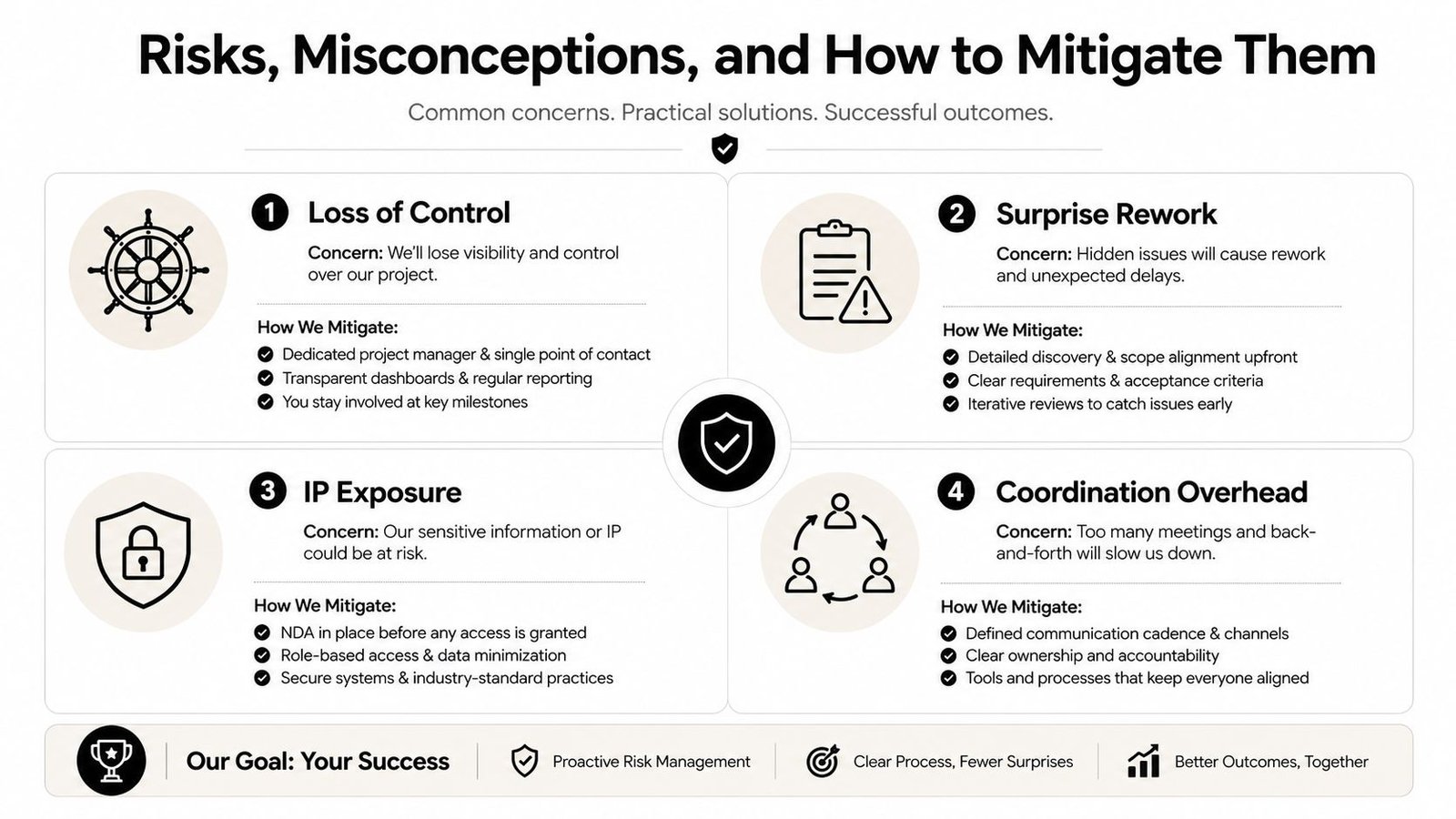
Loss of control happens when the external team works from email attachments and sends back files without shared visibility. Give the team controlled access to the CDE, version-lock the templates, define approval authority, and hold a short weekly production standup. Your firm keeps design control because the RACI says who can model, review, approve, and issue.
Surprise rework usually starts with a vague brief. Use the paid pilot to measure deviations against an acceptance matrix before releasing a major package. If the team misses the standard, fix the workflow while the scope is small. Don't hope a larger package will somehow improve performance.
Treat information risk as a contract issue
IP exposure needs more than a general confidentiality promise. Use project-specific NDAs, role-based model permissions, limits on downloads, and a contractual requirement for destruction certificates at handoff. Confirm where point clouds, models, and exports are stored and who can access them.
Coordination overhead appears when the internal team invents process during production. Prepare the naming convention, RACI, issue categories, model exchange rules, and escalation path before kickoff. The external team should add capacity, not force your project manager to become a full-time translator.
The most dangerous misconception is that outsourcing means surrendering technical judgment. A disciplined firm outsources production execution and retains responsibility for design leadership, code decisions, client communication, and final approval.
A 90-Day Rollout and Next Steps
Use a conservative rollout. The purpose of the first three months isn't to prove that a vendor can complete one package. It's to determine whether the vendor can repeat the result inside your production system.
The rollout sequence
Weeks one and two: shortlist partners, define the package, prepare the pilot brief, and agree on the acceptance matrix. Include the templates and a realistic sample of project inputs.
Weeks three through six: run the paid pilot. Record template adherence, revision behavior, issue closure, turnaround, and reviewer effort. Keep the internal reviewer close enough to catch drift early.
Weeks seven through ten: finalize the contract, security terms, RACI, CDE access, naming rules, and template handover. Resolve commercial ambiguity before the vendor receives a larger backlog.
Weeks eleven and twelve: run parallel production with shadow review. The internal team reviews the external output at each agreed gate, then gradually reduces intervention only when the evidence supports it.
Set a day-60 gate. If deviation rates, turnaround, or issue closure don't meet the agreed targets, pause before deeper integration. A failed pilot is cheaper than a failed construction package.
For firms holding point clouds that still need modeling, architectural services can be evaluated through a concrete sample rather than a broad capability discussion. Send a small scan package, request a free LOD recommendation, and use the resulting artifact to judge fit.
BIM Heroes provides outsourced BIM and CAD production for architecture, engineering, and construction teams, including scan to BIM, point cloud modeling, Revit production, coordination, and construction documentation. Visit BIM Heroes to send your scan data or request a free LOD recommendation and pricing within 24 hours.