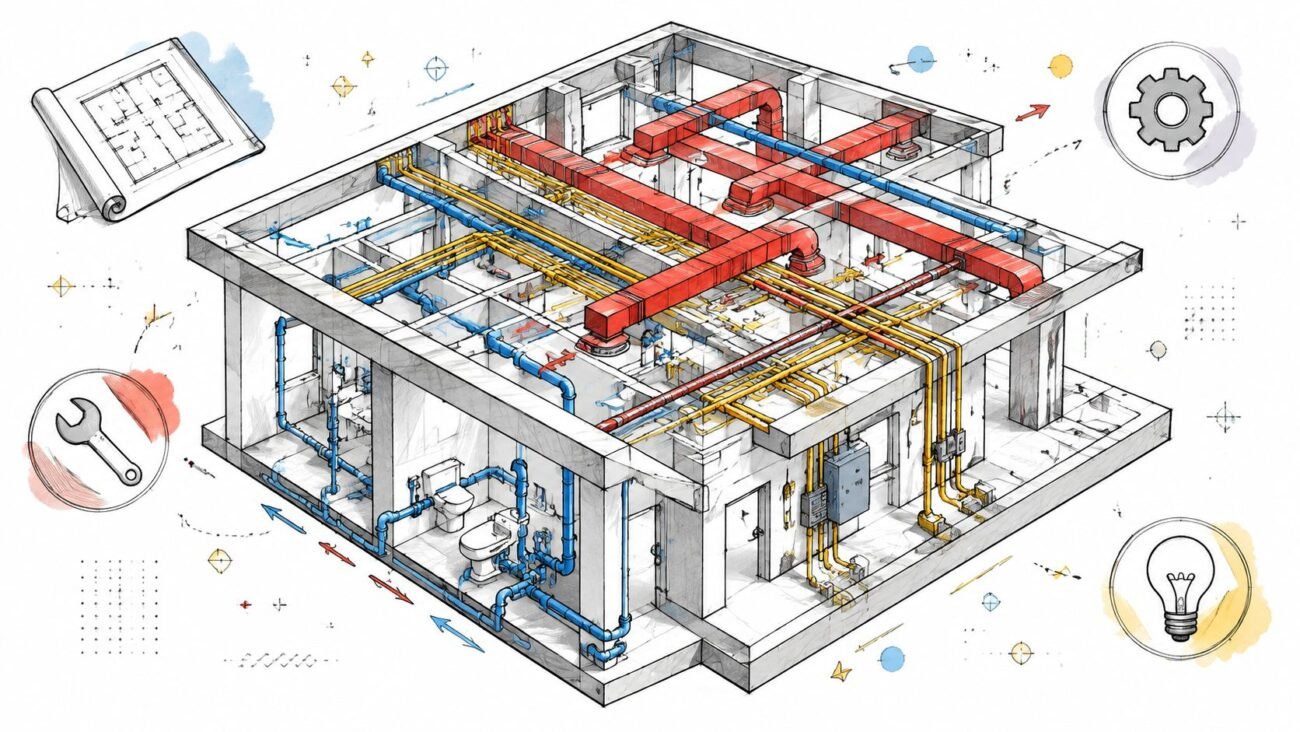
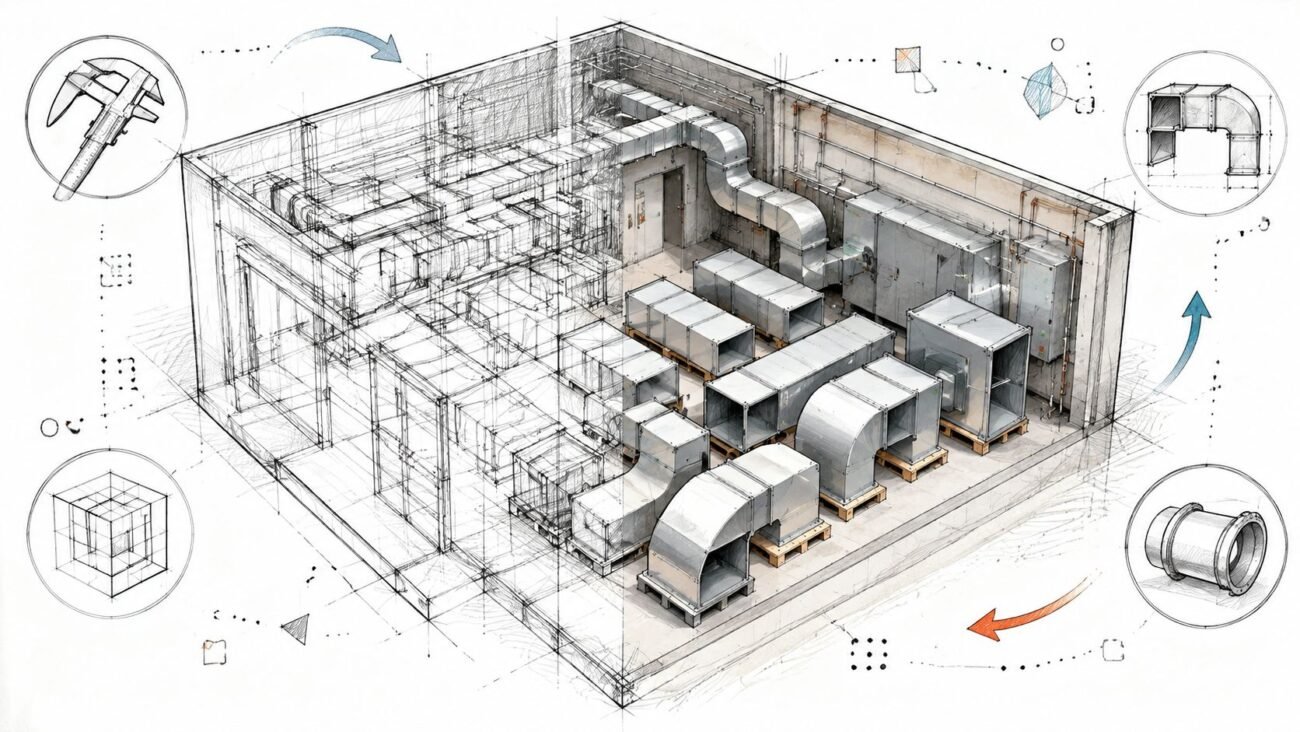
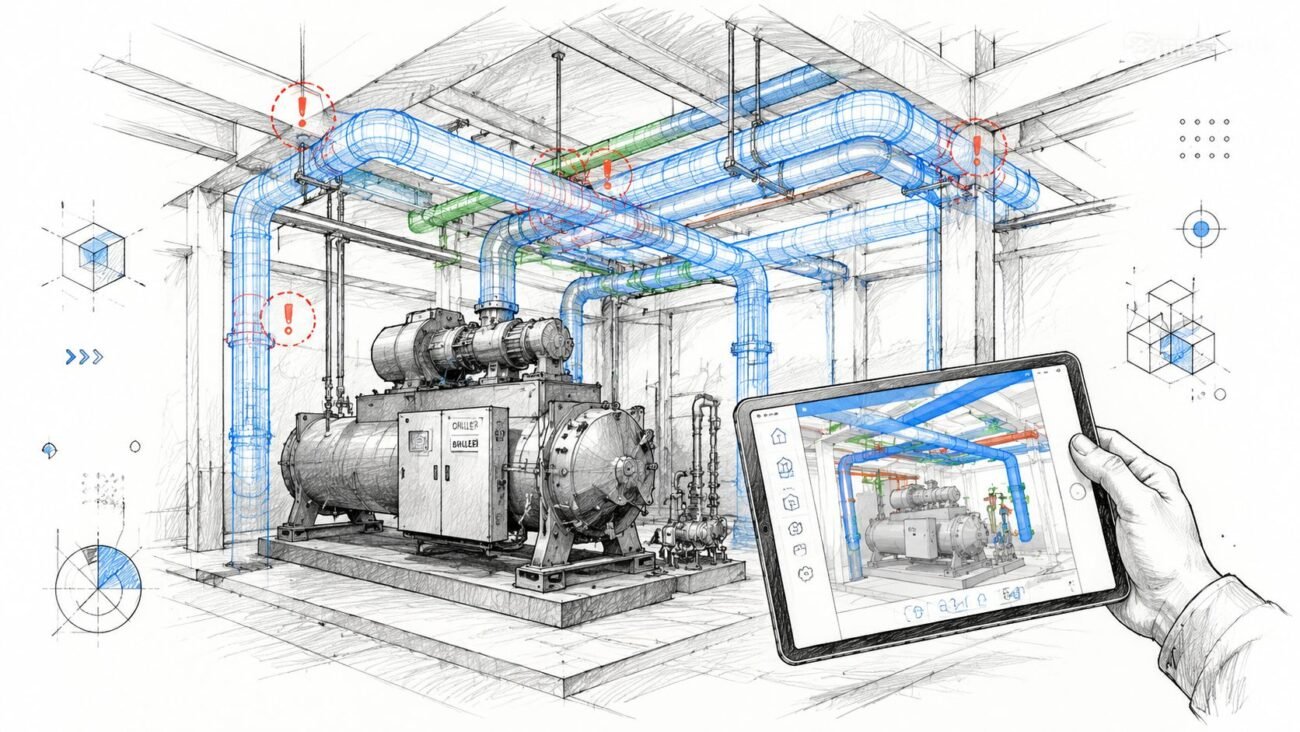
Ceiling tiles come down. The plenum opens up. The model that looked coordinated in Revit suddenly has no relationship to reality.
The duct mains are offset from the 1998 as-builts. A sprinkler main shows up right through the new VAV box location. Conduits that nobody documented are crossing the corridor. The renovation design may have been clean on paper, but the above-ceiling space isn't clean, and it never was.
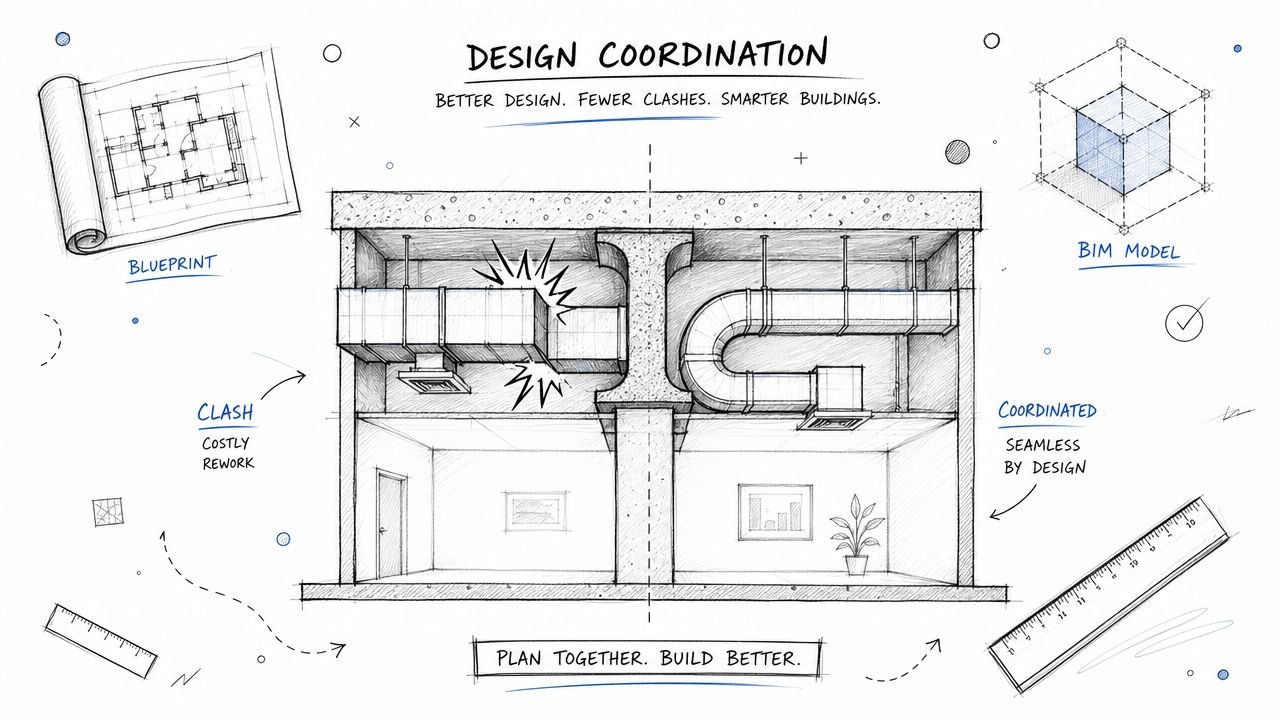
That moment is where renovation MEP coordination either becomes a disciplined risk-management process or collapses into field improvisation. New construction gives you an empty container and asks you to fill it. Existing building renovation gives you a partially hidden system, incomplete records, ongoing building operations, and very little tolerance for wrong assumptions.
The teams that handle this well don't pretend the existing conditions are known. They build a workflow around uncertainty. They separate verified conditions from assumed ones, they make conservative routing decisions, and they force decision checkpoints before installers start fabricating against bad information.
Industry guidance reflects why that discipline matters. The AGC's MEP spatial coordination requirements treat coordination as a managed BIM workflow with defined schedules, milestones, qualified personnel, and scale-accurate trade content. They also note that MEP systems often represent 20% to 40% of total construction cost in buildings, which is why coordination failures can affect a large share of project value (AGC MEP Spatial Coordination Requirements).
Introduction
Anyone who has worked on a tenant improvement or adaptive reuse project knows the key coordination meeting starts after the ceiling opens. The drawing set may show a neat set of existing mains, branch lines, and conduit runs, but those documents often reflect original installation rather than what's currently overhead today. Every renovation, partial retrofit, and emergency reroute leaves a layer behind.
That mismatch is what makes renovation MEP work harder than many teams admit. The design team may have coordinated against owner-furnished backgrounds, legacy CAD files, and a model built from old records. Then demolition exposes conditions that were never documented, no longer match the drawings, or cannot be moved because they still serve adjacent tenants or base building systems.
Production maturity is paramount. Good renovation coordination isn't about making the federated model look complete. It's about showing what is known, what is assumed, and what must be verified before anyone installs new work.
The practical standard is simple. Treat unknown conditions as a management problem, not just a modeling inconvenience. That means disciplined investigation before design, explicit model conventions for uncertain elements, drawing notes that communicate risk clearly, and a fast update cycle once demolition gives the team visibility.
Why Existing Building MEP Coordination Is Different
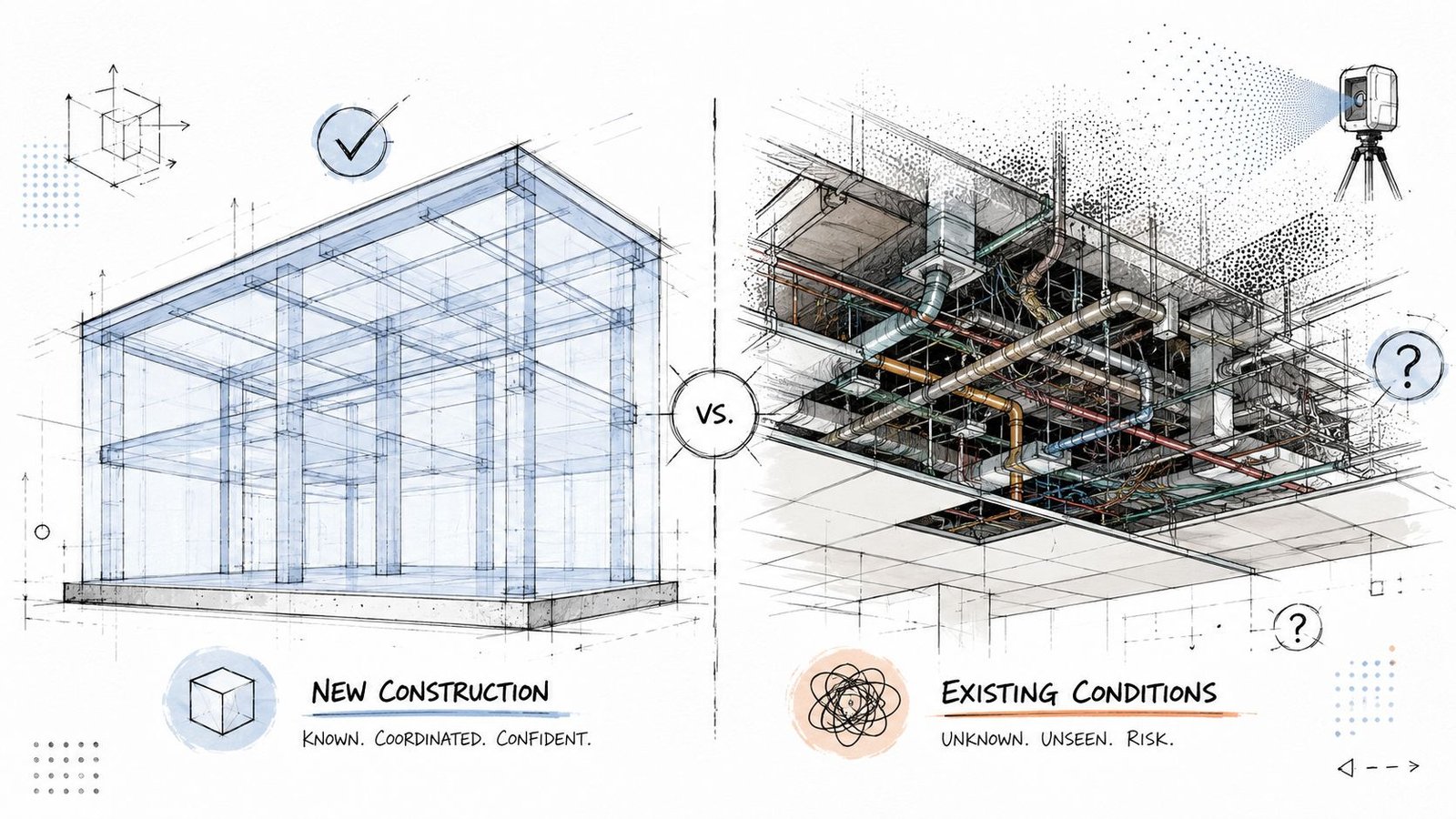
New construction starts with open space. Renovation starts with inherited space. That distinction changes the entire coordination strategy.
In a new-build model, teams decide where systems go. In an existing building, many of the most important systems are already in place, and some of them can't move. Main sprinkler lines, electrical feeders, sanitary stacks, risers, smoke control paths, and tenant-serving systems often stay active through construction. The new design has to route around them, not through them.
The second difference is trust. Existing drawings are useful, but they aren't proof. Owners usually have a record set, not a verified set. The building may have gone through multiple fit-outs, phased remodels, after-hours repairs, and undocumented field fixes. The result is predictable. The official record shows what was intended at one point in time, not what currently occupies the plenum.
The biggest risk is false certainty
The most expensive mistakes usually start with a bad assumption that gets treated like verified fact. Once that assumption enters the model as if it were accurate, every downstream decision inherits the same error. Duct routing, access clearance, equipment placement, hanger logic, and ceiling coordination all get built on a false base.
Practical rule: If an existing condition came from legacy drawings and nobody field-verified it, it should never look “certain” in the model.
That is especially important on renovation programs tied to building remodeling workflows, where permit sets, landlord approvals, and phased construction depend on clear differentiation between what is staying and what is changing.
Occupied buildings force incomplete decisions
Access also changes the game. In occupied space, you usually can't open every ceiling area during design. Hard lids, sensitive tenants, infection-control constraints, restricted hours, and active operations limit what the team can inspect. That means some decisions will be made with incomplete information.
The mistake is pretending otherwise. A mature team acknowledges uncertainty and documents it. An immature team smooths it over for the sake of progress, then pays for it during demolition and installation.
Documenting Existing MEP Conditions Before Design
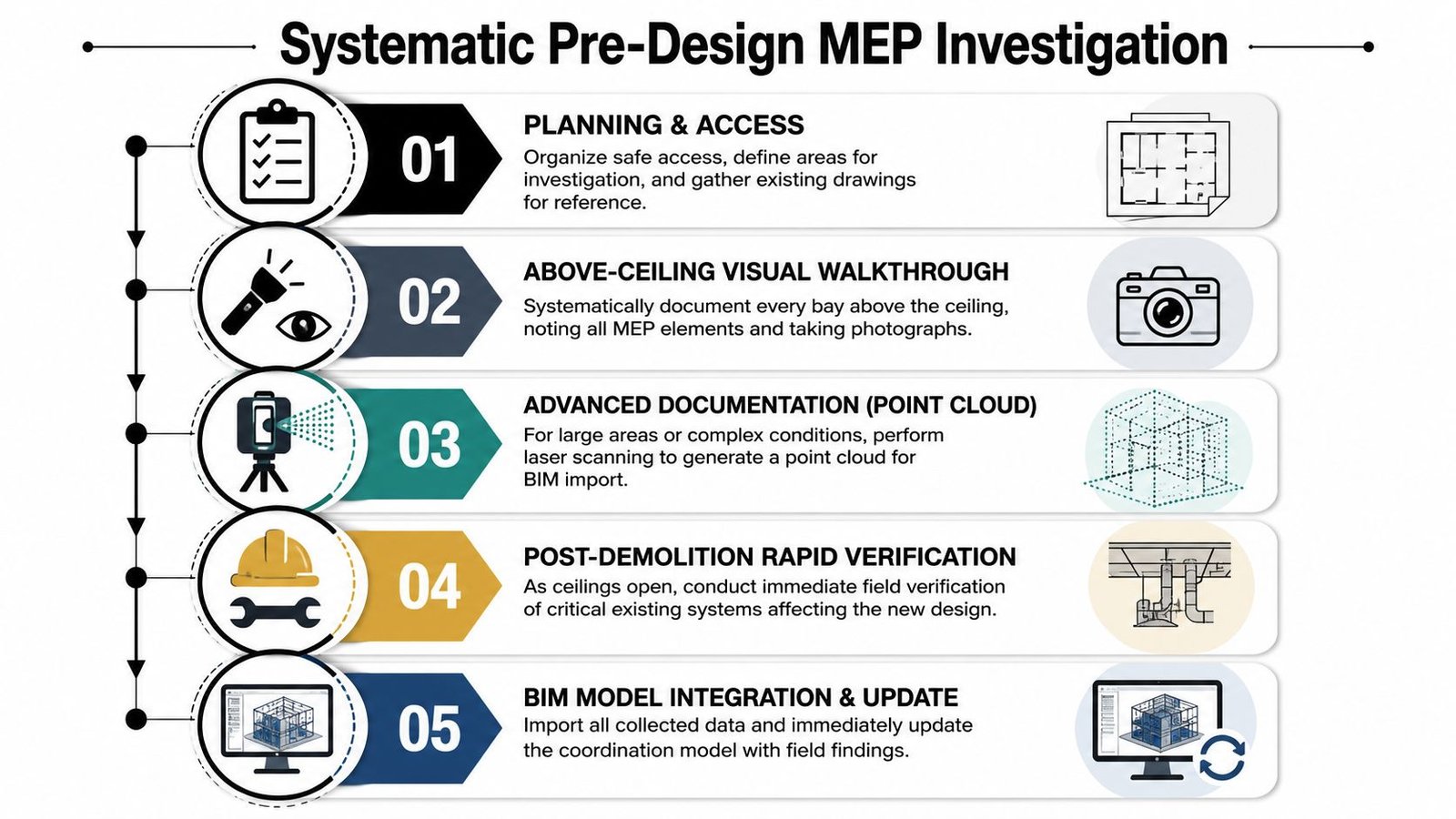
The most useful pre-design work on a renovation project usually isn't more drafting. It's better field intelligence.
A disciplined above-ceiling walkthrough should happen before the MEP engineer commits to routing. That walkthrough doesn't need to be a perfect full-building survey. It does need to be systematic. Open what you can open. Photograph every accessible bay. Record the major duct, pipe, conduit, tray, and equipment conditions that will control layout. Note direction, approximate size, support pattern, and obvious service relationships.
What to capture early
Use a repeatable checklist instead of ad hoc observation:
- Major horizontal routes: Main duct trunks, sprinkler mains, piping headers, cable tray paths, and feeder conduit groups.
- Vertical constraints: Risers, drops, offsets, structural penetrations, and shafts that limit rerouting options.
- Congested zones: Corridor spines, core areas, low-plenum conditions, and areas above rated or specialty ceilings.
- Operational constraints: Systems that appear to remain active and likely serve adjacent spaces or base building functions.
That level of documentation usually tells the team where the true risk sits. It won't answer every question, but it prevents obvious design errors.
When scanning earns its cost
On large floor plates, high-density ceilings, or buildings with poor records, point cloud capture is often the better path. Importing reality data into the model gives the team a much more reliable reference for routing decisions and coordination reviews. It also reduces the false precision that comes from tracing old drawings into BIM and assuming they're accurate.
The market is moving in that direction. The rise of reality capture and AI-assisted verification tools reflects a shift toward field-validated coordination, where the goal is not just to count clashes in a model but to reduce rework, safety risks, and delays on site (Tejjy on MEP coordination services).
For teams building renovation models from field data, point cloud to BIM services can give structure to that process when the site is too large or too complex for manual documentation alone.
Photographing ceiling bays sounds basic. It is basic. It also prevents a surprising number of bad assumptions from making it into the model.
Modeling Unverified Conditions in BIM
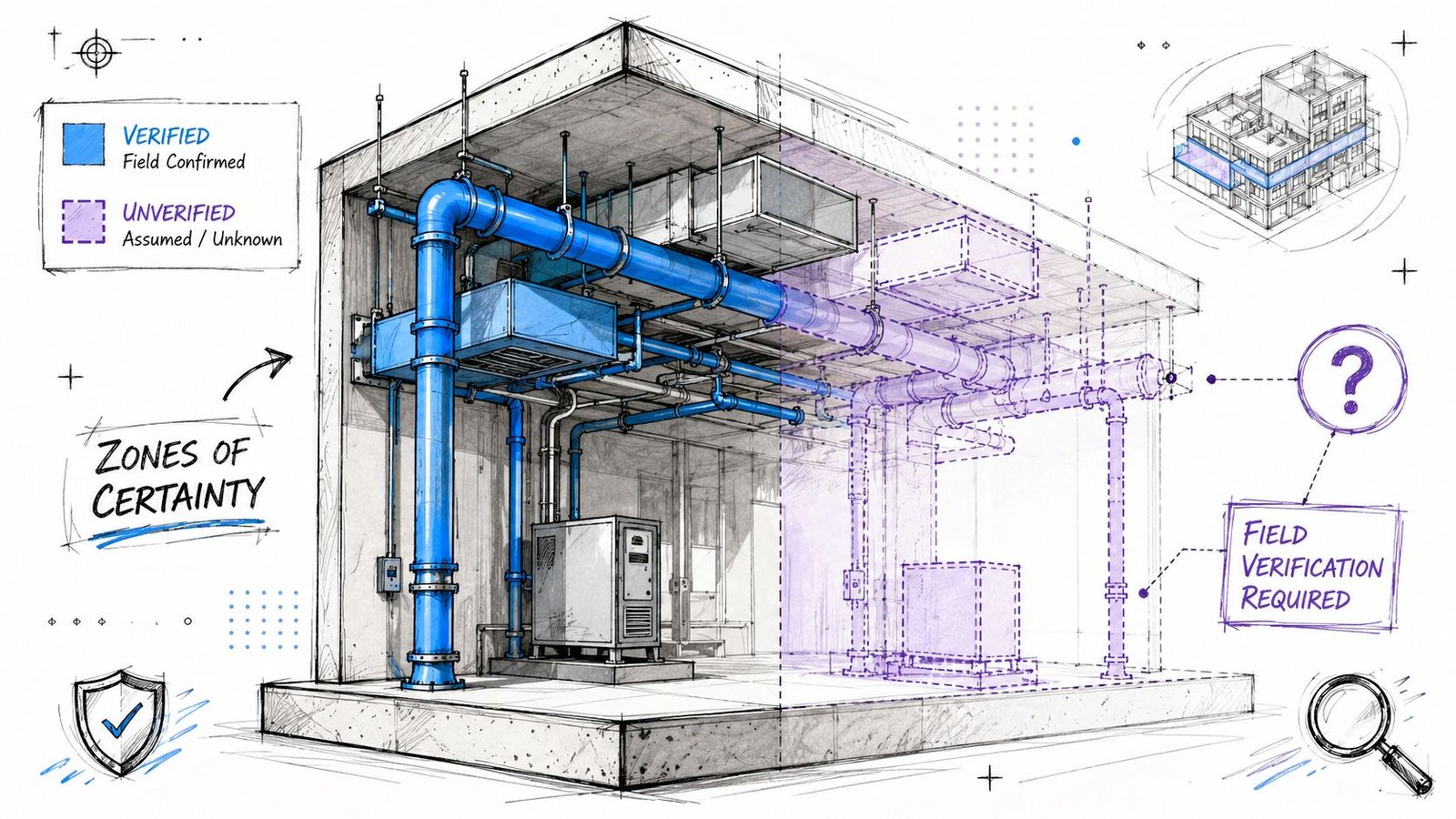
An honest model is more useful than a polished one. In renovation MEP coordination, the BIM model has to show uncertainty clearly enough that nobody mistakes assumption for fact.
That starts with a documented convention in the BIM execution plan. Every existing MEP element should carry a clear verification status. Teams use different methods. Some use worksets. Some use filters and color overrides. Some add a custom shared parameter such as “Verified,” “Unverified,” or “Field Verified by Scan.” The specific method matters less than consistency.
Verified and unverified can't look the same
If existing ductwork modeled from old backgrounds is displayed exactly like scanned or field-measured ductwork, the model is lying. It may be lying politely, but it's still lying.
Use a convention that is visible in every active coordination view. For example:
| Status | Typical source | Modeling treatment |
|---|---|---|
| Verified | Scan, direct field measurement, post-demo confirmation | Standard display and normal coordination priority |
| Unverified | Legacy as-builts, owner backgrounds, inferred routing | Distinct override, tagged status, caution note |
| Placeholder | Known presence, unknown exact location | Generic keep-out geometry with field verification note |
That last category matters more than many teams realize.
Placeholder geometry protects routing decisions
Sometimes you know a system exists but don't know exactly where it runs. Don't leave that condition invisible. Model it as a placeholder volume or keep-out zone in the approximate location and note that field verification is required.
That forces the designer to route conservatively. It also makes clash review more honest. A clean clash report against missing existing conditions is worthless.
When the project needs a stronger reality-based starting point, Scan to BIM support can help teams convert field data into usable coordination geometry before fabrication decisions get locked in.
A placeholder is not model clutter. It is a warning label with geometry.
A Phased Coordination Strategy for Renovations
Renovation coordination fails when teams try to do everything at once. Existing verification, new-system layout, detailed clash review, and installation-level decisions should not all happen in one pass.
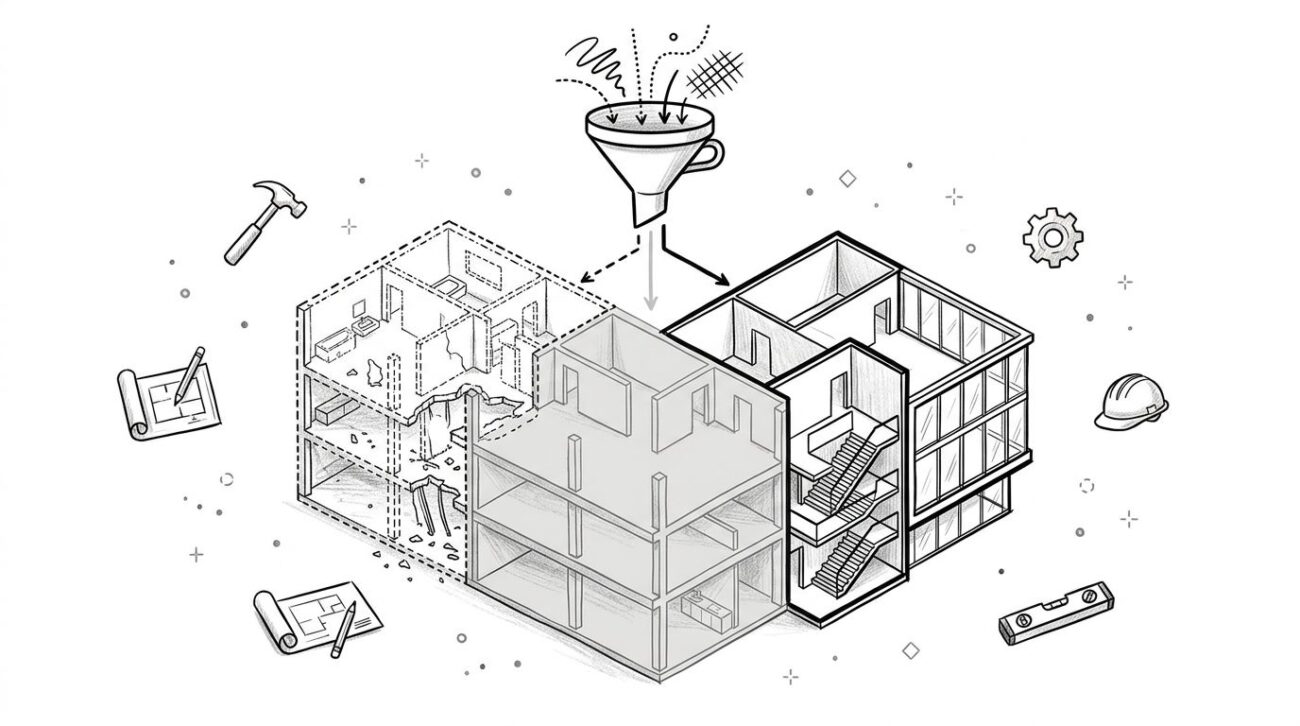
A better process is phased. Phase one focuses on existing conditions. Phase two focuses on detailed routing of new work around what is verified. Phase three handles post-demolition correction and final installation coordination. That sequence sounds obvious, but plenty of projects skip it because the schedule feels tight. Then they lose more time when the model gets rebuilt after demo.
Start with spatial planning, not detailed routing
The National BIM Standard-United States identifies an important early benchmark. The MEP coordination team should hold a spatial planning meeting for conceptual routing before detailed 3D modeling, so major systems have a designated and viable path early in the process (NBIMS-US MEP spatial coordination requirements).
On renovation work, that meeting should define zones of certainty and zones of uncertainty. Not every area of the floor plate carries the same risk.
A practical split looks like this:
- Higher-certainty areas: recently renovated space, accessible ceiling grid, scanned zones, and areas with recent field verification.
- Lower-certainty areas: hard-lid ceilings, untouched core zones, inaccessible tenant spaces, and plenum areas with inconsistent record drawings.
- Critical tie-in zones: equipment replacement points, corridor crossings, riser interfaces, and utility transition areas where old and new systems must connect.
Build alternate paths before you need them
Designers who work mostly on new construction often route systems to the single best path. Renovation work requires at least one fallback path in the high-risk zones. If demolition exposes an unexpected obstruction, the team should be deciding between pre-considered options, not inventing a new route under schedule pressure.
That is what mature renovation MEP coordination looks like. It isn't elegant. It is resilient.
Communicating Uncertainty in Construction Documents
A lot of renovation problems don't start in the field. They start in drawing sets that hide uncertainty instead of communicating it.
Every MEP element on the documents should be unmistakably classified as existing to remain, existing to be removed, or new. This can't live only in one legend note that nobody sees. It has to be embedded into view templates, line styles, tags, keynote standards, and sheet review checklists.
Notes that actually protect the team
When an existing condition has not been field-verified, say so directly. A useful note is specific about what must be verified and when. Generic language doesn't help the contractor or protect the design intent.
Use notes that answer three questions:
- What needs verification
- Who verifies it
- What happens if it differs from the assumed condition
For example, if a new branch duct is shown crossing above an existing hydronic line that was modeled from old drawings, the note should require field verification of the pipe location and elevation before installation. If the condition differs, the contractor should be directed to notify the design team before proceeding.
Contingency language prevents bad field decisions
The drawing set should also identify design dependencies. If a routing solution works only when an existing system is where the model assumes it is, state that dependency clearly. Otherwise, the installer is left to improvise when reality conflicts with the plan.
The worst instruction set on a renovation project is silence. If the documents say nothing about uncertainty, the field still has to act.
Good construction documents don't remove uncertainty from existing conditions. They make the uncertainty visible, assign verification responsibility, and define the decision path when assumptions fail.
Updating the Model After Demolition
Demolition opening is not the end of coordination. It is the most important checkpoint in the renovation workflow.
Once ceilings are open, the project team should treat the next site visit like a verification sprint. Measure the conditions that control the new work. Confirm elevations, offsets, branch takeoffs, support conflicts, and the actual usable routing space. Then update the coordination model immediately.
The update has to be owned by someone
Governance matters. Coordination failures are often decision-rights failures, not just technical modeling errors. Clear ownership and escalation paths for decisions when field conditions differ from drawings are critical, especially when responsibility is split across architect, engineer, contractor, and trade partners (Procore on coordinating MEP).
That means the team should decide in advance:
- Who records field findings
- Who updates the model
- Who approves revised routing
- Who issues sketch updates or formal revisions
- Who logs assumed versus found conditions for pricing and change management
Don't install against an old model
Installers should not proceed using a coordination model that still shows pre-demo assumptions where demo has already exposed real conditions. That sounds basic, but it happens constantly on fast-moving interiors.
The result is predictable. Fabrication advances on stale geometry. Field crews arrive with the wrong spool logic, wrong offsets, or wrong support assumptions. Then everyone burns time deciding whether it is a trade issue, a design issue, or an owner issue.
A fast post-demo update cycle prevents that confusion. It also gives the change-order record a much cleaner basis because the team can document the exact difference between the assumed condition shown on the documents and the condition found on site.
Common MEP Coordination Failures in Renovations
Most renovation coordination failures are not software failures. They are process failures that teams tolerate until the ceiling opens.
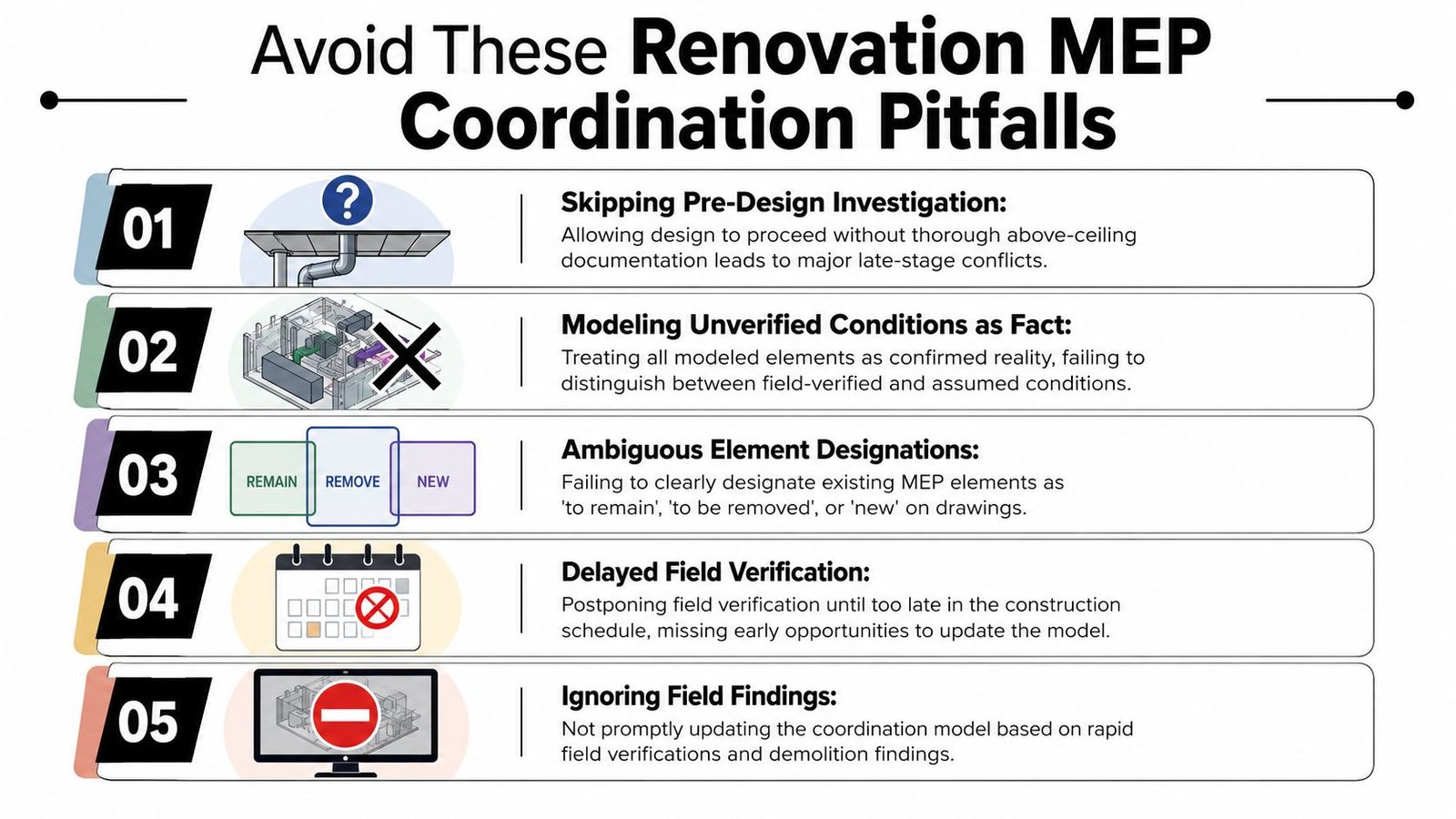
The recurring mistakes are familiar:
- Design starts before investigation: The team begins layout without an above-ceiling walkthrough or equivalent field review.
- Assumed conditions get modeled as fact: Legacy drawing content enters BIM with no visible distinction from verified field data.
- New systems are routed through uncertainty zones: Designers use the apparent open path, even though nobody has confirmed what is above the hard lid or buried in the corridor spine.
- Documents blur remain, remove, and new work: Contractors are left to infer intent from context instead of from explicit notation.
- The model is not updated after demo: Real conditions become visible, but the coordination environment stays frozen in pre-demo assumptions.
Renovation chaos usually isn't caused by one big miss. It comes from a chain of small ambiguities that nobody forced into the open early enough.
The fix is not better optimism. It is stronger production discipline. Verify what you can. Mark what you can't. Route conservatively. Update fast. Assign ownership before field conditions start driving redesign.
Conclusion
Renovation MEP coordination succeeds or fails on how the team handles uncertainty. In existing buildings, the model has to do one job well. Separate verified conditions from assumptions, and show exactly where field confirmation is still required.
Teams that manage this work well do not chase a polished model for its own sake. They set rules for what can be trusted, what stays provisional, who updates the model after demolition, and when routing decisions can be released. That discipline is what keeps a renovation from turning into a chain of late clashes, field workarounds, and margin loss.
A predictable renovation process is built, not hoped for.
If your team needs a tighter process for existing-building coordination, get in touch with BIM Heroes for practical help with renovation MEP workflows, model verification standards, and scan-based existing conditions support. Ask for production checklists, certainty-level conventions, or post-demo update procedures your team can use in the field.