Meta title: Owner Rep Services for Multi-Site Retail Rollouts
Meta description: What owner representative services cover in multi-site retail, restaurant, and franchise rollouts and what makes the production side work.
Suggested WordPress category: BIM Technology & Workflows
A brand team trying to open or refresh dozens of locations in a year rarely struggles with vision. The hard part is execution. The prototype is approved. The customer experience is defined. Then the actual work begins: one site has landlord comments, another has a tight back-of-house layout, a third runs into permit revisions, and a fourth reveals field conditions that don't match the base file.
That's where owner representative services matter in a rollout program. In retail, restaurant, and franchise work, the owner's rep becomes the party protecting the brand's interests across architecture, engineering, permitting, construction, and turnover. Not for one building, but across a portfolio moving in parallel.
From the production side, the difference between a smooth rollout and a chaotic one is rarely a lack of effort. It's usually a lack of system discipline. Prototype drift creeps in. Documentation standards vary by team. RFIs pile up because the model, sheets, and field assumptions don't stay aligned. In multi-site work, those small misses repeat fast.
The Unique Challenge of Multi-Site Rollouts
A single flagship project can absorb a lot of improvisation. A rollout program can't.
In retail and restaurant expansion, the owner is trying to repeat the same brand experience across many locations while every address introduces new constraints. One site may fit the prototype cleanly. The next may need storefront revisions, revised MEP coordination, a landlord-specific package, or a permit response that affects the reflected ceiling plan and equipment layout. Same brand. Different puzzle.
That's why multi-site rollout management feels different from ordinary project oversight. The problem isn't just complexity. It's repeated complexity at speed. Teams aren't solving one technical problem. They're solving the same class of problems over and over without letting the set drift away from the prototype.
For an owner's rep, that means more than schedule tracking. It means holding the line on consistency, making sure site-specific adaptation doesn't turn into ad hoc redesign, and keeping the right partners coordinated when ten sites are moving at once and another batch is entering permitting.
The strongest rollout programs don't treat each store like a fresh start. They treat each store like a controlled variation of a disciplined base.
That distinction sounds simple. It isn't. It's where brand standards either become a scalable delivery system or collapse into one-off problem solving.
What Owner Representative Services Cover in a Rollout Program
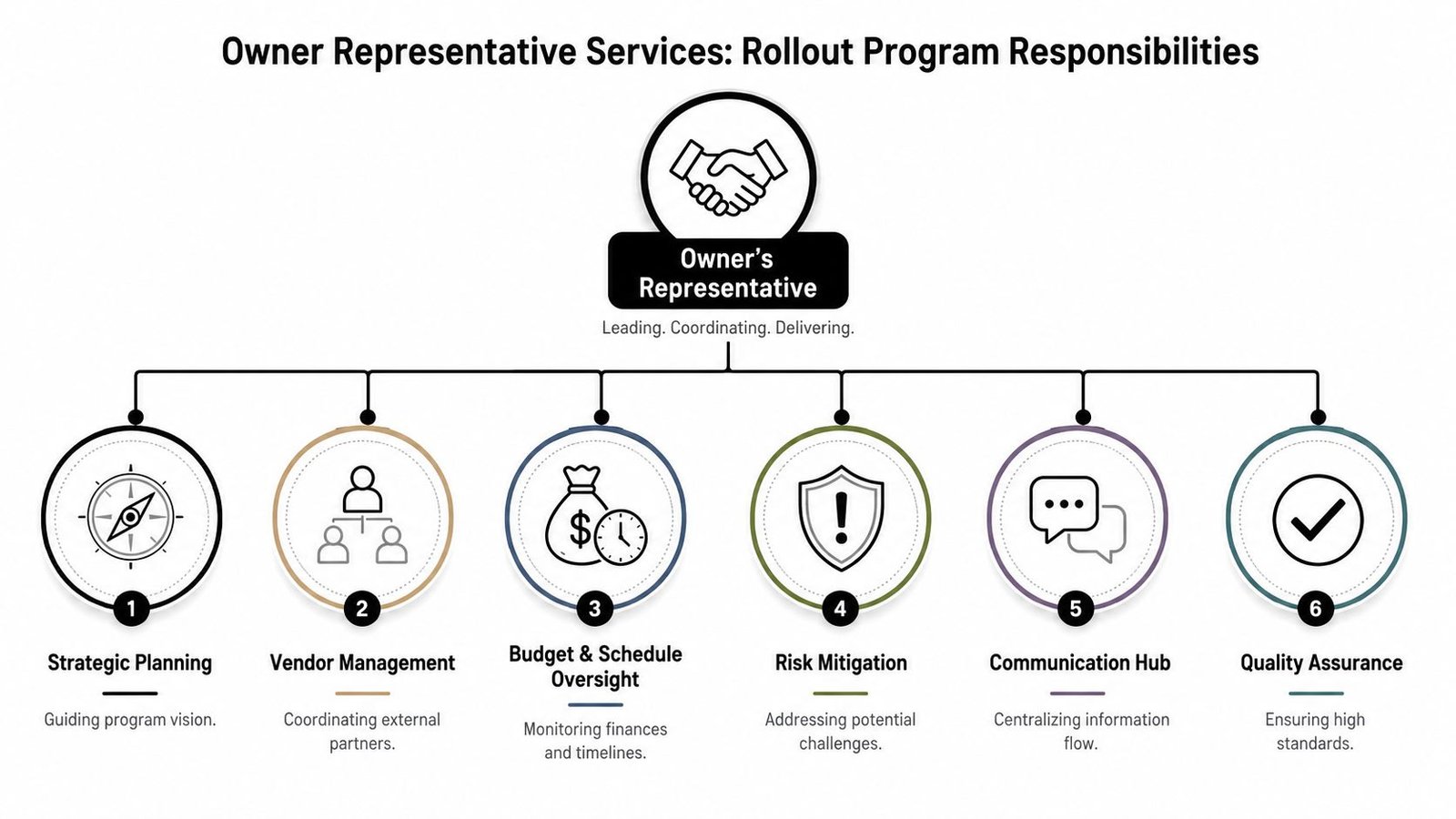
In a multi-site setting, owner representative services sit at the center of the delivery network. The role is less about isolated project administration and more about building a repeatable operating rhythm across the full program.
The portfolio view matters more than the single-site view
On one site, a missed review deadline is a problem. Across a rollout, it becomes a pattern. That's why the owner's rep has to track budget, schedule, decisions, and technical dependencies at the program level.
According to this overview of owner's rep ROI and responsibilities, owner representative services typically reduce cost overruns by 10% to 15% and accelerate project delivery times by 10% to 20% on average. The same source notes that fees for large capital projects generally range from 1% to 3% of total construction costs, which is why owners often view the role as paying for itself through tighter control of risk, schedule, and claims.
For rollout programs, that value shows up in practical ways:
- Brand standard enforcement: The owner's rep makes sure the architect, consultants, GC, and vendors are all working from the same operating assumptions.
- Jurisdiction management: Local code interpretation, landlord requirements, and permit comments get handled without losing the prototype's core logic.
- Decision control: Scope changes, substitutions, and field-driven revisions get filtered through owner priorities instead of being accepted by momentum.
- Vendor coordination: Architecture, MEP, kitchen, signage, millwork, and equipment vendors all affect downstream documentation.
The role is part advocate, part filter
The best owner's reps don't just pass information along. They clean it up before it spreads. They translate owner goals into actionable direction for technical teams and push incomplete answers back to the right party before confusion reaches the field.
A useful comparison appears outside AEC as well. Good program oversight depends on clean communication loops, staged decisions, and accountability across multiple workstreams, which is why Constructive-IT's project management insights are worth a look. Different industry, same operational lesson: systems break down when teams confuse activity with coordination.
Field lesson: In a rollout program, the owner's rep protects margin by stopping avoidable variation before it enters the drawing set, buyout, or site.
Why Multi-Site Rollouts Demand a Different Kind of Management
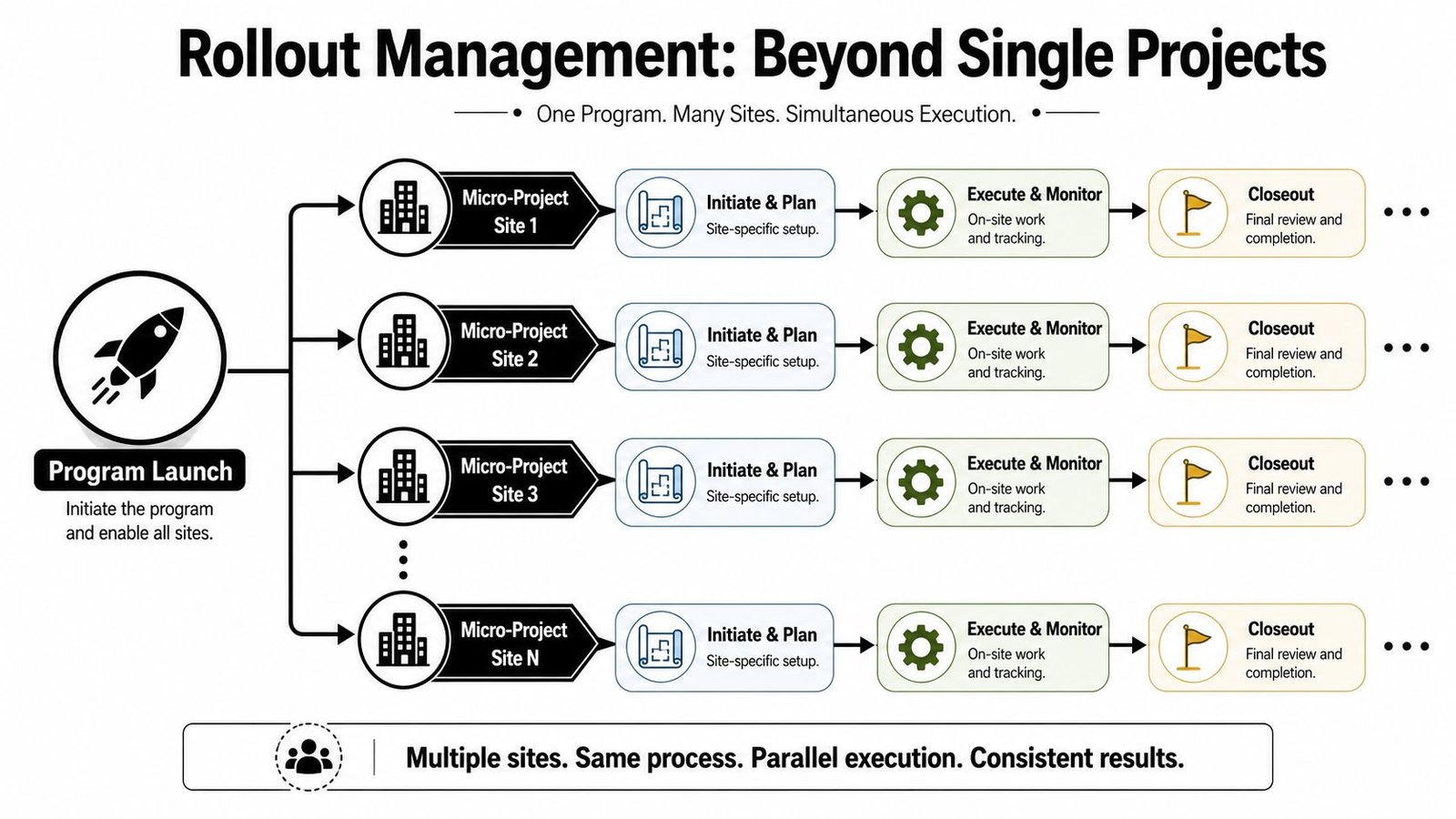
A rollout isn't one big project. It's a stack of smaller projects that need to behave like one program.
That sounds obvious, but many teams still manage rollouts as if they were just high-volume versions of a standard tenant improvement workflow. They aren't. A rollout has prototype inheritance, repeated consultant coordination, recurring permit pathways, and a constant tension between central standards and local exceptions.
Prototype adaptation is the real engine
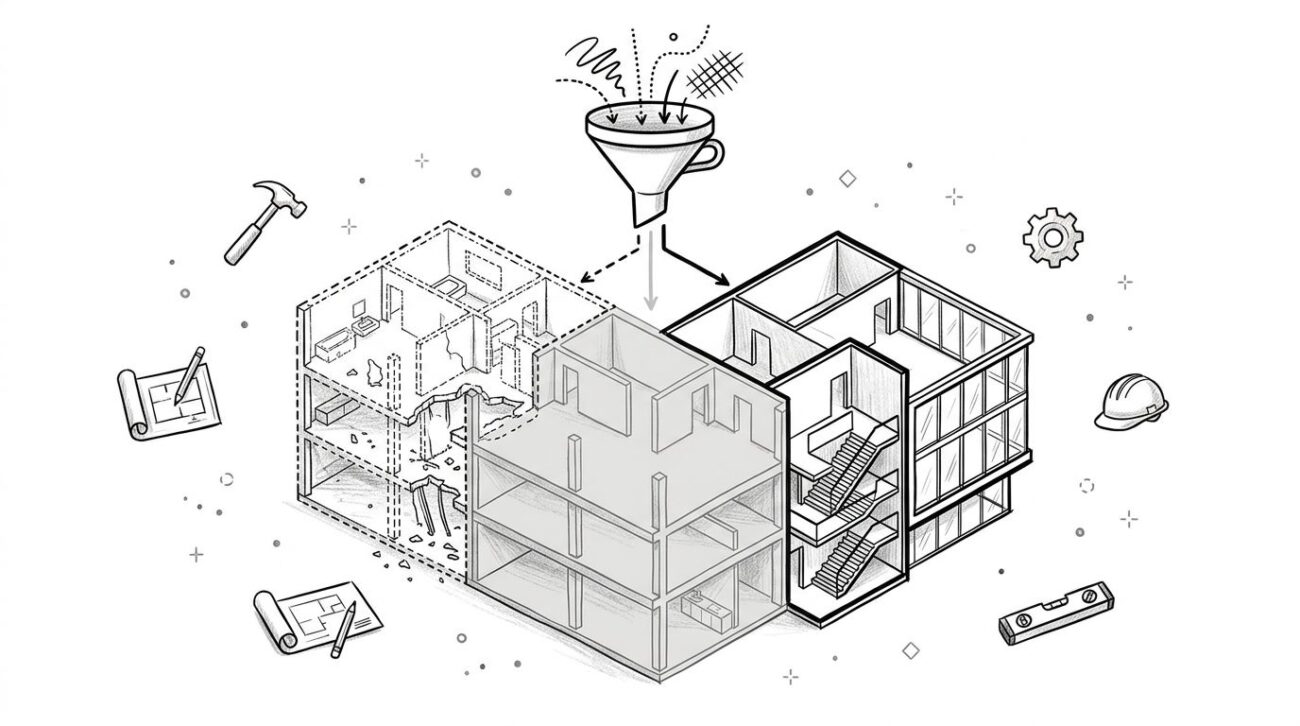
Every successful multi-site program relies on a base prototype. But a prototype only creates scale if teams know how to adapt it without reopening the design on every site.
That means each adaptation needs rules. Which sheets are locked? Which details are local? Which code items require jurisdictional review? What can move in the plan without triggering cascading revisions to reflected ceiling plans, equipment schedules, power plans, elevations, and finish callouts?
When those rules aren't defined, teams end up redrawing rather than adapting. Speed drops. Coordination risk climbs. The program starts producing custom projects under the illusion of standardization.
Parallel work changes the management model
In a single-building project, the team can recover from a few undocumented decisions. In a rollout, undocumented decisions spread. Site 6 follows one path, site 11 follows another, and by site 18 nobody is sure which revision is now the standard.
A rollout management model has to account for that. It needs:
- Decision checkpoints that freeze specific elements before downstream teams move
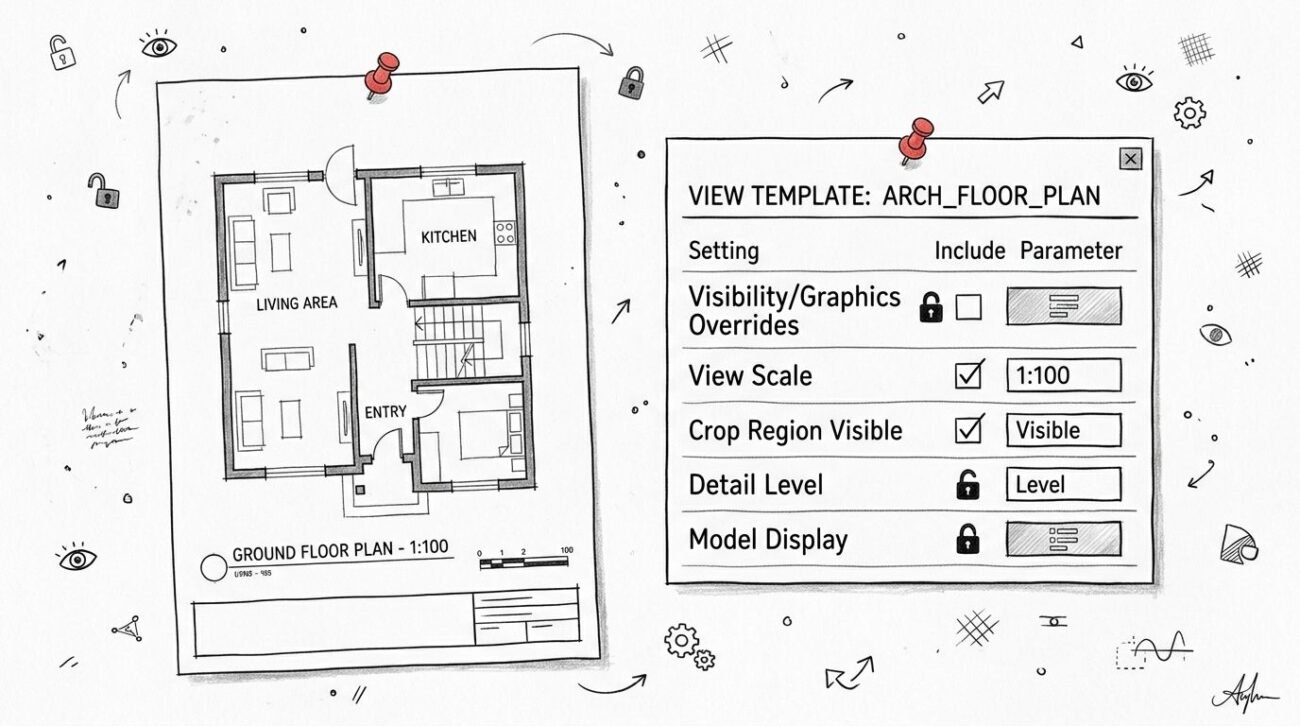
- Template discipline so permit sets inherit the right base information
- Shared issue logging across sites, not isolated email chains
- A repeatable closeout process that feeds lessons back into the next wave
One unresolved prototype ambiguity doesn't stay isolated for long. In a rollout, it multiplies.
Traditional project management often focuses on milestone reporting. Rollouts need something stricter. They need operational consistency across simultaneous site activity.
Where Production and Documentation Partners Fit In
The technical side can either support the owner's rep or make their job harder.
Owner's reps coordinate the program. They usually aren't the team producing high-volume architectural documentation, maintaining model consistency, adapting prototypes, and pushing permit-ready sets through repeated site variation. That production layer needs its own discipline.

The production partner is the rollout engine
In real rollout programs, the production and documentation partner often becomes the mechanism that turns approved standards into repeatable output. That includes prototype adaptation, permit sheet generation, drawing updates, coordination support, and consistency checks across active sites.
That work sits downstream of strategy but upstream of field execution. If it's done well, the owner's rep has cleaner information, fewer avoidable revisions, and better visibility into where decisions are affecting schedule. If it's done poorly, the program gets buried in drawing churn.
That dynamic shows up clearly in technical oversight. Colliers Project Leaders notes that effective oversight validates architectural, structural, and MEP models against the Owner's Project Requirements before fabrication, and that this kind of gatekeeping can reduce change orders by 20% to 30% by identifying clashes during design rather than on-site.
What this looks like in practice
On large rollout programs, the production side has to absorb volume without letting quality slip. That's less about drafting hours and more about controlled workflows.
Examples from this lane include supporting a reinvestment program across 300+ sites, along with retail rollout documentation for brands such as Lindt, Rag & Bone, Rodd & Gunn, and Rise Dispensary. The role in those programs is not owner representation. It's the architectural production and documentation work that helps the rollout maintain pace and consistency.
A mature production workflow usually includes:
- Prototype-controlled base files with clearly governed updates
- Site-specific adaptation logs so every deviation has a reason and a record
- QA checkpoints before permit issue and before construction updates
- As-built feedback loops that improve the next site package, especially when teams use as-built drawing workflows to capture what changed in the field
The owner's rep sets the guardrails. The production partner has to make those guardrails real in sheets, models, markups, and revisions.
What Makes a Multi-Site Rollout Program Run Smoothly
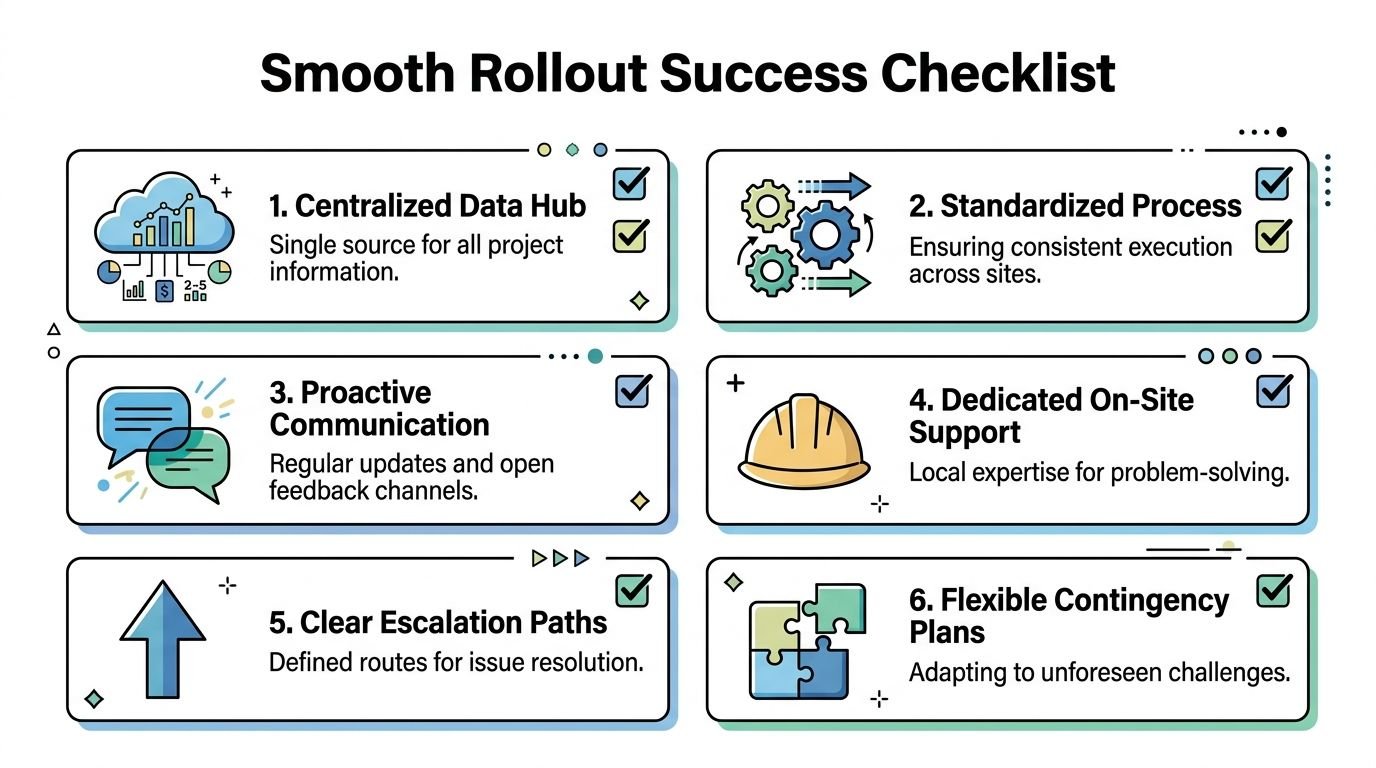
Smooth programs don't run on optimism. They run on controls.
The biggest misconception in rollout work is that speed comes from moving fast at every step. It doesn't. Speed comes from reducing rework, minimizing interpretation gaps, and keeping each site close to a disciplined prototype. Programs slow down when teams leave too much open to judgment in the middle of production.
Prototype discipline beats heroic problem solving
A rollout prototype should be reusable, not merely illustrative. If the base set still needs major reinterpretation every time it meets a new site, the team doesn't have a true prototype. It has design intent dressed up as a system.
The strongest rollout templates include enough embedded logic to support repeat use: standard detail libraries, controlled family usage, naming rules, code-response conventions, and sheet structures that don't get reinvented by each contributor.
Documentation workflows have to prevent RFIs, not just answer them
A lot of teams accept RFIs as normal program noise. Some are unavoidable. Many aren't.
A DeMaria overview of owner's rep responsibilities highlights a critical point: assisting the architect with contractor questions and maintaining a formal RFI log helps prevent RFIs by identifying conflicts digitally before they show up on-site and by keeping every change traceable in the model.
That principle matters even more in rollout work because one unanswered coordination issue can repeat across multiple projects. From the production side, the practical controls usually look like this:
- Formal issue tracking: Every clash, ambiguity, and revision request gets logged, assigned, and closed visibly.
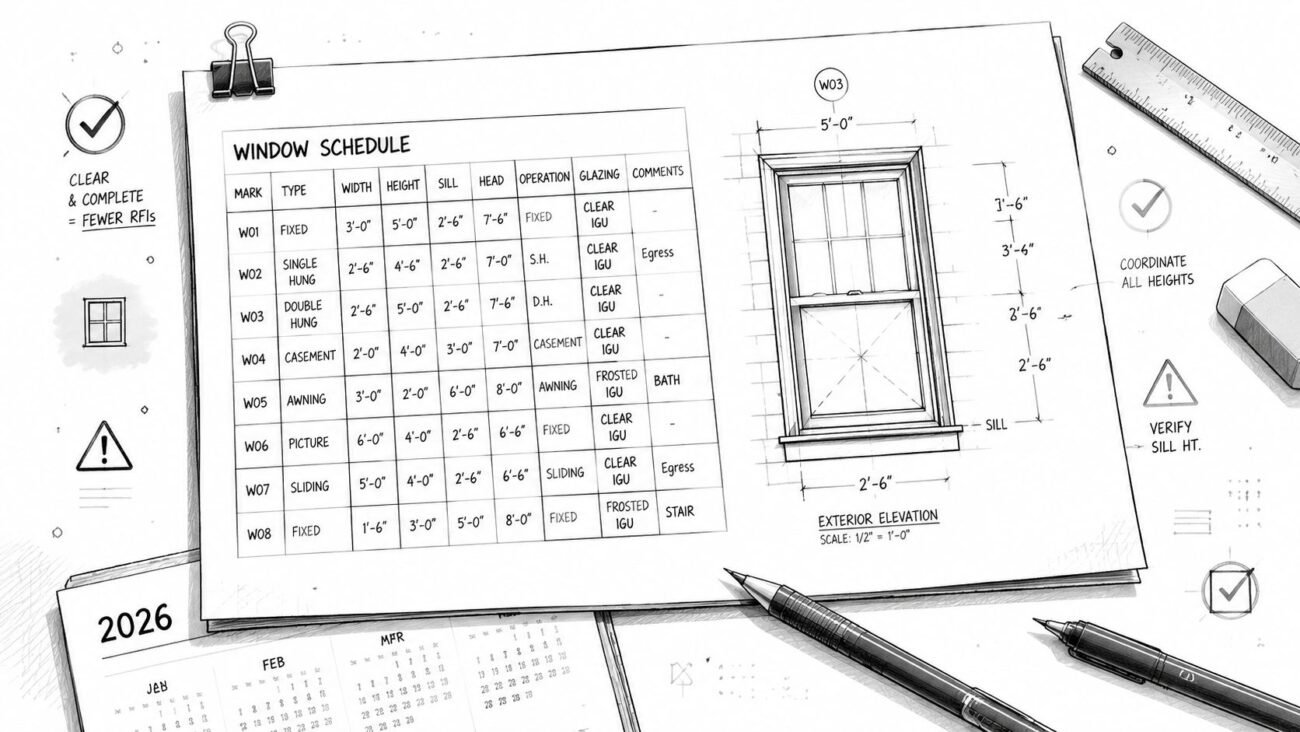
- Model-to-sheet consistency checks: Plans, schedules, annotations, and equipment references stay synchronized before issue.
- Permit prep by jurisdiction type: Teams don't start from scratch each time. They work from known local pathways.
- Shared rollout standards: Teams can reference current templates, details, and approved changes in one place, which is why many firms building retail programs rely on structured retail rollout documentation workflows.
Practical rule: If a field question can be predicted from the model, it should be solved before the permit set goes out.
Capacity has to flex without creating inconsistency
Rollout volume rarely stays flat. One quarter may require only a few active sites. The next may push a much larger batch into adaptation and permit packaging at once.
That's where otherwise competent teams break. They add people quickly, but they don't add process. The result is uneven output, shifting standards, and QA that becomes reactive instead of built in.
What Owner's Reps Should Look For in a Production Partner
A production partner for rollout work shouldn't be selected the same way you'd select a general drafting resource. Capacity matters, but process maturity matters more.
If the partner hasn't worked inside prototype-based, multi-site delivery, they may still produce decent drawings. What they often miss is the system around those drawings: inheritance control, issue logging, template governance, decision freeze points, and the pace changes that come with portfolio work.
Ask how they manage consistency at site 47
That question gets to the heart of rollout readiness.
A qualified partner should be able to explain, in plain terms, how they keep later sites aligned with earlier ones. Not just through designer experience, but through workflow. Ask how prototype updates are issued. Ask how local deviations are documented. Ask what gets checked before permit issue. Ask how they track recurring comments across jurisdictions.
A useful litmus test is whether they speak in terms of production systems or just staff effort.
Make BIM requirements explicit up front
This is not optional in a rollout environment. The owner's contracts need to define what BIM is expected to do, what deliverables are required, and how review happens under the chosen delivery model.
The National BIM Guide from NIBS states that owner representatives must define minimum BIM requirements in the owner's contracts with service providers based on the project delivery method. That ensures deliverables, formats, and review processes are explicitly mandated so BIM functions as a coordination tool rather than a box-checking exercise.
For owner's reps evaluating partners, the practical checklist is straightforward:
- Relevant rollout history: Ask for prototype-based, multi-site examples rather than generic documentation samples.
- Clear QA structure: Find out who checks model integrity, sheet coordination, and standards compliance before issue.
- Scalable delivery pods: The team should be able to absorb volume increases without changing how work is governed.
- Defined handoff rules: Permit, bid, construction, and closeout packages should each have a clear production path.
- Operational transparency: A mature partner should show how they work, not just what they produce. In this vein, many firms also compare broader architecture outsourcing service models to separate cheap drafting from reliable production support.
Cheap production usually costs more once the program starts absorbing revision cycles, permit back-and-forth, and field clarification.
The Blueprint for a Predictable Rollout
Predictable rollout programs don't happen because everyone works hard. They happen because the owner's rep, architect, consultants, GC, and production team are working inside a system that limits ambiguity.
The owner's rep leads that system on behalf of the brand. The production partner gives it operational teeth through disciplined prototype adaptation, controlled documentation, QA checkpoints, and a workflow that can repeat without falling apart under volume.
That same lesson appears in adjacent facility planning work. Teams evaluating layout-heavy operational environments may also find value in reviewing Material Handling USA design services, because the underlying issue is similar: design only scales when documentation and execution are tightly aligned.
For retail, restaurant, and franchise programs, the strongest result is simple. Each site feels predictable to deliver, even when the site itself is not.
If you're reviewing your own rollout production workflow, prototype discipline, or documentation bottlenecks, BIM Heroes has deeper resources on retail rollouts, as-builts, and architectural production systems that support high-volume delivery without turning every site into a custom exercise.